
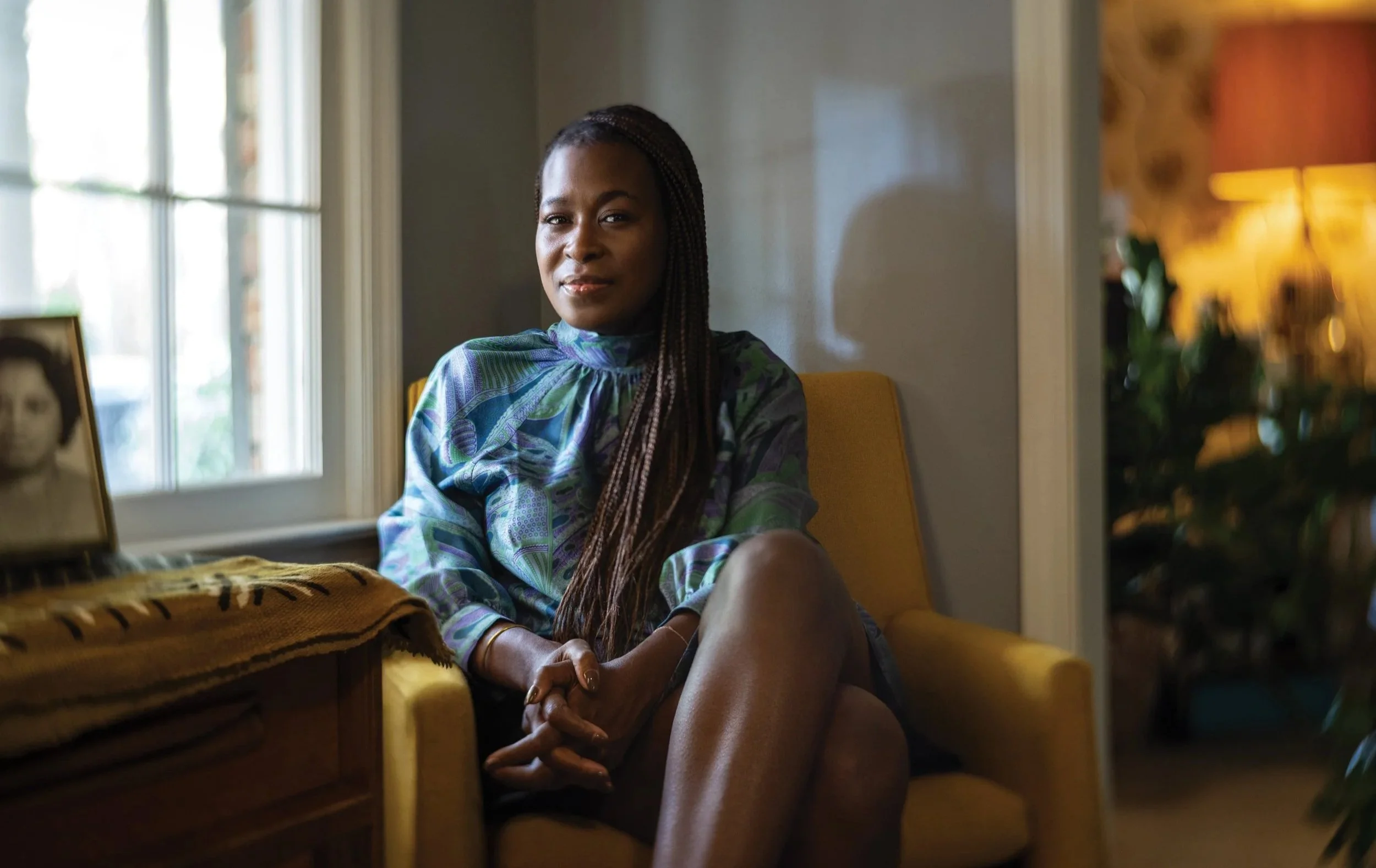

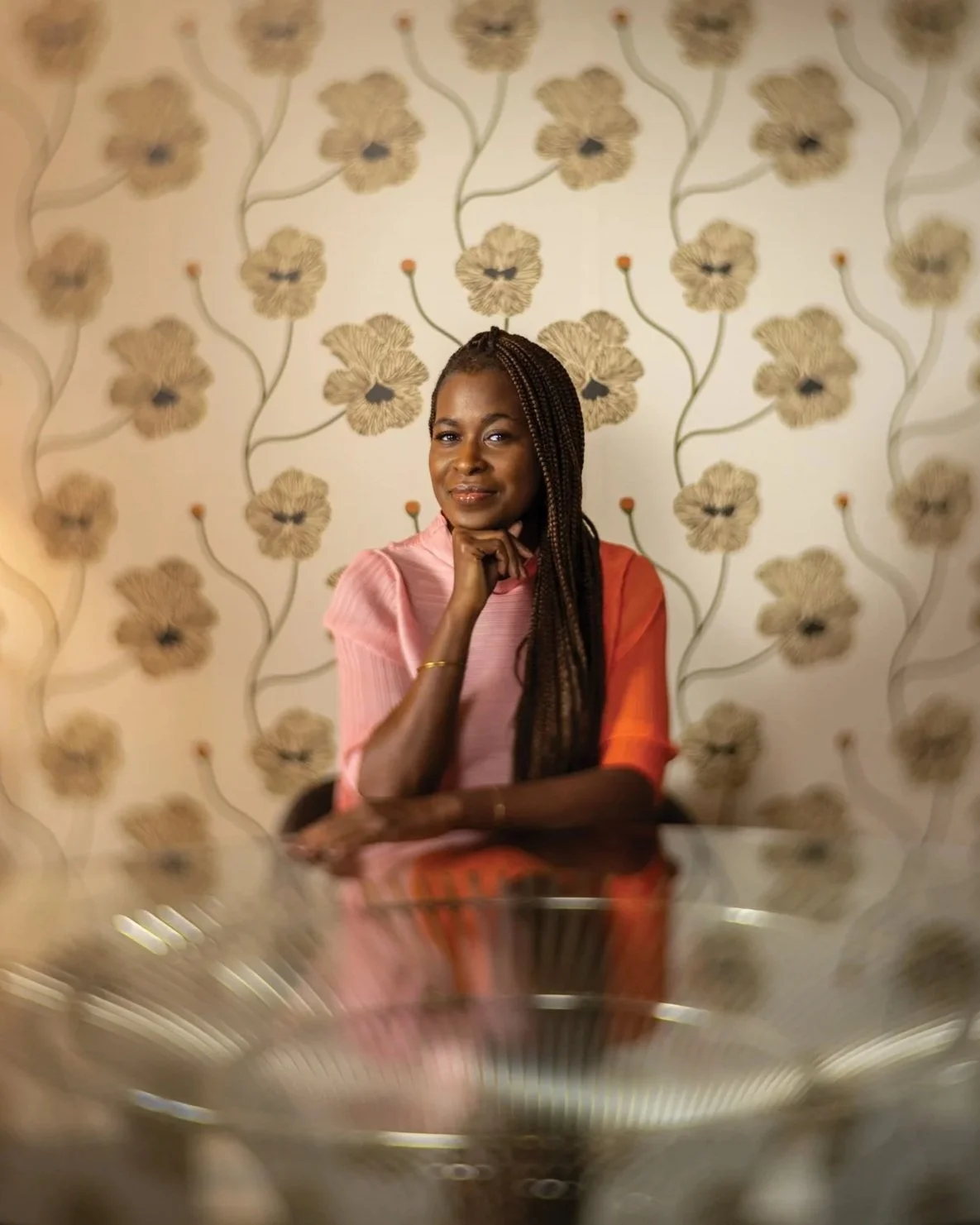
Photos by Fernando Decillis
November 24, 2026
—
Originally published in Issue No. 15 of The Bitter Southerner Magazine
I spent the waning days of summer on Martha’s Vineyard. For the entirety of August, it is a place that becomes, perhaps, the Blackest, boldest place in America outside of my hometown of Atlanta.
If you’re Black and you’ve been to the Vineyard during this hallowed time, you know the feeling. For me, it begins almost as soon as I get off the plane. In an instant, my entire nervous system is reset. My shoulders drop. My jaw unclenches.
The days are filled with activity, but the invitations I most look forward to are the ones to join friends, and not-yet friends, across the island’s porch communities. Sitting in rocking chairs in the afternoon breeze or around fire pits, huddled together under a blanket, inhaling the sea air and exhaling the stresses of the day, months, and years is a sacred gift I guard fiercely.
Elites, entertainers, activists, and politicians all have long sought refuge here. Like Atlanta’s, the Vineyard’s roots are historic, proud, and deep. In the 19th century, the island was one of the few places in America where Black Americans could buy beachfront property, vacation in tranquility, or find safety, joy, and rest.
When we are there, my partner and I spend hours gathered with Black people from around the country who are all more concerned with being interested than interesting. Everything and nothing is on the agenda. Current events are part of the conversation, but they don’t dominate. Belly laughs and hugs are frequent. No one is a stranger (but there also is the understanding that solitude can be a strategy for self-care.)
During these moments, the two of us exchange a knowing look. We are home.
I have learned to recognize the rare gift of being in a place and among people where I immediately feel like myself. For me, it has not always been like this.
In my mid-thirties, I lived in Washington for nearly three years, a period that felt far longer. There, I felt never quite at home — and, as a result, never quite myself. My interactions there often felt transactional, the people transient. It was hard to feel rooted in a city where everyone came for power and prestige.
I welcomed a move from D.C. to Philadelphia, a place that had always been more of a stepping stone than a destination. Within a matter of weeks, the city felt like home for reasons I didn’t immediately realize, but soon came to understand. The warmth of the people and the pride in the place they came from were like a mirror for me. Less familiar — but just as endearing for someone who grew up among passive fans of our perennially losing Falcons, Braves, and Hawks — was the Philly sports fanaticism, which was infectious. Before I knew it, I was in the streets cheering for the Eagles after both of their recent Super Bowl wins.
During my time there, the city of Brotherly Love and Sisterly Affection embraced me, too. I got to know the city, and it had gotten to know me. It had become a place where I recognized myself again, and where I learned that home isn’t just a location; it’s a feeling.
If you’re lucky, home can be both.
After nearly a decade in Philadelphia, I traveled back to Atlanta for the holidays, back to the place I was born, back to the modest brown ranch house I grew up in. Somewhere between my second helping of macaroni and cheese and another pass at the tray of holiday cookies, my mother turned to me and asked, “When are you coming home?”
I assumed something was wrong, that maybe she was sick. “No!” she quickly reassured me. “I was just wondering when you were planning to come back.”
I’d had no sense of urgency to return to the Atlanta I knew was waiting for me. Her question reminded me of how well I know Atlanta. I move through it effortlessly, the same way I can navigate the rooms of my house at night without turning on the lights, instinctively aware of the position of every piece of furniture and the spots where our dogs might be snoozing. I make my way through Atlanta with the same instincts — and I can pick up right where I left off with my core circle of chosen family. My absence only ever meant a pause in our conversations, never an end.
With my mother’s question, I realized Atlanta was the place where the purest version of my past self existed, and where the self I am becoming could thrive. It was settled. With my partner — an Ohio native who gratefully and surprisingly didn’t take much convincing to join me, despite having never lived in the Deep South before — I began looking for houses in January.
I already knew where I wanted our next chapter to happen: Southwest Atlanta, the historically Black part of the city I grew up visiting practically every week as a child, where my grandparents bought a house in the 1960s. An educated class of doctors, professors, engineers, architects, and more made their homes along the streets filled with beautiful brick homes of all shades, with their gorgeous lawns lush with azaleas, magnolias, and dogwoods. It was so beautiful, you could almost forget that racism was at the roots of its existence. It wasn’t the neighborhood my mother and her siblings grew up in, but it was the home all of us grandkids knew and loved.
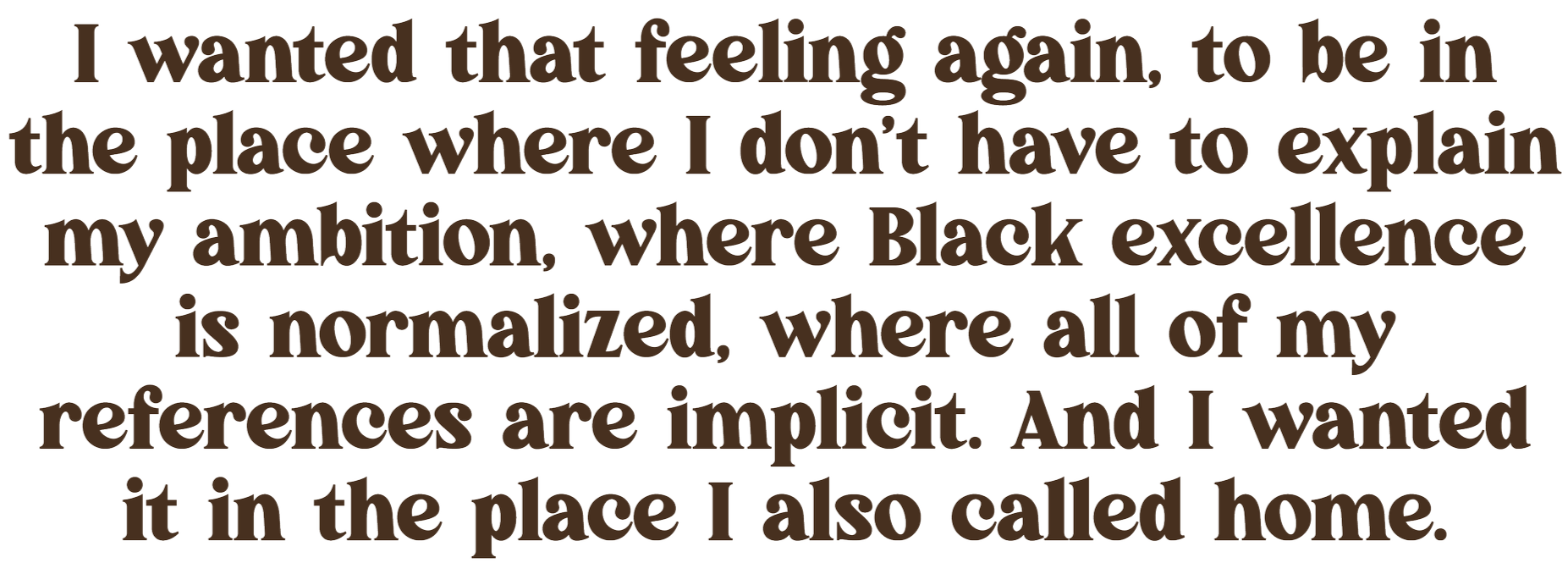
I wanted that feeling again, to be in the place where I don’t have to explain my ambition, where Black excellence is normalized, where all of my references are implicit. And I wanted it in the place I also called home.
We moved in July 2024 into the most perfect split-level brick house with a big backyard and a front porch. Around us daily, we feel energy from the ancestors. I love seeing our neighbors, many of them the vanguard of the city’s Black professional class, when I walk down the street, or into Oreatha’s At The Point or Cafe Bartique, a couple of the area’s Black-owned businesses.
It was divine timing, to be living in Atlanta, and specifically in our neighborhood, on election night in 2024 as my partner and I contemplated living in a country that many Americans do not recognize. There is a safety, a strength, and immense pride that I draw from being rooted in this place, at this time. I wear it like armor when I am out in the world.
It is said that Atlanta influences everything, and it has certainly shaped me. The Atlanta of my childhood showed me I could do and be literally anything because every profession and role model had a face that looked like mine. Success seemed inevitable, even for a Black girl and young woman living in the South. And everything seemed possible in the place that was once the headquarters of the Ku Klux Klan and then became the cradle of the Civil Rights Movement. Atlanta gave us six Black mayors, Freaknik, an Olympic Games, Coca-Cola, and lemon-pepper wings. It was the home of W.E.B. Du Bois and of OutKast. My hometown is a city of multitudes and seeming contradictions that gives all of us permission to be the same.
There is also a knowing, a recognition that my birthplace is now the place of my rebirth. I felt it this year on the Vineyard. Before, the island felt like a place to escape, a refuge. Now, it is a respite, an extension of the home I’ve found in Atlanta and the one I carry with me. This year, when I left, I understood that I wasn’t leaving home. I was bringing it with me, back to the place we had chosen together, the life we are still building, in the city that keeps drawing me closer to myself.
— Errin Haines
Errin Haines is the editor-at-large and a co-founder of The 19th, a nonprofit newsroom focused on the intersection of gender, politics, and power. President of the National Association of Black Journalists, she has more than two decades’ experience as an award-winning journalist and has worked for the Associated Press, Washington Post, and Orlando Sentinel. A sought-after speaker and political analyst, she has taught at Princeton and Georgetown universities.
Fernando Decillis is an Atlanta-based photographer who specializes in environmental portraits, documentary and commercial photography. He is interested in the moments where real-life meets staging and where loneliness meets humour.