May 19, 2026
—
Originally Published in Issue No. 13 of The Bitter Southerner Magazine
Nashville’s Night Train story has already been told.
Even if you missed Paula Blackman’s 2023 book Night Train to Nashville, you could have caught the Country Music Hall of Fame and Museum’s exhibition of the same name — either when it opened in 2004 or when it was expanded and re-mounted 20 years later.
Hence the Blackwell family’s urgency.
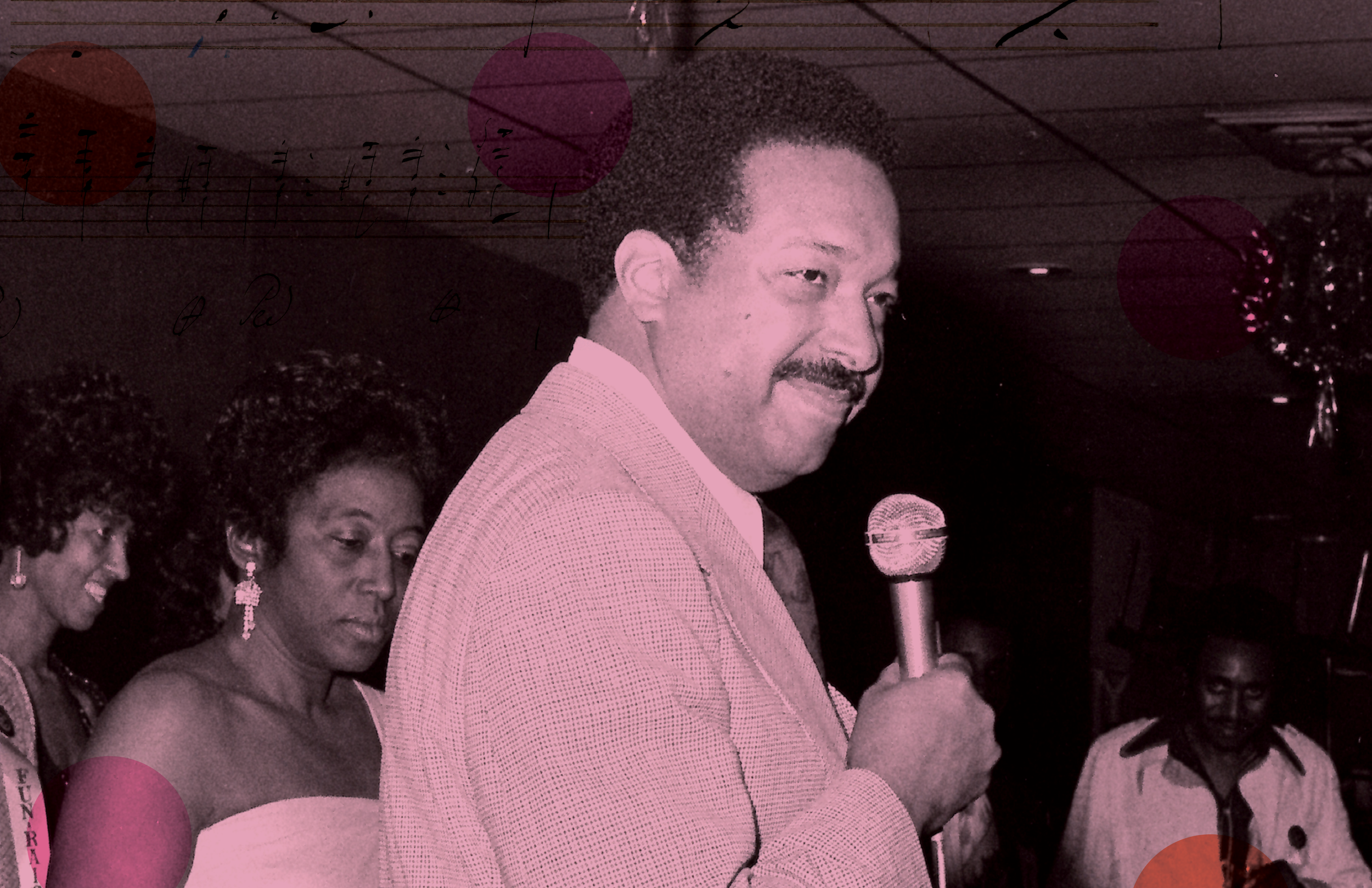
They wish to tell a story they are calling Noble Blackwell’s Night Train. Their docuseries shares many dramatis personae with those previous tellings, but their version has only one main character: Noble Blackwell. His biography — replete with cameos by Jimi Hendrix, Otis Redding, B.B. King, Wilson Pickett, Gladys Knight, Little Richard, and a host of other 60s-era rhythm and blues talent — is a story of segregation and desegregation, ingenuity and vision. It is the story of how Noble Blackwell conceived, sold, wrote, produced, and hosted a syndicated television show — that even reached global audiences — featuring the stars of mid 1960s rhythm and blues. It is these multiple roles that the family feels gets overlooked, relegating Noble solely to host status.
I recently held a video call with Tracye Blackwell-Johnson to talk about her father’s legacy. From her home in Maryland, she sat in front of a wall filled with Noble Blackwell memorabilia. Half a dozen Blackwell family members had joined her there. It was as if they felt that their collective power might be sufficient to resurrect their patriarch’s legacy. In a sense it already has. This year they have been releasing a four-part docuseries about the life of their father, grandfather, uncle, and husband. You can watch it online at nobleblackwellnighttrain.com. It is both well-done and homemade, walking the line between family keepsake and historical document.
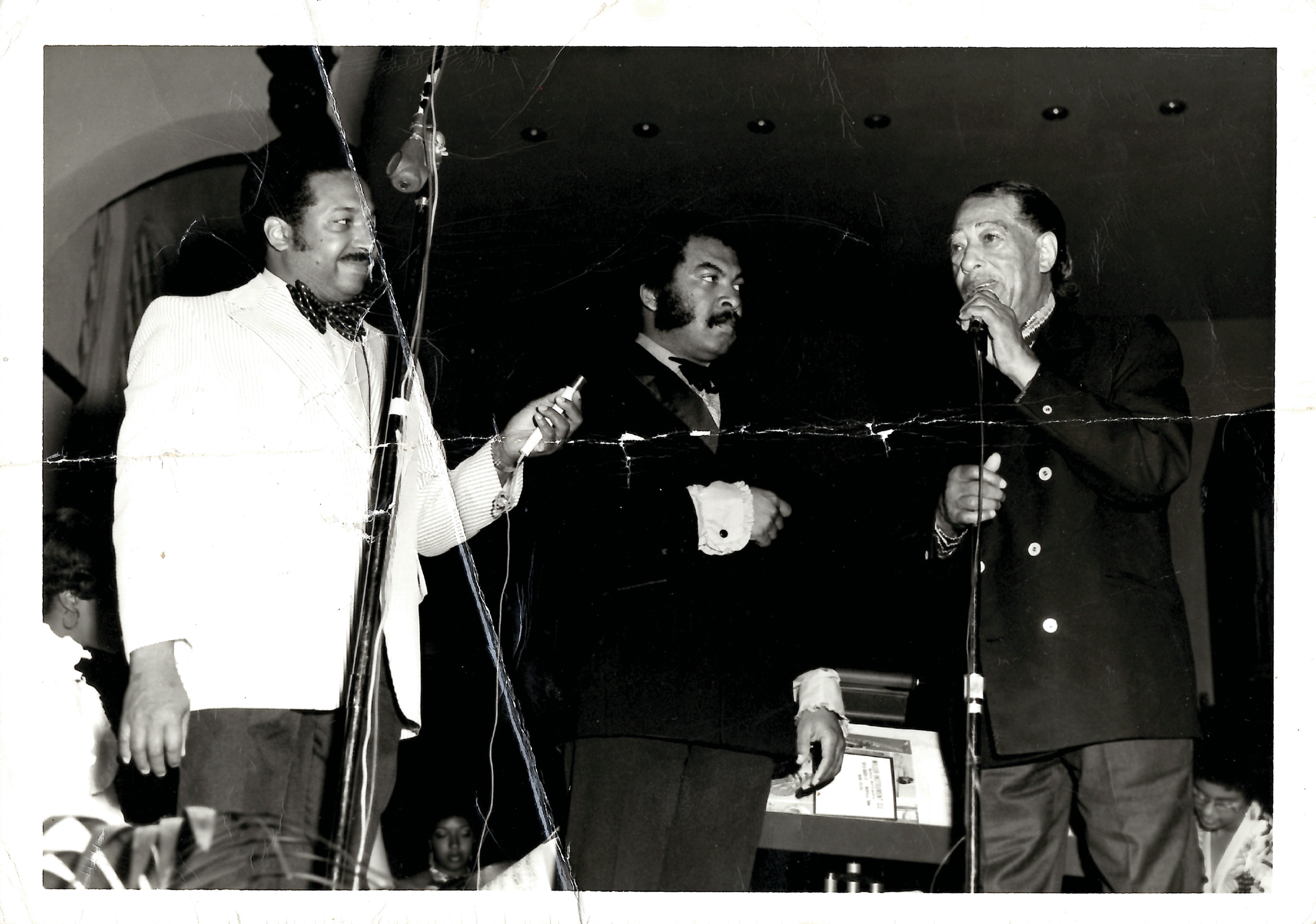
Noble Blackwell with jazz great Duke Ellington in May 1973. Blackwell was invited to host elite artists at Fisk University’s Memorial Chapel in Nashville, Tennessee. Also pictured is Bob Holmes, music director for Night Train.
In 1960, Noble Blackwell was an account ex-ecutive at WVOL AM, a 5,000-watt station in Nashville that served primarily Black listeners. But being a segregation-era Black account executive had its limits, as Noble’s widow Katie Blackwell makes clear in the family video. “He was not allowed to go into the Coca-Cola building office. For him to sign the contract, the secretary would have to bring it out to him,” she says. Being a radio ad man was problematic in other ways, too. As Dinah Washington sang in 1953, “Radio was great, but now it’s out of date. TV is the thing this year.”
Noble saw what Dinah saw and had an idea. He would make the move to TV and create a show featuring Black gospel performers. Nashville’s WLAC TV had taken to the airwaves in August of 1954, and its signal reached much of the South and much of the South was African American. Not only that, WLAC was expanding.
“They had just formed a syndication arm to WLAC TV,” recalls Blackwell-Johnson. “So they were looking for a show that they could syndicate. That’s why they didn’t want a gospel show. They wanted something with more broad appeal. So he came back with Night Train.”
Some white network executives worried that a show featuring Black performers might not be attractive to advertisers. But, as Blackman’s Night Train to Nashville: The Greatest Untold Story of Music City makes clear, WLAC radio had pioneered playing “race records” during the late night hours while keeping its white music programming during the day. Those in the know knew that Black music could attract Black listeners and white listeners and any advertisers who wanted to reach them.
What WLAC got was a host and a show that managed to be both sophisticated and playful.
“And an opadacious hello to you!” Noble intones as he opens, employing a word he invented and which his family tries to define in their second video. That homemade word might lead you to believe that this man hadn’t mastered the standard English vocabulary. But he articulates it with a classic baritone MC voice that he had been honing since 11th grade, when he went from reading the announcements on WXOK radio to being an on-air disc jockey. He is so polished in his delivery that listeners probably ran to their dictionaries wondering if somehow they had missed “opadacious” in spelling class.
There is only one full-length episode of Night Train available online. Perhaps the most famous moments of this show occur near the beginning when a certain left-handed guitar player, who would later be known as Jimi Hendrix, can be seen in his coat-and-tie band uniform, playing behind local singers Buddy & Stacey as they do their cover version of Jr. Walker and the All Stars’s 1965 Motown hit “Shotgun.” Of similar significance is the appearance of Jackie Shane, a transgender singer who declined to perform on the Ed Sullivan Show because she didn’t want to appear as a man. It is one of the few extant videos of Shane, a drummer, singer, and Nashville native, who made a few recordings as a leader and appeared as a backup musician on recordings by Big Maybelle, Gatemouth Brown, Joe Tex, and others.
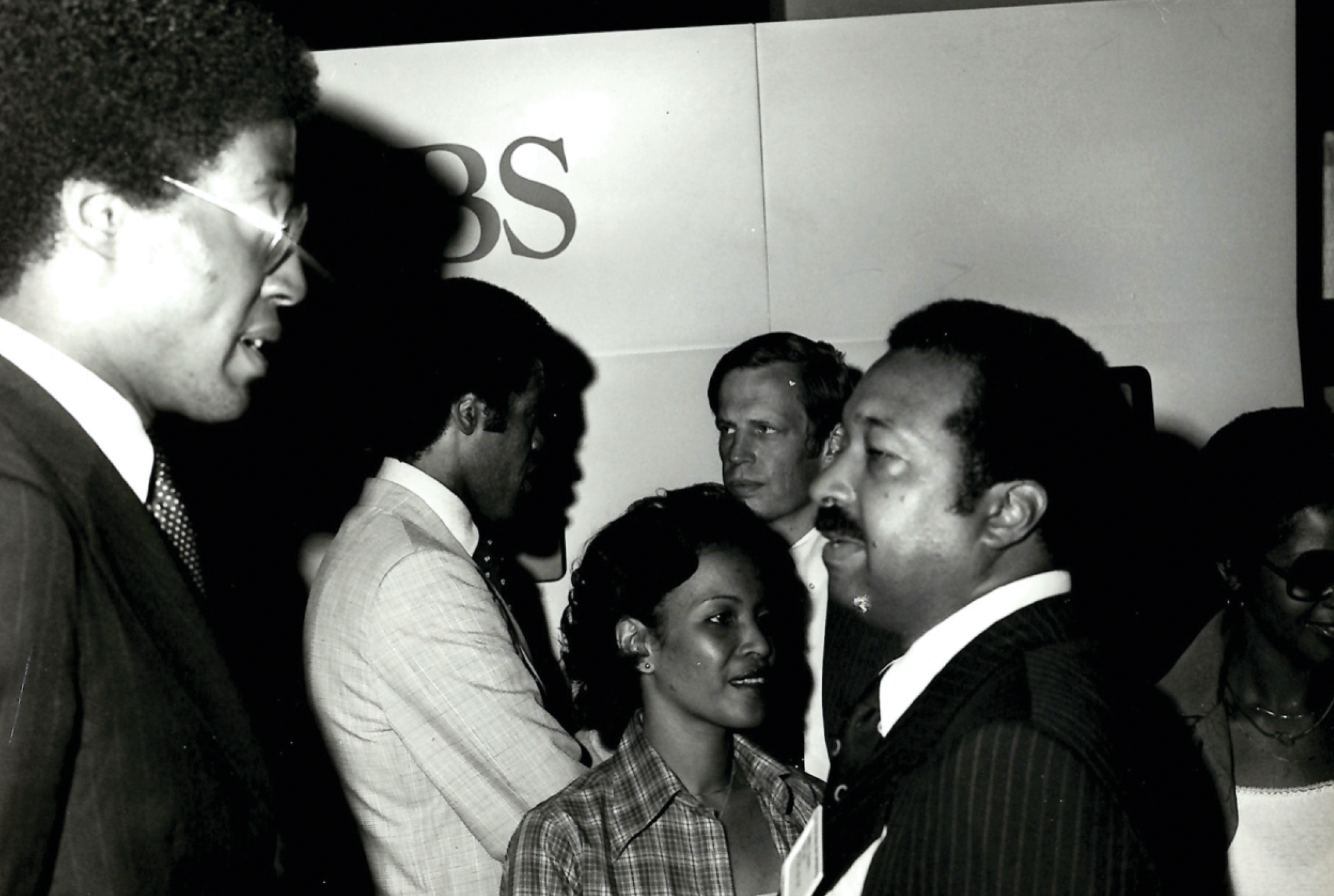
Blackwell with Soul Train creator Don Cornelius at the Urban League convention in Washington, D.C. in 1977 when Blackwell was the liaison officer for CBS corporate.
Night Train aired for one hour each Friday and Saturday night at midnight, after a late night movie. The show wasn’t aired live, but it was filmed at midnight because the studio didn’t want Black people to darken its doors during the day. There were other shows featuring R&B music and Black teens dancing around that time, including the Mitch Thomas Show in Wilmington, Delaware, Teenage Frolics in Raleigh, North Carolina, and Teenarama Dance Party in Washington, D.C. Night Train, which didn’t have live dancers, stood out because it was syndicated by Viacom in 30 cities and was shown in other countries, including Japan, England, Germany, and Hong Kong. It only ran from November of 1964 to May of 1967 but launched many of R&B’s biggest stars, who realized appearing on the show was a good career move. And even though Night Train often featured local musicians doing cover versions of hit sounds, the original artists would find that audiences in far off places were familiar with their music because they had heard these cover versions on TV.
When the Blackwell family talks about all the stars whose first TV appearances were on Night Train and all the careers that were made or boosted by Night Train performances, you can’t help but wonder why neither the show nor the city that birthed it isn’t better known as a cradle of rhythm and blues. Even Memphis, another Tennessee city, is known for Stax Records and the host of stars it produced. Detroit, Chicago, and New Orleans all have bigger reputations than Nashville when it comes to nurturing R&B talent. Was country music so dominant that there wasn’t room for soul music in Nashville?
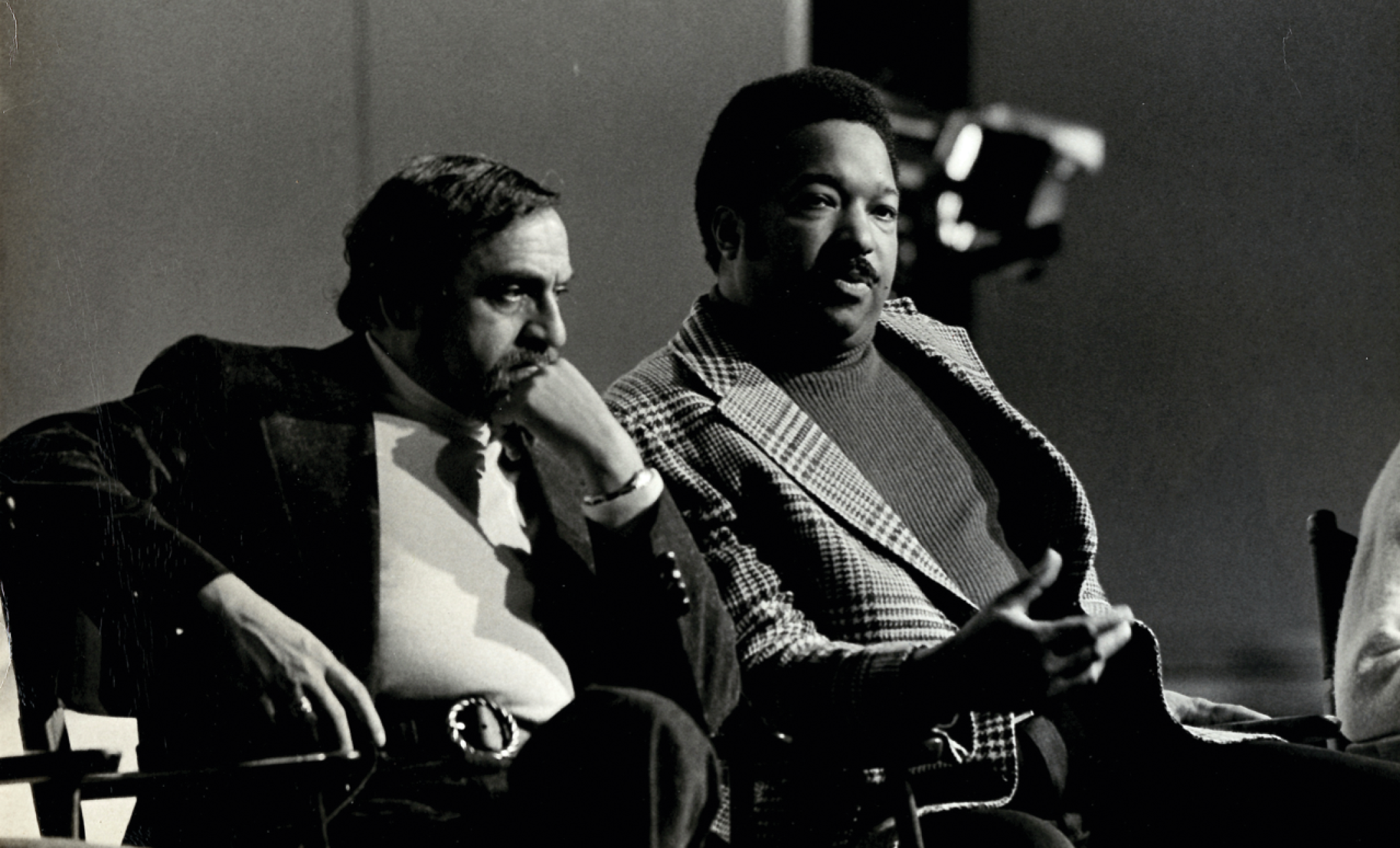
Blackwell with director Stanley Kubrick. His family believes it was taken during the filming of the television show Camera Three in the early 1970s when Blackwell was WCAU TV director of programming.
The story might seem to be Black and white; but in Nashville, perhaps slightly more so than in other American cities, there was Black, white, and upper white, or the “Bourbons” as they are referred to in Blackman’s book. The Bourbons distinguished themselves from the lower whites in at least two ways. In the matter of race, they would seldom if ever use the N-word to refer to the people whom they held in the post-bellum bondage of segregation. And in the matter of music, as Benjamin Houston writes in the introduction of his book The Nashville Way: Racial Etiquette and the Struggle for Social Justice in a Southern City, “Nashville’s best citizens sniffed haughtily at the unwashed crowds who littered outside fine churches before cramming into the pews of a hillbilly show called the Grand Ole Opry.”
Civic leaders thought of themselves as citizens of “the Athens of the South,” since there were 17 colleges and universities in the city. They also saw their city as “the Protestant Vatican” since it had so many churches and headquarters of so many religious organizations. The Grand Ole Opry and WSM, its radio home, didn’t fit this image.
“The powers that be found WSM’s programming to be embarrassing,” Blackman told me in an interview. “Think Minnie Pearl. They found these hillbillies gave Nashville a bad reputation. They sort of painted Nashville with an identity that Nashville didn’t want to embrace. Nashville didn’t own its country music identity until the 70s.”
Even if proper Nashville had wanted to promote itself as a cradle of rhythm and blues, by the 1970s, they had literally demolished that possibility when the construction of Interstate 40 destroyed the Jefferson Street corridor.
“This was our Wall Street,” Lorenzo Washington, the founder of a museum named after the district, said on the PBS program Nashville, TN: Lost and Found on Jefferson St.
“We had three HBCUs, universities, here on Jefferson Street. So we had a crowd of people from all walks of life,” he said. “We had bakeries, we had car dealerships, department stores, funeral homes, churches — just about any business that it would take for a neighborhood to survive.”
“All of those folks that went through Memphis, came through Nashville at one point in time,” Washington told me in an interview. “Then when they shut down Jefferson Street and north Nashville, the clubs left; and when the clubs left, that move caused the artists and musicians to leave Nashville. When the interstate came through, they started leaving and going to Memphis, Detroit, Chicago, Atlanta.”
However, the demise of Night Train was not directly related to the destruction of the neighborhood. Since there were no color TV studios in Nashville, no show filmed in the city would be viable for syndication with the rise of color television in the late 1960s. Also, William “Hoss” Allen, one of the white Nashville deejays who made a career out of playing Black music, got backing for The !!!! Beat, an R&B music show similar to Night Train that was initially filmed in Dallas.
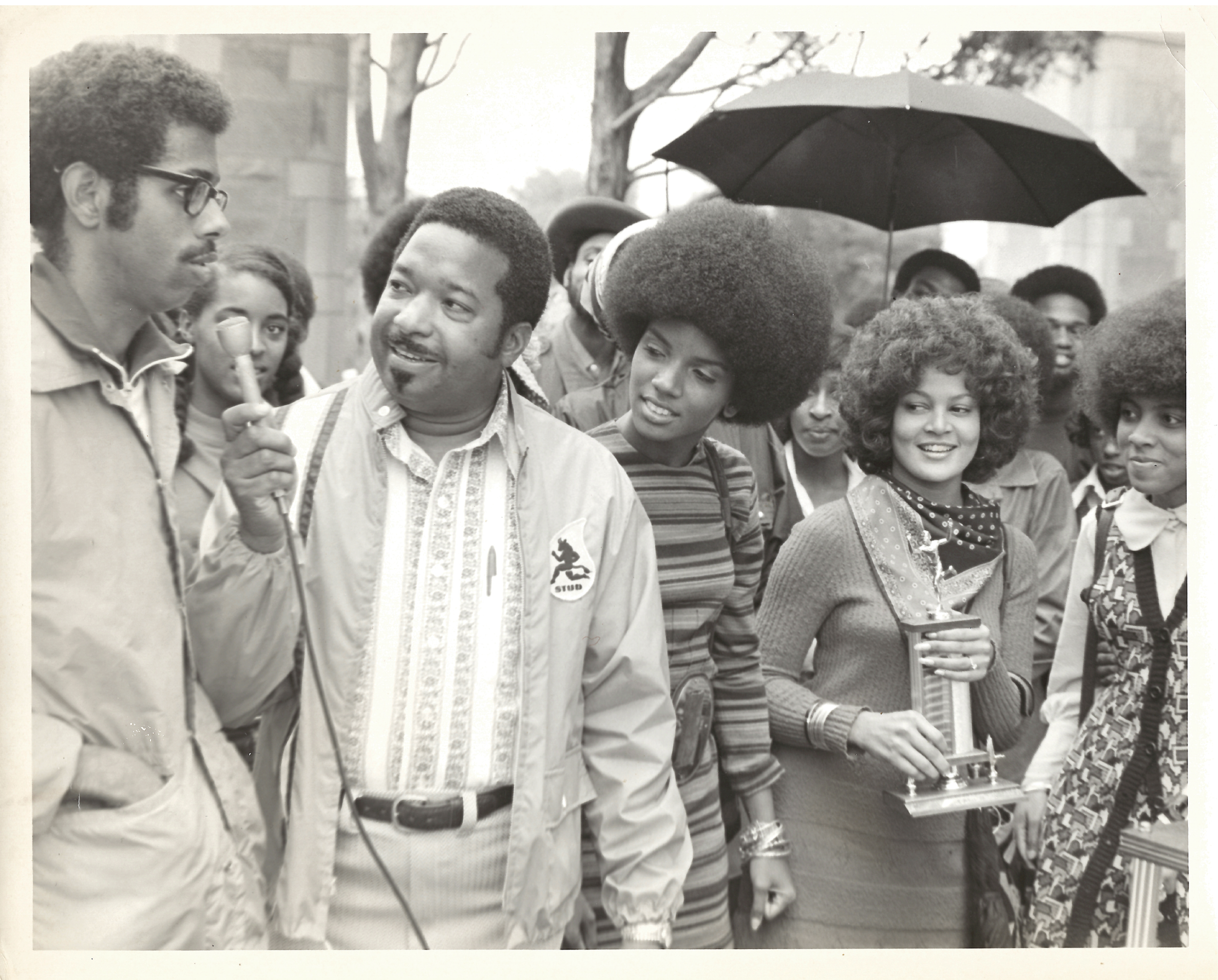
Blackwell on Tennessee State University campus. He interviewed students at TSU, Fisk, and Meharry Medical College for a variety of radio and TV events.
In the end, Noble Blackwell didn’t leave WVOL because Night Train went off the air. His family says he left the radio station because he was denied a promotion. When the station manager’s position opened up, he had been asked to train the white man who would become his supervisor. Blackwell continued to work in various capacities at CBS broadcasting and even wrote the company’s 1970s era manual on hiring minority employees.
Noble Blackwell died in September 1994. He was only 60 when he passed, but his legacy echoes in ways that are heartening to his family. They plan for episodes 3 and 4 of their docuseries to detail his journey as a broadcaster and then executive for CBS, his work in commercializing rap music, and his ownership of a country music radio station — including, famously, giving Oprah Winfrey her first broadcast job in 1971.
“I grew up knowing how special he was and how much of a contribution he made to radio and television,” Blackwell-Johnson said. “I would always come across people, no matter where I was, and if they heard my last name, Blackwell, they would say: You from Nashville. You know Noble Blackwell?
“It was just the weirdest thing. Even celebrities would tell me: Your father was such a great man.” ◊
Lolis Eric Elie is a journalist and television writer. Most recently, he co-authored "Rodney Scott's World of Barbecue: Every Day Is a Good Day: A Cookbook."
Photos Courtesy of the Blackwell Family
Featured in Issue No. 13