
Photos by Jennifer Chase
April 28, 2026
—
Originally Published in Issue No. 13 of The Bitter Southerner Magazine
I hadn’t been inside the house in nearly 15 years, but when I stepped through the back door last year, my body remembered it before my mind did. The den with its wooden paneling and low ceiling. The tiny kitchen, still marked by the same home-phone connection. The garage with its slanted floor, once half-converted into a playroom. The light still fell the same way across the living room. The big bay window was still there — all of it intact, even as the neighborhood around it was being renamed, reimagined, and sold off in pieces. Haynes Meade Circle, with fewer than 20 homes, hasn’t changed. It’s a block holding fast, its residents fighting off buyers who want to replace what’s there with tall-and-skinny houses, just a few blocks from where Oracle now promises parks, offices, and a future that will be created by pushing people out.
My grandfather bought the house in 1961 as a wedding gift for my mother. It sat in a historically Black neighborhood in North Nashville, developed by families who were building something solid in a city that rarely made room for them. The purchase wasn’t sentimental. It was practical, protective; an investment in stability, in a future where his daughter would have something that could not be easily taken.
This was the house I grew up in. It was where my mother began her marriage, where family gathered, where my idea of home was built room by room. Long before it was described as an “East Bank opportunity” or folded into someone else’s vision of progress, it was simply ours.
When my sister and I decided to renovate the house, I opened it up. Walls came down. The floor plan loosened. I wanted more light, more air, more room to move. One of the walls I removed was the one with a mirror, held up by small shell-like knobs. The mirror came down quietly. At the time, it felt like design.
Around then, my sister and I began to understand how much my mother was slipping. She had been living on her own in a condo in West Nashville, fiercely independent, the way she had always been. Because neither of us lived with her, we missed the slow accumulation of overlooked details, repeated stories, and forgotten steps. Dementia announces itself politely at first.
We learned too late about the long-term care insurance policy she had been paying into since the early 1990s. That was my mother — always planning ahead, always practical. But by the time we found the paperwork, she was two days past the cancellation deadline. And when we finally understood the terms, we realized it had never really been for her anyway. It wouldn’t have kicked in until she was far gone — until someone else had to feed her, bathe her, put her to bed.
So the house became her insurance policy.
Not metaphorically. Literally.
There’s no trace now of the spot where the mirror hung, no outline, no ghost of the shell-like knobs that once held it in place. I didn’t think about that at first. But absence has a way of introducing itself slowly. I miss the mirror not because of how it looked, but because of what it once reflected — my sister and me, our friends crowded into the living room, playing records and 8-tracks, bodies learning rhythm, joy bouncing back at us, proof that we were there, that we took up space.
Now the room is open, expansive, efficient. The light moves freely. The house is better for it. And still, something is gone. The mirror once asked nothing of us except to be seen. The house now asks for something else entirely.
The house had already been a rental for years, but it was never meant to carry this much. It needed an overhaul if it was going to command the kind of rent my mother’s care now required. That meant more than cosmetic updates. It meant inspections, permits, patience. It meant spending money in order to make money, with the knowledge that this house — once built to hold a family — was now being asked to hold time.
Some things were lost. The red brick that once signaled durability, modesty, anonymity — replaced by white paint and dark shutters that signal seriousness and value. The paneling came down. The house no longer feels small the way it once did, no longer teaches closeness or economy of movement. By contemporary standards, the openness makes sense. Still, something about the house’s original modesty has been edited out.
Some things remain. A few of our old neighbors are still there — the ones who remember me, my sister, my mother — and wave when they see us. The cement walkway to the mailbox is the same, worn in by decades of coming and going. These are not features anyone would list, but they are the parts that refuse to disappear. The steps leading up to the back door are gone, replaced by a deck meant to expand the house outward. The bay window is still there. The light still enters the same way, as if the house is smiling.
This house sits in Tennessee, but it could be anywhere. A family home converted into an insurance policy. A city promising innovation while relying on the quiet liquidation of memory. A woman who planned for the future meeting systems designed to fail her just late enough. What remains steady is not the market or the policy language, but the insistence on care — on holding what was built long enough to make it useful again. The house no longer reflects us dancing in a mirror, but it still does its work. It holds. It provides. And in a state, and a country, that too often mistakes progress for displacement, that feels like a kind of resistance worth keeping.
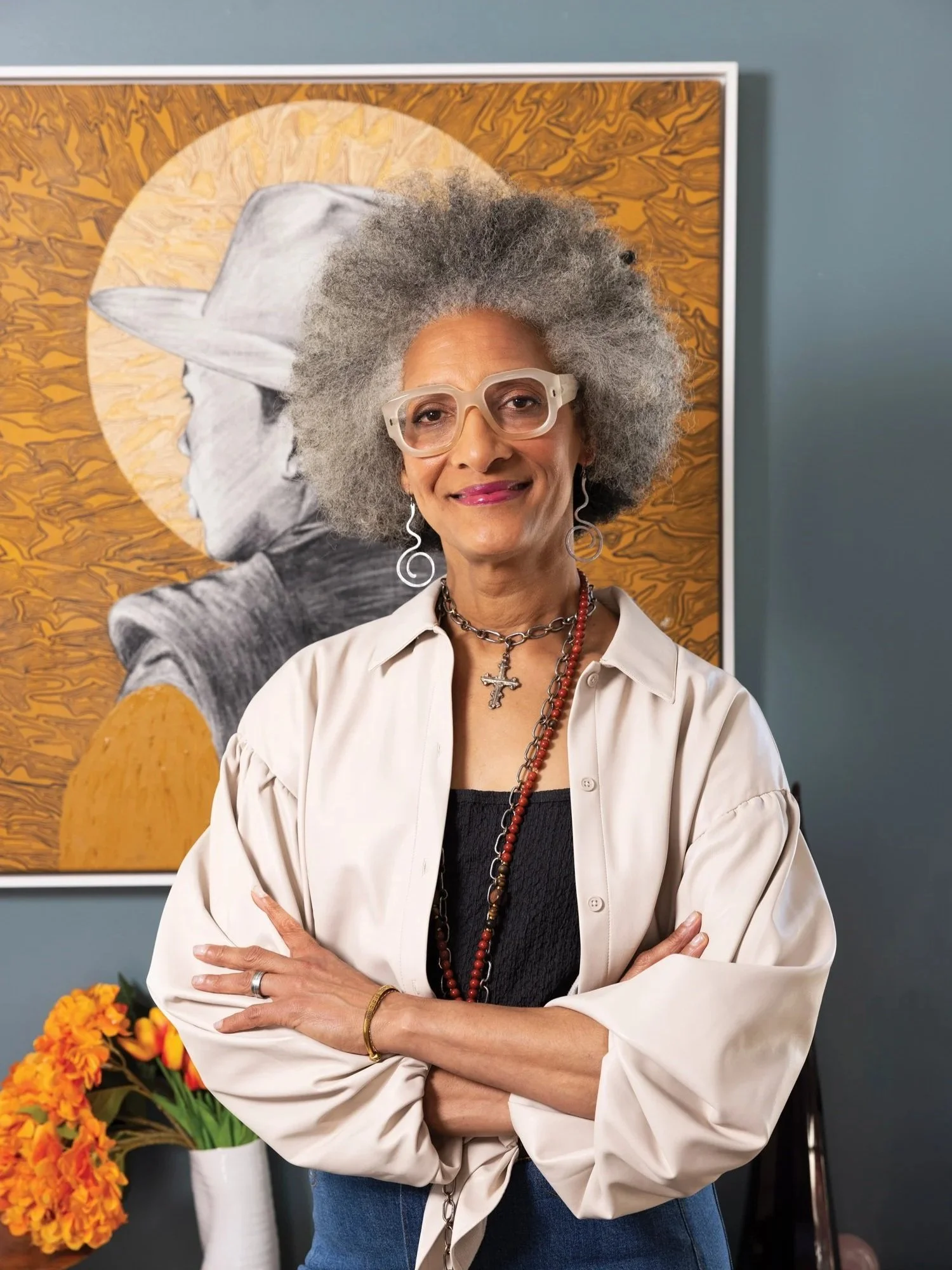
— Carla Hall
As a competitor on Bravo’s Top Chef and Top Chef: All Stars, Carla Hall won over audiences by sharing her philosophy of always cooking with love. A trained chef, Hall co-hosted ABC’s Emmy Award–winning lifestyle series The Chew for seven years. This year she will perform her one woman play Carla Hall — Please Underestimate Me at the Olney Theater in Maryland. The author of several cookbooks, including Carla Hall’s Soul Food: Everyday and Celebration, she has also published children’s books including Carla and the Christmas Cornbread and Carla and the Tin Can Cake, a series loosely based on her childhood growing up in Nashville. Hall has been honored by Les Dames d’Escoffier as a Grande Dame, a lifetime achievement award recognizing extraordinary contributions to the fields of food, beverage, and hospitality.
Jennifer Chase is a food, travel and lifestyle photographer and creative director based out of Washington, D.C. Jennifer first learned to cook with one pot, a spoon, an open fire, and a village full of teachers, while a Peace Corps volunteer in West Africa. Her travels and her curiosity about culture, ritual and the ways we connect around food have informed her food photography and food styling.