
Street photographer Ray Di Pietro focuses his work sharply on his adopted hometown of Nashville. With little fanfare, he has attracted tens of thousands of devotees His images are artfully composed, spontaneous, honest, and, well, kind.
Photos by Ray Di Pietro | Words by Libby Callaway
May 27, 2026
—
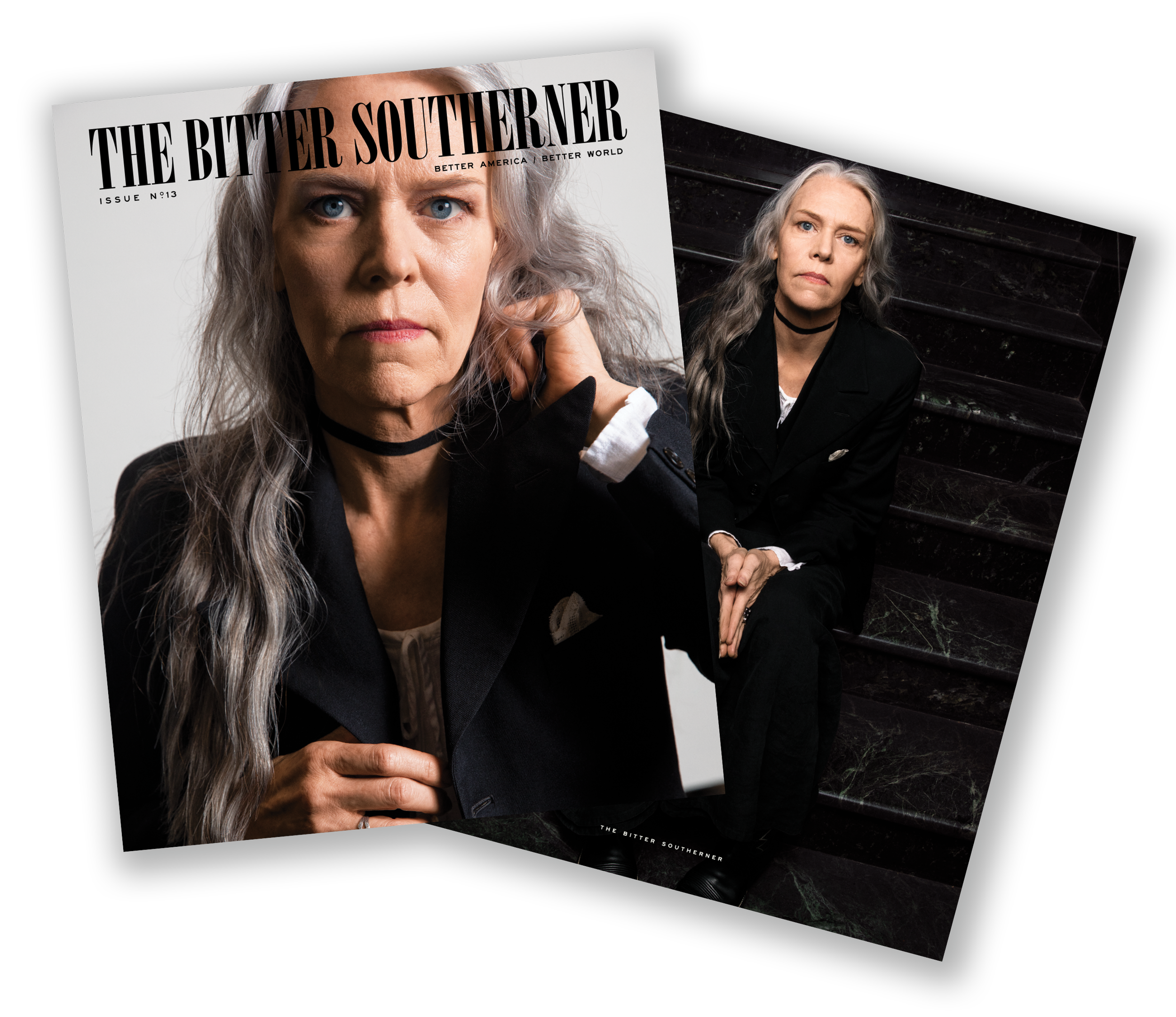
Originally Published in Issue No. 13 of The Bitter Southerner Magazine
Photographer Ray Di Pietro always wears imogene + willie socks — white with red hearts printed on them — whenever he’s out taking pictures on the streets of Nashville. “I buy them by the dozen, because I feel I just need some love on me, right?” he explains.
That love flows through his images, too: an elderly man feeding pigeons, drag queens cheering in a courtroom, Bernie Sanders working a crowd. There’s even a wary acknowledgement of his more fraught subjects — a state trooper with a protective hand on the back of his elderly detainee, a grizzled Proud Boy astonished by coming face to face with a young man in a keffiyeh.
His poignant and benevolent compositions — all precisely framed — have landed the self-taught photographer in top publications from far-reaching titles like the Wall Street Journal and Financial Times to local outlets including the Tennessean and Nashville Scene. His work has appeared in shows, including at Nashville’s Frist Art Museum and the National Civil Rights Center. And he supplied the still images for a 2024 music video by the Tennessee Freedom Singers, a supergroup of Nashville musicians including Allison Russell, Brittany Howard, and Fancy Hagood. Their anthem “Tennessee Rise” supported various social justice causes and a U.S. Senate run by state representative Gloria Johnson, who was ultimately defeated by incumbent Marsha Blackburn.
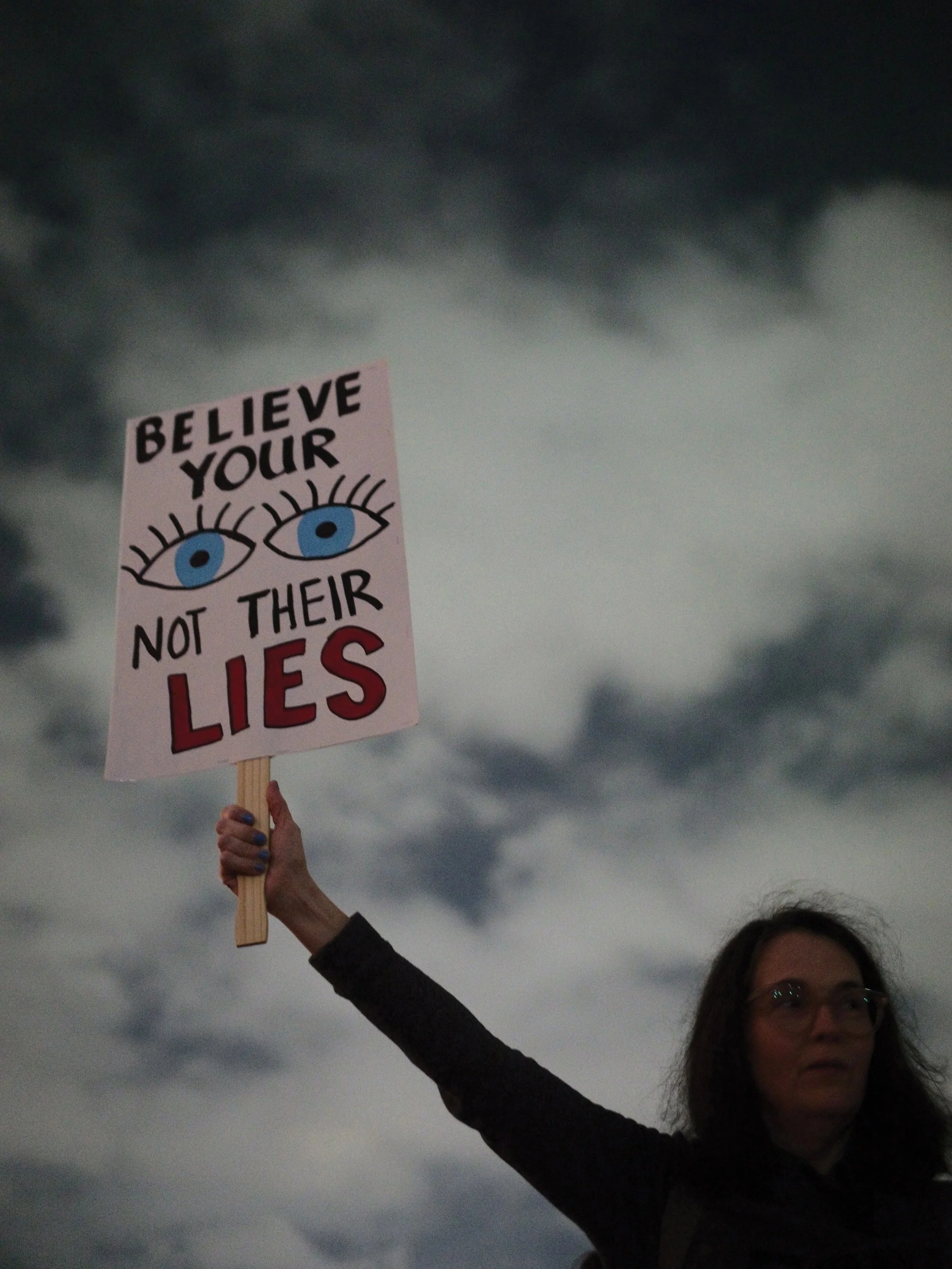
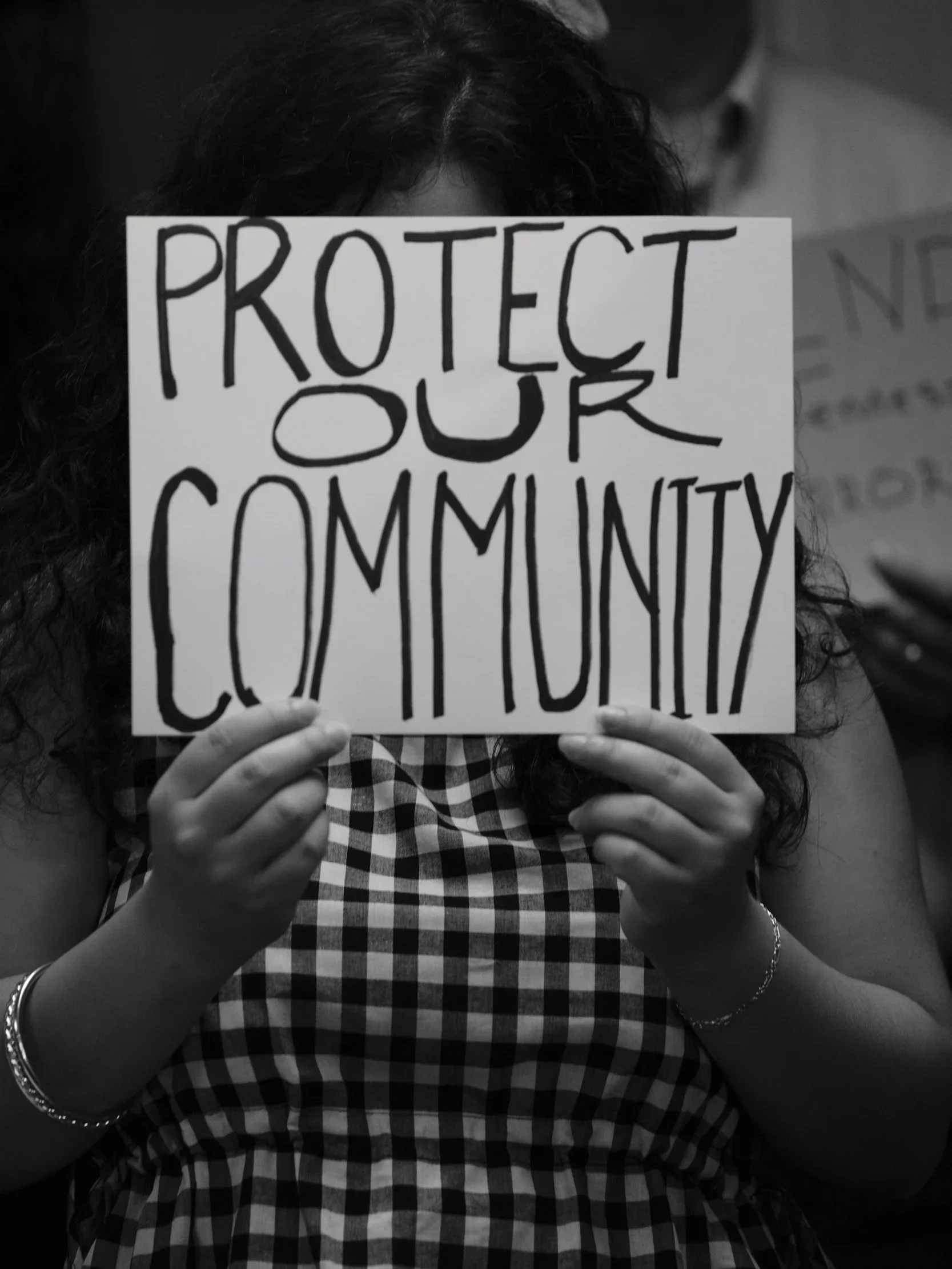
Julie Franklin holds a sign that reads, “Believe Your Eyes Not Their Lies” during a vigil for Renee Good held at Centennial Park in Nashville. 1/8/26. 6:23 a.m. A woman holds a sign that reads “Protect Our Community” at Tennessee State Representative Justin Jones’ (D-Nashville) press conference where he announced he was filing HB 1442, known as the Stop American Gestapo Act (SAGA), that would make it an offense for law enforcement officers, local, state, or federal law enforcement agency “to wear a mask, face covering, or personal disguise while interacting with the public in the performance of the law enforcement officer’s official duties.” 7/2/25. 11:05 a.m.
Despite his success, Di Pietro isn’t focused on building a brand. His website consists of a single landing page, with his personal email listed as the contact. He retains rights to all images and does not sell prints. “It just doesn’t bring me any joy,” he says. “But what does bring me joy is giving somebody a print of a photograph I took.” Lucky recipients include Mayor Freddie O’Connell, who displays three inauguration day images outside his office at Nashville’s City Hall.
Di Pietro’s photography career began only nine years ago when, at the age of 47 and almost 20 years into his work as a record promoter in New York and then Nashville (he was an early employee of Lost Highway Records, the job that first brought him to town), he decided to make a major life change.
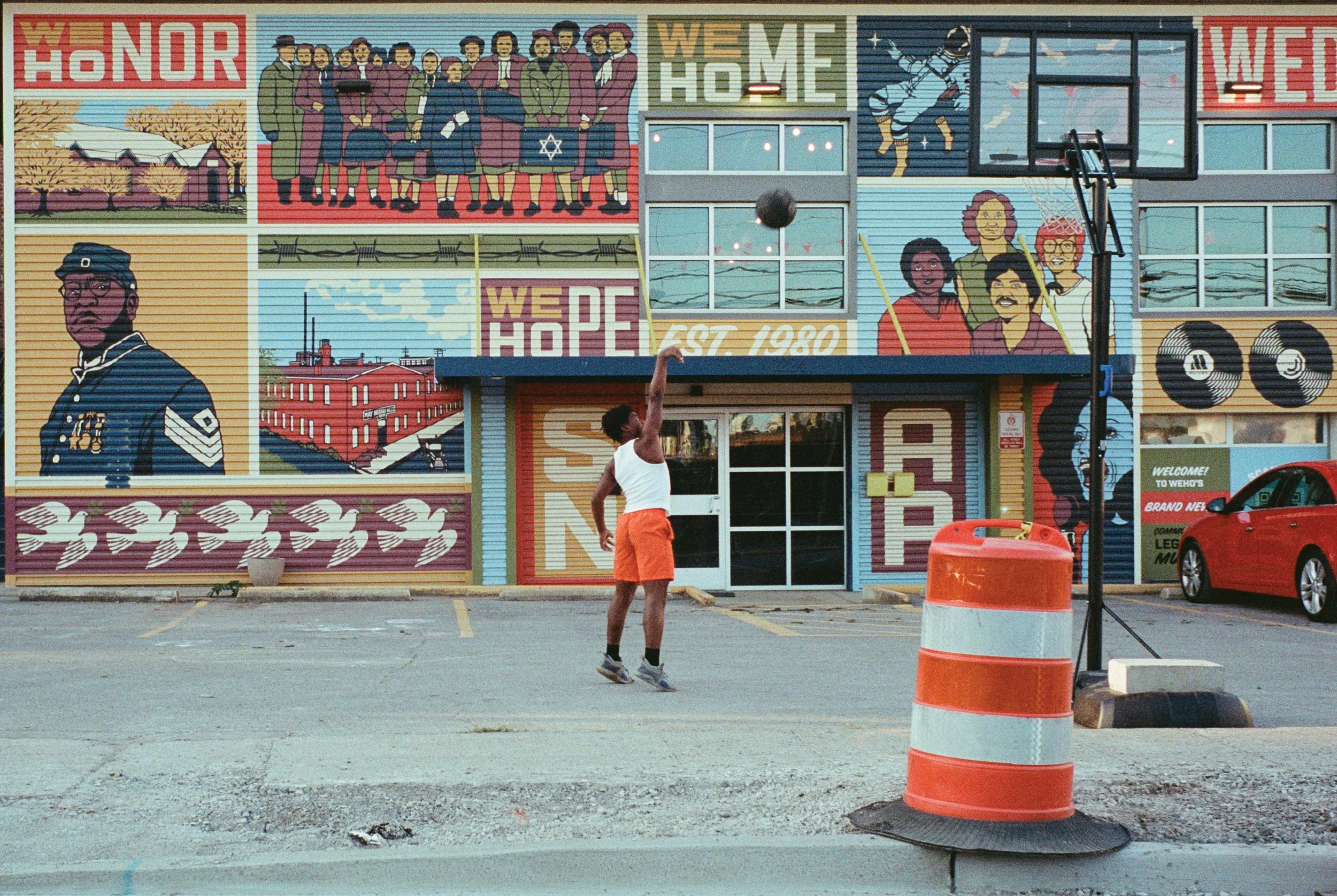
Playing hoops outside of Yogasoul Bhakti Center in the Wedgewood-Houston neighborhood. Editor’s note: He made the shot. 10/7/24. 7:33 a.m.
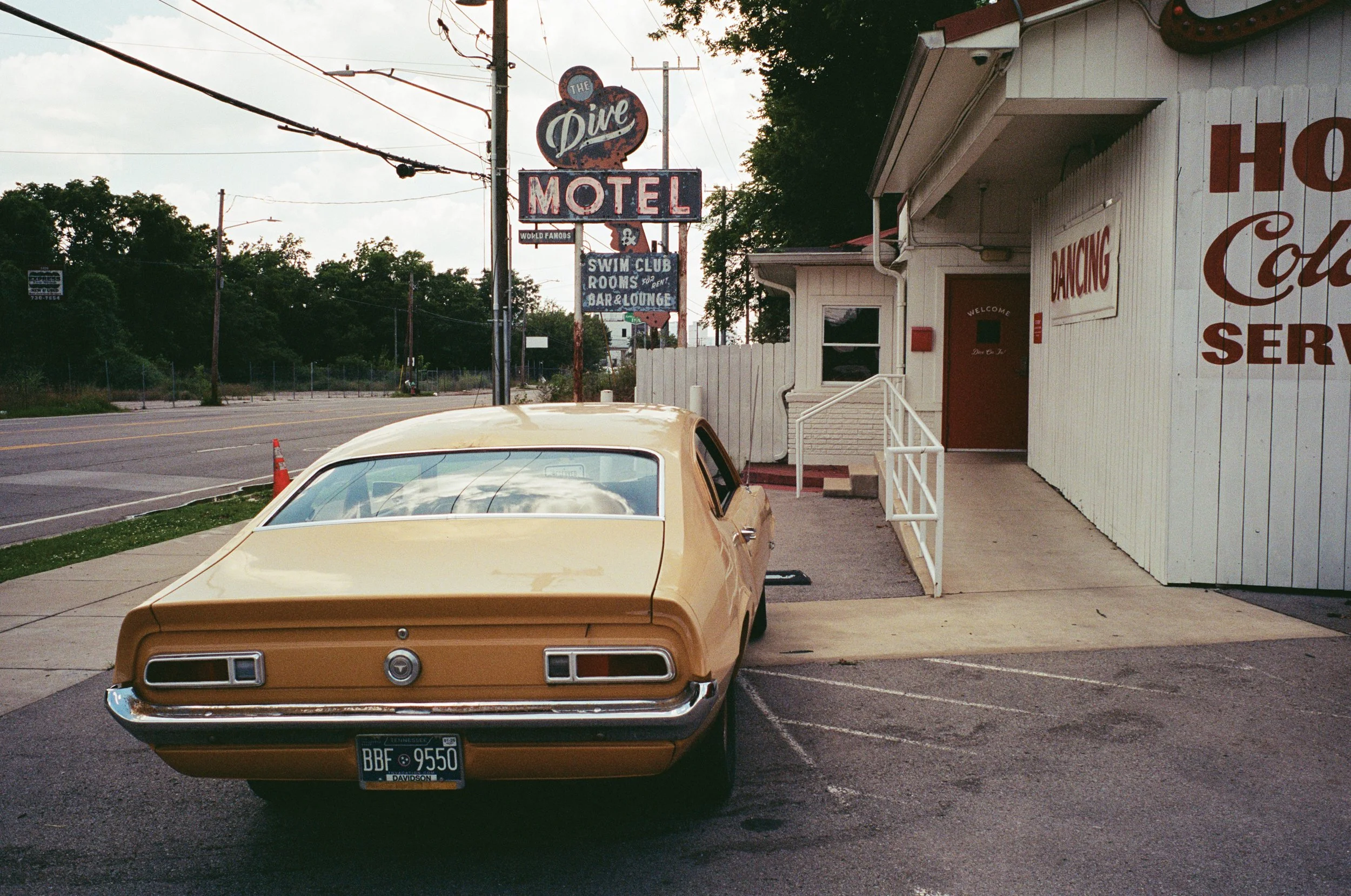
Classic mustard Ford Maverick at the Dive Motel. 7/2/25. 1:30 p.m.
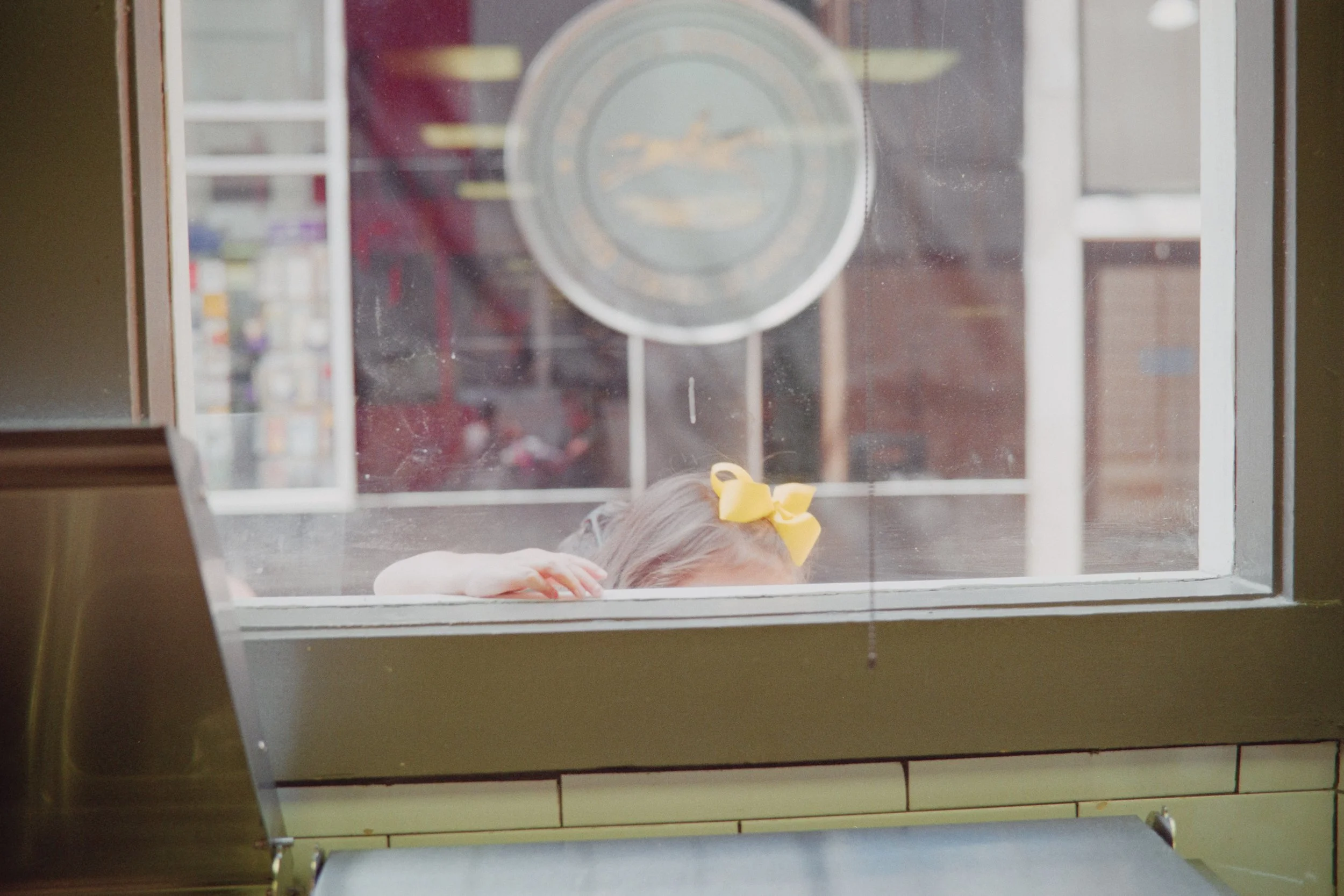
Little girl with a yellow bow in the window of Manny’s House of Pizza in the Arcade. 8/12/22. 2:41 p.m.
Di Pietro had been taking photos since he was a teenager growing up in Fishkill, New York. When he was 15, his father, a part-time musician who did a stint playing bass in French pop superstar Johnny Hallyday’s band in the early ’60s, gave him his first camera — a Minolta SRT 101 with a 50 mm f/1.4 lens. Still, the decision to pursue photography full time was unexpected. He says: “I just woke up one day and said, I’m going to document my time here.”
When he left Lost Highway in January 2010, Di Pietro thought about returning home to New York. But by that time, “Nashville had become much more interesting and was my home. I remember when City House opened, thinking to myself, OK, this is a moment,” he says, referencing the city’s James Beard Award-winning restaurant, helmed by chef Tandy Wilson.
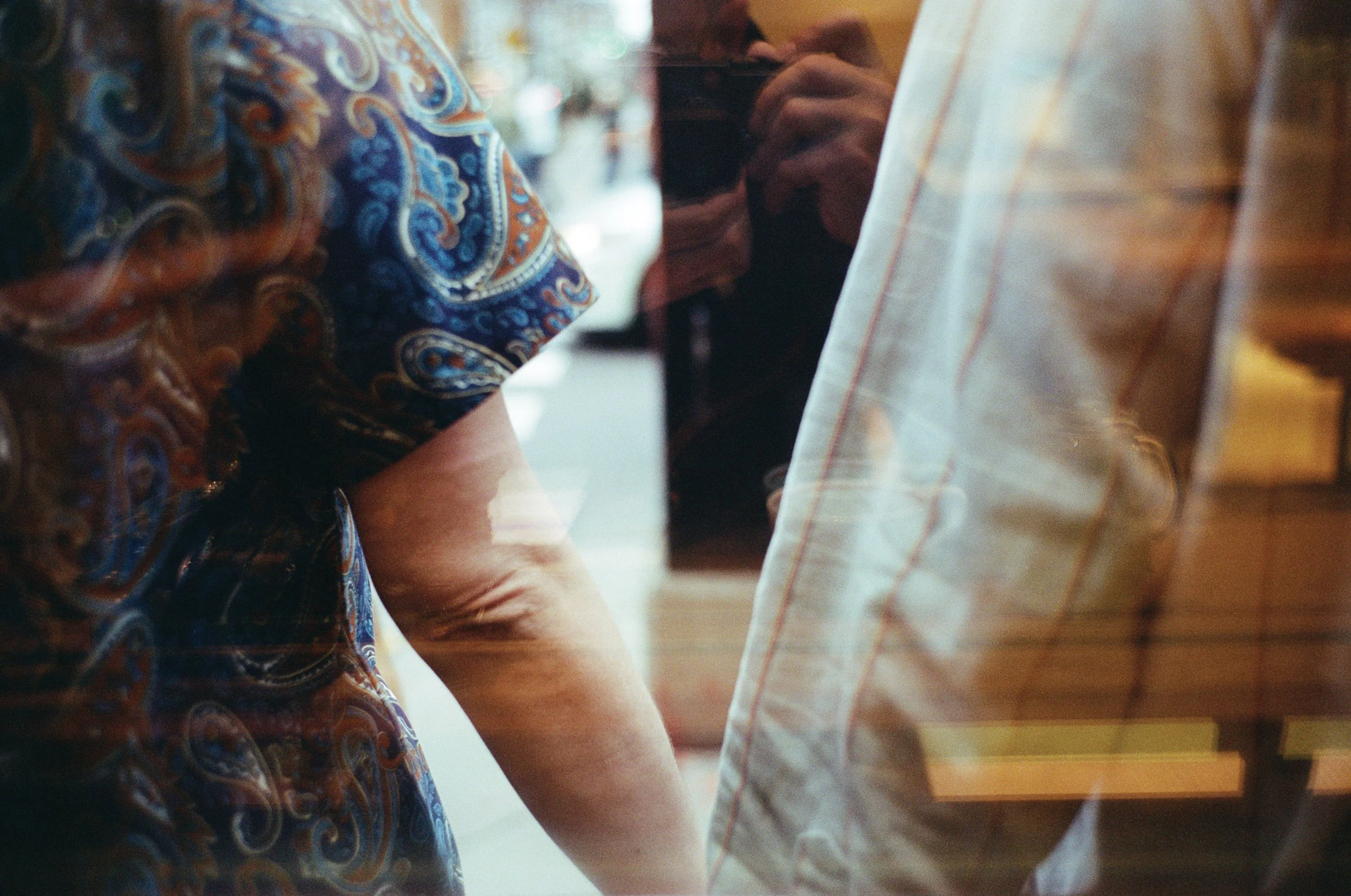
As seen from Drug Store Coffee. 3/9/24. 5:24 p.m.
Originally captured on 35 mm film (he now uses digital cameras, as well), Di Pietro’s personal work lives on Instagram, where images appear with deeply detailed captions, including the name and style of the camera he used (he’s partial to Leicas; he has 11). Di Pietro doesn’t post with any specified regularity, just whenever something happens that he finds interesting “or when I get a roll of 35 mm film back.”
“They’re dreadfully mundane photos for the most part,” he says of his Instagram archive. “But if you put together 10,000 photos, you’ll release those mundane moments and you can see what it was like to live here.”
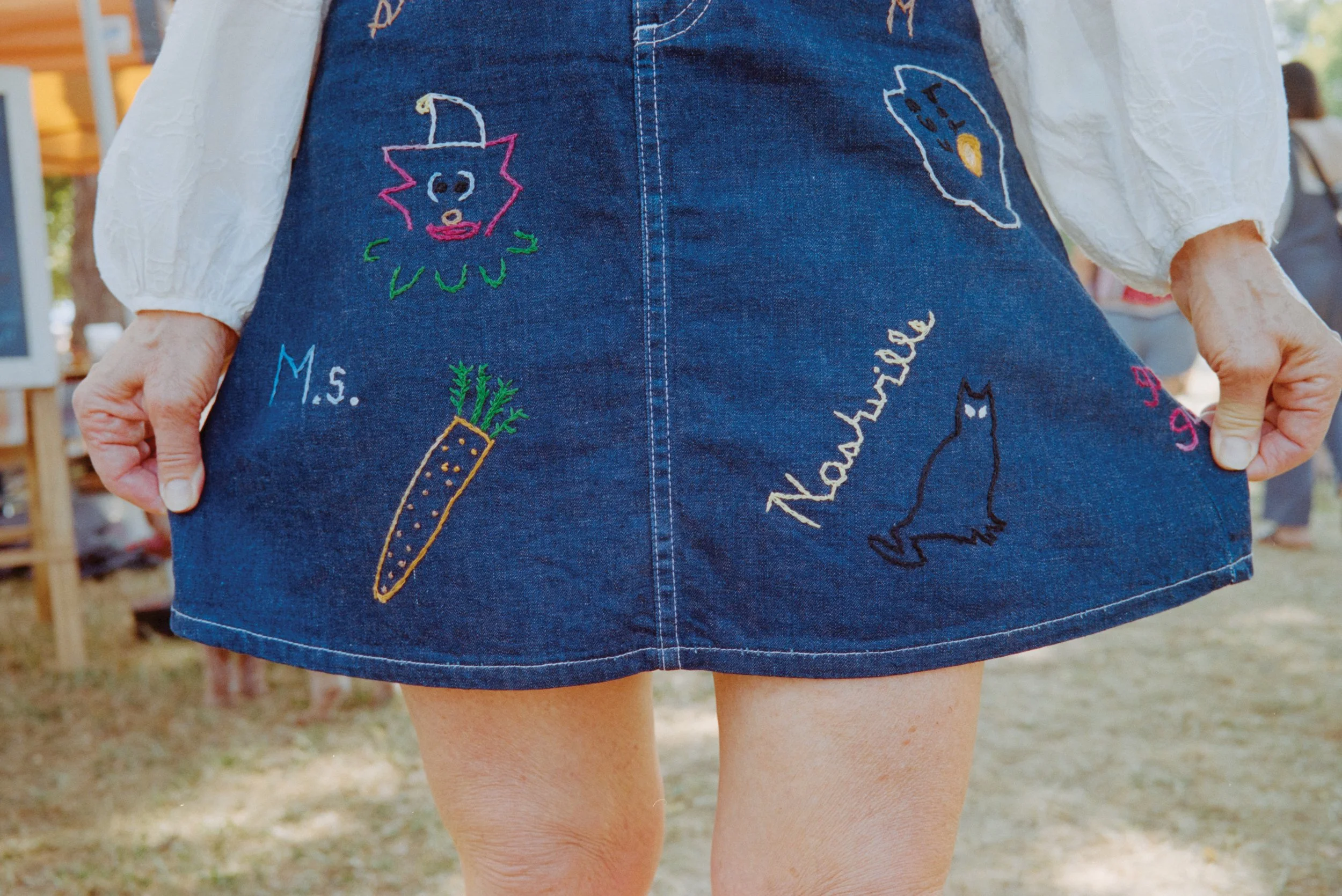
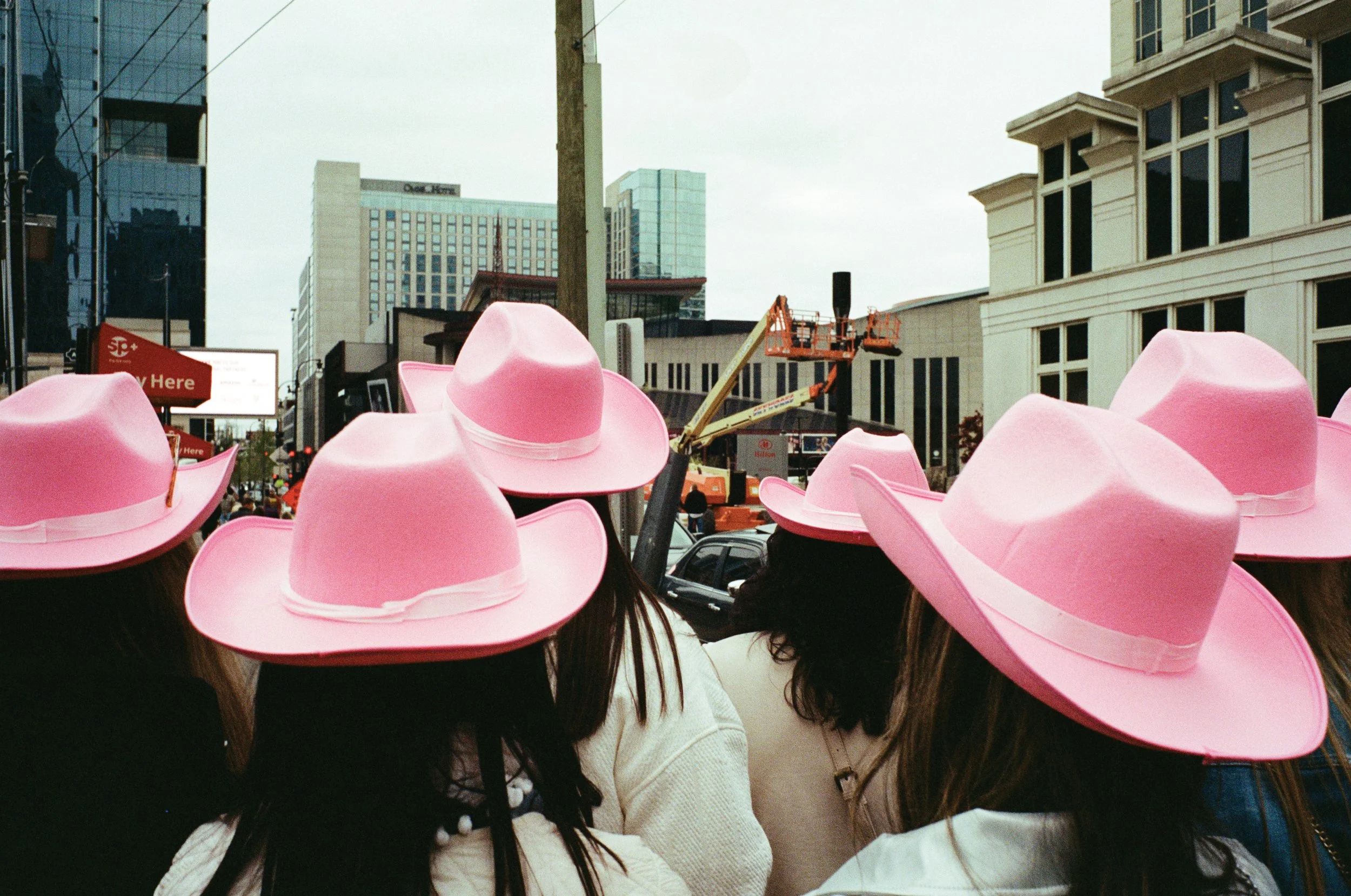
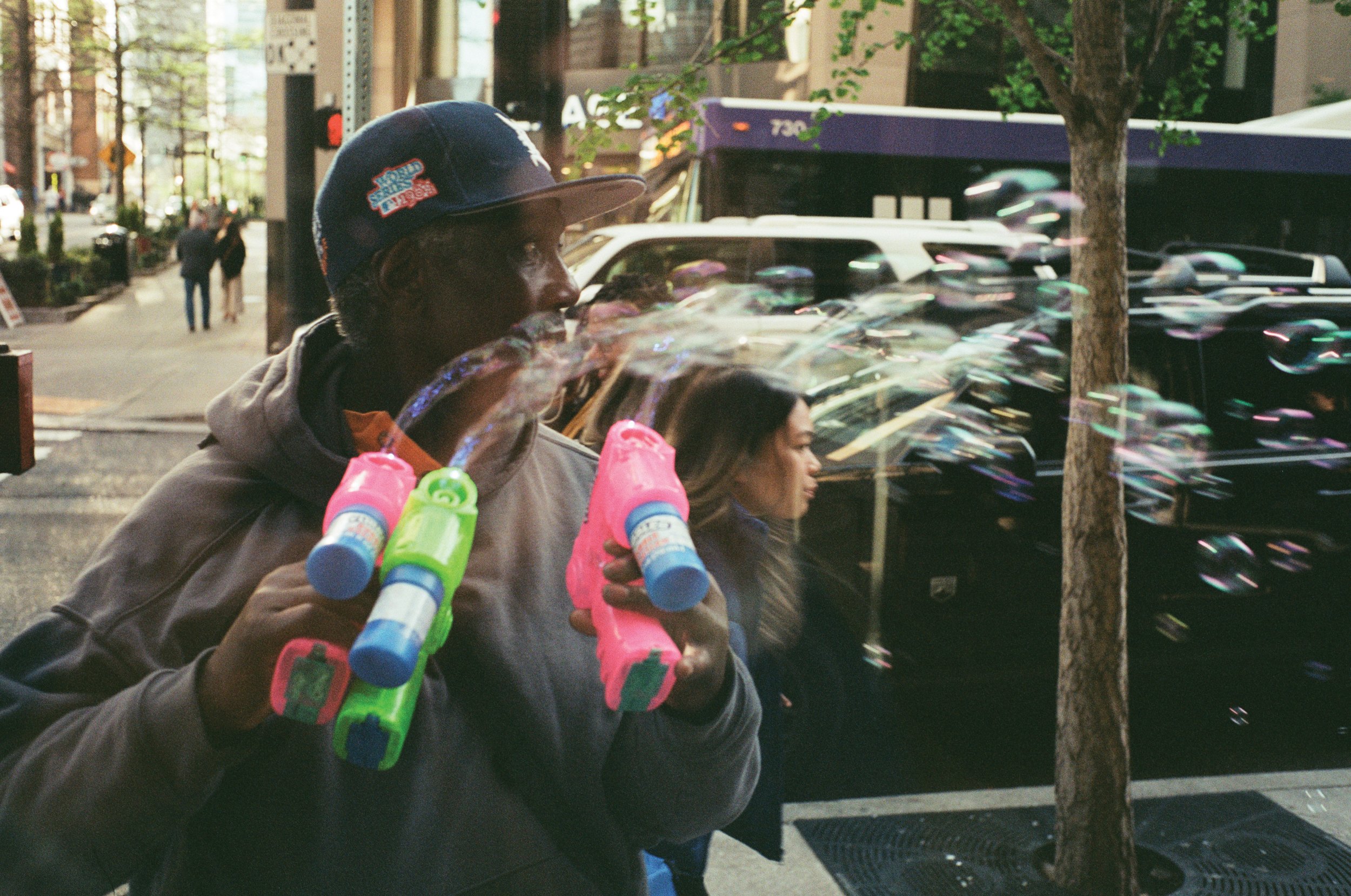
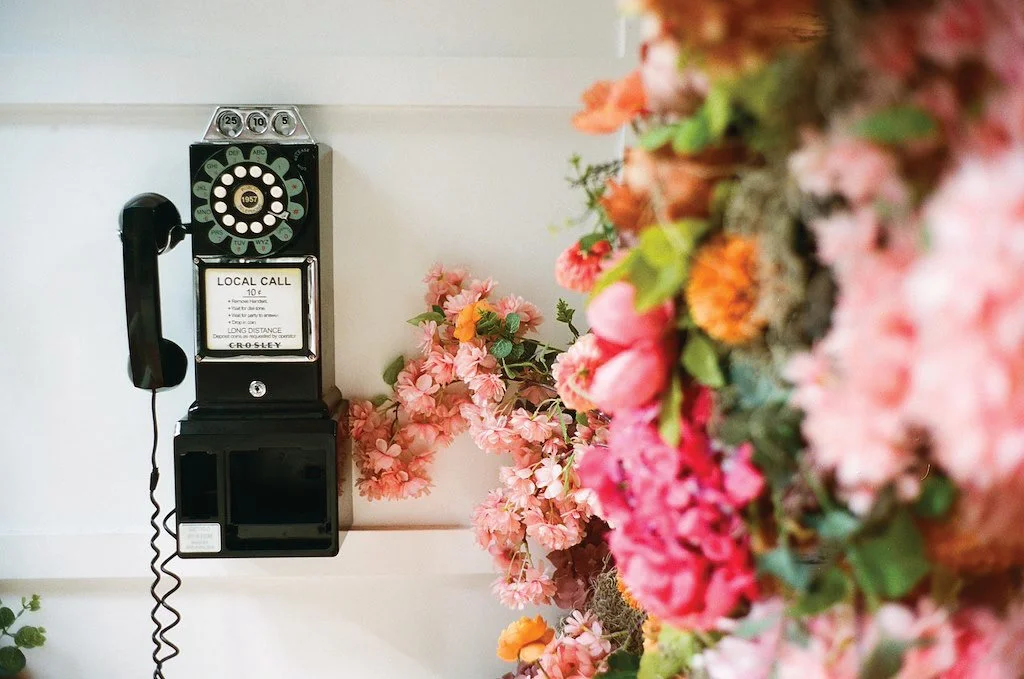
“I made it in the ’70s when I was in college at Tulane. It’s what I did when I was in classes. I’d do needlepoint just to stay busy. I’m fourth generation Nashville.” Marlene Eskind Moses, captured on 35 mm film at the Richland Park Farmers Market. 7/2/22. 10:06 a.m. A sea of pink hats on 4th Avenue South is off to Lower Broadway. 4/5/24. 5:30 p.m. Bubble man on 4th Avenue North. 4/9/25. 5:37 p.m. Flower bed in morning light on Anne Dallas Dudley Blvd. 5/21/25. 9:03 a.m.
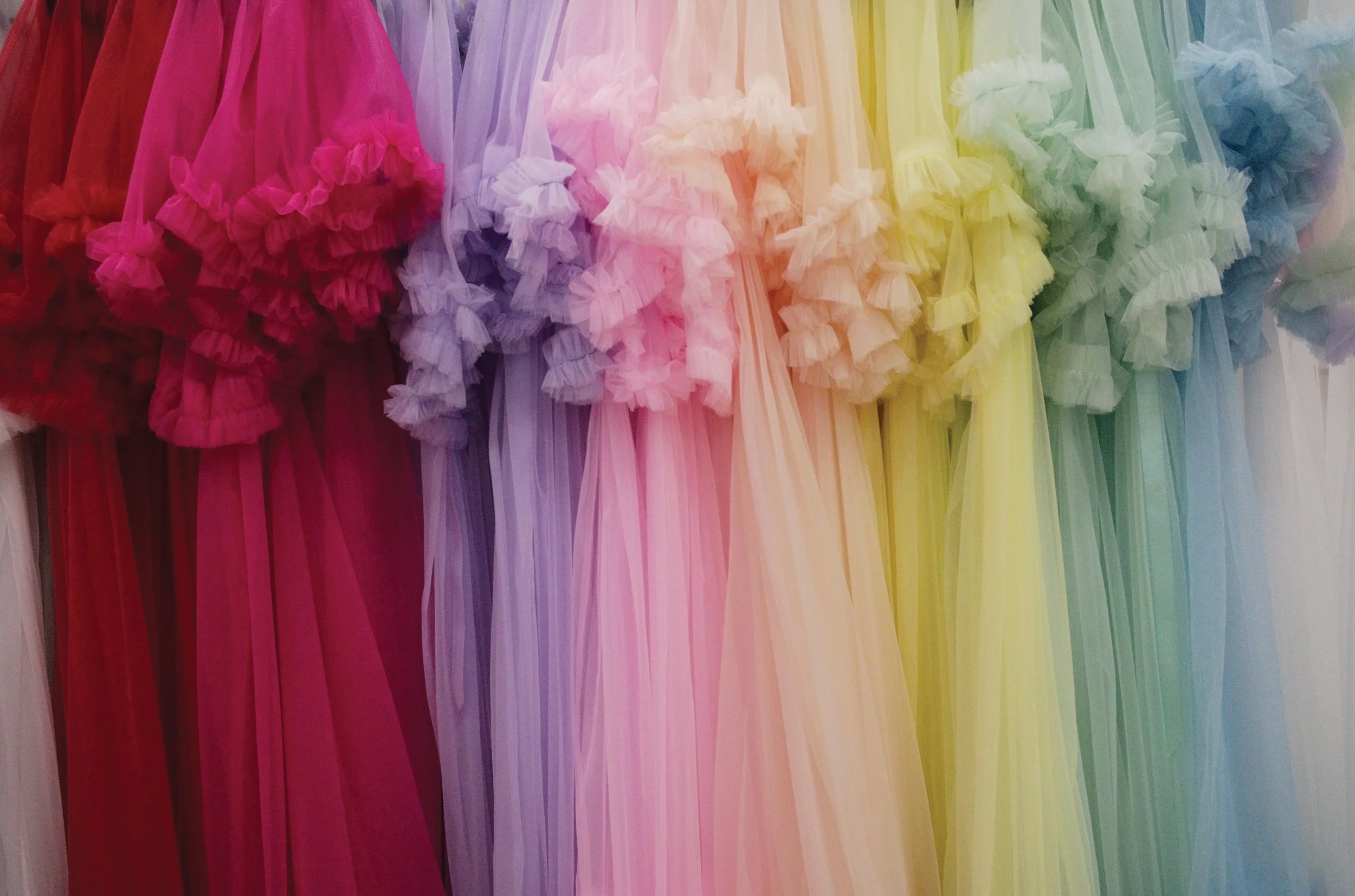
Dottie’s Delights booth during the 2022 Porter Flea Holiday Market at the Nashville Fairgrounds. 12/10/22. 9:16 a.m.
Nashville is the most essential throughline in Di Pietro’s photography. He’s savvy enough to understand that the world is a lot bigger than Middle Tennessee, and he’s documented trips to London and Paris. But at this point in his life, he’s not interested in casting a wider net; he wants to dig deeper where he is. Never married and with no children, he is free to chart his own course. “It’s like golf,” he says. “You can travel all 18 holes, or you can stay at one hole and see everything. This is my hole. Everything comes through here.”
This is a divisive time in Nashville’s history. Over the last decade, as Nashville’s population has surged, many neighborhoods have become unrecognizable to anyone watching closely. Like many larger cities in the South, there’s more new construction, worse traffic, and less affordable housing. But Nashville also has its own unique challenges.
A city once celebrated as a bastion of creative authenticity and natural hospitality has become a cartoon version of itself, overrun by gaudy theme bars from country stars like Kid Rock and Jelly Roll and endless parades of bachelorettes in cowboy hats and feathered boas. One recent survey called Nashville the fourth biggest tourist trap in the world, just behind Las Vegas. While the schlock is paying dividends to its creators — in recent years, tourism traffic has climbed to more than 16.8 million visitors, who come ready to pay for their high times on Lower Broadway — locals are feeling left out. The new $2.1 billion NFL stadium might nab Nashville a Super Bowl, but what good is that when people can’t afford to rent an apartment and city infrastructure is flawed, as evidenced by weeks-long power outages during a deadly storm at the start of this year?
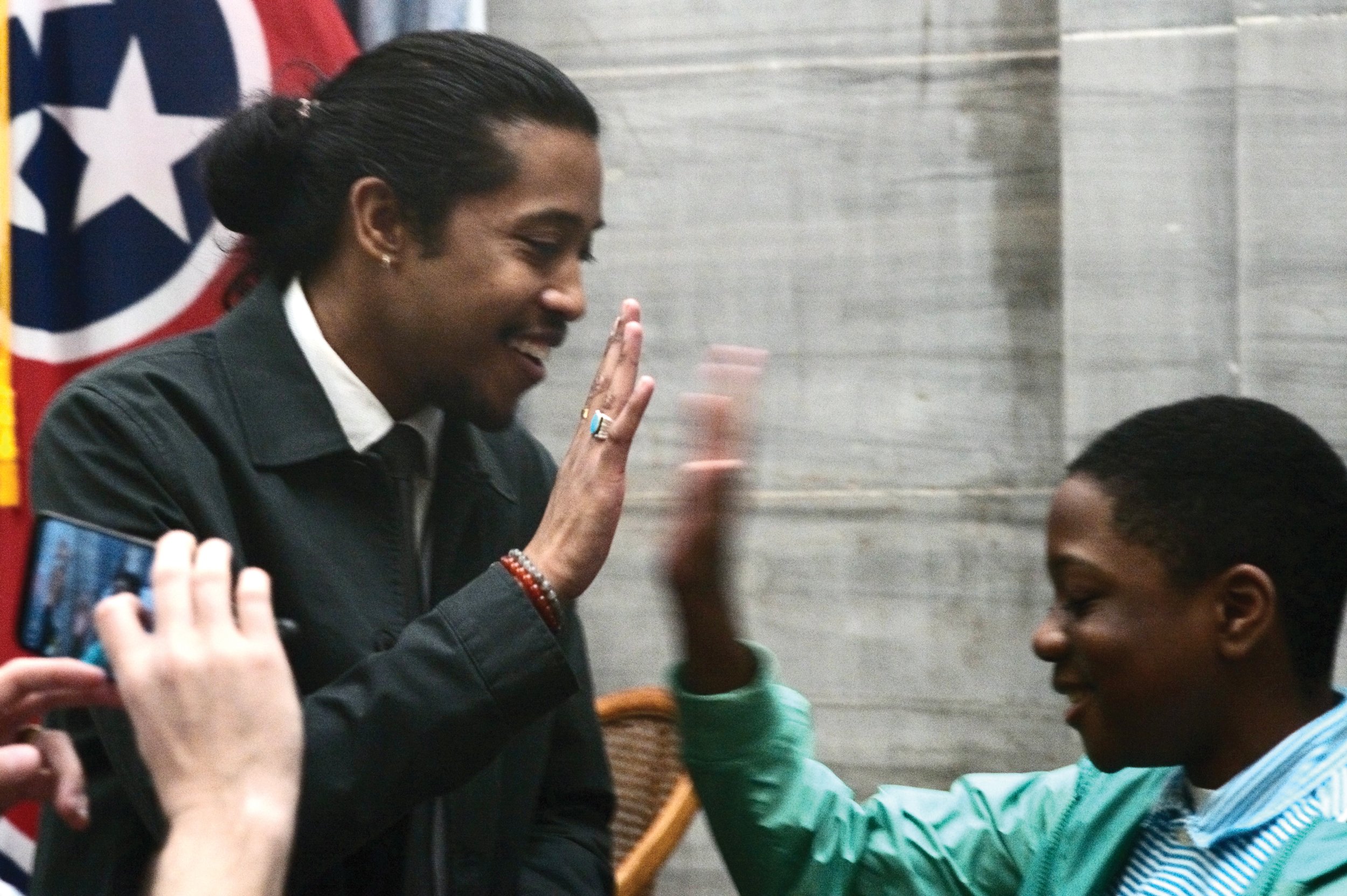
State Representative Justin Jones (D-Nashville) gives a high five to Caleb, a 12-year-old MLK Magnet School student, during Jones’ inaugural Literary Day on the Hill at the Tennessee State Capitol. 3/4/25. 11:45 a.m.
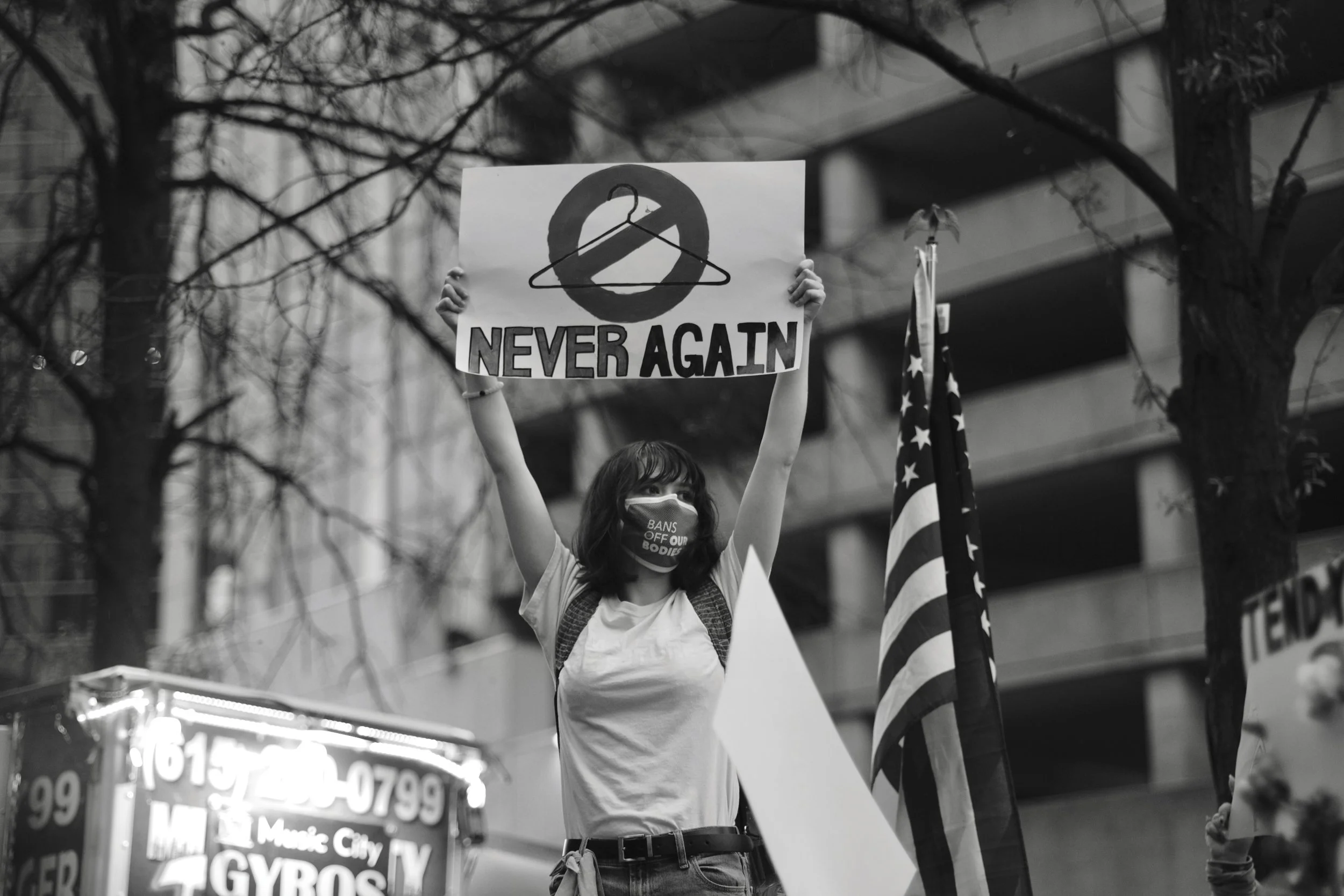
Lilly Leann holds a sign that reads “Never Again” during the Nashville Women’s March to the Tennessee State Capitol. Nashville joined Washington D.C. and cities and towns across the nation and marched to fight against the right-wing agenda of reproductive control. 10/2/21. 5:47 p.m.
While Di Pietro is not a traditional member of the press, he does belong to the National Press Photographers Association and wears an NPPA badge. But he’s not gunning for a job with a paper or wire service. As Di Pietro sees it, he’s just a guy with a camera, taking pictures in a community he loves, in times of peace and in times of protest. And there have been a lot of these, especially over the last five years since the Black Lives Matter movement radicalized a new generation of outspoken young activists and reignited the spirits of old hands. Politicized reporting of marches and other contentious local events has driven thousands of viewers searching for trustworthy news coverage to Di Pietro’s Instagram account.
Di Pietro has an ongoing friendship with Representative Johnson, who retained her house seat and who, with Democratic colleagues Justin Jones and Justin Pearson, became nationally known as the Tennessee Three in 2023. The trio’s doggedness in seeking progressive change and relentless but polite aggression toward far-right legislation surely make for good photos. And Di Pietro appreciates their advocacy, particularly for “common sense gun safety legislation.” But he sees himself as a documentarian, not an activist.
Di Pietro considers himself a historian first, photojournalist second. Working in the style of classic street photographers like Vivian Maier, Elliot Erwitt, and Robert Frank, whose work captured quotidian moments in the mid-20th century, he documents the daily lives of Nashvillians, cutting across lines of race, gender, sexual orientation, religion, and political affiliation. Di Pietro tries to remain neutral (the self-proclaimed “New York Democrat” considers Tennessee Republican state representative Jeremy Faison a friend, ever since taking a photo of Faison’s son playing “Careless Whisper” particularly beautifully on the piano in the Hermitage Hotel lobby). He just captures what he sees.
More often than not, he photographs regular people doing good work (see: his coverage of free food lines in winter storm Fern’s aftermath) or having fun (see: girls goofing around in hot dog costumes outside his favorite downtown coffee shop). Di Pietro also digs an animal moment, as evidenced by the number of times his English bull terrier Edward makes his Instagram grid. Celebrities pop up in the feed from time to time, too, but only with their consent. A paparazzo Di Pietro is not. (His ongoing photo friendship with performer Michael Shannon, whom he met at said coffee shop, is particularly fun to follow.)
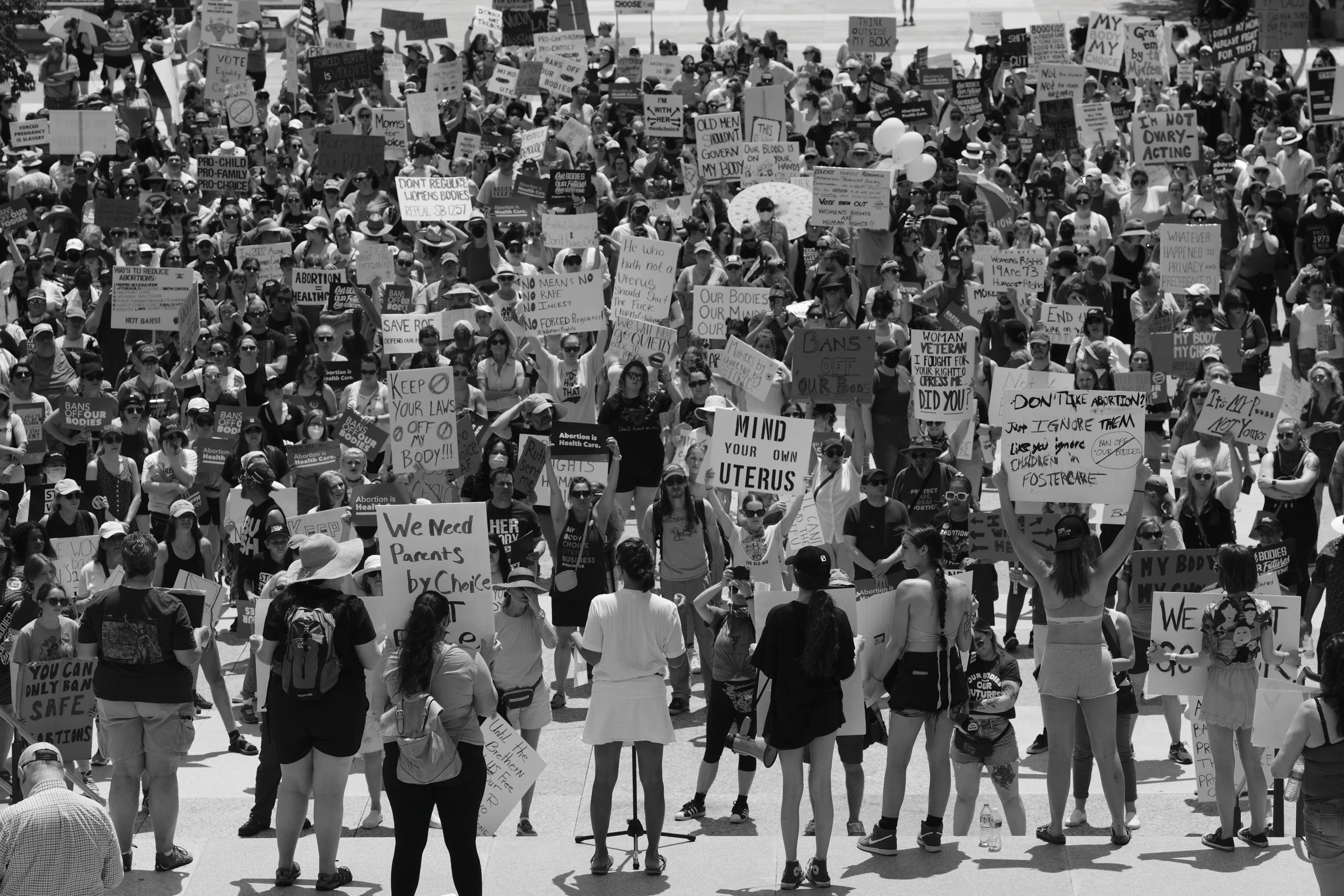
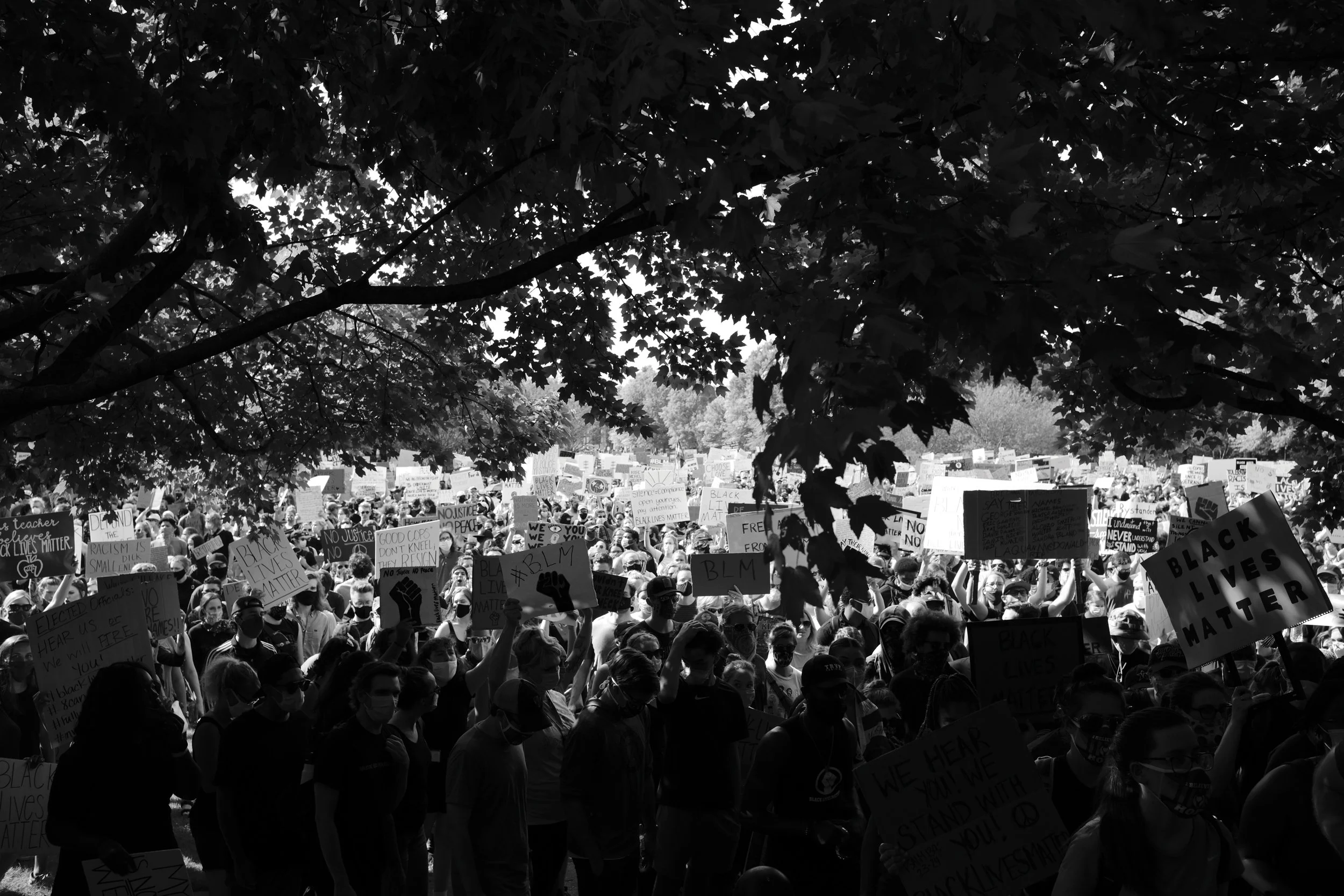
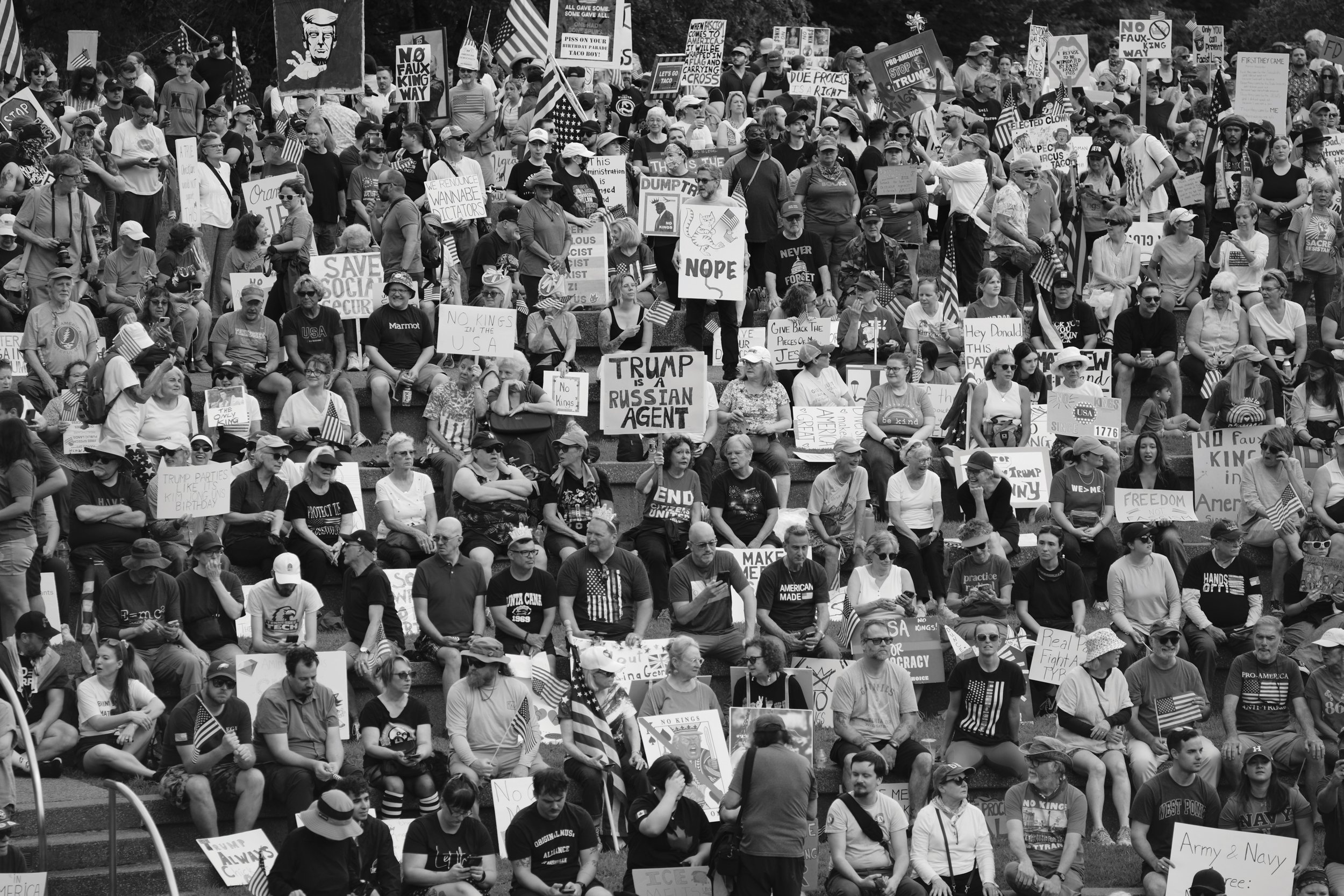
Tennessee Advocates for Planned Parenthood activist Francie Hunt speaks at a Bans Off Our Bodies rally in Legislative Plaza in front of the Tennessee State Capitol in Nashville. 5/14/22. 12:22 p.m. In the aftermath of the killing of George Floyd in Minneapolis on May 25, 2020, over 10,000 protesters peacefully assembled in Bicentennial Park for the Black Lives Matter Nashville march organized by Teens4Equality. 6/4/20. 4:35 p.m. No Kings protest in opposition to President Trump and his policies. 6/14/25. 9:48 a.m.
Di Pietro’s inspiration comes from a surprising place. Andy Warhol, one of his favorite artists (he has several authentic Warhol works), kept a meticulous record of how he spent his days for the 10 years leading up to his death. In 1989, the pop artist’s secretary-turned-collaborator, Pat Hackett, published the notes in a book called The Andy Warhol Diaries.
Warhol, of course, was famously obtuse and provocative. But stories of the flash and dash of the artist’s fame — the crazy parties at The Factory, Warhol’s legendarily debauched, silver foil-papered studio and clubhouse — weren’t necessarily what interested Di Pietro about the conceit. Nor did Warhol’s habit of recording appointments or expenses of the day, including doctors visits, meals, even the price of cab rides. Di Pietro admires Warhol as an accidental historian who documented global figures while recording his daily routine, whether his subjects were Jimmy Carter and the empress of Iran or Mick Jagger and Lou Reed. “He’s writing world history without knowing that it’s world history,” Di Pietro marvels.
Di Pietro considers downtown his beat, and takes pride in covering all of its bases. His art-filled apartment is two blocks from the state capitol. So that he can run out the door at a moment’s notice to chase a story, Di Pietro has edited his belongings down to the basics. “Everything I own has form and function,” he says.
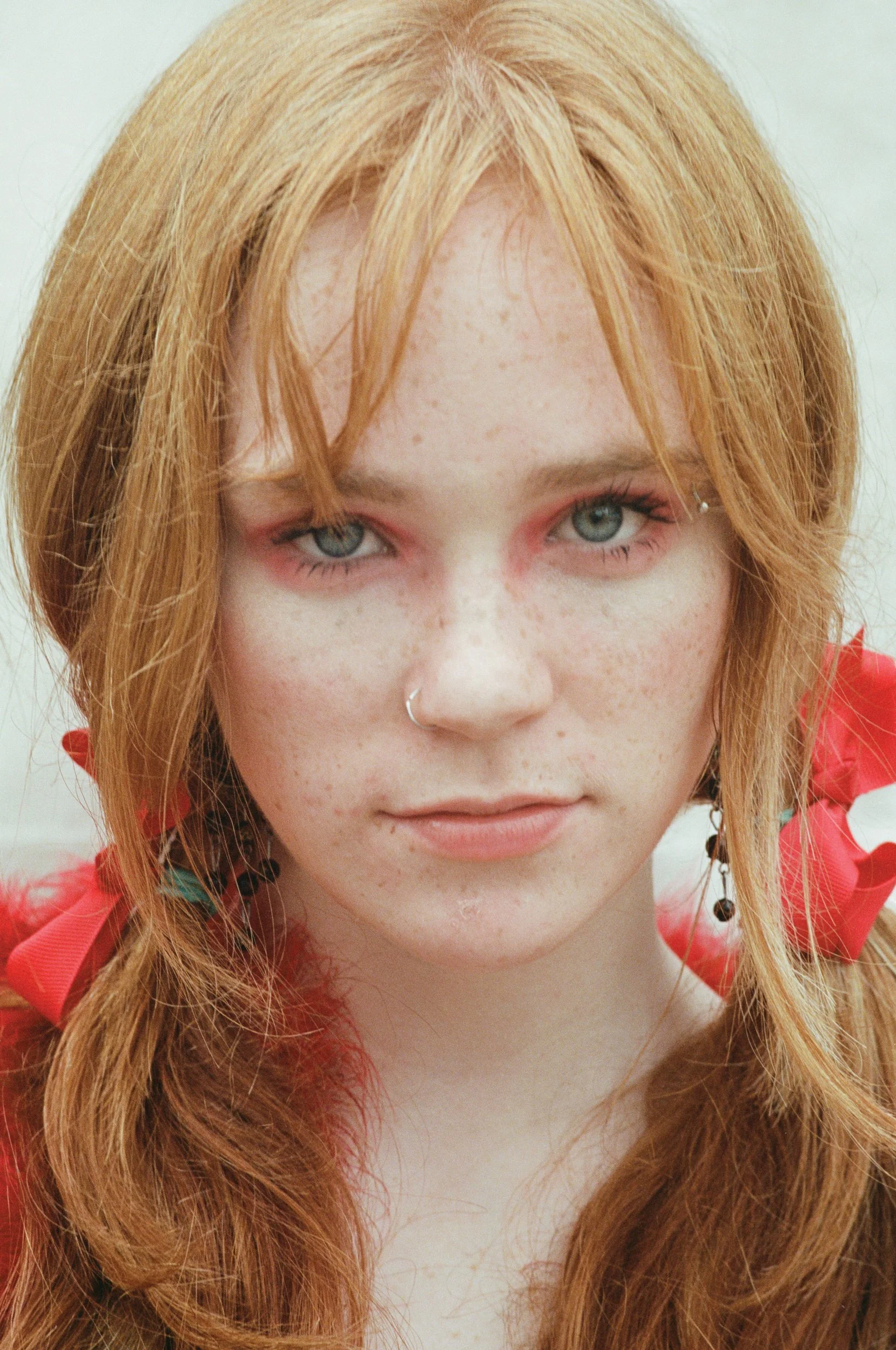
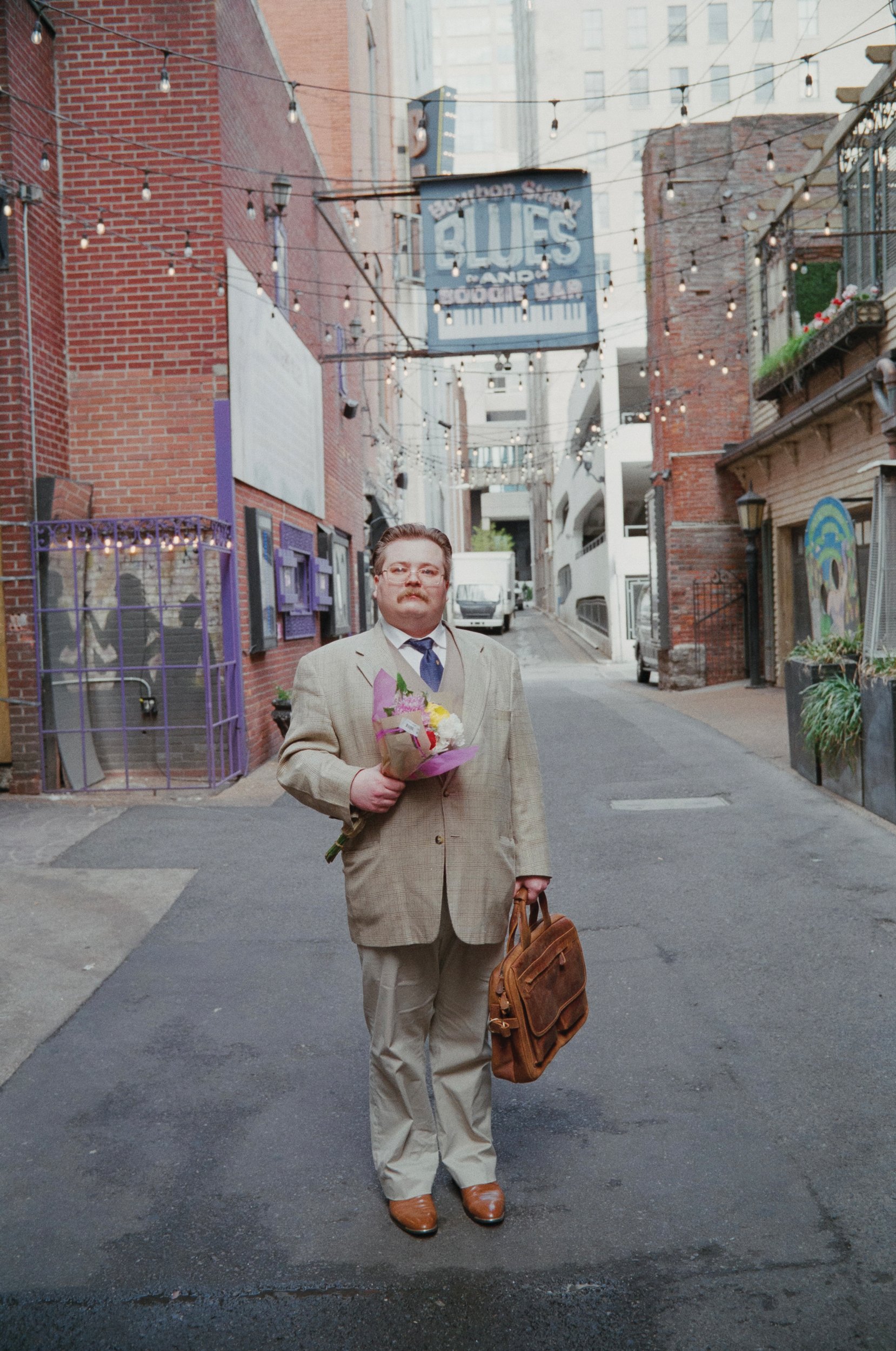
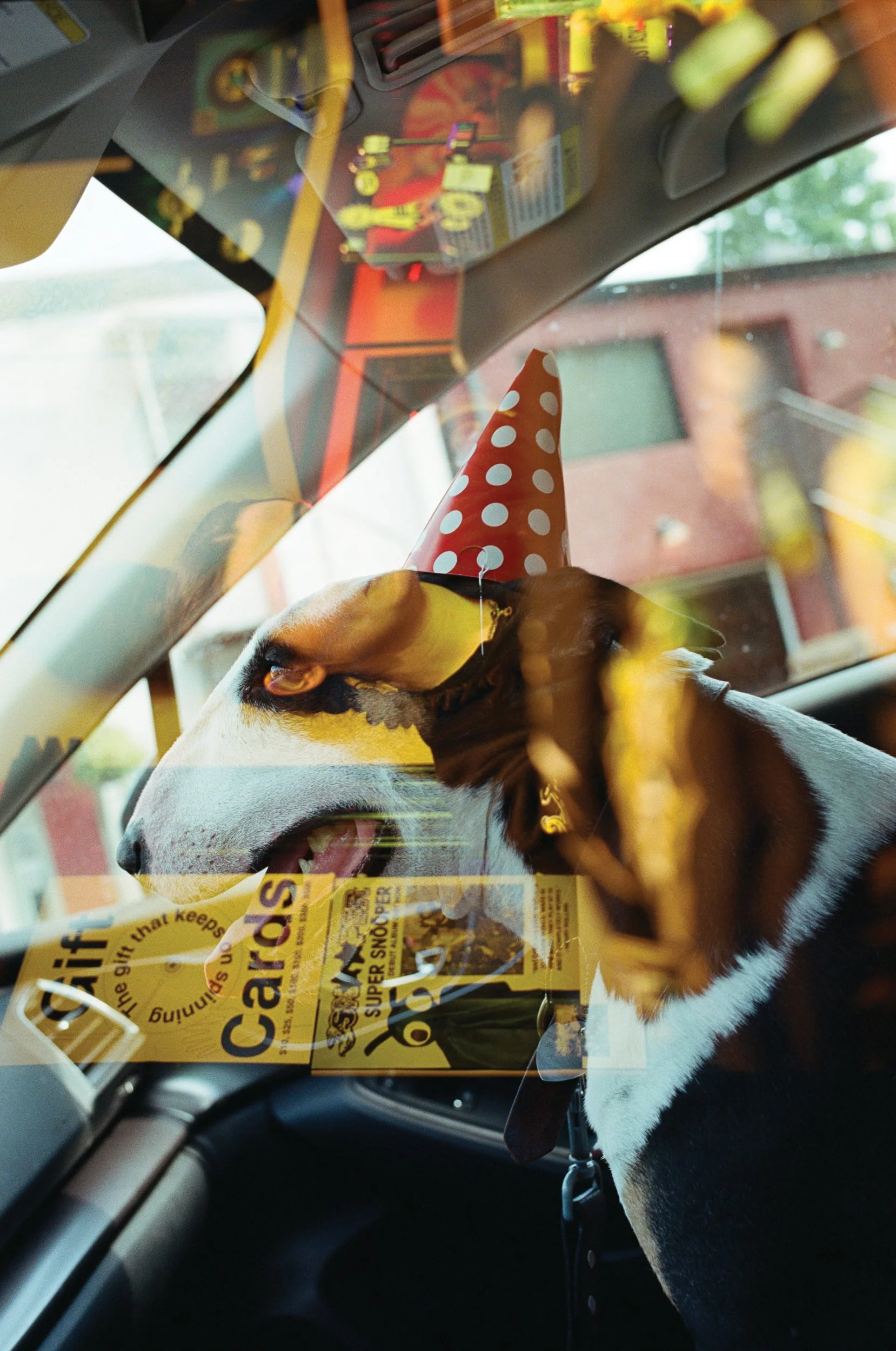
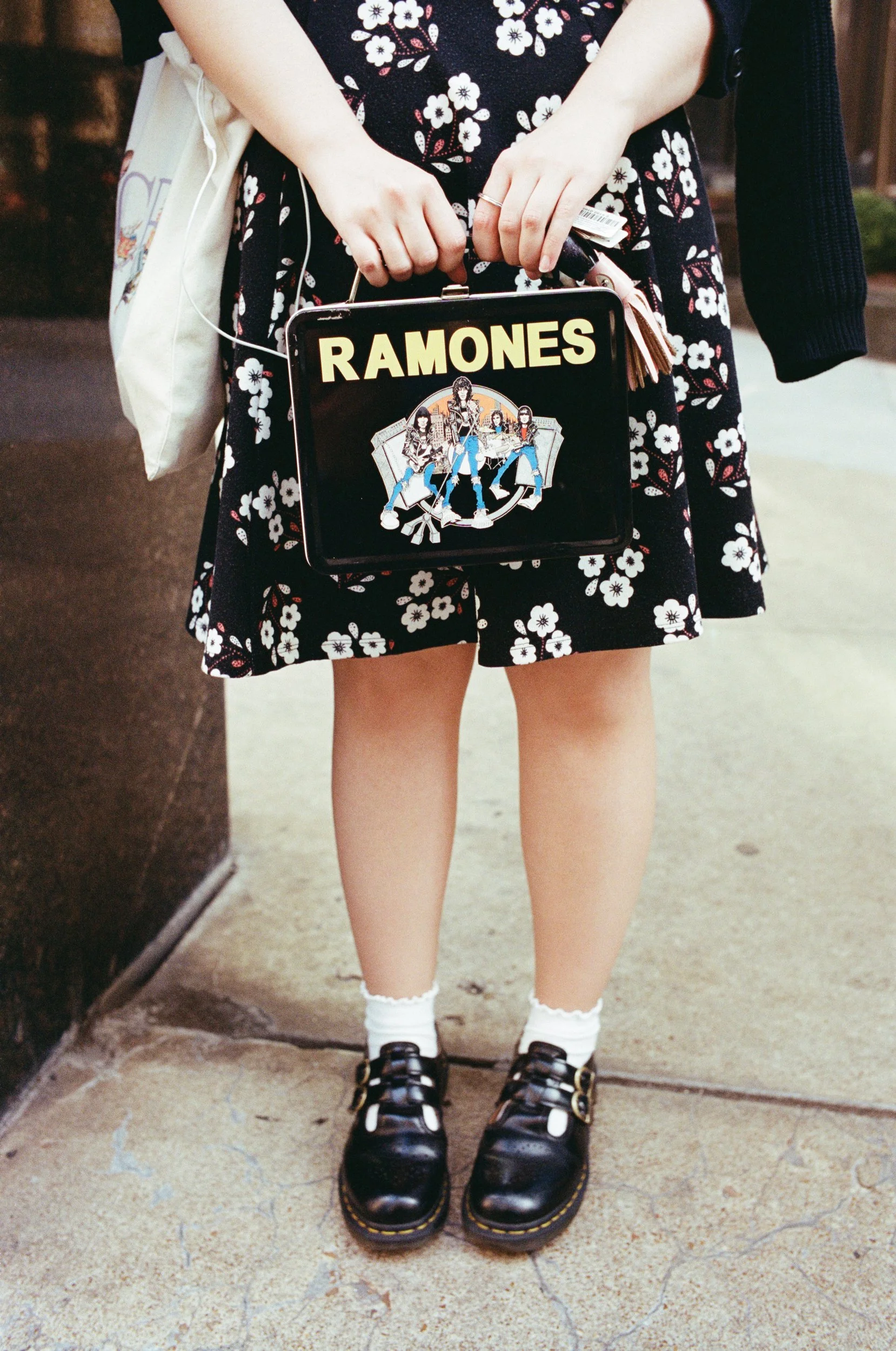
RobinAugust, 20, musician/college student, before judging the redhead contest at the 2023 Tomato Art Fest in Five Points, East Nashville. 8/12/23. 10:22 a.m. Edward in the car on his 8th birthday with polka dot birthday hat at Wags & Whiskers in East Nashville. 7/29/23. 10:25 a.m. “Last night I got weird news, so I decided to dress up this morning and get some flowers to cheer me up. Find serotonin where I can. Can I give you a hug? You made my day.” Duncan Kimsey, captured in Printers’ Alley. 3/30/22. 10:05 a.m. “My friend Bria gave it to me as a Christmas present in 2021. Joey Ramone was my first crush! I must have been in the 7th grade when I really, really started listening to punk, and there’s this picture of Joey Ramone holding a kitten, and I don’t know why it did it for me at age 12, but I was like, What a nice guy!, and I just loved the Ramones ever since. I’m in a punk band myself!” Olivia David, 26, with Ramones lunch box on the corner of Church Street and 4th Avenue North. 8/27/24. 5:12 p.m.
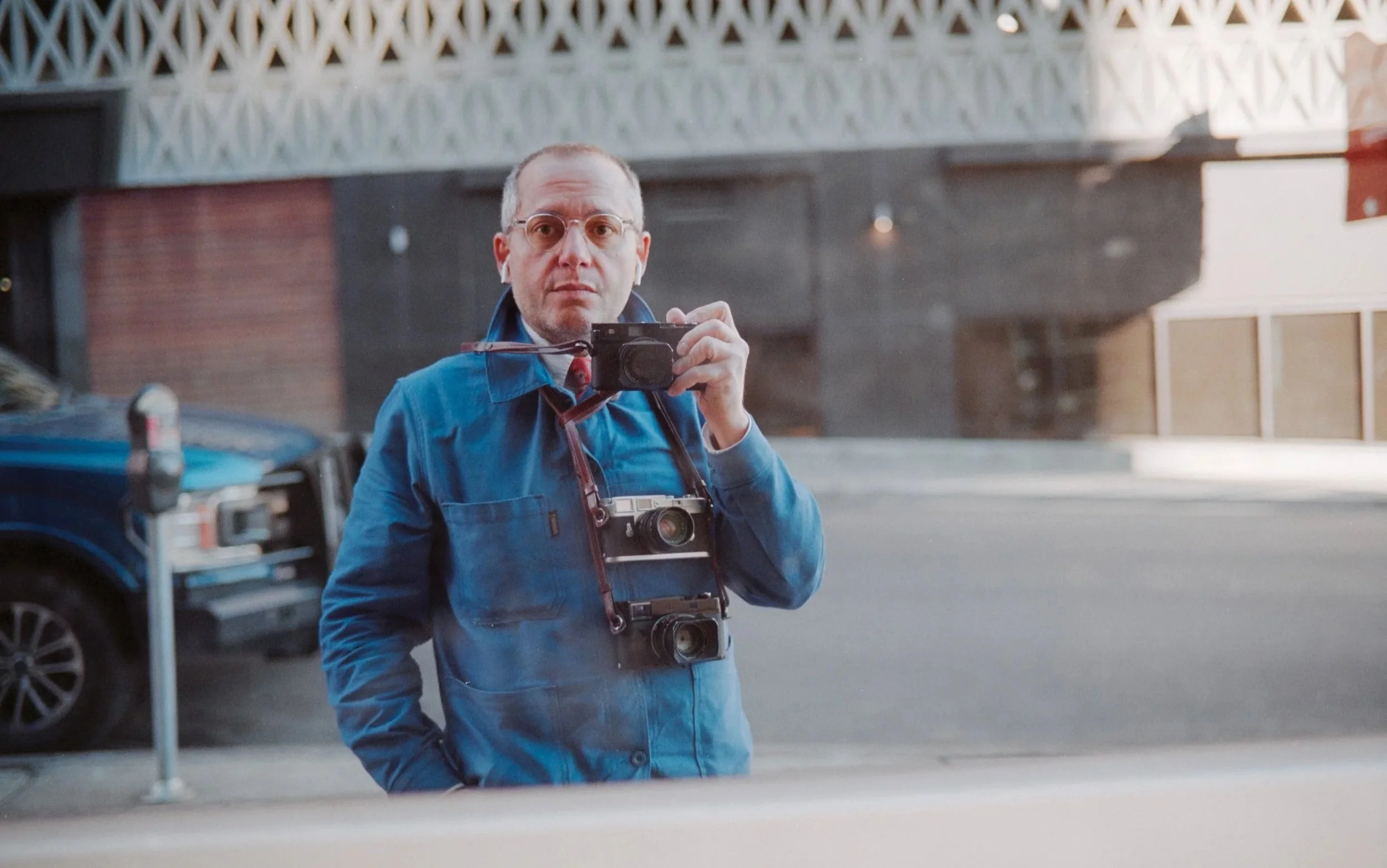
The essentials of his daily uniform are a pair of khaki pants from J. Crew, a white button down by Alex Mill, and those heart print socks by Nashville design house imogene + willie. Three or more (but never fewer) Leicas hang on leather straps around his neck, and, most notably, he wears a bright blue four-pocket French work coat by Le Laboureur, the favored garment of France’s working class and more than a few international hipsters. This is Di Pietro’s homage to the late New York Times photographer Bill Cunningham, another highly disciplined photojournalist whose beat was city streets — likewise known for documenting the strikingly normal and utterly extraordinary lives of everyday people.
The work uniform is part of Di Pietro’s personal guidelines for showing up in the world. “I have a no-schlub rule,” he says. “I started wearing the white shirt six years ago, and soon after that I started wearing the blue jacket. Then lastly, I added a tie.” He favors silk ones by Hermès (he has 13).
Despite his efforts to blend in, Di Pietro’s become a bit of a local celebrity. (“It’s quite odd to me,” he admits). He’s never been physically assaulted, but there have been some uncomfortable interactions. In late 2024, Di Pietro was approached outside a theater by a man “dressed like John Goodman in The Big Lebowski — he had the yellow glasses, the shirt, the vest. He looks dead at me and says, ‘The Handsome Truth wanted me to thank you. Your reportage only helped him.’ And he turned around and went back inside.” In July 2024, Di Pietro had posted photos from a rally led by the Goyim Defense League, a white supremacist, antisemetic network founded by Jon Minadeo II, aka the Handsome Truth, and photos of the group attending a Metro Nashville Council meeting. Di Pietro says he doesn’t regret posting the photos, but the encounter did leave him momentarily shaken, if undeterred.
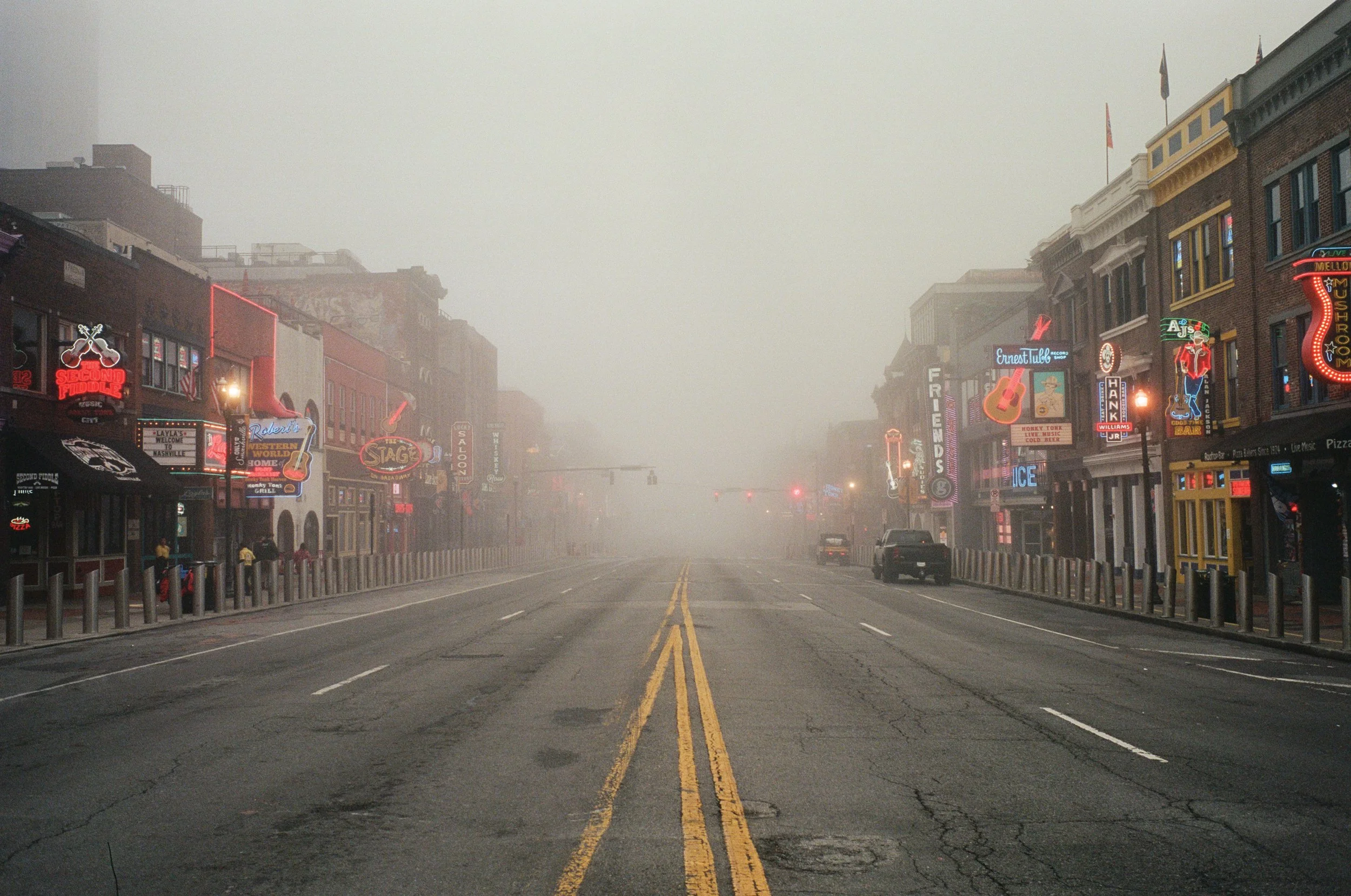
Nashville Lower Broadway honky tonks and country star bars shrouded in a Saturday morning fog. 11/8/25. 6:52 a.m.
As he continues his documentary work, Di Pietro stands by three personal mantras:
“The first is do the work,” he says. “You can’t control if somebody sees the work, likes the work, thinks it’s the best thing they’ve ever seen, or hates it. The only thing you can control is doing the work. So I just do it.
“The second is showing up — even when I do not want to, even when I know it’s gonna be painful. It could be heartbreaking. It could be chaotic. You could feel you’re being threatened or in danger.”
The third mantra? “Be kind.” ◊
Ray Di Pietro is a photojournalist based in Nashville. His work documents politics, people, current events, and social issues. He has contributed to outlets including The Times (London), The Wall Street Journal, Financial Times, Business Insider, and NBC Nightly News. His work as a Rex Features/Shutterstock contributor includes Time magazine, The Guardian, People, The Daily Beast, ABC News, CNN, and more. His work was shown at the Frist Art Museum in Nashville in the 2019 exhibition “Connect/Disconnect: Growth in the ‘It’ City.” His photographs also are included in the collections of the Nashville Civil Rights Center and the Tennessee State Museum, and are featured in the book The People’s Plaza: Sixty-Two Days of Nonviolent Resistance by Justin Jones, and in the “Tennessee Rise” video by The Tennessee Freedom Singers.
Libby Callaway moved to Nashville in 2004 from New York City, where she worked as a journalist for almost a decade. She has contributed to some of the country’s most widely regarded magazines and newspapers, including the New York Post, where she was a staff writer and fashion editor from 1997 to 2004. Elsewhere, she has penned stories for publications including Architectural Digest, Elle, and the New York Times. Currently, she produces a style and design-driven newsletter, The Callaway Report. She is the former media director for the Nashville denim company imogene + willie and marketing director for the Alabama fashion house Billy Reid. A native of Cleveland, Tennessee, Callaway lives in East Nashville in a purple house known as The Callaway Compound.
Featured in Issue No. 13