Since 1883, high atop the Cumberland Plateau, a few lucky families have spent summers in their private cottages at the Monteagle Assembly. Dr. Katharine K. Wilkinson, a fifth-generation devotee of Tennessee’s famously cloistered community, has memories that both soothe and unsettle her. Was the summer bliss she remembers “freedom” or something else?
Words by Dr. Katharine K. Wilkinson
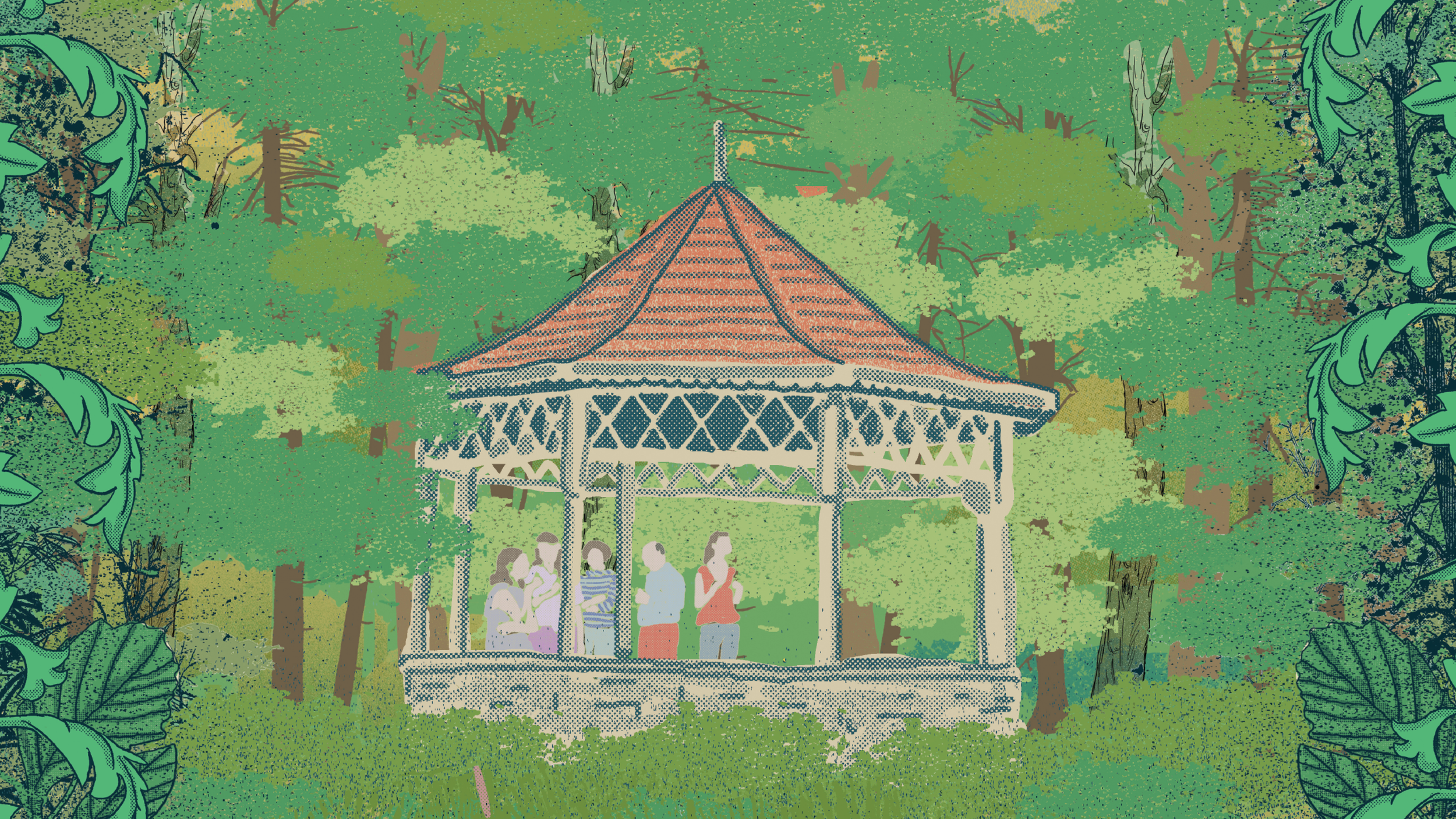
Illustration by Jon Mackay
April 21, 2026
—
Originally Published in Issue No. 13 of The Bitter Southerner Magazine
Can you smell it? That scent that carries you back to summertime. The one you can ride to that place, those scenes, even at the faintest whiff. Dappled memory, committed to the flesh. How grass and weeds and wildflowers become so sweet, I couldn’t tell you. But that’s the scent that catches me still — and assured me, each June, “you’ve arrived.”
In our tan Ford Aerostar van, my mother, sister, at least one rescue dog, and I were bound, always, for my grandmother’s. Destination: Monteagle, Tennessee. At first glance, it’s an ordinary rural town, strung along an unruly hodgepodge of a main drag. But look deeper and you’ll find a fascinating patchwork of a place. Perhaps most famously, it is home to the Monteagle Sunday School Assembly, a multigenerational retreat that has drawn families like mine for nearly 150 years.
To get there, you scale a stretch of steep grade that Johnny Cash warns about on his 1990 album Boom Chicka Boom:
Goin’ down Monteagle Mountain on I-24
It’s hell for a trucker when the devil’s at your door
He’ll tempt you and tell you, Come on let her roll
’Cause the mountain wants your rig and trucker I want your soul
That “mountain” is actually the Cumberland Plateau, the westernmost feature of the Appalachians. Running from northern Alabama through Tennessee and Kentucky, it’s a hotspot for rock climbing and damn good for waterfalls. In childhood, that uptick of highway grade was a kinetic cue. My spindly body would begin to pulse with the eagerness of arrival.
With dogs whining and wagging in back, we’d pull off the interstate and drive by Pop’s Happy Land truck stop and then an incongruous stone mansion that belonged to Al Capone’s lover, or so says local legend. When traveling between Chicago and Miami, the Prohibition-era mobster would stop in Monteagle to stay with the Mabee family, including the lovely Irene.
We’d pass the turn toward the original Highlander Folk School, where activist Myles Horton and his collaborators established a center for labor education and organizing against the backdrop of the Great Depression. When Highlander’s focus expanded to civil rights in the 1950s, it became a retreat and training space for leaders — Martin Luther King Jr., John Lewis, Rosa Parks — before the state of Tennessee abruptly forced the school’s closure in 1961 and confiscated the land.
A mere mile and an eternity later, we’d hang a right off Main Street to pass beneath a modest metal arch: MONTEAGLE ASSEMBLY cast in blocky green letters. A teenager in a small clapboard gatehouse would lift its spare wooden arm, granting entry to the compound of summer cottages with their well-appointed porches, Victorian flourishes, and predictable must. Gravel crunched beneath our tires. Then, windows down, that layered grassy scent.
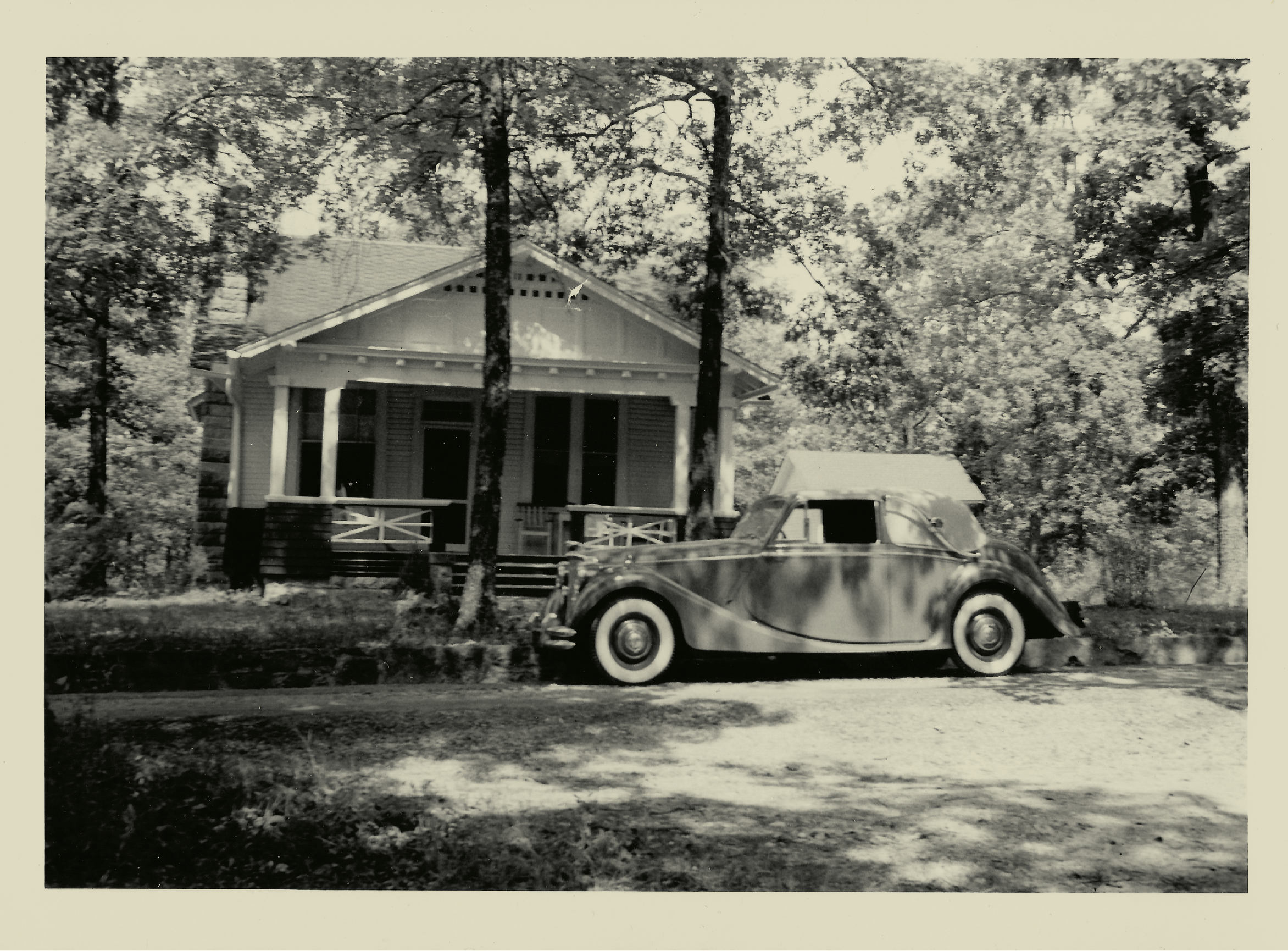
The author’s grandparents, Edwin Keeble and Alice Beasley, met at a porch party in the Assembly. This is their cottage, where extended family gathered every summer.
When you pull into the Assembly, as it’s familiarly known, one of the first things you see is a speed limit sign: 14 MPH. Practically, the quirky number says slow down more effectively. But it’s a symbol, too, of a world set apart. Just five minutes off the interstate, the whole place moves at a different pace, a living remnant of a 19th-century phenomenon.
If you trace the Cumberland Plateau northward, its highlands eventually give way to the Allegheny Plateau, a kissing cousin that runs to western New York. There, in 1874, the Chautauqua Lake Sunday School Assembly was established — a training ground for Protestant church workers that President Ulysses S. Grant visited the following year. Its purely religious focus expanded over time, growing into a curated spiritual, intellectual, artistic, and recreational program. Today, it’s known as the Chautauqua Institution, borrowing the Haudenosaunee place name.
From a beautiful lakeshore in New York, this movement for adult learning and enrichment spread with gusto. Hundreds of “Chautauquas” or “assemblies” were formed in rural locales across the U.S. and Canada. Others took the concept on the road, popping up a “tent Chautauqua” for a handful of days and then circuiting on. Pastors giving sermons, lecturers making speeches, musicians and other performers offering entertainment — all played essential roles in the life of an assembly. Some describe them as the original TED talks. The movement also gave us book clubs.
In 1882, Tennessee hopped aboard the band-wagon. That fall, an ecumenical group of leaders drew up a charter for the Monteagle Sunday School Assembly. The following summer, teachers from denominations across the South gathered for the inaugural session. A campus was raised, and, as in New York, the program quickly expanded to serve a broader audience with something of an edifying vacation.
The core religious and educational program became intermingled with a social scene and, of course, courtship. Among those attending the Monteagle Assembly in the 1890s was John Bell Keeble, an attorney from Nashville and my great grandfather. According to the story passed down to me, he heard Emmie Frazer give a dramatic reading in the auditorium and was instantly smitten. She, apparently, had plans for a carriage ride with a suitor the following day. Putting his lawyerly wiles to personal use, John rented out all the horses. Her only option would be to ride with him.
The stratagem worked. The two married. In August 1905, one of their six children, my grandfather Edwin, was born in the Assembly and, I’m told, placed in a laundry basket. Edwin would become a celebrated architect in Nashville, designing churches, homes, the Life & Casualty Tower downtown, and Memorial — Vanderbilt’s iconic gym.
In 1950, Edwin and my grandmother, Alice Beasley, met at a porch party in the Assembly. She’d been swept into the goings on of Monteagle summers by her own grandmother, Lucy Pulliam Williamson. The day the architect and the redhead from West Tennessee met was the Fourth of July and — forgive me for this — there were fireworks of the best kind.
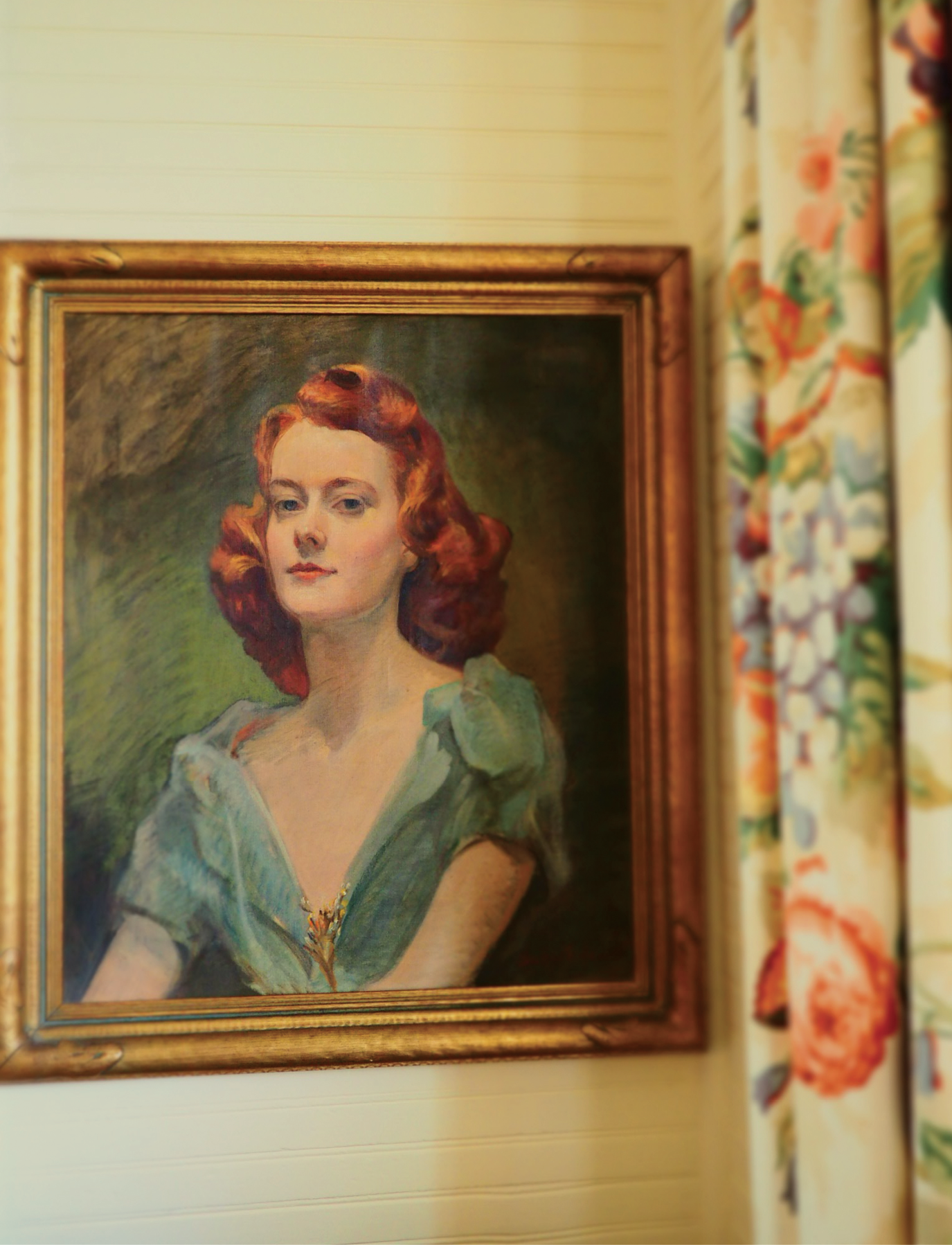
The author’s grandmother Alice Keeble, fondly nicknamed Yaya, was a gracious entertainer with a fondness for floral chintz. Her gatherings often included multiple generations.
The Assembly is one of the few remaining Chautauquas that has operated every summer since its founding. During the eight-week “season,” the cottages come alive, the B&B fills up, and an organized program unfurls. A single week might hold lectures on literary history and present-day economic policy, a field excursion with a botanist, classes in tai chi and flower arranging, a jazz performance, pottery lessons from an artist-in-residence, and all-Assembly bingo. Mornings are a flurry of games for youngsters, the littlest among them called “hummingbirds.” Afternoons are graced by quiet hour, which is actually an hour and a half. Each evening, a visiting minister leads twilight prayers. There are kids on bikes everywhere.
Long wooden foot bridges dot the Assembly grounds. They connect what may be the oldest swimming pool in Tennessee or the new-fangled pickleball court, to the chapel or the dining hall — both of which my grandfather designed. Those mid-century structures, like the dense hemlock trees he planted around our family’s bungalow, tether me to a man who died before I was born. They are handholds for knowing him and, in some way, more of myself, too.
Growing up, this was the infrastructure of freedom. In Atlanta, where we lived, backyards were the limit of our range. Adult eyes were on us, or could be, nearly without exception. The Assembly, by contrast, felt like a vast terrain — for catching crawdads in a creek or lightning bugs at dusk, for playing infinite rounds of Crazy Eights or Don’t Break the Ice, for painting rocks with drug-store watercolors, for splashing in muddy puddles during an afternoon downpour.
My friends Helen and Lillie, who were lucky enough to be cousins, became comrades in everything from Assembly-wide Capture the Flag to an annual water ballet. One summer, we discovered that our interest in diving — somewhat feigned, if I’m honest — would give us access to the deep end of the big oval pool during adult swim and, more importantly, to a handsome lifeguard. Assembly crushes were epic. (I now feel a sense of fortysomething relief that all of mine were unrequited.)

My magnetic grandmother, whom my sister and I called Yaya, was dedicated to parties, manners, and floral chintz. Five o’clock came with lessons on looking grown-ups in the eye and shaking hands firmly, as well as reminders to pass the hors d’oeuvres. Yaya, who almost always wore a belted shirt dress and low pumps, delighted in bringing her friends together, and those gatherings had a blueprint — from greetings at the porch door to small colorful napkins and nuts in hand-carved wooden bowls. Hospitality, she showed me, is rarely happenstance.
At those parties, I learned how to be in and move through a space with people five, six, and seven decades older than I was. I followed their conversations and joined in. And my circle of friends knew Yaya, too. Lillie, for one, loved flipping through her Prevention magazines. Monteagle summer was intergenerational in the way of a wedding dance floor, but for days on end.
I remember only two screens. At the cottage, Yaya’s boxy TV aired Julia Child re-runs, sprinkled with static, while she shelled lady peas or strung green beans. In the Assembly’s cavernous wooden auditorium, we watched dated films — Fantasia, The Incredible Journey, Willy Wonka & the Chocolate Factory — as crickets and katydids chirped beyond the screened windows. The attached snack shop, with its over-salted popcorn and glass-bottled root beer, was the site of my first job. “The point” overlooking the valley, and far in the distance I-24, was the site of my first beer. We traipsed the night woods without flashlights, rendered fireside versions of “Jack & Diane” and “You Can’t Always Get What You Want,” and, despite the lyrics, it felt like maybe we could.
All of it gave me space to stretch into a summertime self — parts of me that felt different, bigger, more free.
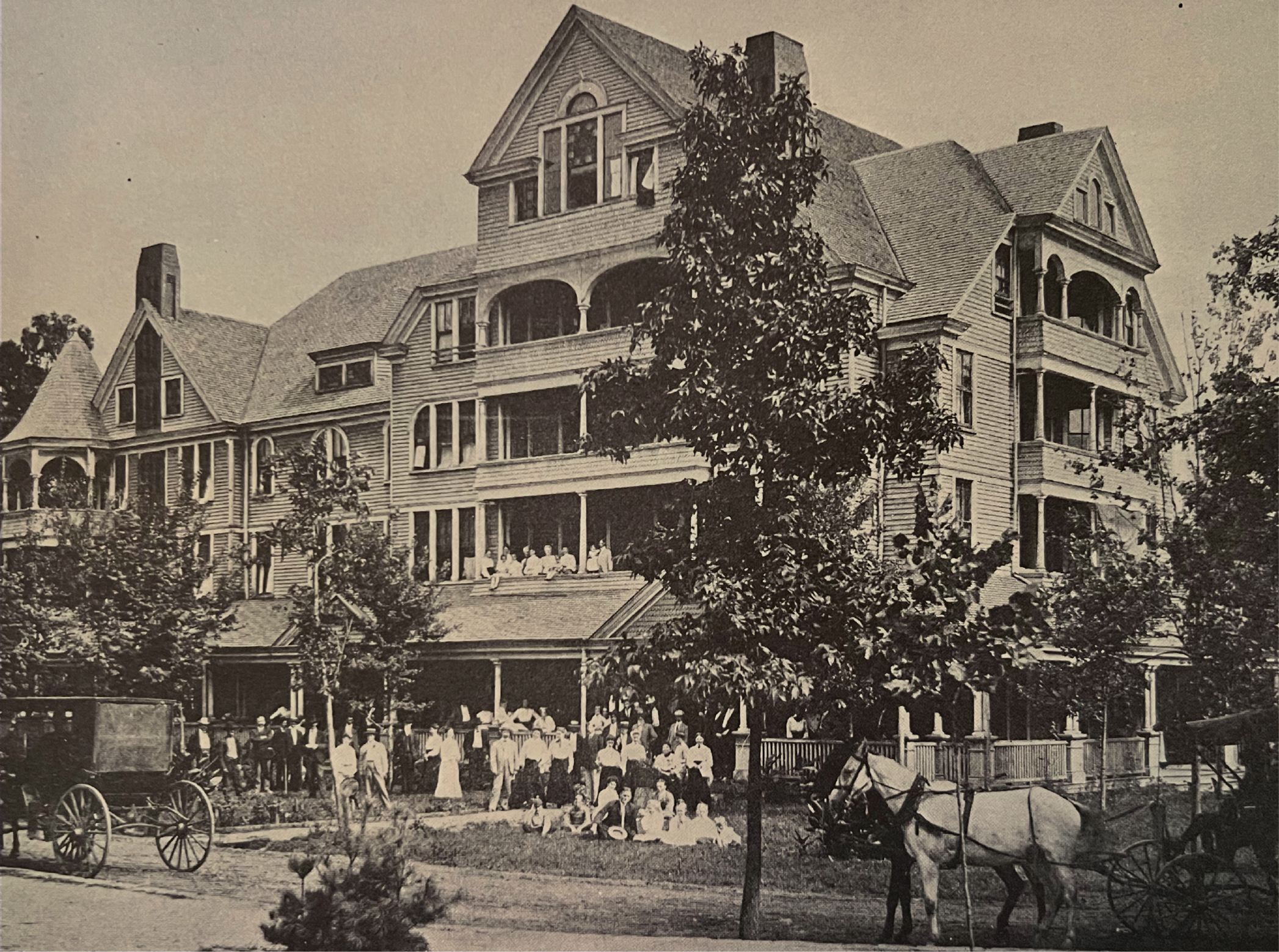
A 1913 photo of the Assembly Inn, where the author’s great grandmother, Lucy Pulliam Williamson, stayed.
As I got older and my politics sharpened, I began to see the Assembly, and the history around it, with thickening complexity.
In contrast to my life in John Lewis’s congressional district in Atlanta, this seasonal space was, and is, almost entirely white. No doubt monies for those Southern summer cottages of the 1880s and ’90s had ties to the economy of enslavement. Nearby historical markers comment on the Trail of Tears, but there was mostly silence about whose land this had been before colonization and the federal government’s vile program of ethnic cleansing and forced removal of Native peoples, including thousands of Cherokee and Chickasaw.
All these second or third homes, so often sitting empty — while rural poverty hounds communities beyond the fenceline. Within it, cottages that aren’t passed down and get sold? They must be paid for in cash by approved members. No mortgages means the wealthy are most welcome.
Those cocktail parties, I came to realize, were full of Republicans, and Republicans, I came to realize, were not so keen on, say, my bodily autonomy or the concerns of a budding environmentalist. I imagine many Assembly-goers would have been indifferent or even relieved when the government came for Highlander during the civil rights era. Circa the early 2000s, I had a blowout fight with a group of older guys about the horrors of flying a Confederate flag, which they insisted on framing as “heritage.”
The Monteagle legacy I’d received by birth started to rumble within me uneasily. Johnny Cash had truckers’ souls on his mind, and increasingly other souls weighed on mine. What bargains had been struck here? And how was I a party to them? The freedom I’d relished as a child felt less and less free.

When we come to see the underbelly of a place, temptation to flee can come, too: to get down the mountain as fast as 18 wheels can carry us. There’s a part of me that wants to cut and run from Monteagle, from Tennessee, from the South. Plenty of folks seem to be feeling that urge about America, period. Though, lord, it can hurt to hear of eager decampments abroad when so many are desperate to stay here.
To roll on may indeed be the right choice for some of us or for some time. But when I catch that scent of summer, the body itself is a reminder. Even if I never stepped foot in the Assembly again, cutting ties isn’t an option. Not really. The gifts of those summers, in that place — they shaped me. And the shadows did too, in both knowable and unknowable ways. You can’t shut the gate to a place that lives within.
I find myself swimming in paradox. How do we honor the beautiful inheritances of our ancestors, without giving tacit permission for all the rest? Can we tend the wounds honestly and still claim the good?
In some ways, the gifts of Monteagle call to me now more than ever. Living within this fast, fractured time, I feel an ache for rest and community. I witness too little learning and too little play in the swirl of adulthood. I believe spaces for reflection and renewal are essential human goods. We need assemblies. We need folk schools. We need camps, retreats, community centers, and sanctuaries. We need spaces where we can be together and grow our capacity for a greater we. I need that.
The truth is, almost none of those spaces are actually idyllic. Most are fraught and flawed, and if they aren’t yet, they will be. Because those who make and gather in them are humans. Even when we are trying our best — even when we aim to make something virtuous, which no doubt the Chautauqua-builders did — we get things wrong. We come up short. We can find ourselves thoughtlessly reproducing the cultural norms and systems we inhabit, and their harms, too.
All of that? It only strengthens the case for collective spaces where we might grow to do and be better, where we can neighbor as a fumbling verb, where we can keep trying. Most such places are a mess, and we are utterly desperate for them. It would be far worse to have no commons at all.
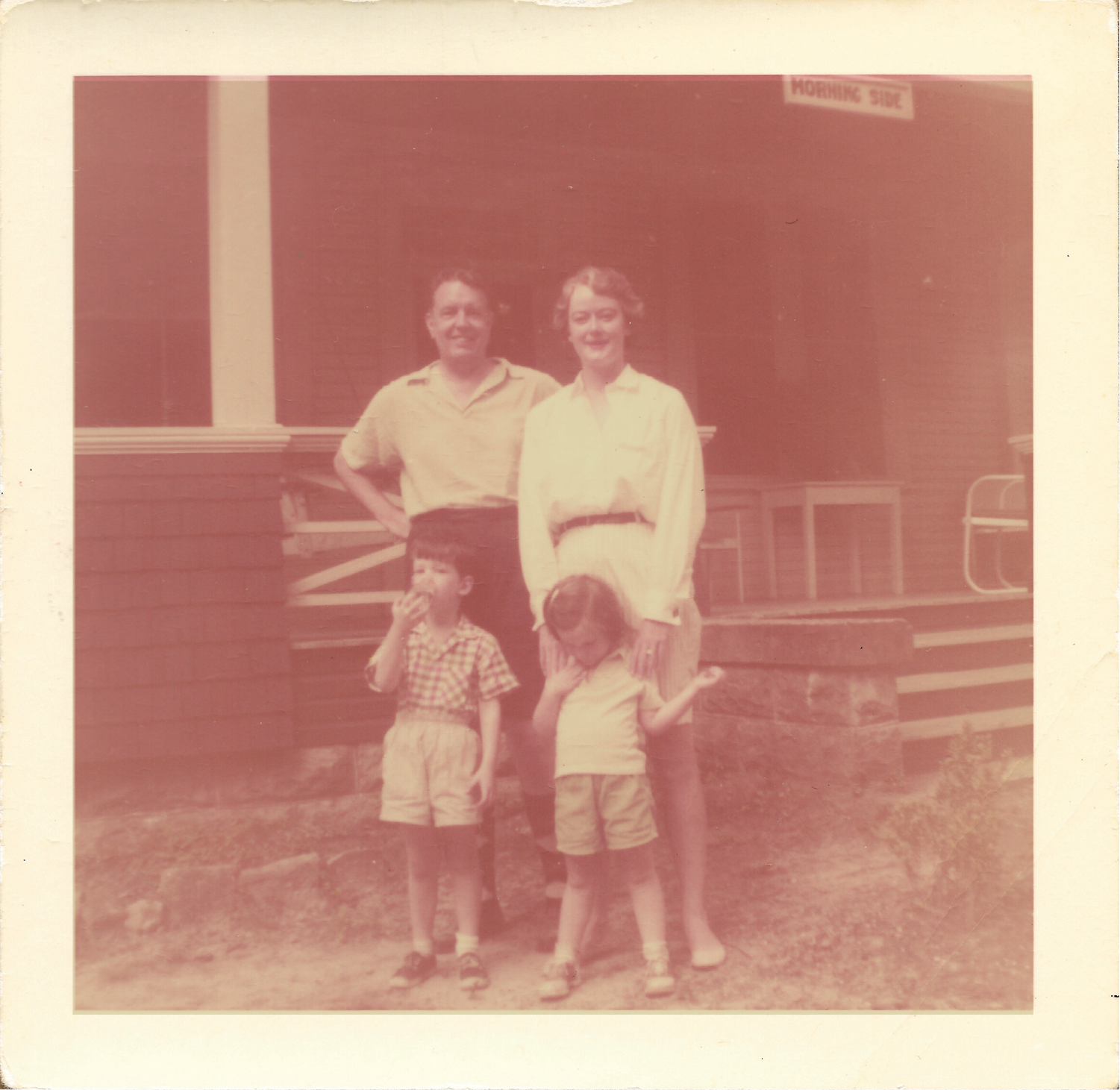
The Keeble family — Edwin and Alice, and their children Peter and Lucy,the author’s mother — in 1956.
For more than four decades, I’ve driven past big rigs on the haul up to Monteagle and Al Capone’s old love shack, now a restaurant called High Point. These days, I rarely go during the Assembly season except to give a lecture there myself. But I still believe in the power of 14 MPH. I still believe in quiet afternoons. Foot bridges. Porches with swings. Moss in abundance. Trees held in an arboretum. Dogs without leashes. Kids on bikes everywhere. I believe a more liberated world would offer all of this — not just to the lucky few and not just for a few weeks a year.
For all its contradictions, Monteagle imprinted me with a sense of possibility, seeing life not just as it is but as it could be. Lasting, too, is an unsettled sense of responsibility, for there is a great deal to mend. As much as I can find flaw in the Protestant ethic of self-improvement that fueled the original Chautauquas, I, too, hold a desire to help this human project along. I, too, believe intentional education and community building are essential. Schools, as Highlander leader Myles Horton showed, have the potential to be seedbeds of social change.
When closure was forced on Highlander in the early ’60s, the organization rechartered almost immediately in East Tennessee, which has been home to its operations ever since. As of late 2024, a fraction of that original Monteagle acreage and a few buildings are now back in Highlander’s hands. Skimming the top of the Plateau, circuitous backroads run between the Folk School’s old library and the Assembly’s east gate, and I can’t help but sense some unflowered promise there.
The smell of grass and campfire, creeks and popcorn — it will always reel me back to the mountain. But maybe the scent of summer holds more than nostalgia. Maybe it can pull us not only to the past but toward a future we long for and might yet climb up to see. ◊
Dr. Katharine K. Wilkinson is a climate leader and bestselling author, whose books include Climate Wayfinding, All We Can Save, and Drawdown. For her work in education, Time magazine named her one of 15 “Women Who Will Save the World.” Dr. Wilkinson co-founded and leads The All We Can Save Project, co-hosts the podcast A Matter of Degrees, and writes the newsletter Human on Earth. She holds a doctorate in geography and environment from the University of Oxford, where she was a Rhodes Scholar. A homegrown Atlantan, she finds her deepest joy on a mountain or a horse.
Jon Mackay is an illustrator, designer and screen printer in the lovely Cotswolds in the United Kingdom. He produces artwork and prints for a wide variety of clients in the music industry as art galleries and retail outlets.
Featured in Issue No. 13