
Introduction & Excerpt by Lauren Collins
July 15, 2026
—
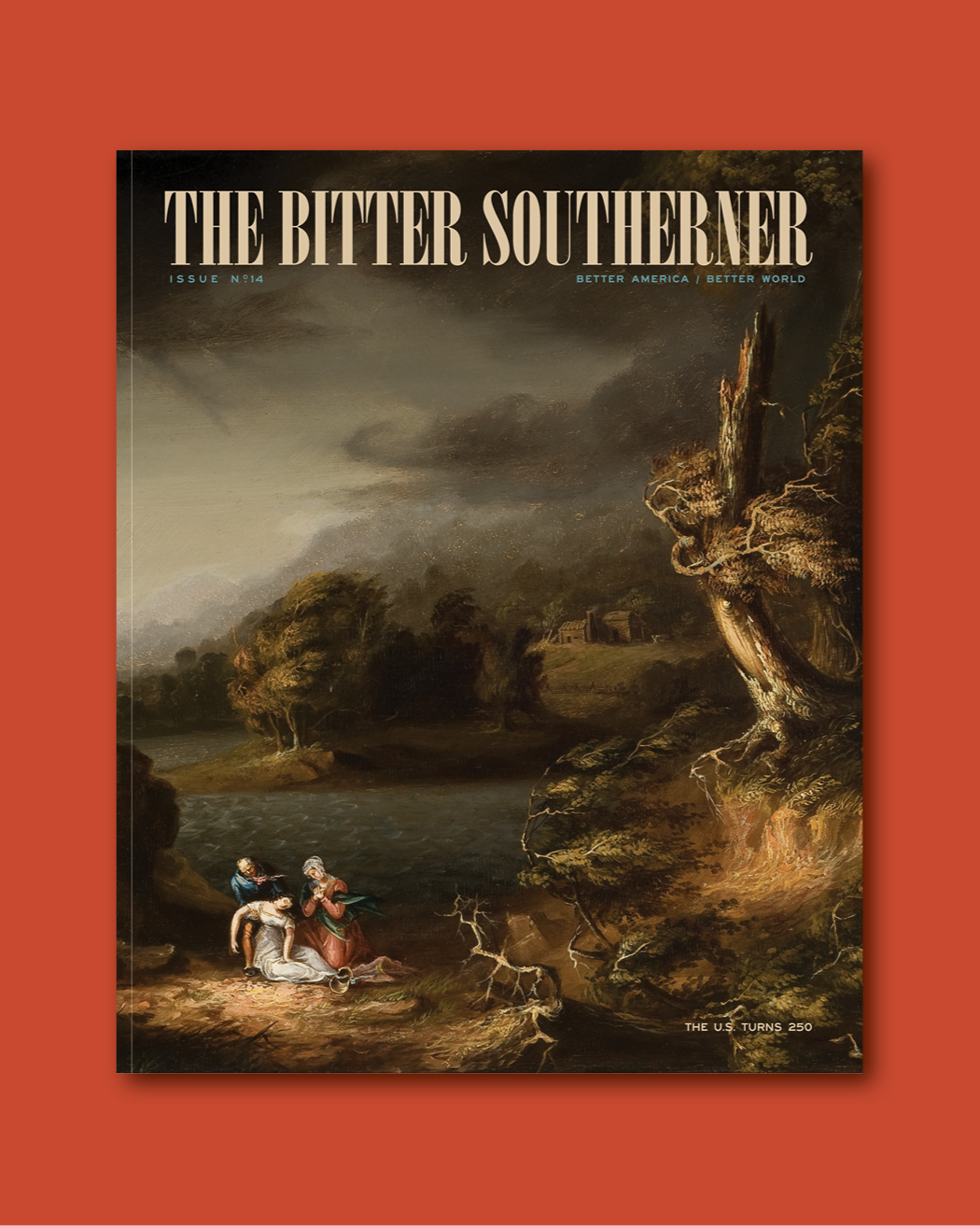
Originally published in Issue No. 14 of The Bitter Southerner Magazine
Reconstruction — those “seven mystic years,” per W.E.B. Du Bois, when America came as close as it ever has to fulfilling the promise of a truly democratic democracy — effectively lasted longer in Wilmington, North Carolina, than almost anywhere else.
The Compromise of 1877 handed Republicans the presidency in exchange for the Democrats’ demand of withdrawing federal troops from the South, taking Black political and economic power with them. Yet, in North Carolina in the 1890s, an unlikely movement called Fusion kept the dream of interracial cooperation and political equality alive, “fusing” Republican voters (mostly Black) and Populist voters (mostly white) in a coalition emphasizing not color but class. Candidates representing this unprecedented alliance dominated the elections of 1896, winning every statewide office.
Democrats — in those days, the party of states’ rights and the free market — needed an angle. With the 1898 elections approaching, they settled on an explicit program of white supremacy. Aided by grabby tycoons and a complicit media, they blanketed the state in racist propaganda. Newspapers ran trumped-up stories with lurid headlines — “Negro on Train with Big Feet Behind White” was hardly the worst of it. A typical cartoon, depicting a taloned Black man as “the vampire that hovers over North Carolina,” preying on white women and children, might be thought of as the precursor to the A.I.-enhanced memes slopping around the white supremacist internet today.
Wilmington was the largest city in North Carolina and a bastion of Black political power — a “mecca for Blacks,” with a thriving middle class of lawyers, doctors, pharmacists, architects, oystermen, restaurateurs. Its democratically elected municipal government comprised seven white men and three Black men. Inconveniently for the white supremacists, the aldermen weren’t up for re-election for another year. For months leading up to the 1898 elections, members of Wilmington’s white supremacist elite plotted in secret. Paramilitaries, including one named for their distinctive Red Shirts, intimidated Black voters and anyone who might dare to stand with them. Election Day came and went relatively peacefully, with Democrats sweeping back into power.
But the white supremacists weren’t done. The next day, they placed an ad in Wilmington’s leading white newspaper, summoning “the white men” to the courthouse, “as business in the furtherance of White Supremacy will be transacted.” There, hundreds of them signed a “White Declaration of Independence,” vowing to strip Black men of jobs and to drive Alexander Manly, the editor of the Daily Record, the city’s pioneering Black newspaper, out of town. On November 10, an armed mob of white men burned down the Record and killed untold numbers of Black men — estimates range from dozens to hundreds — in the streets. (We know the names of only eight of them, including Joshua Halsey, whom you will read about on the following pages.) Then, they proceeded to City Hall, overthrowing the local government at gunpoint in what is thought to be the only successful coup d’état on American soil.
No one was ever prosecuted or punished. President William McKinley declined to send federal troops to intervene. The message of impunity resonated across the nation, empowering white vigilantes and contributing to the rise of Jim Crow. North Carolina added a grandfather clause to its state constitution in 1900, effectively disenfranchising Black men, and did not elect another Black person to Congress until 1992. On January 6, 2021, the country came uncomfortably close to a second coup. Donald Trump, in his second term, has gone far beyond McKinley, actively encouraging the attackers and pardoning some 1,600 of their crimes on his first day back in office.
The Supreme Court’s April 2026 decision in Louisiana v. Callais, which finished the gutting of the Voting Rights Act that the Roberts Court began with Shelby Co. v. Holder in 2013, continues the white supremacist work of evicting Black people from American political life. In Wilmington, they used fire and guns. In Washington, Justices Alito, Barrett, Gorsuch, Kavanaugh, Roberts, and Thomas relied on paper and pen. If the particulars differ — this time, instead of a mob attacking officials, the officials are doing the work of a mob — the effect is the same: a seizure, effected overnight. Researchers predict that at least 15 majority-minority House districts will vaporize under the new rules, triggering the greatest decline in Black representation since the end of Reconstruction.
The origins of the crisis we are living through today are right here in our own violent past. We can hone strategy and draw sustenance by knowing it, understanding it, and paying close attention to the places where racism, capitalism, corruption, misinformation, and the suppression of inconvenient history converge. It’s not that the 1898 coup and similar instances of political violence are repeating themselves. It’s that they never stopped, manifesting through the decades in ways seen and unseen, acknowledged and not. In Wilmington, white supremacists stole a city.
They will not steal a country if we let history teach us how to fight.

Sometime after noon, the Wilmington Light Infantry — a socially elite, all white volunteer military organization — came flying into Brooklyn in flatbed wagons drawn by “fiery big horses,” trailed by members of the naval reserves. Almost immediately, they came across a group of Black men and opened fire. One survivor recalled that the soldiers were ready to blast away “for the least expression of manhood,” as though they were “great sportsmen firing at rabbits in an open field.”
Quickly, the white gunmen fanned out around the neighborhood. One unit went speeding over to Joshua Halsey’s block at Sixth and Bladen, where, rumor had it, someone had fired at a white man from a shack. The gunman in the shack proved elusive, so the militia decided to search a square just across the intersection, known as Manhattan Park.
The park housed several Black businesses, including a dance hall, enclosed by a tall wooden fence. The militia started shooting the machine gun straight into the park. Its .44‑caliber bullets were so powerful that they sawed the planks of the fence clean in half. As craters appeared in the walls of the dance hall, a Black man who had taken shelter there went running out the back door.
“Halt!” the white gunmen called, still firing, as a crowd cheered. The man made a run for it but found himself blocked in on the park’s far side. As he tried to fling himself over the fence, the white gunmen unleashed a fusillade, riddling the man’s body with “fifteen or twenty bullets.” One of the shooters thought the encounter was hilarious, boasting later to a Northern journalist, “When we turned him ove’, Mistah N— had a look of s’prise on his count’nance, I ashore you!”
The militia hacked down the rest of the fence with axes and charged into the park, flinging open the door of the dance hall. Inside they found Joshua Halsey, along with a handful of Black men, one of them armed. When the militia ordered the men to surrender, Joshua darted out the door. Some people speculate that he may not have understood their commands, because of a hearing impairment. It’s also possible that he understood them perfectly and decided to take his chances in the court of decisive action, rather than consigning himself to the kind of justice that the white men were meting out. The evidence suggests that Joshua just wanted out of there. Had he been a fugitive sniper, as the white men alleged, he could have easily disappeared into the neighborhood. Instead, he ran home, got into bed, and crawled under the covers.
The militia tore apart every house in the vicinity. Finally, someone gave up Joshua’s address. One of his young daughters saw the soldiers marching toward the family’s home. “His poor little child ran in and begged her father to get up and run for the soldiers were coming after him,” Jane Cronly, a white witness, wrote. A gauntlet of white men awaited Joshua. “The poor creature jumped up and ran out of the back door in frantic terror only to be shot down like a dog by armed soldiers ostensibly sent to preserve the peace.”
By midafternoon on November 10, the white supremacists had accomplished many of their goals. The state had been “redeemed” by Democrats, Manly was gone, the Daily Record was in ashes, and those they considered troublemakers were either dead or being rounded up. But the city government was still in Fusionist hands, with another year to go before the current mayor and board of aldermen were up for reelection. At four o’clock, members of the Committee of Twenty-Five gathered at City Hall, accompanied by more than a hundred armed men, who blocked the building’s hallways. Their message was clear: Capitulation was the only way out. Behind closed doors, the self-appointed Democratic guardians of the city forced the mayor to resign and then turned their attention to the aldermen. Never mind that they had been democratically elected. Never mind that the overthrow amounted to a coup. “Under the form of law, but in terrorem [they] made each officer resign seriatim, filling his place with a reputable citizen and property holder,” one local white aristocrat recalled, straining to bury bayonet law in courtroom Latin.
Seven white men and three Black men went into the room as aldermen. When the door opened again, an all-white board of aldermen, a white police chief, and a white mayor walked out. The most critical phase of the so-called 1898 revolution had been achieved, replacing an interracial coalition with a new regime whose singular goal was to make Wilmington white again.
• • •
The next day, November 11 was unseasonably warm — seventy degrees under a clear sky. The white supremacists set to ridding the city of anyone they didn’t like who hadn’t already left. A list went out: T. C. Miller, the city’s richest Black man, was on it, alongside entrepreneurial Black men such as Salem Bell and Robert Pickens (who owned a fish and oyster business together), Ari Bryant (a self-employed butcher), and Carter Peamon (a barber). Politically engaged white men such as John Melton (the newly deposed police chief), G. Z. French (the “carpetbagging” deputy sheriff), and Robert Bunting (the United States commissioner in Wilmington, who lived with a Black woman and had spoken up for Black suffrage) were also targeted for banishment. When the Red Shirts found that Bunting and his common-law wife had already fled, they ripped gold-framed portraits of the couple out of their house and strung them up on Market Street, suspended between telephone poles, “with large black letters on the big pieces of canvas heralding their miscegenation.”
WLI units scoured the city for their targets, snatching six Black men from a barbershop, for instance, and “toss[ing] [them] into Burkheimer’s wagon like cordwood.” Now, with their handpicked slate of candidates installed at City Hall, the conspirators controlled the police force as well as the paramilitaries. Almost as soon as he had taken oath, the new police chief went to T. C. Miller’s home at Castle and Third, just a block down from the Howe homestead, and demanded that he surrender. Miller had a lot to lose. He had made a fortune flipping real estate, and he loaned money to both Black and white people, vying with white buyers for valuable lots at courthouse auctions. After being summoned by the white supremacists, he had decided to remain in the city.
Miller was tossed into jail and held overnight, “for safe keeping.” Word of his detainment got around, and that night, a band of Red Shirts crowded around the building, clamoring for him and other prisoners. The high-placed white men who had ordered the arrests knew it would reflect poorly on the new regime if they allowed a rabble to lynch the captives. Subsequent accounts credited Colonel Roger Moore and Captain Walter MacRae with fending off the mob and keeping the prisoners alive until the next morning.
Just after daybreak, the prisoners were brought out of the jail and into the street. Members of the WLI “formed a hollow square around these . . . objectionable men,” parading them through town as onlookers showered them with abuse and humiliation. A man wearing a “special police badge” jumped out of the scrum and thrashed Melton, the ousted police chief, with the butt of a rifle. The crowd taunted him with shouts of “White n——!”— per the Star, “the least of the insulting names.” These expulsions were not random byproducts of the coup; they were the cruel, culminating ritual of what one observer called “this war of purification.” Ever conscious of appearances, the new board of aldermen reimbursed the Atlantic Coast Line Railroad $61.70 for fares that were overlooked in the excitement.
It was a point of pride for white supremacists such as the Colonel that the banishment phase of the coup was carried out according to their specifications, rather than left to the whims of the mob. In the same way enslavers often claimed that they treated the people they enslaved decently, without acknowledging the barbarous framework of the entire institution, the white orchestrators of 1898 pointed to these moments of comparatively restrained behavior as evidence of the honorable nature of the “revolution.”
Over time, family members focused on these incidents, wringing claims to heroism out of their kin’s ignoble acts by selectively forgetting the larger context. Sometime after the Colonel’s death, his widow wrote a letter to the Wilmington Messenger, asserting that her husband and an associate — not Alfred Moore Waddell, as some claimed — were the “appointed and recognized leaders in that revolution.” Mrs. Moore was at once proud of her husband’s involvement in 1898 and keen that he be remembered as a moral exemplar. To resolve this paradox, she homed in on his performance at the jail, writing that he refused to succumb to pressure “to give the order to fire on the negroes.” She asserted, “In his own words: ‘I will do nothing of the kind, there will be no murder done today whatever else is done,’ and so a great calamity was averted, not only in the way of preventing bloodshed, but the fair name of Wilmington was saved also.
• • •
While the white elite cherry-picked the aspects of the massacre that they wanted to be associated with, the Black masses had few such choices. “If I had a job for Mrs. So-and-So, I just had to get up and go back to work,” one Black woman said later. Thousands of Black residents did so, braving checkpoints and searches to deliver delicacies for celebratory white supremacy banquets and to launder their white employers’ clothing, still encrusted with soot and blood and gun oil from the previous day’s spree. Their friends and neighbors were still hiding in cemeteries and swamps, cold and starving. One federal official reported that “nearly a dozen infants were born and died, in many instances with their mothers the victims of exposure.” Yet James Worth, a white railroad investor, wrote to his wife, Josephine, whom he’d sent away to a safer part of the state, that all was dandy in Wilmington. He assured her that George, a Black man in their employ, was “back at work again and is happy as can be[,] whistling at his work — I am quite satisfied that he as well as all the best darkies are glad the change has been made.”
Overnight, professional opportunity for educated Black people disappeared, liquidated alongside the Record. Before the coup, for example, the city’s four Black lawyers had vied with their white peers for clients and courtroom glory. Now at least three of them had been terrorized out of the city. W. E. Henderson, considered the most sparkling jurist of the group, fled to Indianapolis. There, seemingly shell-shocked, he recounted his experiences to a large crowd at an AME church, a local newspaper reported, “in a low voice, so low as at times to be almost inaudible.”
Henderson had moved to Wilmington only a year earlier, after having successfully defended a Black man who was charged with murdering a white man during a corn shucking. Wilmington, he believed, was a beacon of Black progress. He decided to invest in real estate, putting four hundred dollars down on a house. Racing out of town, he was forced to sell his stake back to the original seller, for an eighth of its value. Henderson begged the man for seventy-five dollars to buy last-minute train tickets for his family of twelve. The man refused. Another Black lawyer, attempting to flee North, was sitting in a railroad car when Red Shirts boarded. He jumped out of the moving train.
• • •
Weeks later, Alfred Moore Waddell assured the nation that the violent overthrow of Wilmington’s municipal government had, in fact, been a peaceful handover — voluntary and perfectly legitimate. “We didn’t really have anything to do with it,” he wrote, putting his case forward in an essay for Collier’s. “They asked us whom we wanted. Successively they resigned, and our men were elected. The room was as quiet as a room in a private house.”
The white supremacists had laid waste to the city’s physical, political, and social infrastructures. Now the campaign began to reboot their businesses and sanitize their reputations. Waddell hired new white policemen, dissolved the Black fire department, and forced a few remaining Fusionists out of office. People who were unsure of their status and wished to stay in the city appeared at City Hall to seek his personal blessing, which he conferred or withheld, like the hereditary dynast that, in many senses, he was.
“We have taken a city as thoroughly, as completely, as if captured in battle,” Rev. Peyton Hoge proclaimed from the pulpit at First Presbyterian, the Sunday after the massacre. “It has been redeemed for civilization, redeemed for law, and redeemed for decency and respectability.” Across the city, white clergymen congratulated their flocks on their Christian bravery and resolve. “After this week, I feel that I really know Wilmington and love it,” Rev. C. T. Blackwell, of First Baptist, told the Messenger. In Blackwell’s view, the massacre was already yielding positive effects. Black people, “a childish race,” were more obedient on the sidewalks. Even actual Black children were benefiting, Blackwell claimed, saying the “riot” had “put a lasting good . . . into their wooly heads.” As a man of the cloth, Blackwell wasn’t bothered by the taking of lives. “That a few Negroes were shot was a mere incident,” he said with a shrug. “You can’t make an omelet without breaking a few eggs.”
Quickly, the state’s white elite closed ranks around Waddell’s government. “My dear Colonel, Just a few lines to congratulate you on your courage and the people of Wilmington on their nerve,” the editor of The Charlotte Observer wrote, adding that he was enclosing a copy of the next day’s paper, “in which I have endeavoured to give the public an idea of the character of Wilmington’s new mayor.” North Carolina expatriates sent tidings from Pueblo, Colorado, and from Baltimore, Maryland, praising Waddell for having “dragged the dear old state out of the slough of black mud and degradation, into which she was fast sinking.”
Weeks earlier, Waddell had vowed to fill the river with carcasses. Now he maneuvered to lure Black workers back to the factories and the wharves. With an eye toward public relations, he sounded notes of appeasement, proclaiming confidently that there was no possibility of further violence. “Gentlemen, I will patrol this city with six women, so quiet and peaceful and orderly it is,” he declared. “It is like Sunday all the time.
• • •
Nearly a week after the massacre, Mildred Clinton, Joshua Halsey’s oldest sibling, went to claim his body. According to the papers — the white papers, because now there was no Black one — whatever had happened to him had been his fault. The testimony of witnesses before the coroner’s jury, the Star reported, “will prove conclusively that the negroes were the aggressors in the unfortunate affair and that the white men were forced to fire as a matter of protection.” This was a familiar projection, a transfer technique that has been used by everyone from enslavers and colonizers to patrollers, night riders, jailers, politicians, and police. The more violent they are, the more violent they accuse Black people of being.
Joshua lay dead on the coroner’s table, labeled a “Negro aggressor.” Clinton, called before the panel, kept her mouth shut. She told the men the body she had seen was indeed that of her brother, but that she didn’t know how he had come to his death. Eventually, the coroner ruled that Joshua, along with five other Black victims, had died by gunshot wounds “inflicted by some person or persons to the jury unknown.” A doctor who examined fourteen men — two white and twelve Black who were wounded during the violence pointed out another commonality: Except for the pair of white men, all of them had been shot in the back.
With murderers ensconced at City Hall, survivors could hardly seek succor from local authorities. Nor would the shambolic state government be of any use. Desperate for help, they turned to the federal government, which was theoretically obliged to ensure their equal protection under the nation’s laws. “Please send releif [sic] as soon as possible or we perish,” one citizen wrote to President McKinley. Another correspondent, identifying herself only as “A Negro woman of this city,” gave a detailed account of voter suppression, murder, and banishment, begging the president “from the depths of my heart” for protection against “lawless whites.” She continued:
I call on you the head of the American Nation to help these humble subjects. We are loyal we go when duty calls us. And are we to die like rats in a trap? With no place to seek redress or to go with our Greivances [sic]? Can we call on any other nation for help? Why do you forsake the Negro?
It wasn’t as if a few frantic postcards from the provinces simply failed to land on McKinley’s desk. Practically every national newspaper carried reports of the “bloody day in this one- horse town.” The “fatal race riots” made the front page of The New York Times, while the New York Herald proclaimed, “Whites kill negroes and seize the city of Wilmington.” In an editorial, the editors of The Richmond Planet, a leading Black paper, expressed historic levels of shock. “The outrageous happenings at Wilmington almost surpasses comprehension,” they wrote. “Never in this country have we heard or seen anything like it before.” The paper’s headline was stronger still: “horrible butcheries at wilmington. the turks out done.”
Three deposed white Republican officials — the US commissioner and justice of the peace, the chief of police, and a policeman — got on a train and rode to Washington, D.C., where they demanded an appointment with the Justice Department, recounting their ordeal and demanding federal action. Judson Lyons, the register of the United States Treasury, published a “ringing letter” in the New York Herald, writing, “The record of those days immediately following the 8th of November makes me wonder if, after all, we are not mistaken and are not, in fact living in middle ages, with their racks and thumbscrews, instead of in the bright civilization of the closing days of the nineteenth century.”
In Indianapolis, the exiled lawyer W. E. Henderson laid out the political stakes of the situation. Going into the election, he recalled, Black Wilmingtonians had been counting on backup: “We have a Republican sheriff, a Republican mayor, the governor is with us, and we have a Republican president. If we can’t get protection now we can never get it.” McKinley was their last resort.
People suffering in Wilmington could have reasonably assumed that McKinley would be sympathetic to their plight. He was the son of Methodist abolitionists, a former Union officer, and a reliable supporter of the Reconstruction Amendments — “the irreversible judgment of battle and the inflexible decree of a Nation of free men.” But McKinley, the last Civil War veteran president and “an inveterate conciliator,” wished, above all, to do nothing that would disturb the fragile entente between the white people of the North and the South. With the Spanish-American War, the nation had at last come together to face a common enemy. Despite the contributions of Black soldiers, the war, the historian David Blight writes, “exacerbated racial antagonism,” racializing American patriotism and solidifying the alliance between white supremacy and imperialism.
Under pressure from white supremacist industrialists such as the North Carolina tobacco magnate Julian Carr — “Don’t do it,” Carr wrote, explicitly jubilant over the victory of “men of white skins, sons of revolutionary ancestors” — McKinley chose to sacrifice equal protection on the altar of white unity. Leaning on a technicality, he claimed that he couldn’t send troops to Wilmington because the governor hadn’t requested them. Nor did he offer words that might comfort the afflicted or deter further vigilante violence. A group representing the “Colored People of Massachusetts” addressed the president in an open letter, questioning “your extraordinary, incomprehensible silence” in the face of innocent American citizens having been “butchered like dogs in the streets of that ill-fated town.” The Colored American eventually concluded that the Wilmington massacre and coup “in one fell swoop throttled what was left of the sentiment of political equality for all citizens,” with the “echoes of the wreck reverberating to the farther-most ends of the country.” By declining to act in Wilmington, McKinley had sent a message to the whole nation: From now on, as far as the federal government was concerned, Black people were on their own. ◊
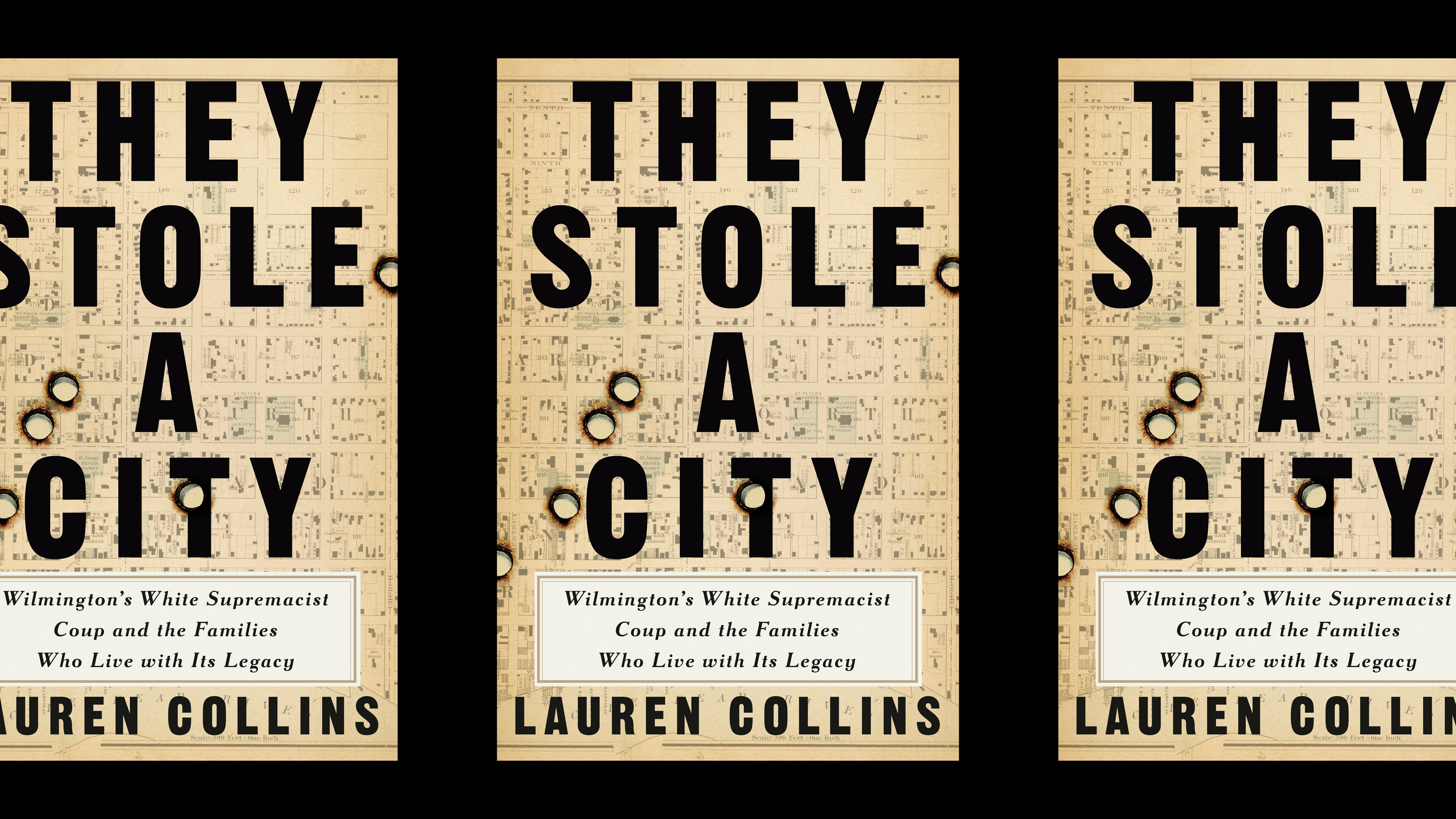
From They Stole a City by Lauren Collins. Published by arrangement with Penguin Press a member of Penguin Random House LLC. Copyright© Lauren Collins, 2026.
Born in Wilmington, North Carolina, in 1980, Lauren Collins is a staff writer at The New Yorker and the author of When in French: Love in a Second Language, which The New York Times named one of its 100 Notable Books of 2016. She lives in Paris with her family.