


July 1, 2026
—
Originally published in Issue No. 14 of The Bitter Southerner Magazine to match other credits
On our nation’s 250-year anniversary, record numbers of American citizens are leaving for other countries that they find more safe, stable, and affordable. According to a recent article in The Wall Street Journal, this millions-strong phenomenon of people choosing to retire, study, and live outside our borders is surging — with 180,000 Americans voluntarily leaving in 2025. There has never been such an exodus in U.S. history, a clear red flag that something in the American experience is amiss. As the Journal put it: “The new American dream, for some of its citizens, is to no longer live there.”
This crisis of American democracy, while accelerating rapidly, didn’t begin last year; it has been brewing for some time. In 2021, the United States was named to a global list of backsliding democracies by the thinktank International IDEA. This was after the violent attempt to disrupt the peaceful transition of presidential power on January 6, 2021 and against the backdrop of rising election denialism, misinformation, and state-based extremism. Our sacred institutions are not consistently protecting the rights of people. In 2026, the U.S. Supreme Court decimated generational progress and protections for voting rights; and, in mere weeks, Southern states drew lines to exclude minorities from fair representation. There have been military occupations of our cities. Citizens murdered at the hands of their own government for peacefully protesting. Immigrants rounded up and placed in inhumane conditions, where rising numbers have died. A president who has personally threatened lawyers, judges, artists, creators, journalists, educators, medical professionals, and their families for daring to fulfill their professional responsibilities. Levels of wealth disparity that rival those of the Gilded Age in the late 1800s.
This crisis is overwhelming, yes, and past threats have risen in new forms. History doesn’t repeat itself but it often rhymes. Today’s struggle for freedom and true democracy in the United States is not new. This is an old struggle, in a new time.

Two-hundred-and-fifty years after people threw off the reins of a king, we know that their action created, for the first time in modern history, a nation that was based on a set of common ideals, not on historical accident or survival. Those ideals, spelled out for humankind in our Declaration of Independence, declare that all are created equal. And they mandate that, in the United States, we are not just about the pursuit of wealth, industry, and liberty — but we are a people in pursuit of happiness, whatever that may mean to an individual. Yet, the soaring rhetoric in our Declaration fell short of addressing the moral challenges of the day. It failed to address that the land the United States was being built upon had been inhabited by people who were forcibly removed. And it failed to denounce and eradicate human enslavement. In earlier drafts of the Declaration of Independence, Thomas Jefferson, himself an enslaver, had prepared a short passage condemning slavery as a “cruel war against nature itself” and accused King George III of violating sacred rights of life and liberty of enslaved persons. But the draft provision was deleted from the Declaration to appease Southern states, particularly South Carolina and Georgia. In removing the passage, our founders accomplished what I call a performative peace — failing to address the issue of the day, slavery (much less unacknowledged issues like Indigenous displacement or women’s rights), in the hopes of keeping a political coalition together, which only led to the intensification of a crisis at a later time. So, while the Declaration of Independence was exceptional and accomplished what no other nation had done, its moral clarity rang hollow for many living in America at the time and even today.
A little over a decade later, another crisis came to a head. The initial governing structure of the United States under the Articles of Confederation failed to deliver, and the union was in peril. Representatives assembled to revise the Articles of Confederation, then scrapped them altogether. The creation of a new document, the U.S. Constitution, emerged out of the crisis. In justifying the new document, James Madison famously wrote, “If Men were angels, no government would be necessary. If angels were to govern men, neither external nor internal controls on government would be necessary.” Since then, liberal Americans have tended to emphasize the first part of the passage (government is needed because men are not angels), and conservative Americans have preferred the latter (government must be limited because leaders are not angels). Madison considered both principles in shaping our Constitution.
Despite our nation’s relative youth, the U.S. Constitution is the oldest, continuous constitution in the world. Yet, it fell short of abolishing the tyranny that was human enslavement — and even went so far as to ratify the practice in its text. After hot debate, the framers again opted for a performative peace — “saddling posterity,” in the words of Gouverneur Morris of Pennsylvania, who made an impassioned plea to abolish slavery at the time — with a Constitution that effectively rewarded the Southern states for holding people in bondage.

The deep division in the nation was palpable at Abraham Lincoln’s inaugural address in January 1861. Lincoln, while being the candidate favored by Northern states, was not a dedicated abolitionist. He urged the nation not to split on the question of slavery. He concluded his inaugural address by calling on the “better angels of our nature,” hoping the nation would find some compromise. But this was another call for “performative peace,” which sidestepped the moral imperative in order to protect the union. (Lincoln once remarked, “I hope I have God on my side, but I must have Kentucky.”)
Thankfully, there were indeed angels at work for justice: Harriet Tubman’s angels. By 1861, she was already helping enslaved people escape to freedom. Guided by spiritual principles rooted in both Christian and African traditions, she was most influenced by fearless, faith-driven narratives, such as the journey of Moses leading enslaved Israelites to freedom.
Despite Lincoln’s attempts to preserve the union, civil war broke out in April 1861 just a few months after his inaugural address. By the second year of his presidency, Tubman’s angels — the angels that help us find courage in the face of injustice — had found Lincoln. Influenced by abolitionists such as Frederick Douglass, President Lincoln saw the war for what it was, not just about preserving the union, but about championing our shared humanity. In his address to Congress in 1862, Lincoln declared, in words that are chilling read in our present time:
The dogmas of the quiet past are inadequate to the stormy present ... The occasion is piled high with difficulty, and we must rise — with the occasion. As our case is new, so we must think anew, and act anew. We must disenthrall ourselves, and then we shall save our country.
The Civil War would end and culminate in the modification of our Constitution. A second founding of the nation occurred, one that expressly abolished slavery and established equal protection under the law and birthright citizenship. The 14th Amendment makes plain: “All persons born or naturalized in the United States ... are citizens of the United States and of the State wherein they reside.” “No State … shall deprive any person of life, liberty, or property, without due process of law; nor deny to any person within its jurisdiction the equal protection of the laws.” With the 14th Amendment, the words of our Declaration became less hollow. Democracy became less restricted.
Yet, Southern states continued to hold on to the legacy of enslavement, continued to push for a restricted democracy. And a political deal — another performative peace — was struck following a disputed presidential election in 1876. Republican Rutherford Hayes was awarded the presidency in exchange for removing the remaining federal troops from the South, enabling white Southerners who had supported slavery to regain control and end integration in government. The new founding was over with hard-fought progress partially reversed. The Jim Crow era of the American South had set in.

It would take political movements, court decisions, legislation, and, yes, bloodshed at the hands of state governments on American streets, to end the era of Jim Crow. Civil rights leaders would be targeted by our government and, at times, murdered by vigilantes. There were other fights as well. Much like the Declaration of Independence was remarkable and also fell short, U.S. victories for democracy against global fascism were incomplete. In the 20th century, we saw our people fight global fascism in World War II — while our government forcibly incarcerated Japanese Americans (our Supreme Court let it do so), and Black Americans who fought for democracy abroad were denied voting privileges at home.
But even in the midst of this fight against restricted democracy in the 20th century, new movements emerged, giving rise to women’s rights, LGBTQ+ rights, immigrants’ rights, workers’ rights, and more. None of them progressed without obstacles.
At our nation’s 250 anniversary, we are at another inflection point. Today, as in Lincoln’s era, the crisis puts the entirety of the American democratic experiment at risk. The progeny of segregationists have now weaponized the 14th Amendment to re-enshrine white supremacy, and the U.S. Supreme Court has enabled them to do so, decimating core provisions of the Voting Rights Act and allowing states across the South to pass maps that effectively lock Black and Brown people out of representation. Make no mistake: the crusade against voting rights, civil rights, immigrants rights, diversity, equity, and inclusion is a crusade against the spirit and letter of the Constitution’s second promise of equal protection. It is a crusade against the angels of Tubman and Lincoln and all those after them too — from Rev. Martin Luther King Jr. to President John F. Kennedy, to the freedom riders and freedom fighters, to the suffragists and workers rights advocates. And so many more. All of them.
Finding our better angels in this moment requires more than a miracle, it requires a new movement. And that movement begins with all of us. Our responsibility would be less if we didn’t stand on the shoulders of moral giants who stood in the presence of angels — and who found a way through in times of despair. Who did far more with less than what we have today.
But as people in this nation on its 250th anniversary, we do stand on the shoulders of those who pushed for more, who demanded more, and who achieved more than the narrow vision that prioritizes some over others. We inherit that legacy so we must now work to overcome the challenges of today. We must act.
Two-hundred-and-fifty years ago, when the signers of the Declaration of Independence put their names on a sheet of paper declaring independence, they put themselves at risk of being tried for treason. Imperfect as they were, they were courageous in signing that document. They knew that tyranny runs on silence and complacency and that democracy requires our name, our voice, our action, and our courage. And so they signed their names, noting that they “mutually pledge[ed] to each other our Lives, our Fortunes and our sacred Honor.”
We as a people of freedom must make that pledge to each other today. We must make a mutual pledge to be part of the movement to achieve true democracy — not to restore old systems that weren’t made to hold all of us but to reimagine new ones where we become our better angels. Tubman died in the early 1900s. As she passed from this earth, she said “I hear the angels singing!” Will we find those angels? Will we hear their songs?
Or, as Lincoln reminded us, we must “rise with the occasion.” We stand on the shoulders of moral giants, but they are not here anymore. It is now up to us to take the next step. We must rise. ◊
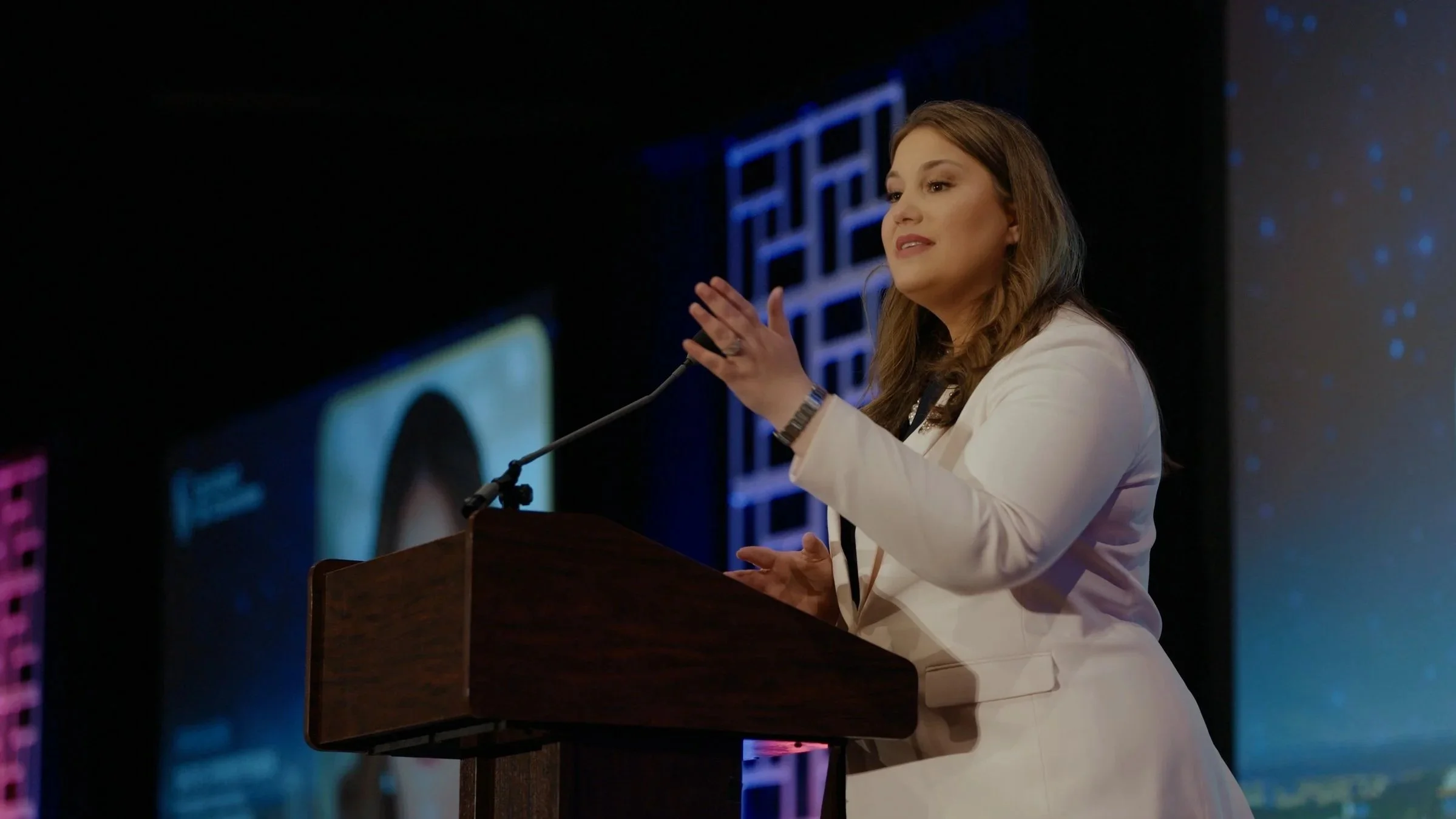
Named one of TIME's 100 Most Influential People of 2025 and the Washington Post's Next 50 Americans shaping society in 2026, Skye Perryman is a nationally respected lawyer, advocate, and executive. She serves as President and CEO of Democracy Forward, a nonpartisan national legal organization that advances democracy and progress through litigation, regulatory engagement, policy education, and research. Her book, Ordinary People, Extraordinary Times: How to Reclaim Your Power, Fight for Freedom, and Reimagine Democracy (Penguin Random House/Ten Speed Press), is available for pre-order and will be on shelves August 25th.