
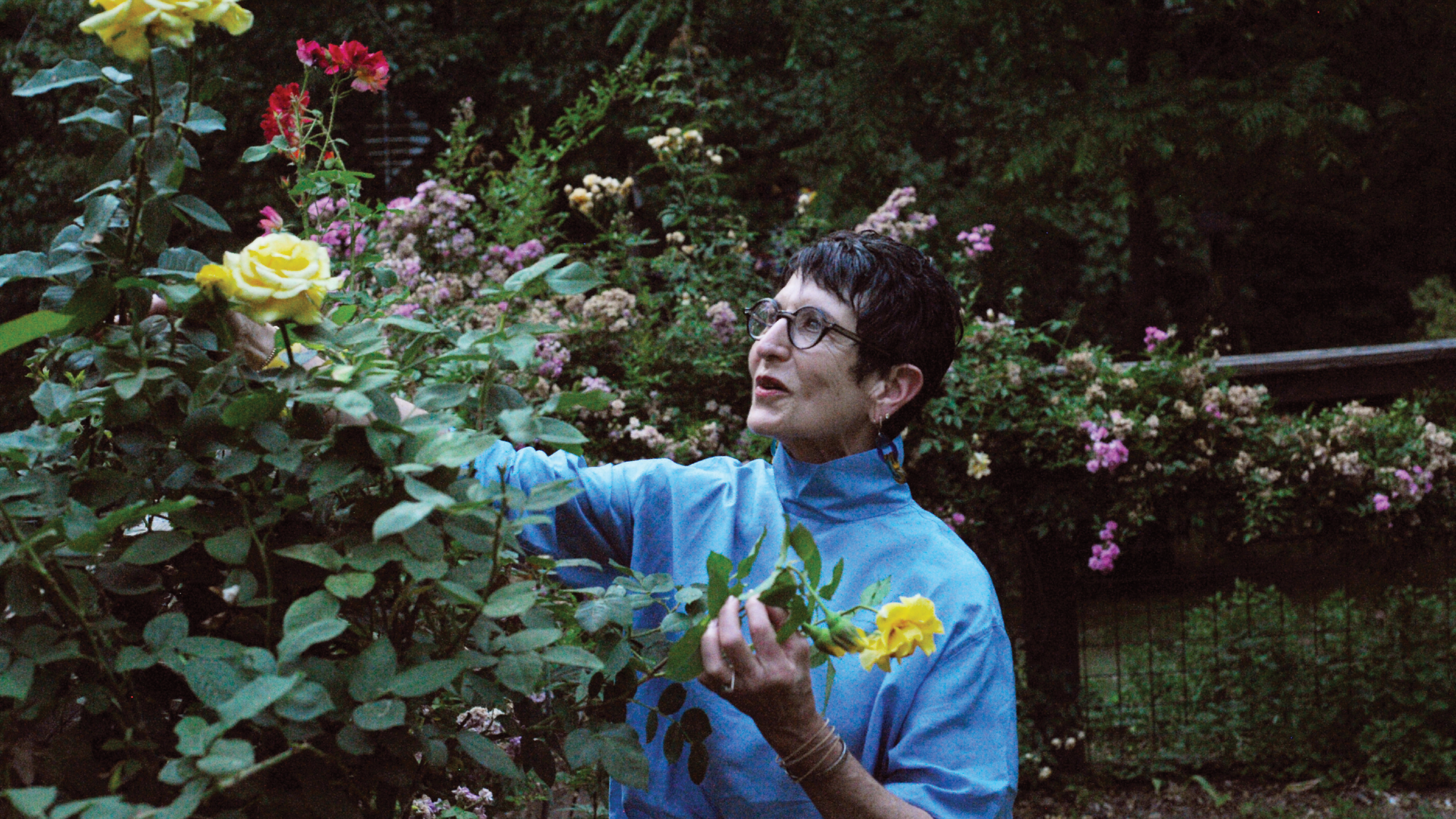

For the author’s Russian Jewish grandparents, America offered an escape from fascism. That promise doesn’t seem so certain today.
Photo by Ali Donnelly
August 5, 2026
—
Originally Published in Issue No. 14 of The Bitter Southerner Magazine
I have a visceral connection to cotton. I grew up in northeast Arkansas — in Mississippi County — one of the most important cotton-producing regions in the country. From the 1950s to the 1970s, my childhood was shaped each year as school began by the sound of ginning and the sharp smell of defoliant in the late summer air. It was a world controlled by white dynasties and built on the labor of Black and white tenant farmers and sharecroppers. By the time I went to college in the early seventies, the so-called neo-plantation was well established — a post-World War II, highly mechanized, capital-intensive agricultural system that displaced the labor-intensive world of my grandparents’ generation.
That industrial cotton economy sustained my family in Blytheville, yet I was always aware that our Jewishness marked us as outsiders, and had ever since my immigrant grandparents arrived in the Delta in the early 1920s. This region had been made and remade by people whom the nation simultaneously needed and wanted to exclude. In 1937, Arkansas Congressman William Driver wrote a letter of recommendation for my father, Jerry Cohen, hoping to help secure his nomination to the military academy at West Point: “The fact that the young man is of Jewish extraction is not a barrier to his recognition.”
Here’s some of our “difference” as I remember it from growing up: My grandmother had a Russian accent. My family went to temple on Friday nights instead of Sunday church. We celebrated Jewish holidays like Hanukkah, Rosh Hashanah, Yom Kippur, Passover, and Purim. Despite this, every year my father’s secretary, May Dixon, whom my sister and I adored, gave us spectacular Easter baskets. Bring ’em on — we wanted all the chocolate eggs and bunnies. We drove endlessly around the neighborhood at Christmas time, entranced by the colorful lights and decorations. In comparison, our unadorned house looked like a guest who refused to dress up for the costume party. Divinity candy and Christmas cookies entered our kitchen solely on cellophane-wrapped gift trays from family friends.
The food my mother prepared appeared exotic to my classmates — cold borscht served with a dollop of sour cream, challah, roast chicken and brisket, noodle kugels, matzoh meal pancakes, bagels and lox, babka, marble cakes, stewed fruit, and Seder-time gefilte fish with a side of bright red horseradish. My lunch box included salami, egg, and olive salad sandwiches, alongside a bag of Fritos and a frozen Hostess Cupcake (my mother froze everything).
Family vacations were set in New York City and New England rather than Southern beaches and mountains. My sister and I went off to summer camp like our Christian friends, we just didn’t mention ours was Jewish. I heard antisemitic stories in school, along with schoolmates’ worries about the future of my soul. Our parents and grandparents were Democrats and locally considered “liberals.” When it came time to consider college, Mom and Dad urged me to look East while my friends stayed South. My mother whispered “Jewish” as in, Do you think they’re … Jewish?
The quest to understand my family’s Southern Jewish experience, and the region as a whole, turned into my profession as a scholar and teacher of American Studies at the University of North Carolina at Chapel Hill. Education was my ticket out of the South, yet ultimately a journey that brought me back home. Recently I have returned to my family’s historical saga, and as I examine their papers, letters, and ephemera, I am slowly uncovering their assimilation from Russian Jews to white Southerners.
In the early 1920s, my grandparents Samuel Joseph “Jimmie” Cohen and his young bride Luba Tooter Cohen left their immigrant families and the vibrant Jewish enclaves of New York City to establish a new life in Blytheville, Arkansas. They were young and ambitious. They had fled the rising nationalism and antisemitism of eastern European worlds, and America represented opportunity. Once they came South, I imagine they laid aside as much of their outward Jewish identity as possible. Judaism was not their focus. It would be up to the next generation, my father and mother, to build a Jewish community in Blytheville after World War II.
Jimmie and Luba arrived through a door still open before the Immigration Act of 1924 effectively shut it. They arrived in a country that, over time, would absorb them into whiteness, granting a belonging that was conditional and costly. As America marks its 250th anniversary this year, I think about what my grandparents would recognize in the immigrants arriving now: the same hunger for safety and opportunity, the same disorientation of language and culture, the same reliance on ethnic networks to survive. I also think about what would horrify them: a surveillance and deportation apparatus of a scale that did not exist in the 1910s and a political climate that has made arrival nearly impossible for people fleeing violence no less severe than the pogroms that drove my grandparents west.

Luba and Jimmie Cohen with son, Jerry, in the 1920s on a construction site in northeast Arkansas. In the Cohen Family Papers #05178, Southern Historical Collection, Wilson Library, University of North Carolina at Chapel Hill.
In Arkansas they entered a land as ancient and layered as the Mississippi River mud — a place where geological time, Indigenous history, European settlement, slavery, and immigrant arrival were compressed into the same Delta soil. Through photographs in family albums, my grandparents reach out to me, pushing through time, and I am reminded of the challenges they faced — floods, pandemics, financial insecurity, antisemitism, and racial violence — challenges that resonate today. The world they built was always unstable. In the Mississippi Valley’s New Madrid Seismic Zone, the great earthquakes of 1811–1812 created the “Sunken Lands,” the same land where their livelihood was centered in the 1920s. They lived through the catastrophic Mississippi River flood of 1927 whose destructive force was directly tied to the politics of white land ownership and control of water flow. That flood killed hundreds of people and displaced thousands more, most of them Black Southerners. Federal relief was administered along racial lines, and Black flood survivors were forced to labor at gunpoint.
As a civil engineer in northeastern Arkansas, my grandfather was immediately engaged in the land and local waters. Each day he came home covered in dirt. That makes you Southern in a visceral way. If not for his accent, he might have passed as any typical young, hardworking, Southern white man. He drank hard and told stories and broke into song at the table. That makes you Southern, too. Jimmie oversaw the construction of hundreds of canals, bridges, dams, and highways. Draining swampland, removing timber, and building levees opened some of the richest farmland in the world to cotton, soybeans, and rice. Without flood control, the land was worth nothing; this work became Jimmie’s specialty.
Jimmie and his team at the Pride & Fairley Firm proposed an innovative, cost-efficient solution — the “inverted siphon” — inspired by an ancient system developed by Roman engineers to channel water through difficult terrain, essentially creating a crossroads where one waterway passed over another. My grandfather’s 1924 drawing of the inverted siphon at Rivervale, Arkansas, is signed by him as the “Chief Engineer of Construction.” But the land he opened to cotton was not an achievement experienced equitably. The drainage infrastructure Jimmie built made Mississippi County one of the most productive agricultural regions in the country — and deepened a racial economy that depended on the labor and dispossession of Black Southerners. My grandfather was a good man by all accounts — generous, capable, beloved by colleagues and employees alike. He was also a participant in a system he did not build and may not have questioned. That is the inheritance I carry. It is not unlike the inheritance many Americans will be asked to reckon with at 250: the distance between the promise of the republic and the machinery that built it.
Jimmie’s work was interrupted by World War II, when he enlisted as an officer in the 98th Naval Construction Battalion of the Seabees, who built the airfields, bases, and roads in the South Pacific. An article in Memphis’s Commercial Appeal caught his attention: “Seabee Forces Require Officers: Construction Experience is Essential for Interviews in Memphis.” He received this naval promotional flyer: “Here lies a genuine OPPORTUNITY for two-fisted, red-blooded Americans to serve shoulder-to-shoulder with the combatant forces in the ‘SEABEES,’ the newest branch of Uncle Sam’s Navy.” I doubt my grandmother thought this was a good idea.
At 46, Jimmie was almost past the age limit for military recruitment when he registered for active service. He mentioned Russian as his foreign language, and under “education,” he described how he left Minsk in 1912 after completing high school, and studied engineering, math, science, and English at night school in New York City. Now, he left Luba in charge of managing his stalled company; he sold most of the draglines and earth-moving equipment, and what they kept, she rented out. Their 20-year old son, Jerry, who would become my father, had just graduated with honors from the Civil Engineering program at Cornell University and joined the Navy as an Ensign.
In 1944, Blytheville’s Courier News published a photograph of Lieutenant Samuel J. Cohen with two other officers: “Arkansans on Tarawa.” The article reported that Cohen had survived 19 bombing attacks in the Pacific theater. In June 1945, the lead article of the 98th Battalion’s weekly newsletter was entitled “Lt. Cohen Goes Home.” It noted that “aside from his duties as Transportation Officer, Cohen will be best remembered as master of ceremonies at various battalion affairs and for his imitation of Hitler.” Jimmie’s vibrant Russian personality and accent, his quiet but gutsy Jewishness, and his deep patriotism were key to his mocking portrayal of Der Führer.
Jimmie died in 1954 from complications of an ulcer, what my father called “the Contractor’s Occupational Hazard.” Letters of condolence poured in from colleagues in the construction business — fellow engineers, equipment drivers, suppliers, former Seabees-turned-contractors. Each spoke of Jimmie’s expertise, kindness, and dynamism. A Seabee veteran and official at the Monongahela Power Company wrote: “He was such a robust individual that I thought he was indestructible and would live forever.”
My father Jerry took over the family business and led it until the 1990s. In retirement, he became a quiet conservationist, dedicated to restoring natural resources where construction and extraction had led to deforestation and profound habitat loss. Restoring waterways was his way of giving back to the land his father and he helped drain and transform. In my parents’ honor, my family funded the construction of a canoe shelter through the Arkansas chapter of the Nature Conservancy in the protected river corridor of Bayou DeView — a region that preserves the Arkansas Delta’s ancient forests and rich wildlife in a hauntingly beautiful cypress-studded bottomland that is both vulnerable and resilient.
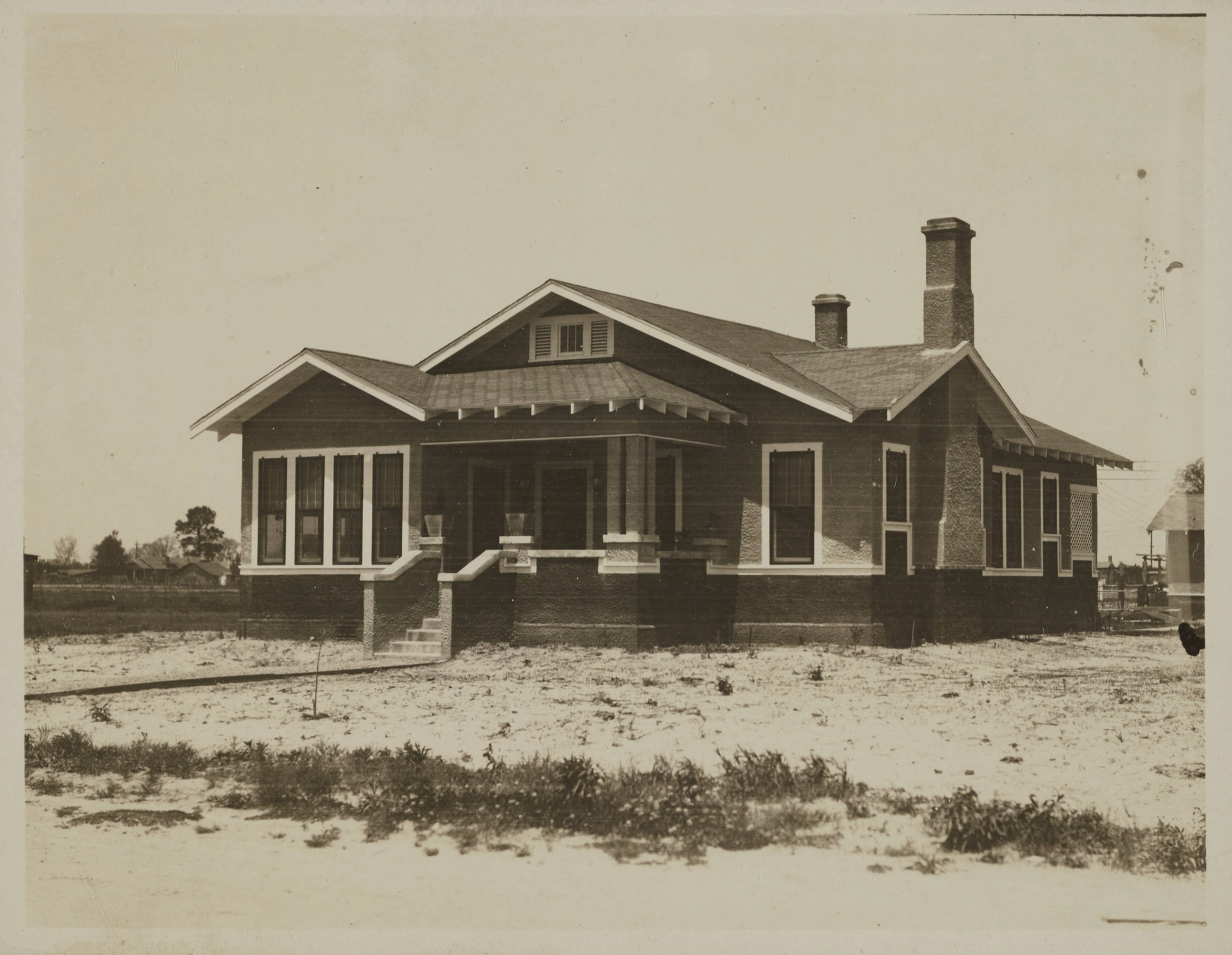
Jimmie and Luba Cohen’s home in the J.P. Pride Subdivision in the 1920s. In the Cohen Family Papers #05178, Southern Historical Collection, Wilson Library, University of North Carolina at Chapel Hill.
In the fall of 2019, my husband, Bill, my sister Jamie, and I took our mother, Huddy, back to her adopted home in northeastern Arkansas. Huddy grew up in an observant Jewish home in New London, Connecticut, and had met my father on a blind date when he was stationed in Rhode Island during World War II. Now, Mom was 93, and returning to see a cotton field at harvest time was at the top of her bucket list. We stopped along the way and walked with Mom to the edge of a cotton field. She gently pulled the cotton fibers between her fingers, reconnecting our family thread between Arkansas and North Carolina.
My parents came of age in an era that promised to end the fascism that targeted their ancestors. They believed they could live Jewish lives in America — openly, proudly, without apology. I inherited that same belief. But fascism, as we have learned, is not a thing that ends. The fear of displacement, emptied communities, the need to blame someone, to concoct conspiracies behind falling wages and the rising price of groceries and gas is often aimed at immigrants, Black Americans, and Jews. The list is familiar. My grandparents would recognize it.
America at 250 is being asked to celebrate itself. I can predict our version. Bill will grill an almost burned hot dog for Huddy who just turned 100 this year. I’ll add sliced tomatoes, sweet corn, and watermelon to the table, and we’ll hang out until fireworks are visible beyond the pine trees in the backyard. Maybe we’ll watch a good World War II–era movie, a favorite of Huddy’s, perhaps because of their moral clarity. Fascism was the enemy, sacrifice meant something, community held together under pressure. My mom will say she cannot believe she has lived to see this America, and she’ll want an answer — she always does. I’ll tell her what I believe: that the American experiment of democracy is a practice and its people, not an administration. Then I’ll remind her of what she already knows — that we push back, we fight, we make noise. I’ll pass her some more watermelon, and we’ll make plans.
— Marcie Cohen Ferris
An emeritus professor in the Department of American Studies at the University of North Carolina at Chapel Hill, and director of UNC’s Center for the Study of the American South, Marcie Cohen Ferris is a faculty editor for Southern Cultures, a quarterly journal of the history and cultures of the U.S. South. She is the author of The Edible South: The Power of Food and the Making of an American Region and Matzoh Ball Gumbo: Culinary Tales of the Jewish South, which was nominated for a James Beard award. Ferris received the Craig Claiborne Lifetime Achievement Award from the Southern Foodways Alliance in 2018. Her 2022 book Edible North Carolina: A Journey Across a State of Flavor explores the vibrant contemporary food movement in the Tar Heel State. Ferris continues to teach and research on the Jewish South and Southern food cultures and is currently working on a nonfiction narrative of her Russian and Arkansas family.
Ali Donnelly grew up in Kentucky on the Ohio River where industry and nature collide. Her photographs explore the beauty of our existence while here on earth. She is drawn to people, plants and the land - and the interconnectedness and pleasures we share. In addition to her photographic practice, Ali is a gardener for Montrose Garden in Hillsborough, NC providing further ground for observation and attention to light. Her work has appeared in The New Yorker, Rolling Stone and NBC News online. She is a member of Women Photograph.