
Hundreds of thousands of citizen clerks nationwide work diligently to make sure you can cast your ballot and that your vote is counted. They take democracy seriously.
Words by Rebecca Burns | Photos by Sue Dorfman
September 2, 2026
—
Originally published in Issue No. 14 of The Bitter Southerner Magazine
To be honest, until I became an election clerk myself, if I gave poll workers any consideration at all, it was a little dismissive. Oh, look at those nice, earnest, nerdy people, I’d think while standing in line to cast a ballot. Sometimes I’d idly wonder: It must be fun to be the person who hands out those “I’ve voted” stickers — like the grown-up version of a kindergarten teacher doling out gold stars. Maybe I’ll do that when I’m retired, I would muse.
Then came the 2020 election and the false information disputing its result. We saw rallies — “Count Every Vote!” “Stop the Steal!” Armed protests at election offices. The endless conspiracies about voting machines. The blatant lies on TV talk shows and in state capitals and in Washington D.C. Falsehoods about voting mushroomed — despite study after study and lawsuit after lawsuit proving voter fraud is exceedingly rare. Crackdowns on voter access accelerated.
Clerks, who used to seem like background extras during the drama of election days, suddenly were thrust into a blinding spotlight. For decades I had worked at journalism organizations that forbade active participation in political campaigns or election work, so my interest had been theoretical. But when I retired in 2023, it seemed that enlisting as an election clerk would be a small way to support fair elections. I signed up.
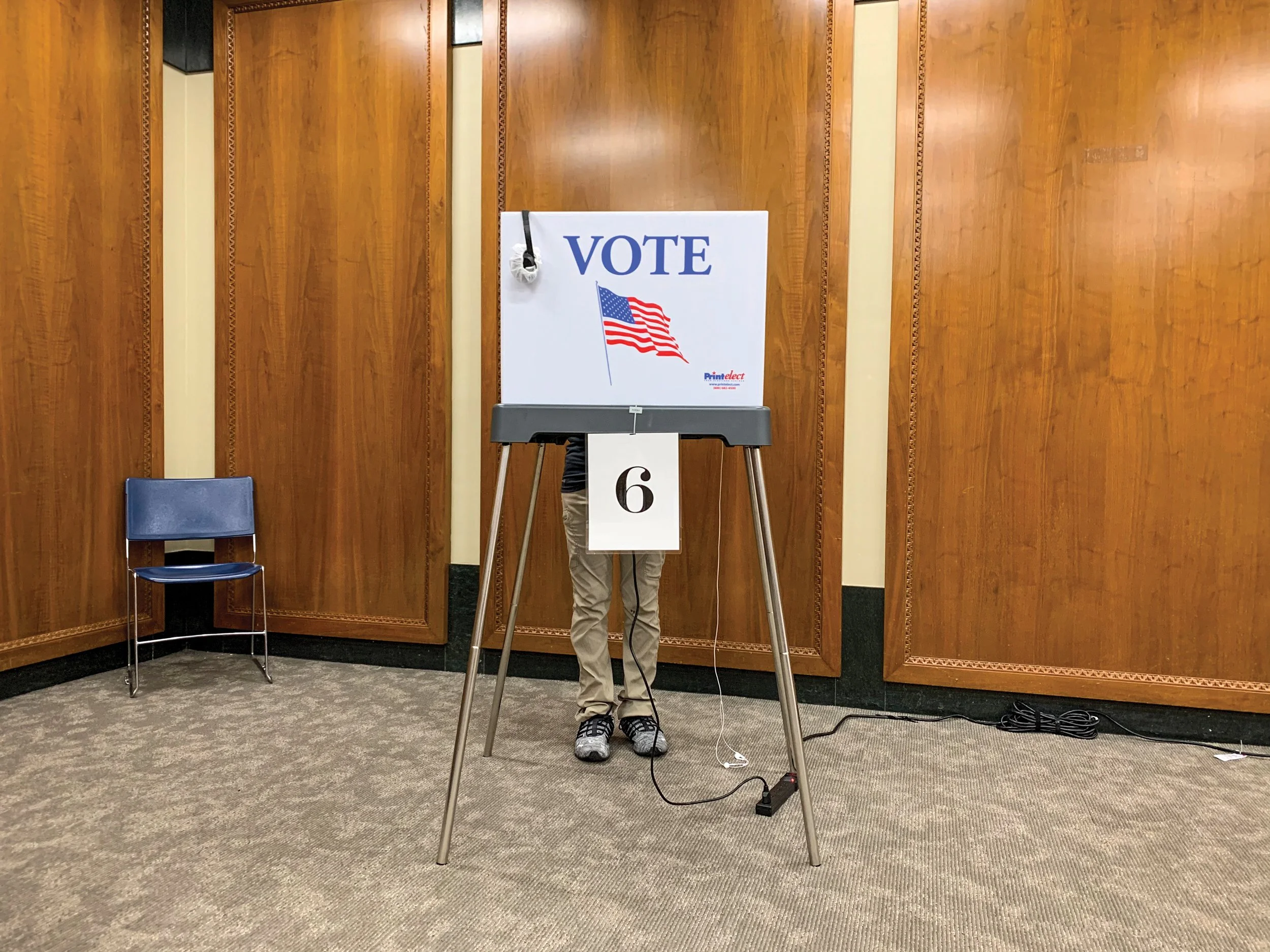
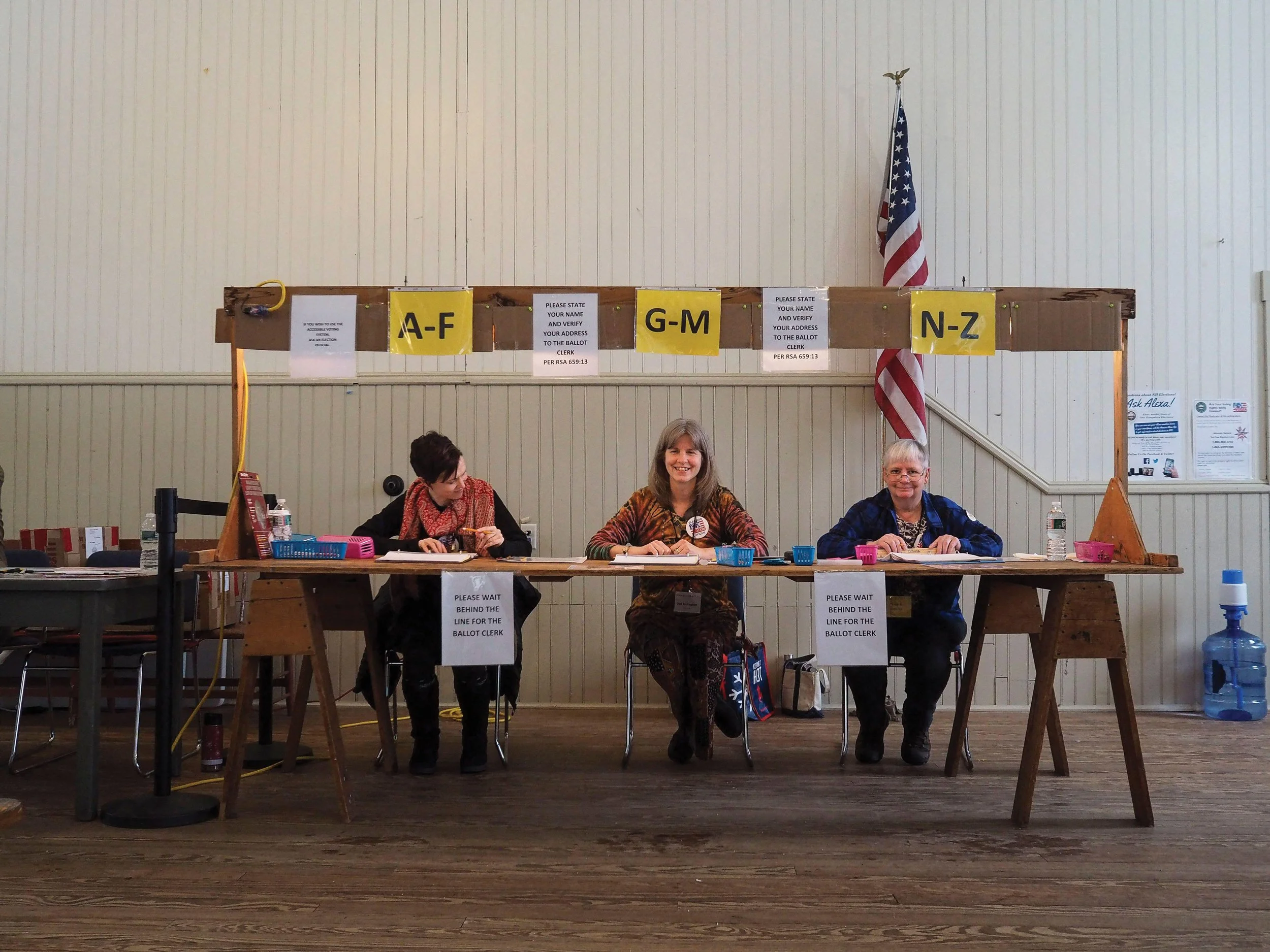
(Top) Poll workers in Sanbornton, New Hampshire’s Old Town Hall greet voters in February 2020. (Above) A South Carolina college student casts a vote for the first time.
While I had presumed clerking was a volunteer position with cursory vetting, nationwide, pollworkers are paid, temporary employees. The hiring process varies from state to state and county to county. To become an election clerk in Athens-Clarke County, where I live in Georgia, I had to fill out an application, go through a background check, have an interview, and complete the bureaucratic process to become a part-time county employee (we earn between $15 and $18 an hour). Once hired, I started training. Lots and lots of training.
Since voting in my first election (Bush-Dukakis), I have cast a ballot every time I could, and never doubted my vote would be counted. After working within the system, that trust has grown into an iron-clad faith. In every state, full-time staff — secretaries of state, county clerks, and various boards — plan for elections, implement systems and processes, and comply with state and federal policies. To conduct elections, they bring in part-time election workers — more than 600,000 nationwide. In 2024, I joined this army of everyday citizens who step up for a few days or weeks during each election cycle to keep our democracy moving forward.
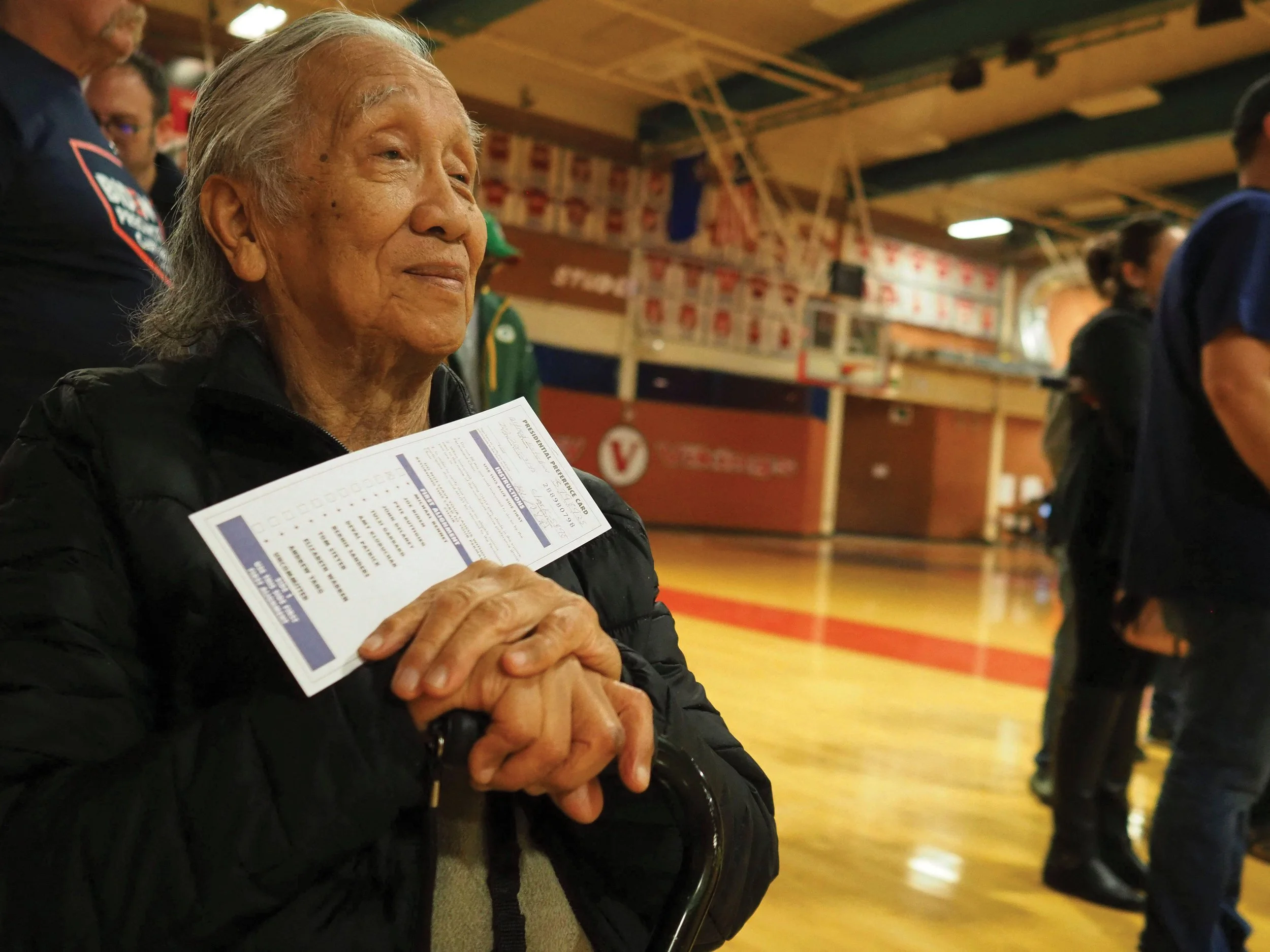
Caucus voters await the count of the first alignment at Valley High School in Las Vegas.
• • •
Heading to my first orientation session, I anticipated deep dives into voting law or esoterica relating to Georgia’s ID requirements. Instead, seated in the public library auditorium, we spent most of our time talking about what to do in case of confrontations at the polling place. We engaged in role-playing exercises: asking a voter to remove a campaign hat, diffusing an argument, avoiding partisan commentary. We talked about ways to herd voters to safety in case someone showed up with a gun.
“Well, it’s not just handing out stickers,” I told my husband when I got home, toting a heavy binder of training materials and sympathizing with every middle schooler who’s gone through an active shooter drill.
Subsequent training sessions — held in the elections offices — got into the technical details. We learned how to use software to check in voters, going through a host of scenarios for confirming identity. We learned how to format the chip cards used to cast ballots in Georgia’s voting machines. We troubleshooted every worst-case scenario from power outages and natural disasters to handling drama when people show up at the wrong precinct or refuse to put away their cell phones. We talked about diffusing conflict — again.
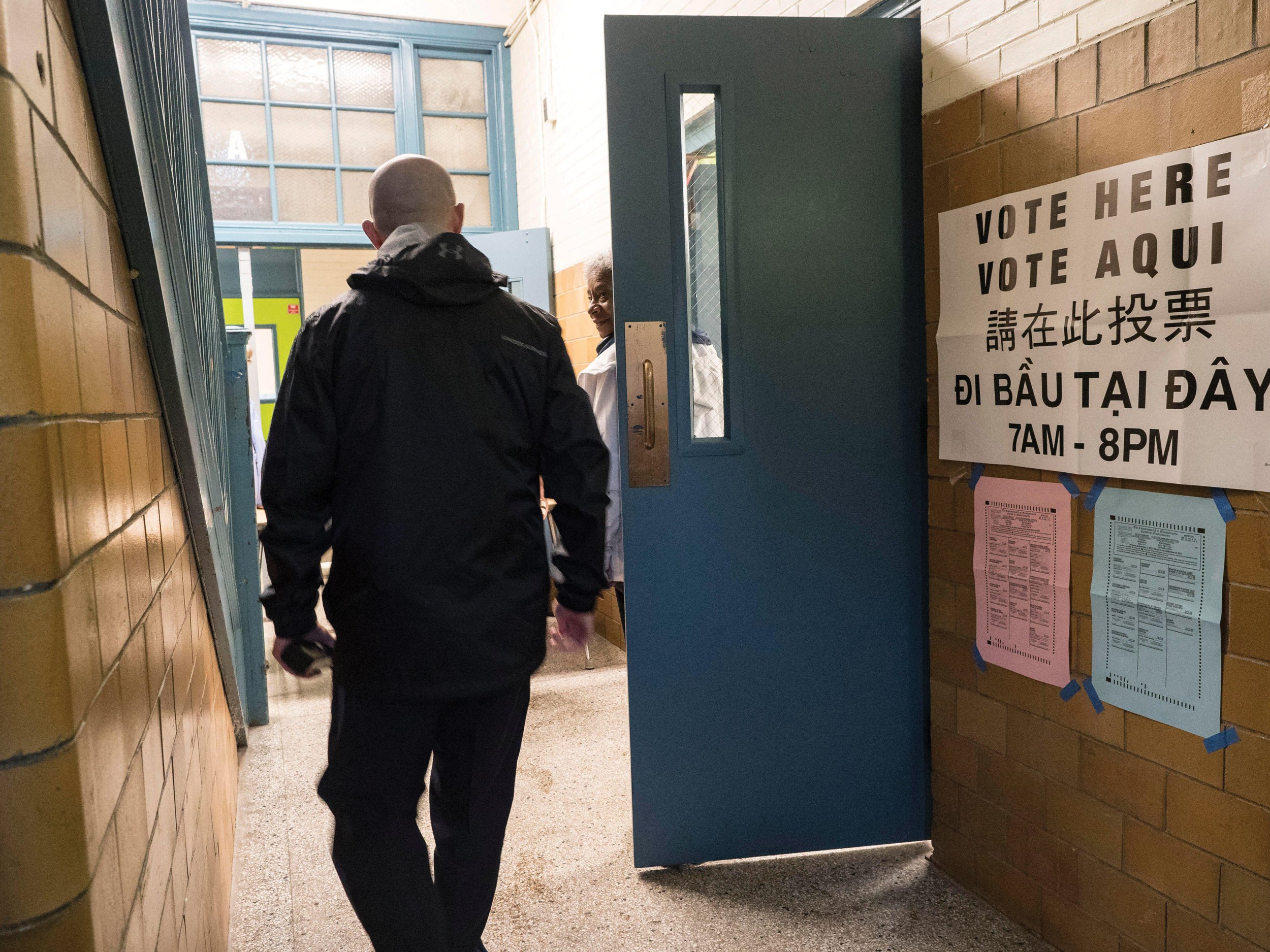
A man enters his polling place to vote in-person in the Massachusetts Primary. Wall signs saying Vote Here are in English, Spanish, Chinese, Vietnamese, and a phonetic equivalent of the Chinese characters.
Concern about safety is mounting among election officials. A survey conducted this year by the Brennan Center for Justice revealed that, nationally, almost a third of election officials have experienced “threats, harassment, or abuse because of their job,” while more than half worry about the safety of their coworkers and 23 percent are anxious about the threat of being physically assaulted at work or home.
I agonized about writing this essay. To you, this fear might sound self-aggrandizing — I’m just a lowly clerk who works a few days each year. But you have to recall the harassment and invective that has been thrown at election staffers — full-time and temporary — in the past few years. Here in Georgia, the most famous case is the mother-daughter duo Ruby Freeman and Wandrea ArShaye (Shaye) Moss, who won a $148 million defamation suit against Rudy Giuliani after he accused them of tampering with election results in the November 2020 presidential election. Facing death threats and harassment, Moss quit her full-time role with her county elections department, changed her look, and went into hiding.
“It’s turned my life upside down,” Moss testified during a 2022 Congressional hearing. “I second-guess everything that I do. It’s affected my life in a major way — in every way. All because of lies.”
The women and other family members were harassed at home. Freeman, a part-time election worker, even dropped her longtime nickname — “Lady Ruby” — as she stayed out of the public eye.
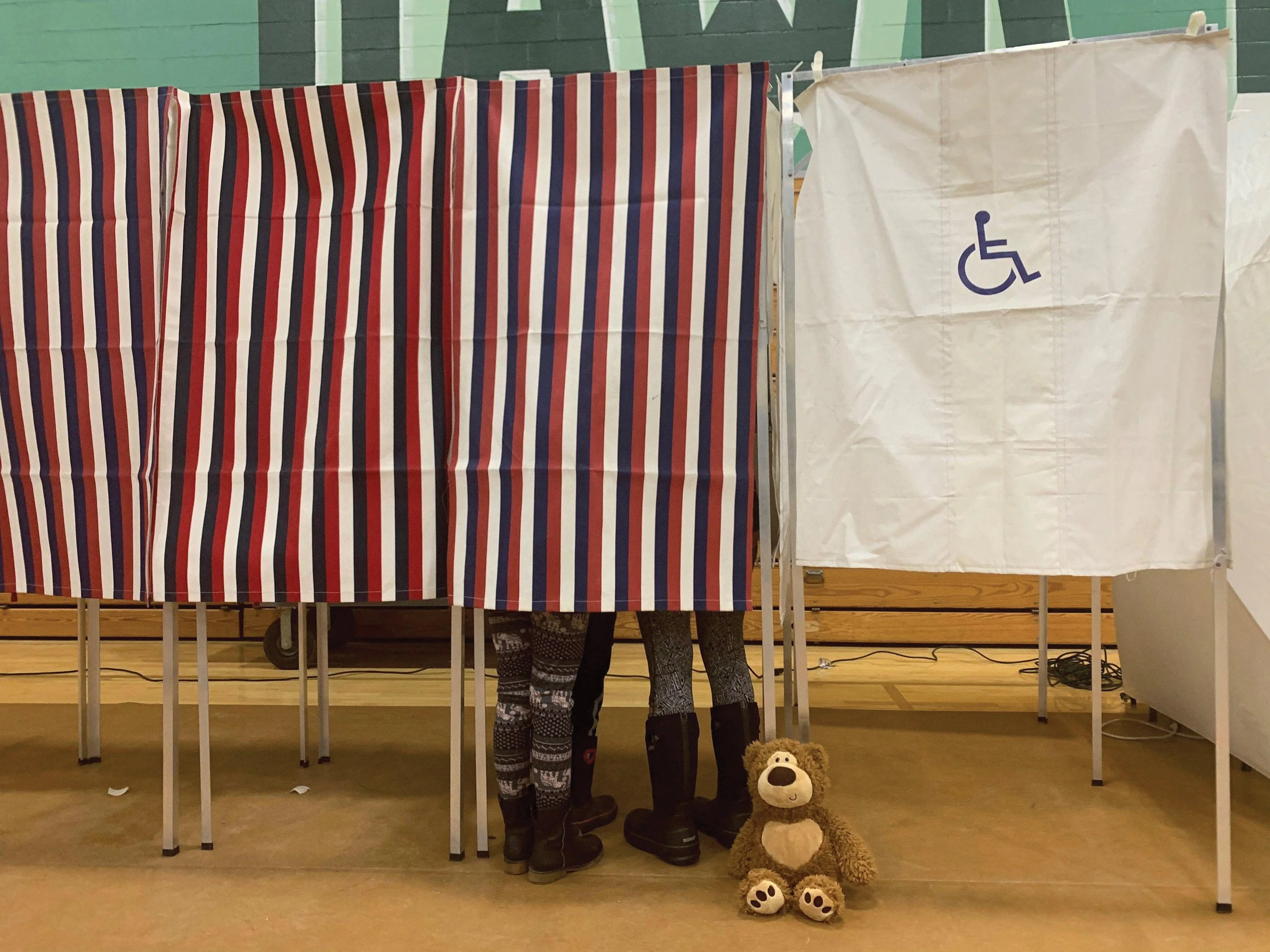
A teddy bear awaits its owners who are helping their parent vote in New Hampshire.
• • •
Chuck Horne is a retired IT specialist and one of my coworkers at an Athens-Clarke County precinct. In 2020, he and his wife served as poll watchers — volunteers trained and assigned by political bodies or nonpartisan candidates to observe the election process. He retired in 2021 and the next year, he decided to sign up as an election worker.
Horne said that since witnessing the work from the inside, his faith in election fairness and accuracy has increased “vastly.”
“That sort of confidence came from the work and seeing the reality of what happens,” Horne says. “The real impediment to election fraud — the same as any humungous conspiracy theory like debates about the moon landing — is keeping a secret among tens of thousands of people. The results of the election are publicly posted on the wall of every precinct. Exactly what the count is. There are many thousands of poll workers across the country — somehow we conspired to steal an election?”
“Zooming out a little bit, one of my main thoughts about the political morass we are in is: America, we need to talk. I mean to each other,” says Horne. “Back in high school, I was taught that if you shout fire in a crowded theater, you have to pay a price. If you shout a lie on Facebook, you should have to pay.”
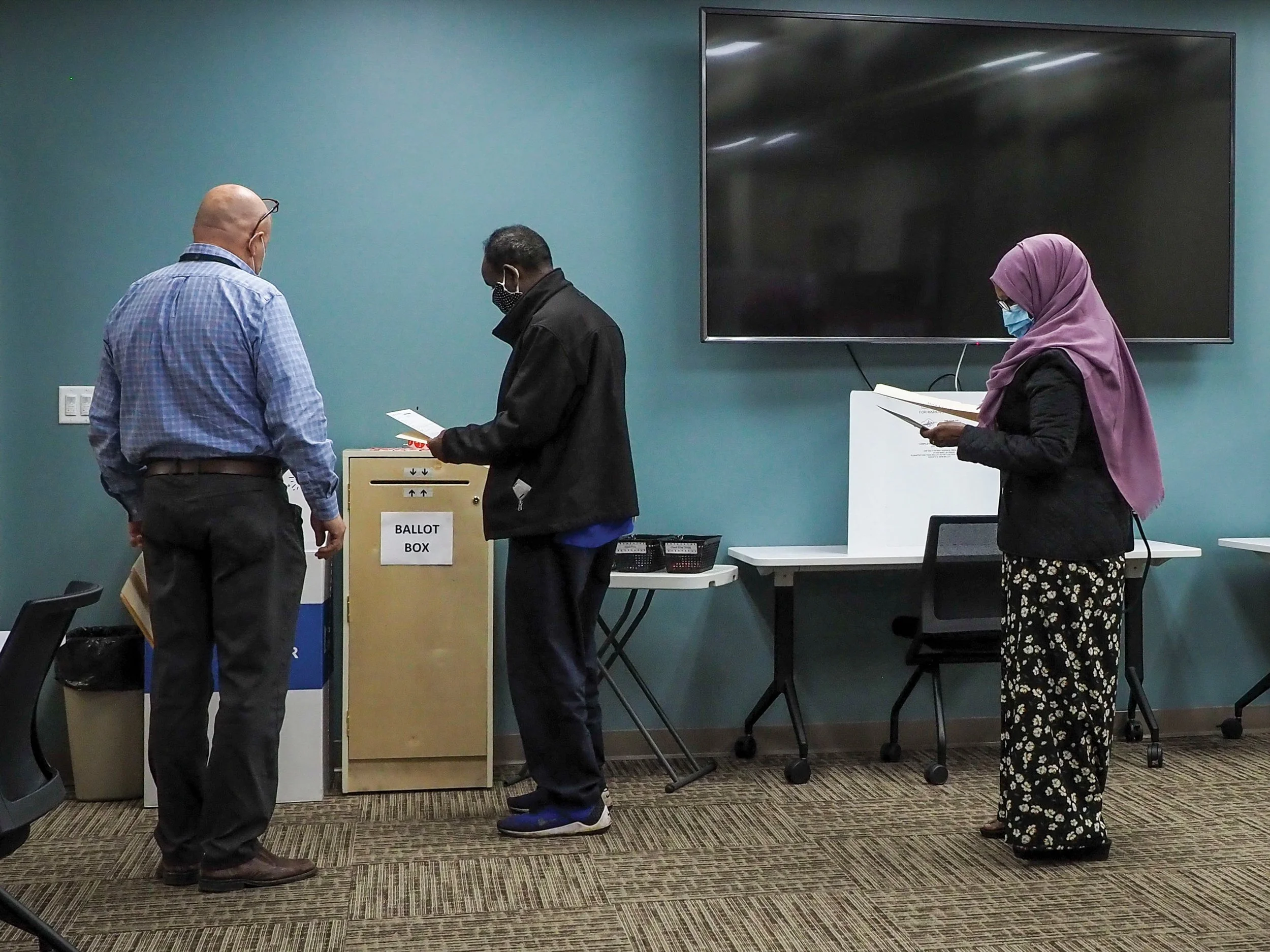
Voters cast early in-person absentee ballots at the Olmsted County Election Office in Minnesota. Policies for early, absentee, and mail-in voting vary by state.
• • •
Election clerking requires a methodical, nose-to-grindstone work ethic. Before each election — whether a high-profile presidential contest or a local school board race — we go through at least three hours of extra training. This ranges from refreshing ourselves on the steps of setting up and using high-tech election equipment to familiarizing ourselves with the ballots. We are briefed on any changes in laws and policies. In 2024, when Georgia elections officials warned us that we might have to hand-tally ballots on election night, we even practiced counting sheets of blank paper, going through the most efficient ways to arrange counted stacks and put double and triple safeguards in place.
Cynthia Turner has worked as an election clerk for more than 30 years. In the beginning, she took vacation days from her job as administrative assistant to the University of Georgia’s vice president for student affairs. Now that she’s retired, she works as an assistant precinct manager. “Voting has always been so important to me. I think about people who fought for my right to vote,” she says. As an election clerk, she strives to “make people feel welcome, to let them know we want them to come vote, to create a good environment.”
Turner started in the days of curtained booths and polling machines with heavy levers. “The new technology is better and easier for voters to use, but it does take keeping up with,” she says.
Whether we have decades of experience like Cynthia, or are relative newbies like Chuck and me, in our county, at least, poll workers represent a true microcosm of the electorate. Granted, we skew older. After all, it’s hard for working folks to take off weekdays or for young parents to commit to a day that starts before dawn and ends, well …. that’s uncertain. (As long as folks are in line when polls are scheduled to close, they can vote. So a day that’s slated to wrap up a little after 7 p.m. might drag on until 9 or 10.) I’ve worked with a retired plant scientist, a former EMT, a onetime FBI agent, a contractor, a custodian, an auditor, a minister, and a radio host.
At orientation, I was bemused to receive a small enamel pin that says “election official” to which metal bars are attached for each election year we work. Some longtimers have clinking chains of these bars, blinged out like war veterans. My pin now has three bars. During the May primary, Cynthia wore a badge sporting 17 bars. “But I have more at home,” she noted. Another of our coworkers, Barbara — aka Lady B. — has earned multiple pins and chains and all kinds of special buttons and badges. She gleams like a five-star general.

Whatever our backgrounds, election staff secure the process at hundreds of checkpoints throughout the voting day and during ballot casting. When we set up equipment (at 5:45 in the morning, in locked rooms before voting starts) we check and cross-check codes on tags that secure the equipment. We pause voting at the top of every hour and check the results logged on each voting terminal, each check-in terminal, and the scanner that processes ballots. We count — and count and count again — the chip cards used in the voting machines. If there’s the slightest blip in the system, it’s logged and recorded and accounted for in multiple steps.
For example, during the primary election this May, the ballot in Athens-Clarke County was so long — races for senator and governor and lieutenant governor and statewide commissioners, not to mention mayor, school board, and local commission spots — that the ballots printed on two sides. Every voter was warned: The ballot will print double-sided. Please wait for the printer to do its thing. But that didn’t stop an impatient citizen or two from getting flustered and yanking their ballots too soon. “The printer tried to eat my vote,” one woman said in distress. Each such incident triggered extensive documentation as the mangled ballot had to be destroyed and the voter printed out a new ballot, this time chagrined and patiently waiting as the printer did its thing.
Georgia pollworkers — required to be “judicious, intelligent, and upright citizens” — swear oaths not only when they join the election workforce but at the start of each shift. The importance of complying with the law is drummed into us. We are acutely aware of the legal requirements to administer the election properly.
Sometimes, we work under the scrutiny of outside observers. Poll watching used to focus on ensuring that voters didn’t face barriers or discrimination. Today’s poll watchers are more focused on the mechanics of the process.
The watchers I’ve encountered have been a mixed crew. One looked like the restaurant critic from Ratatouille — tall, cadaverous, with sunken eyes and a perpetual frown. He jotted in a notebook all day, using what appeared to be a system of ciphers or shorthand. His counterpart from another party stood against the wall, wearing Vibram shoes. She bounced on her rubber-sheathed toes and smiled beatifically. I never saw her take notes, but she would leave from time-to-time, make a phone call, do some calf stretches, and return to keep watching. During another election, a husband-and-wife duo sat on hard plastic chairs and chatted quietly, sipping coffee, and occasionally glancing as voters entered and exited the precinct. When we conducted our hourly count of votes he silently followed our precinct manager, then went back to his chair.
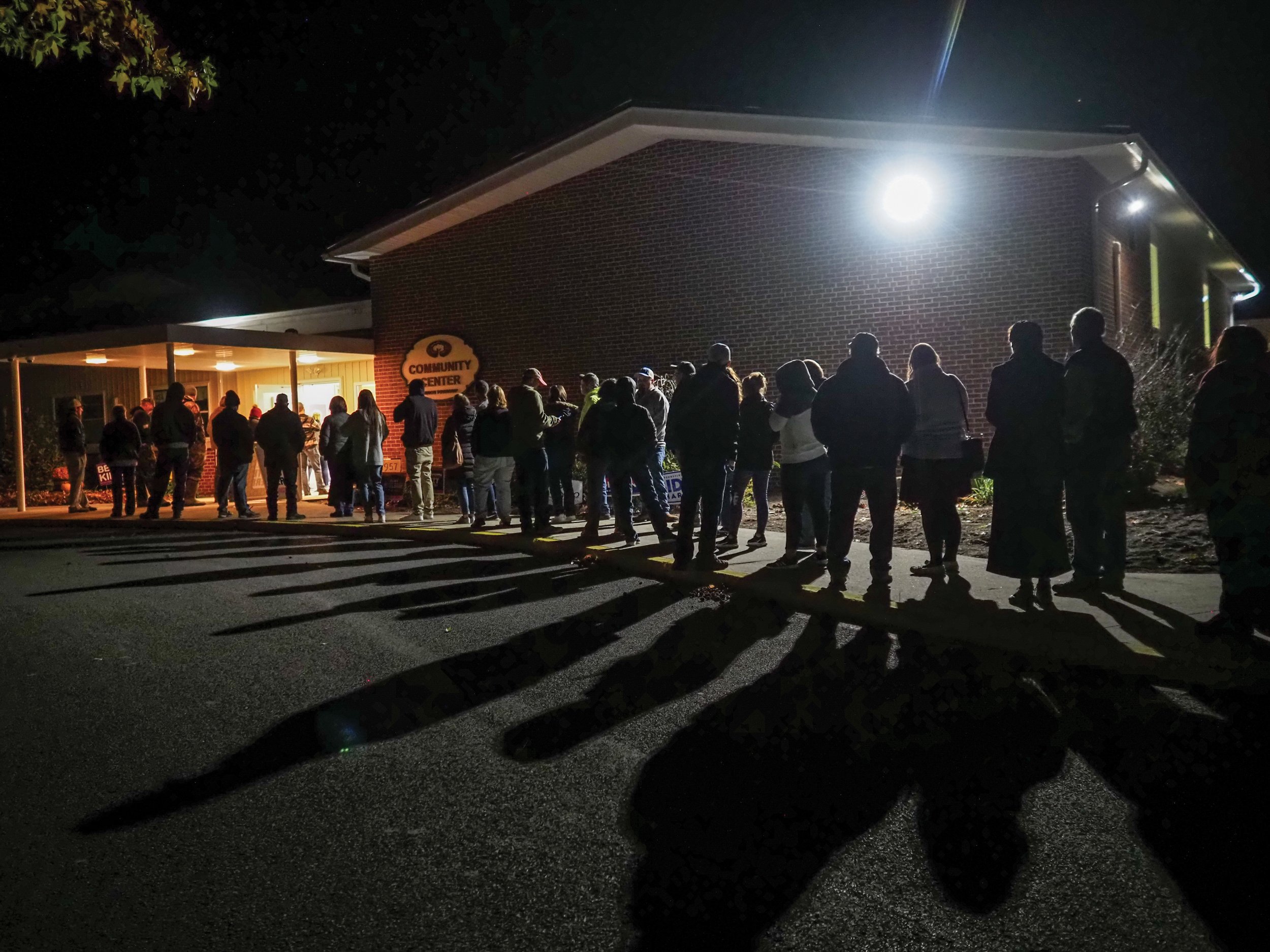
On Election Day 2020 in Bellville, Pennsylvania, voters patiently waited close to two hours under a starlit sky.
• • •
My first assignment was early voting for the 2024 presidential election on the University of Georgia campus. It was exciting: Hundreds of first-time voters earnestly stood in line, checking their IDs, scrutinizing sample ballots with an intensity their professors wished they applied to midterm study guides.
Our official gear includes a wooden handbell that we ring when a first-time voter checks in. During a regular election day we might ring it four or five times. On campus, one election clerk essentially devoted his days to calling out “First-time voter!” and jingling those bells.
There were learning experiences: Dozens of students were shocked to realize that, while early voting is open to every registered voter, that doesn’t mean they could vote in Athens-Clarke County if they registered when they got their driver’s licenses in, say, Gwinnett or Cobb or Pickens or any other of Georgia’s 159 counties. “But my mom said I could vote here,” more than one student pleaded. Your mom is right about so many things, we recited. But when it comes to election law, in Georgia, you have to vote in the county where you’re registered. We encouraged them to go home by election day. You have time. We want you to vote. That assurance didn’t always prevent teary outbursts or mild cursing.
Newly engaged in the process, students had to be reminded to remove political buttons from their backpacks, stuff caps into their pockets, turn campaign t-shirts inside out. But they also wore subtle tribal identifiers. Some young women sported Chuck Taylors or AKA pink and green. Students of all genders wore pearls. Other young women wore Alpha Chi Omega sorority shirts and caps, indicating their sisterhood with Laken Riley, the UGA graduate whose murder sparked political rhetoric during the 2024 campaign. All these members of Gen Z had to be reminded to put away their phones and not take selfies in the voting area or with their ballots. They were very excited to get their voting stickers, which most of them immediately posted to social media.
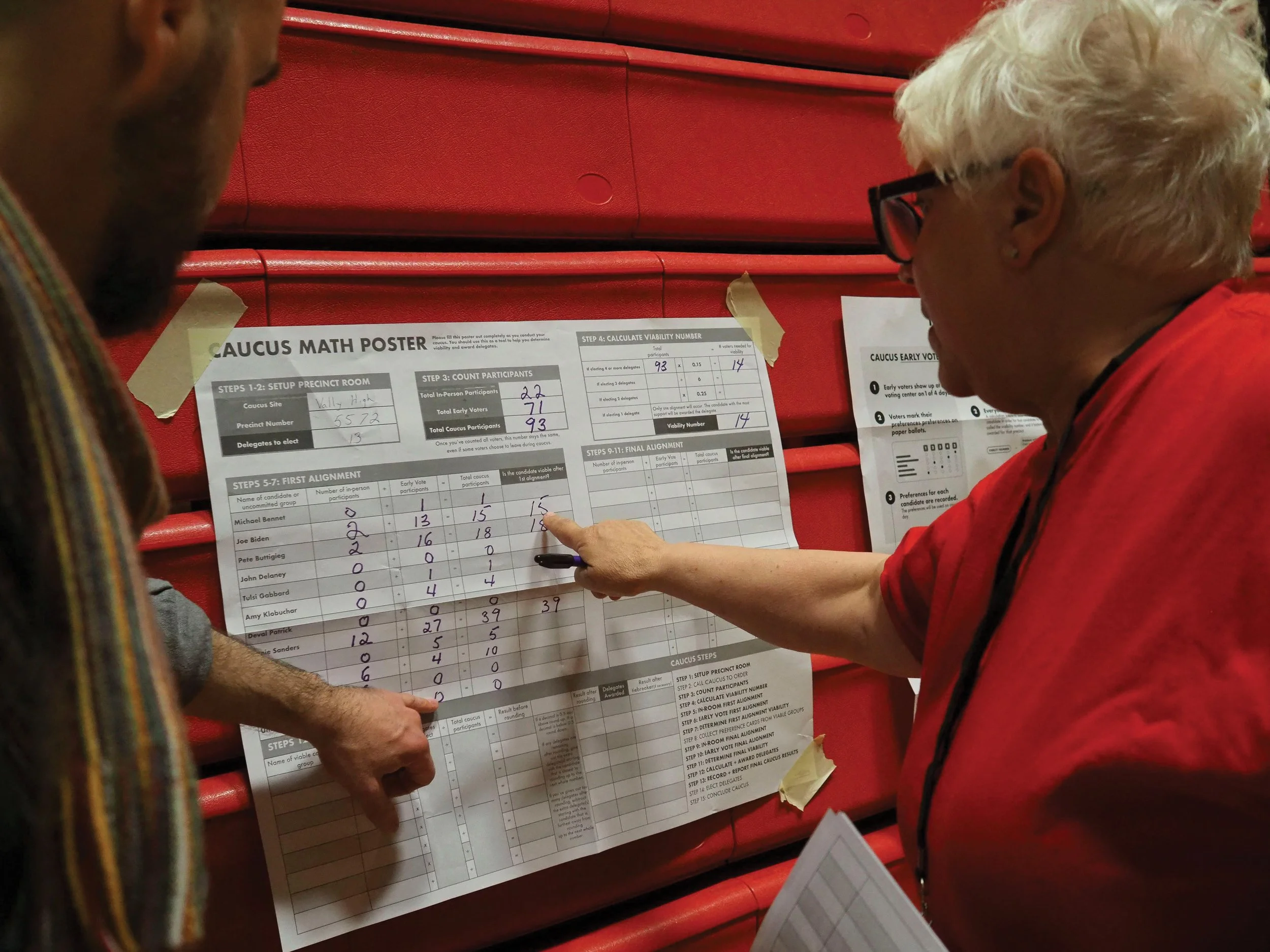
A caucus worker reviews the first round alignment choices at Valley High School in Las Vegas.
For election day itself, I was assigned to a precinct in the local high school, and I’ve worked there every election since. We occupy the front of the gym, where voting equipment is set up by the ticket window and concession stand. In the afternoon, we hear the pounding of basketballs from the courts on the other side of the wall housing the trophy case. If things are slow, we speedwalk around the indoor track above the bleachers.
Working at this precinct is a reminder of how democratic our elections are. Voters arrive representing every facet of the community; kids proudly grab their “I’m a future voter” stickers, and Lady B. greets everyone by name. The sheriff stops by.
The last voters on election day 2024 were three women. The polls had closed, and I was sent out to pick up signs in the parking lot. One of the women stopped and asked if I could take their photo. “That’s my mother,” she said, then gestured, “And that is my daughter — and she’s pregnant with a girl.” I took their photo, exclaiming “Four generations!” They walked toward their cars, and I kept on picking up signs. Vote Here. Vote Aquí. No Campaigning in 150 Feet. Vote Today. I thought about that baby on the way and all those future voters.
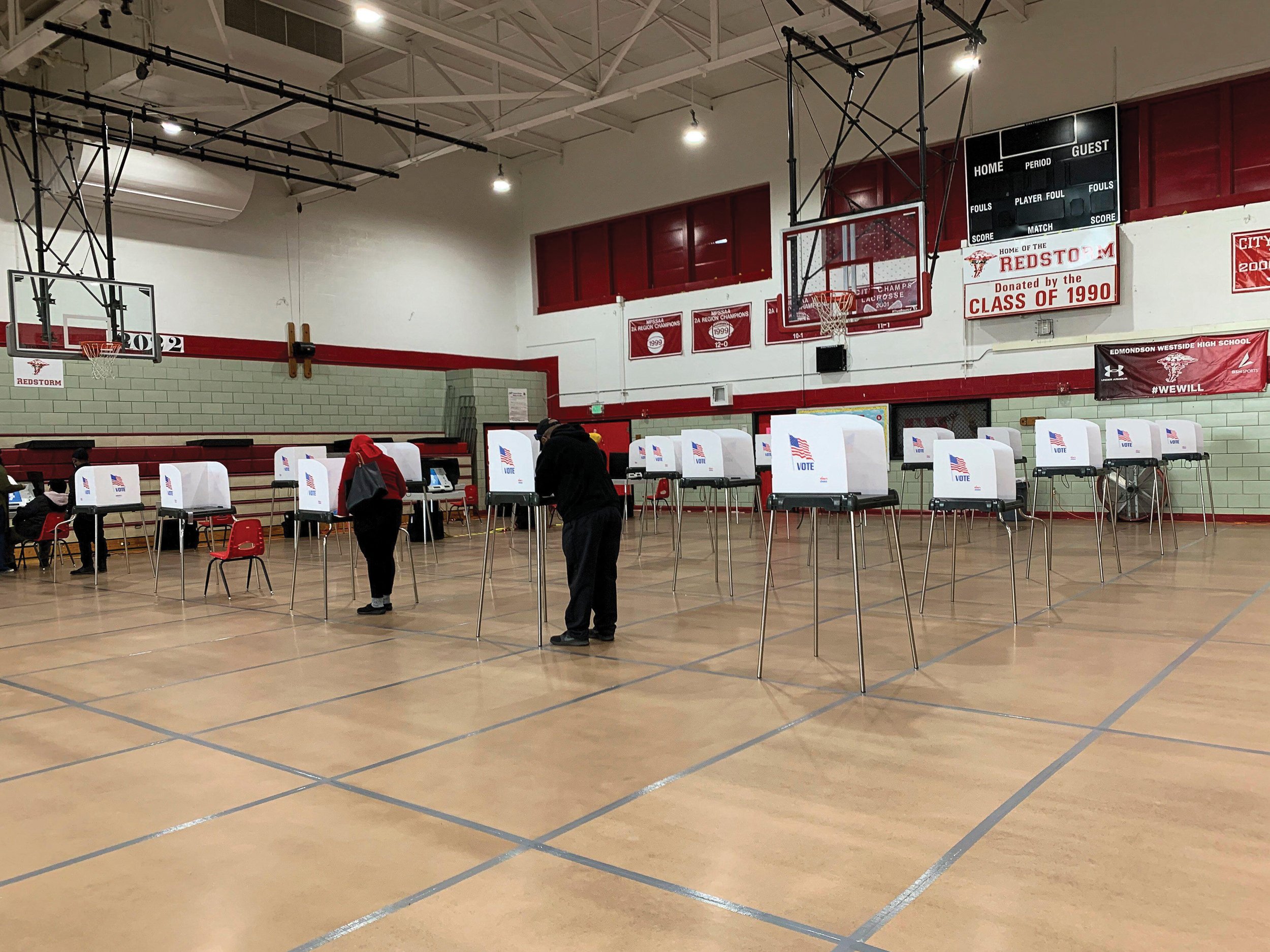
In Baltimore, Maryland, voters cast provisional ballots as they voted in-person for Maryland’s 7th Congressional District Special Election.
• • •
As we head into the fall midterms, the scrutiny election staff faces is expected to escalate. The chaotic efforts to redraw voting maps for political gain — which has accelerated following the Supreme Court decision that essentially gutted the Voting Rights Act — leave voters confused at best, disenfranchised at worst. The mid-cycle scrambles disrupted primary elections already in process in Louisiana, which stoked fears in other states. In Georgia, lawmakers decided to postpone redistricting and to keep in place the current voting system. They did, however, stipulate hand-counting of ballots in marquee races with thin margins. (Good thing we’ve already practiced counting paper stacks.)
All this change leaves voters rattled. Just two-thirds have confidence elections will be conducted fairly and accurately, according to a 2026 Marist poll — although only 7 percent worry about errors at their local polling places. Their anxieties split — mostly along party lines — about voter fraud (Republicans) or lack of access to the polls (Democrats). What people universally agree on is the potential impact of AI and other falsely generated messages on voting and the election. Red, blue, or independent, more than 80 percent believe AI will spread misinformation.
“The underlying fact is simple: Persuasion has become effective and cheap,” write Tal Feldman and Aneesh Pappu in MIT Technology Review. “Campaigns, PACs, foreign actors, advocacy groups, and opportunists are all playing on the same field — and there are very few rules.”
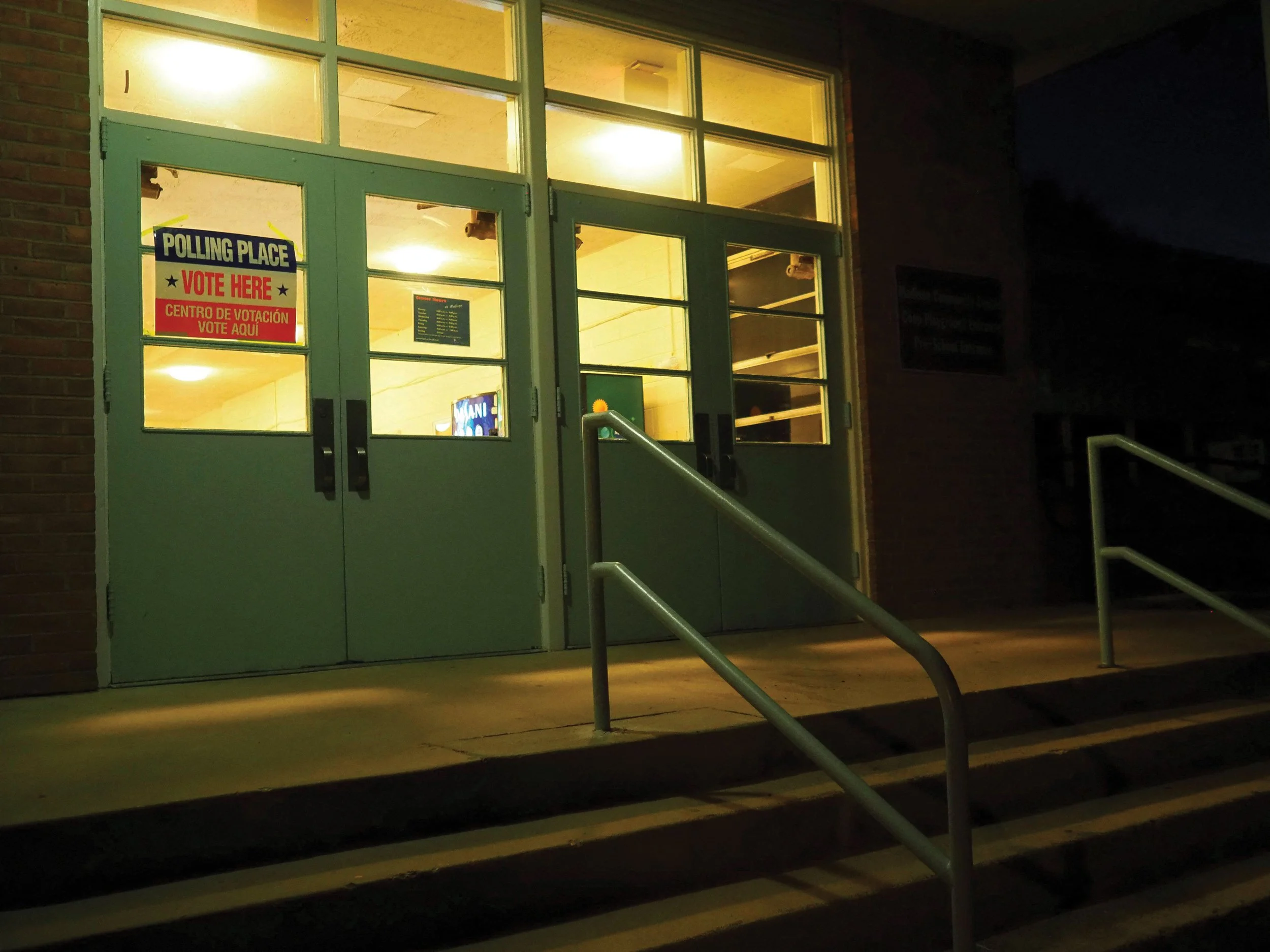
Arlington, Virginia, election officials prepare to open the polls on Presidential Primary Day.
When voters run into snags, election workers always repeat the same line: We want you to vote. Let’s figure this out. This might mean sending a voter to the correct precinct. It might mean directing someone to the voting machine equipped with vision and auditory assistance. It might mean helping someone use a form of ID other than a driver’s license to check in to vote. Georgia is one of 36 states with an ID requirement for voting. We check spelling and punctuation and a host of details to ensure the right person is voting at the right place.
As we head to the 2026 midterms, there are greater concerns. In May, President Trump implied in an interview that he would not rule out sending military to polling places. Electoral maps have been dramatically redrawn. Sections of the Voting Rights Act, which for 60 years ensured protections for Black and other minority voters to avoid discrimination and disenfranchisement of the past, have been eviscerated. Politicians make pronouncements about elections; and poor losers blame fraud for their own failures at the ballot box. Social media and AI are throwing unprecedented curveballs into the process.
We are in an electoral climate fraught with anxiety and uncertainty. But rest assured that as we prepare for November, thousands of your fellow citizens promise to be there for you on election day. We want to get the details right, we want you to vote. And we will ensure your vote is counted. ◊
Former editor-in-chief of Atlanta magazine, Rebecca Burns is the author of three books on Atlanta history. Inducted into the Atlanta Press Club Hall of Fame, she has taught at Emory and the University of Georgia.
Sue Dorfman is a dynamic communications strategist, documentary photographer, program manager, workshop facilitator, film promoter and educator passionate about promoting mission-driven nonprofits and arts organizations.
Featured in Issue No. 14