
Words by Shane Mitchell
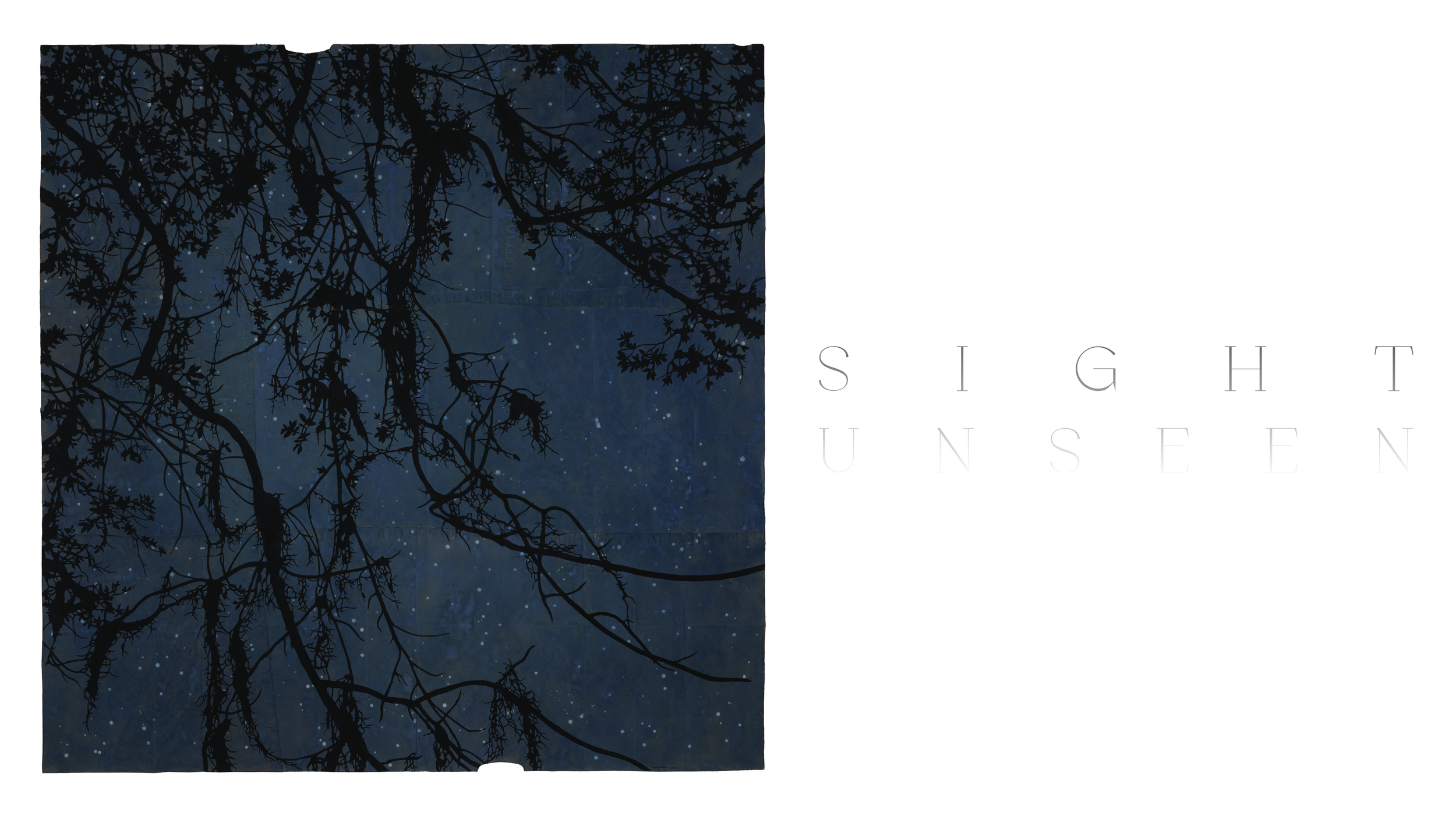
Painting by Maysey Craddock
September 30, 2026
—
Originally published in Issue No. 14 of The Bitter Southerner Magazine
They go for the eyes first, soft like jelly.
Memories play tricks. But they’re not the kind of tricks I lose sleep over. It’s okay if I got the little details wrong over time, like who gave me the fairy stone in the first place. Think it was a great-aunt, the one who used to live close to the old ridge where these staurolite crosses materialize, winkling out of the metamorphic earth, lying there until someone with the eye comes along to claim them. In my family, that’s most of us women. But when conflating how the body of a dead girl wound up lying at the bottom of a tidal creek, gnawed to the bone by crabs, I had to talk my way into a special collections library, depressed at the thought of scrolling back through years of news clippings that only exist on sulfurous microfilm, to bring that terrible night back into focus again.
“If it doesn’t work out, you can come stay with me on the beach,” Gertrude had said.
She got me a place to sleep when I asked to come back. It wasn’t ideal, just a squat cinderblock ranch, halfway down the fields to the farmhouse where my grandfather was born. I’d have to share it with the caretaker, but only for a week, and he was away for most of that so the place was pretty much left to myself. I’d been to the island once as a kid when Nana and her sisters took me to the beach, and afterward drove in the gate trying to find the shellmound. I don’t remember much about that day except being tumbled in an undertow and emerging half-drowned, all salty snot and bloody knees. The aunts bundled me in a towel in the backseat and I paid little attention to the view out the window, while listening to their laughter at not being able to navigate their own childhood memories.
On my return, only a few of them were still above ground, retired in a nursing home on the mainland.
The bridge was low to the marsh where a blackwater river kissed the ocean mouth. A simple swing affair, a few feet above the pluff mud at low tide, long as a dawhoo mile from one side to the other. The span was sectioned with iron bands so car wheels went thunka thunka thunka like a bass drum announcing my arrival.
I crossed over.

A Gullah gentleman was fishing at the landing, while some ladies tossed a cast net. Hands full, hard to highway wave. The road narrowed right away, crowded on each side by rheumatic oaks barely holding up under the weight of moss and resurrection fern. No one on the island wanted to cut them down to widen the road for fools from off driving too fast after drinks at the bar. Each was pinned with little red reflectors. A blinking final warning for those with pettier lives about to embrace bark.
Turning in at the cow gate, I passed between fields where cotton once grew, and then a row of abandoned cabins, unpainted, crawling with vines, and one gust away from collapse. Right at a drainage ditch, and straight all the way to the end, where the black cypress clapboard farmhouse with a red tin roof faced a low bluff above the river. Nobody home. Sat on the high front steps where so many of the family caught splinters in their bare feet and chased down a chicken for dinner when younger than me. Or so I imagined. Sometime around 1910 my grandfather bought a two-dollar camera, probably a Kodak Brownie No.2, and started taking mono-
chrome photographs. His parents under the oak in the front yard. My grandmother and her sisters in their nicest dresses bouncing on a joggling board. The Gullah cook in her apron and the field hand driving an ox cart. Strings of croakers, sailboat races, and the old mare May grazing in high pasture. Happy excursions to the beach with the double cousins, tangled bloodlines apparent in the dark eyes and sunburned noses. No hint what the future held, no clue purple death raged out in the world. Two leather albums full, only to collect dust in Nana’s hall closet. To my later shame, I took them without permission.
The caretaker was already gone but he left the door open to the cinderblock. I cranked the air conditioning unit stuck in a window and set my bag down by the bed in the back room. Even with the sun on a slow dip, the air felt thick like a jar of cheese spread. There wasn’t much in the fridge so I walked back over the road to the field where tomatoes were ripening to pick some for dinner. Didn’t think anyone would mind. One of the abandoned cabins looked safer than the others so I stepped up on the narrow porch and pushed through the door standing ajar to the empty parlor. Bare pine floorboards, a crumbling brick fireplace, a homemade ladder to a sleeping loft. Layers of old newsprint lined the wallboards. Spattered with blue paint, and scraps of blue floral paper. Kept out the wind, kept out the haints. I tried reading some of it. Only a few words legible here and there, messages missing beats.
In the darkness
Unconscious
Aloud
at her
The sun, within
On the earth in
And in the
in action a gentle
which had struggled
But take heart.
Ate the tomatoes with some squishy bread. Should have grabbed some shrimp at the little fish market out on the main road. Or dropped a crab trap in the creek. Crabs will eat most anything. They’re scavengers. One of my great uncles used a dead dog to catch jimmies and sooks when his mother set him the chore. Seems he tied a rope around the carcass, and tossed it in the canal between the fields, over and over for days, until there was nothing left. Didn’t say why he always came back to the kitchen with a full bucket but when the truth finally came out the family told it onward as a joke. Stories have power in places like this. Maybe that’s how I got stuck on the crab thing.
Forgot to bring a book, and the television got zero reception, no matter how I twisted the antenna. Mind, this was before dead zones were annoying. Doesn’t seem that long ago, but then time has a way of slipping around me. The woo woo déjà vu kind of time, not the quantum entanglement kind. Although, if I’d known then what I know now, no question I’d bend the continuum ass backwards to warn myself.
I stepped outside again to watch the moon rise, so bright it woke the egrets, rustling white plumes in the oaks overhanging water. Was it swamp or lake? Honestly not sure. Above the mantle in my dining room hangs a painting of this scene, with a flight of egrets dipping down to roost in that same spot. My grandfather painted it before he died in 1940. But I didn’t inherit it from one of the aunts until long after that night. The gnats had subsided and the crickets hummed. No lights in any direction except celestial, for what seemed like a whole lot of lonely. With nothing to occupy me, I poured a glass of water, stripped to t-shirt and undies, and climbed into the unfamiliar bed, the sheets smelling faintly of some musty cupboard.
I woke to her sitting on my chest. Pressing hard. Pinning me down. It felt like she had claws.
Angry. So angry.
My fairy stone was misplaced. I usually keep it under my pillow or close to hand, and that added to my panic in the pitch dark. I was lying on my back, not on my side like usual. The paralysis was intense. I couldn’t move, couldn’t scream.
I don’t ever see her, exactly, or hear her either. She, always she. Out of solidarity with all the maligned old ladies in my life, I refuse to use the H word. Even calling her a mare has lost its power, because that has come to mean a girl with hooves, not the nocturnal fright who turns my flyaway hair into a matted tangle. She can lurk quietly near the ceiling or in a corner of the room, then descend like inescapable doom. Once in a while heralded by a shadowy scurrying across the sheets. Sometimes I just wake up and she’s right on top of me, a malevolent peculiarity. She ambushed me once in the back bedroom of my grandmother’s apartment in Queens, where we played a childhood game called “Alligator” on sleepover visits. Between the twin beds was a swamp teeming with gnashing reptiles, so my sister and I had to bounce on the mattresses before jumping across, or dash shrieking back and forth on the rug. Nana would come in and tell us to settle down. Vivid imagination, monsters under the bed, all that. They never tried to smother the last breath out of me. After that time, I taught myself a recital trick to break free from her, memorizing the Lord’s Prayer inscribed in gold leaf on a ceramic trinket box shaped like an open Bible that sat on Nana’s bureau. I’m not religious like that. Could have been any prayer or chant really. Years later, she appeared in a villa owned by some British national on a remote archipelago in West Africa. The spell broke as a muezzin called to the faithful at dawn. So, a nondenominational boo.
Had to tap a deep well of will to twitch a finger. Blink. Cough. Forgive us our trespasses. All at once, the dead weight lifted. And she was gone again. Drenched in sweat, drained, I drifted back into unconsciousness.
Next morning, I needed sun on my face after being assaulted in a place that should have felt like a homecoming. Walked through the sandy backyard to a rickety dock stuck out into the marsh and sat on the weatherworn planks, letting my feet dangle as the rising tide flushed the spartina. A ripple of shrimp swam past, turning the water silver in their wake. Stayed there until the numbness wore off. Rose and turned back, but almost face-planted in one of the shallow holes off the back door. Dozens of them, easy enough to stumble in and turn an ankle. Didn’t make any sense, but treasure hunters used to look for trinkets this way. Coins, buckles, rings, and buttons. Bullets. Anything left behind after a battle. Possessions abandoned in a terrified flight from angry men and their vicious dogs. This place was that old.
Threw my clothes in the bag, turned the car around, and raised a cloud of dust that drifted across the tomato field.
The beach felt like a hug. I could hear the surf from Gertrude’s screen porch, one street in from the shoreline. Her sons bought the house when she retired back to the island. Built on stilts in case of hurricane and flood, painted a certain shade of blue for luck, wind chimes made of shells gathered among the dunes. She was an elderly cousin and best friend with one of the aunts when they still rode horses to school and shared penny candy from her father’s general store next to the post office. Bent with age, arthritic hands, scarecrow hair. Gertrude was kindly intentioned. She volunteered for turtle watch during egg laying season and took in strays with sleep-wrecked bruises under their eyes. Settled me into a wicker chair and brought out iced tea and homemade cookies in a plastic tub.
“Maybe I should have told you,” she said.
“Told me what?”
“About those holes.”
I went still, a cookie raised in my hand.
That was it for a while. A long while.
You left me there.
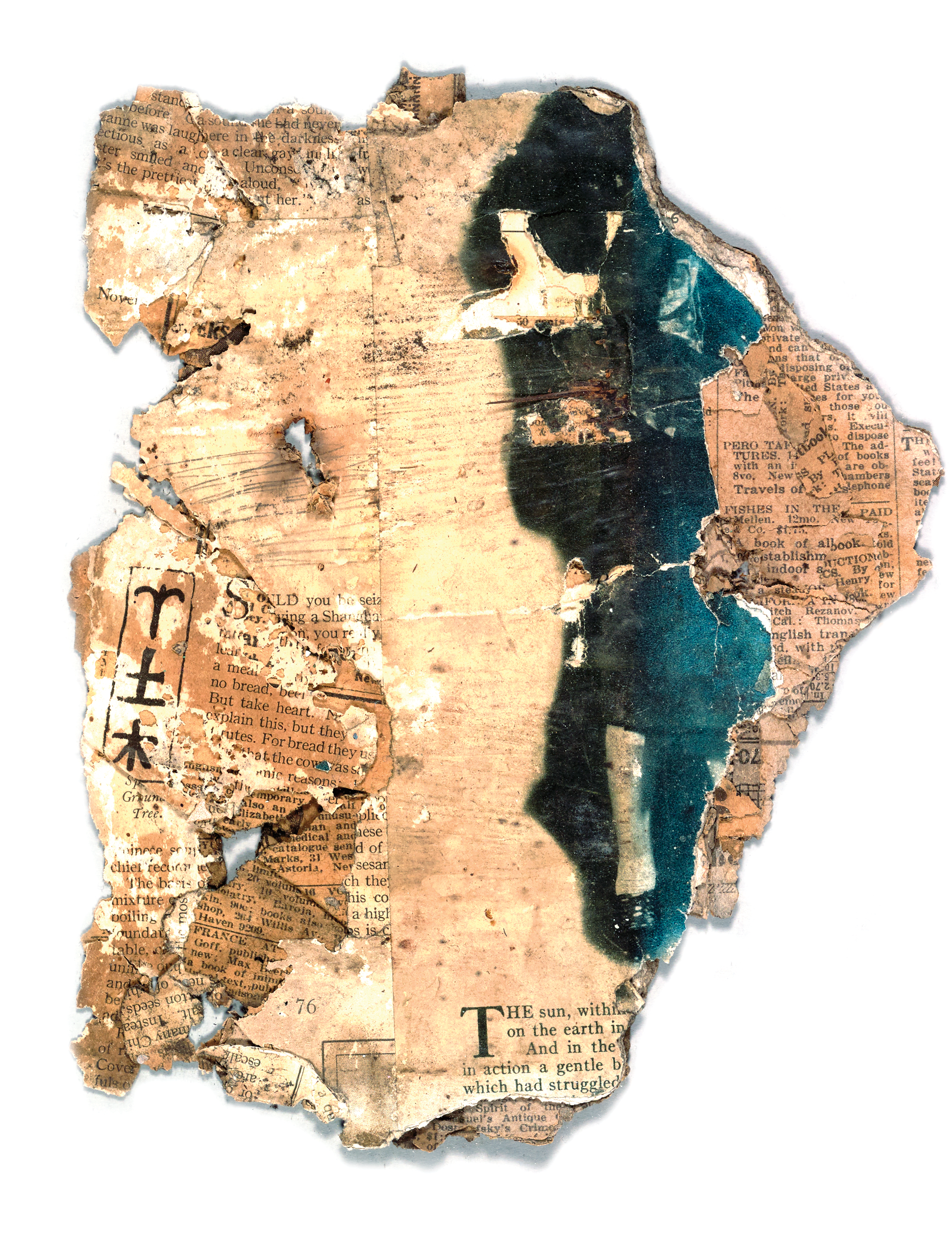
Scraps of layered wallpaper from the island cabin built in 1853. Collection of the Smithsonian National Museum of African American History and Culture.
• • •
Then I found her.
When you come from a long line of liars, any story is fair game, especially on an island where the telling is a proud social skill, right up there with pretending the loss of a beloved won’t break you or sitting up straight in the pew as sweat beads under your bra when the electric fans cut out before the homily. What Gertrude told me the morning I first sat on her porch would change over the years, until the truth of it obscured. Still gruesome, but my terrible night in its aftermath somehow made it more personal, and believe me, I try not to dwell on that too much, because it can invite another episode. At some point I started saying he threw her body in the creek. Makes sense, right? At least, that’s what I would have done to cover up a murder, knowing the voracious proclivities of beautiful swimmers.
“Do you know how to work one of these machines?” asked the librarian on the special collections desk.
“Not really.”
He pulled a reel from the cardboard box labelled 1986 and threaded it into the reader. We huddled in a cubicle way back in the third floor stacks next to rows of filing cabinets like steely barricades against ignorance and oblivion. Centuries of the rare and the mundane. If I wanted to see pictures of the old bridge again, or hold a letter sent to my great-grandfather about his management of the farm, this was where to find such things. A fool’s errand, maybe. Needle in a stack of needles. Last ditch. At least the librarian narrowed it down by telling me I was looking in the wrong place. The daily I wanted didn’t exist anymore, swallowed by its competitor. Working backwards from that summer spent with Gertrude, scrolling through microfilm from the year before was my best shot, squinting at blurry headlines between ads for the Piggly Wiggly and Rexall Drugs. The librarian checked his watch and wished me luck.
Four days into December, as I was considering the stupid magnitude of searching a dead newspaper for signs of a life, there she was in a grainy photograph, big grin at the camera, right on the front page.
“Woman’s Body Found, Police Seek Husband”
See? I never left.
He reported her missing a few days after arguing loudly at a Halloween party in one of the bars on the beach. Onlookers later reckoned they had a stormy relationship. Maybe they drank too much. Maybe she cheated on him or flirted with someone else. A tow company discovered her beige pickup abandoned in a parking lot up in Charleston, her purse and wallet on the seat, like she walked away and never came back. The police became suspicious when the husband lied poorly about her disappearance. And then a witness remembered driving him back down to the island.
He fled.
Detectives probed with long rods and dug around until they hit bone, about 200 yards off the cinderblock’s back door, a shallow grave facing the loblolly on a boggy bend of the creek. Unearthed remains were so decomposed dental records were necessary to identify her. The coroner said she died of a lacerated lung, from blunt chest trauma.
That happens when someone beats you to death.
She was only 27. Stood five feet, messy brown bangs, weighed less than a wet paper towel. A nurse at an elder care outpatient facility. We could have been sisters. Or cousins, anyway.
He was 10 years older, almost a foot taller, worked construction, and had a solid 70 pounds on her.
When the cops picked him up in Florida two months later, the state prosecutor suggested he might have buried her alive and floated the death penalty. He pleaded non-capital and escaped the chair with a life sentence. Her family took her home to bury her. Again.
Goddamn it.

• • •
That low slung bridge is gone, replaced by a sky high span, an ironical conduit for invasive alligators to sashay over from the mainland. My imaginary ones would have snuck across on their little webbed tippy toes, snickering.
Hehehe.
When I come back now, it’s to clean the graves. Scrape lichen off with a credit card, swipe away moss, prune the camellia. Nana and her sisters, all in a row. Husbands by their sides, and so many of the double cousins. Burst into tears the first time I stood by Gertrude’s fresh headstone. Left her a shell off the shore. On these visits I commune about the trajectories those happy photographs didn’t capture. Infant deaths, crop failure, a big Depression and many little ones. More world-swallowing wars. Another pandemic. It’s taken all this time to set aside nostalgia and realize my grandparents bid the island goodbye for a much better life up North, even if it was cut short when he came home one day, put his head down on the table, and left Nana without her childhood sweetheart for the next 50 years. A little dusting of my father rests here, and my sister, too. Maybe, someday, a grey speck of me.
Afterward, I go over to yet another cousin’s house for the night, walk out on his dock, and bait the wire trap.
I do love deviled crab.
Inmate number 143285 served 20 years. A clemency plea and petition of community support mouldering in a different special collection devoted to the papers of a certain Dixiecrat senator clarified what happened next. One unlikely justification stuck out like a wicked nail in a warped floorboard:
“He is a rare victim of male spousal abuse by a violent wife over a long period of time. She was killed accidentally during a struggle.”
The letter went on to say he turned his life around in prison, quit the drinking that led to his downfall, ministered to others and committed his life to God. Saved money to start a home repair business should he be returned to society.
He got out five years later and went right back to the island.
Regardless of how it went down, she’s clearly not at peace. Easy to dismiss what I sensed one night decades ago as hallucinations from disordered sleep. Say what you want, a lingering vibe is gonna haunt, extra sauce if it’s the echo of a woman lashing out at her erasure. And don’t make fun of my fairy stone either. If I feel the need of it in my palm, that’s my business. Always ready in my wallet with the other lucky charms that have since accrued. A jade dragon, a nazar, a silver Ganesh rubbed almost inscrutable. When you hear too many voices, when you see strange out of the corner of your eye, when monsters brush past you in the dark, or plop down hard on your chest demanding attention so fiercely, clutching a crystalline talisman is a small act of resistance against the pressing weird.
Forgive those who trespass against us.
Oh yeah. One more thing. She is not the she, and deserves a name.
I see you, Lesley Anne. ◊
Journalist and author Shane Mitchell writes cultural criticism and narrative nonfiction. She has received five James Beard Foundation awards, including two M.F.K. Fisher Distinguished Writing prizes. Her book, The Crop Cycle: Stories with Deep Roots, was long-listed for the PEN America Diamonstein-Spielvogel Art of the Essay prize. She loves spooky season.
Maysey Craddock was born in 1971 in Memphis, TN and currently lives and works in Memphis. Known for her richly layered gouache paintings of ephemeral landscapes, Craddock’s work explores fragile ecosystems and the poetic, cyclical forces that shape them. Drawing from her own photographs of wetlands and other delicate environments, Craddock reimagines fragments of wild habitat that persist—despite human impact—within ongoing cycles of death, rebirth, and reclamation. These spaces become both specific and unmoored: at once rooted in observed reality and transformed into imagined terrains that evoke deep time, distant shores, and unseen depths. Her works function as meditations and memorials, honoring both the beauty and vulnerability of environments in flux.
Header: “Dark was the night,” 2023, 50 x 50 inches, gouache, flashe, and thread on paper bags. Painting by Maysey Craddock.