

In the 19th century, explorers discovered tiny islands off the coast of Peru that were 3 meters deep in guano. That natural fertilizer was shipped to Europe, where it temporarily buoyed an ailing agriculture industry.
Words by Jack Bell
Photos by Dan Routh & Ernesto Benavides

September 18, 2026
—
Originally published in Issue No. 14 of The Bitter Southerner Magazine
If you look closely at a map of ocean currents in the South Pacific, one of the first things you notice is a strange, serpentine tongue of water curling up the western coast of South America. When current from the South Pole reaches the tip of Cape Horn, a portion of it peels away from the south and begins shaping a path to the north. This new current — the Humboldt Current, so named for the 19th century German scientist, Alexander von Humboldt, the first European to study it — runs parallel to the continent until it comes alongside Peru’s border with Ecuador, 4 degrees shy of the Equator. As if suddenly uncertain of the tropical clime it wandered into, the current tacks to the west, where it disappears into the warm waters of the unimaginatively named Pacific South Equatorial Current.
You’d be forgiven if, like me, you supposed that the Humboldt Current’s isolated path represents an attenuation of the ocean’s power. On the map, it looks like the mighty, counterclockwise circuit of saltwater near the South Pole would slow to a halt when it makes contact with South America. The current’s northward drift seems forced, as if the ocean were trying (and failing) to dislodge the continent’s heft. Compared to other currents, the Humboldt Current is indeed very slow. It moves a tremendous amount of water, up to 700 million cubic feet per second, but it does so at a leisurely pace: 15 miles-per-hour, tops. However, the secret of the Humboldt isn’t its size or speed so much as what is happening on top of it.
In her 2023 book, The Blue Machine: How the Ocean Works, the physicist Helen Czerski asks you to imagine a stack of clean, white copy paper on top of a desk. If you place your hand on top of the stack and push the paper to one side, the top sheet moves about as far as you decide to move your hand. Some of the papers below will move, too. The friction between the lower pages allows the top sheet to pull them along with it. But the force isn’t strong enough for all of them to travel the same distance as the top sheet. Instead, the pieces fan out below, each one traveling a little bit less than the other, until the paper that is furthest from your hand barely moves at all.
Czerski explains that this is more or less what happens whenever wind blows on the surface of the ocean. The warmer surface layers of water get pushed about in different directions, generating most of the planet’s major ocean currents. When this surface water moves, it takes some of the lower, colder layers with it. But like the stack of paper, the further down the water column you go, the less these lower layers tend to move. At the bottom of the ocean, the water barely moves at all.
The same phenomenon happens in the Humboldt Current, but on a different order of magnitude. Trade winds blowing off of the Andes perform a constant stripping away of the warmer layers of water that extend horizontally several hundred miles offshore. A staggering amount of ocean, up to 300 meters, is displaced by the wind. The earth’s rotation causes the water to swerve to the north instead of west with the wind (the so-called Coriolis Effect). And the wind doesn’t just stop; it keeps pushing this column of warm water hundreds of miles up and then out to the Pacific. In its place, frigid, nutrient-dense water from the depth surges to the surface in a mechanism ocean scientists call “upwelling.”
“Cold, nutrient-rich water has escaped from underneath the warm lid,” Czerski writes, “and as it comes up to meet the sunshine, all the ingredients for life are there in huge quantities.” Bathed in sunlight and a rich broth of nutrients, the phytoplankton “gorge themselves silly on sunlight, stashing away solar energy on a monumental scale.”
“Monumental” undersells it. The explosion of phytoplankton in the Humboldt Current supports the most productive fishing area in the world. In a body of water that makes up roughly .05 per cent of the ocean’s surface, the Humboldt Current consistently generates 15 to 20 percent of the global fish catch every year. The majority of this catch is made up of the Peruvian anchoveta, a small, foul-smelling anchovy that is technically edible, but not palatable, to humans. Once caught, the anchoveta are processed, dried, pulverized, and shipped all over the world in the form of fishmeal. It’s not uncommon for harvests to reach 5 or 6 million metric tons annually. The two fishing seasons in 2021 combined to haul in nearly 8 million tons.
What is done with this abundant harvest of marine life? A tiny percentage of Peruvian anchoveta is pressed into fish oil, which is pumped into pills and sold as a dietary supplement for humans. The rest — 98 per cent of every anchoveta harvest — is destined for agricultural purposes, primarily as feed for farmed fish and hogs. So dependent has modern agriculture become on the tiny Peruvian anchoveta that, when the fishery collapsed in 1972, the price of bacon in the U.K. doubled instantly. In the United States, the price jumped by one third.

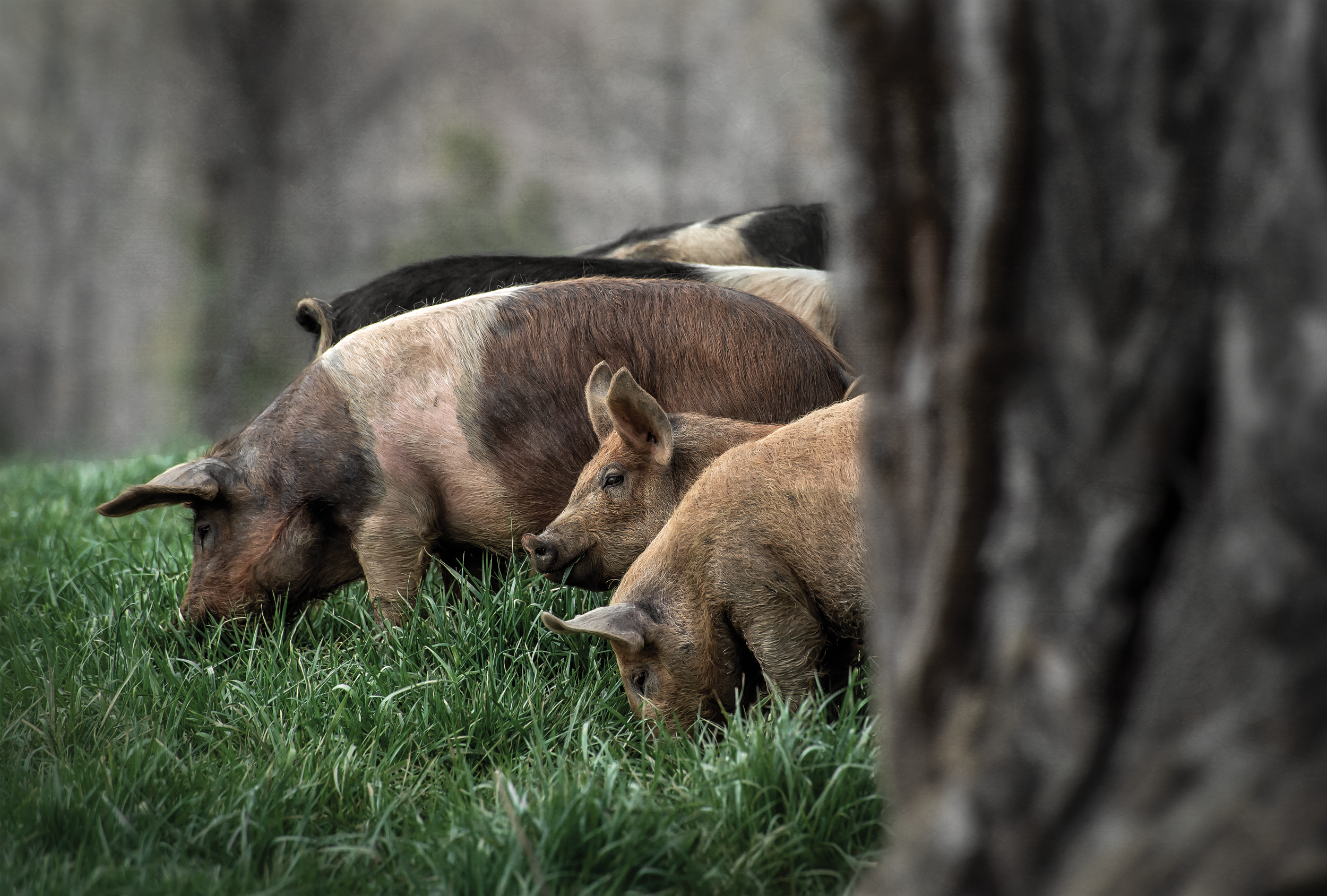
After reading Czerski’s book, I checked my feed labels. It’s true: the 20 hogs I raise every year on my North Carolina farm have some of the ocean, maybe a bit of the Humboldt Current, inside of them. (According to trade groups, Peru accounts for 20 percent of global fishmeal and fish oil supplies). So do the people who buy my pork, I suppose, and so do I.
Persnickety as I am about what my animals eat, I’m embarrassed to say that I hadn’t really considered the ingredient before. When piglets are weaned, they are fed a special ration that contains fishmeal. Once they get to 50 pounds, their protein needs shift, and they switch to a primarily soy-based feed. I’m told by my “feed guy” that hogs fed on fishmeal their whole lives have an unpleasant fishy smell. Call it the revenge of the anchoveta.
From one perspective, the Humboldt Current’s outsized role in the global agricultural economy makes sense. Animal feed is big business. It’s been that way for as long as agriculture has been conducted on an industrial scale. My little herd of swine forms a tiny, anomalous fraction of the hog industry in North Carolina, a state that produces an average of 8 million hogs each year. Such immense numbers of animals require large quantities of feed. In an indoor confinement operation, a hog will live for about six months and eat anywhere from four to six pounds of feed every day, which means that it will consume 700 or 800 pounds of food over the course of its life. One source of cheap protein is fishmeal; another is soy. Like fishmeal, the majority of soybeans produced around the world go to animals like pigs and chickens, not humans (77 percent, according to one study). In the U.S., over a third of corn goes to feed non-human animals.
One way to look at the situation would be to say that agricultural systems reflect human appetites. If we look in the mirror, we see pretty quickly that what we want to eat is cheap meat and sugar, and that few of us wish to do the brutal but necessary work of growing either. Such a view can be strangely consoling, because it suggests that the problem lies within — as if we could somehow transform a calamitous food system by tweaking our diets or growing our own food. As therapeutic as this perspective may be, it overlooks the role that invested capital has played in actively producing these systems and the appetites that they satisfy. The discovery of the Humboldt Current is one example of how capital utterly transformed the way we practice agriculture, particularly in the South. The Current wends its arcing path beside a different continent, on a different hemisphere, from the one where I live. How is it that its frigid waters have made their way to the land, to my farm?
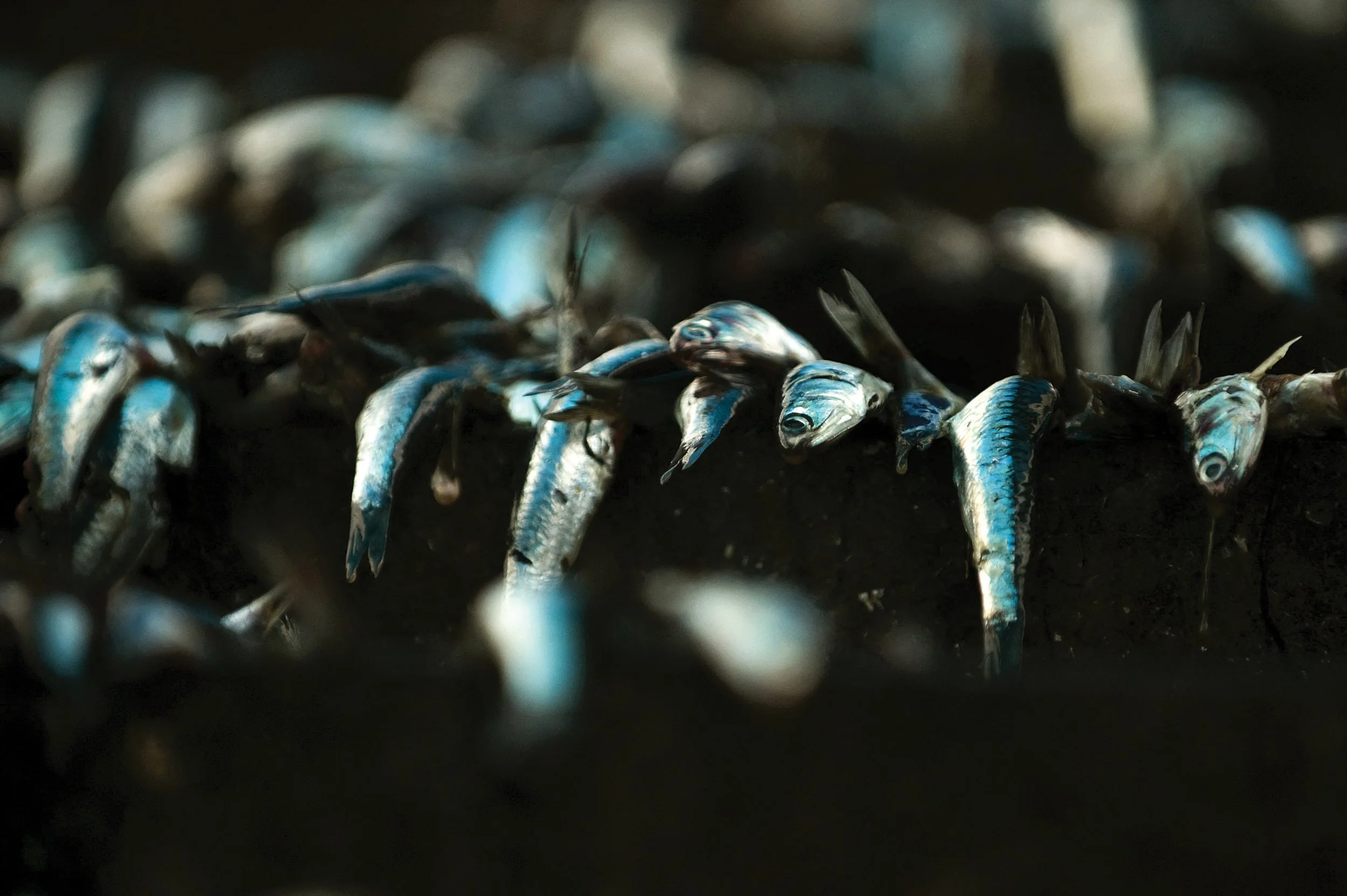
The Peruvian anchoveta (Engraulis ringens), is an important source of foreign currency and food for Peru, where between 5 and 6 million tons of the fish — of which, 2 percent is consumed by humans and the rest for the industry and export — are caught every year. Photo by Ernesto Benavides/AFP via Getty Images

Europeans first came to the Humboldt Current because of the massive deposits of guano, or bird shit, on a chain of islands called the Chinchas that lie in the middle of the Current. For thousands of years, ocean-going birds have feasted on the seemingly miraculous numbers of fish swimming in the Humboldt. Pelicans, boobies, and cormorants all make their nests on the Chinchas. There’s no rain to wash the excrement away, so it dries and accumulates. The current’s extremely cold waters, coupled with the rain shadow effect of the Andes, keeps this region among the driest on earth. The Atacama Desert in Chile, just inland of the Current, is the most arid non-polar desert in the world.
When Alexander von Humboldt first travelled to the Chincha Islands, he recorded layers of the acrid-smelling stuff 3 meters deep. Described in his day as “the Napoleon of science,” von Humboldt suspected the substance to contain lots of ammonia. But he rejected the explanation that indigenous people gave him (that the guano mounds came from the birds) and surmised that the pungent substance was left behind after some prehistoric cataclysm. In any case, Humboldt shipped samples back to his colleagues in Europe. The English chemist, Humphrey Davy, a close friend and companion to the poet Samuel Taylor Coleridge, published one of the first chemical analyses of guano in 1813. He instantly realized the value of the substance. Guano, Davy wrote, was chock full of uric acid, phosphoric acid, lime, and potassium salt. It could be a boon to capitalist farmers, who were experiencing declining crop yields and soil infertility. To Davy, Peruvian guano demonstrated beyond the shadow of a doubt that God Himself had set down “the modification of the soil, and the application of manures [...] within the power of man, as if for the purpose of awakening his industry, and of calling forth his powers.” The guano of the Humboldt Current and the exhausted soils of Europe and America were two pieces of a puzzle God intended humans to solve. And solve it they did.
Davy’s Elements of Agricultural Chemistry was translated into a number of languages, including Hungarian. His and other popular reports about the potency of Peruvian guano kicked off a bonanza of international military expansion to the South Pacific. Numbers help clarify the scale of what unfolded in the decades that followed. During the 18th century, when the Dutch East India Company controlled the South Asian nitrate trade, around 100 tons of guano were imported annually into Europe. By 1800, the British East India Company had supplanted their rivals, hauling in approximately 1,000 tons per year. However, as historian Gregory T. Cushman notes, “Peruvian nitrate imports immediately dwarfed these numbers, rising from an average of 2,500 tons per year in the 1830s, to 17,000 tons in the 1840s, to 42,000 tons in the 1850s.” By the 1890s, Peru was exporting around a million tons of nitrates from the Chinchas Islands and the Atacama all around the world. Peruvian guano was quite literally fueling the industrialization of the Northern hemisphere.
Cushman proposes calling the period of global history from 1802 to 1884 “the age of shit.” He means it, literally and figuratively. Haunted by English economist Thomas Malthus’s grim pronouncement that population growth regularly exceeds agricultural production, many of the leading minds of Europe and America suddenly became obsessed with agricultural productivity and the possibility of turning political economy into a formal object of academic study. They became fascinated with the properties of animal dung — Peruvian guano, in particular. However, “rather than improving the world’s food supply,” Cushman writes, “Peruvian guano mainly served northern consumers of meat and sugar.” And instead of “inaugurating an epoch of peace and prosperity,” rapacity for guano and nitrates inspired some of the most vicious conflicts of the period: the Chincha Islands War (1865-1866), which granted Peru’s independence from Spanish rule, and the War of the Pacific (1879-1884).
To the chagrin of abolitionists in the United States, the search for guano encouraged the expansion of slavery into new lands. In 1856, Congress passed the Guano Act, which allowed U.S. citizens to lay claim to any uninhabited island that had guano on it. The authors of this legislation reasoned that such islands were essentially a public commons and could be taken at will by anyone who demonstrated a need. Of the 66 islands U.S. citizens seized after the Act was passed, nine remain in U.S. possession.
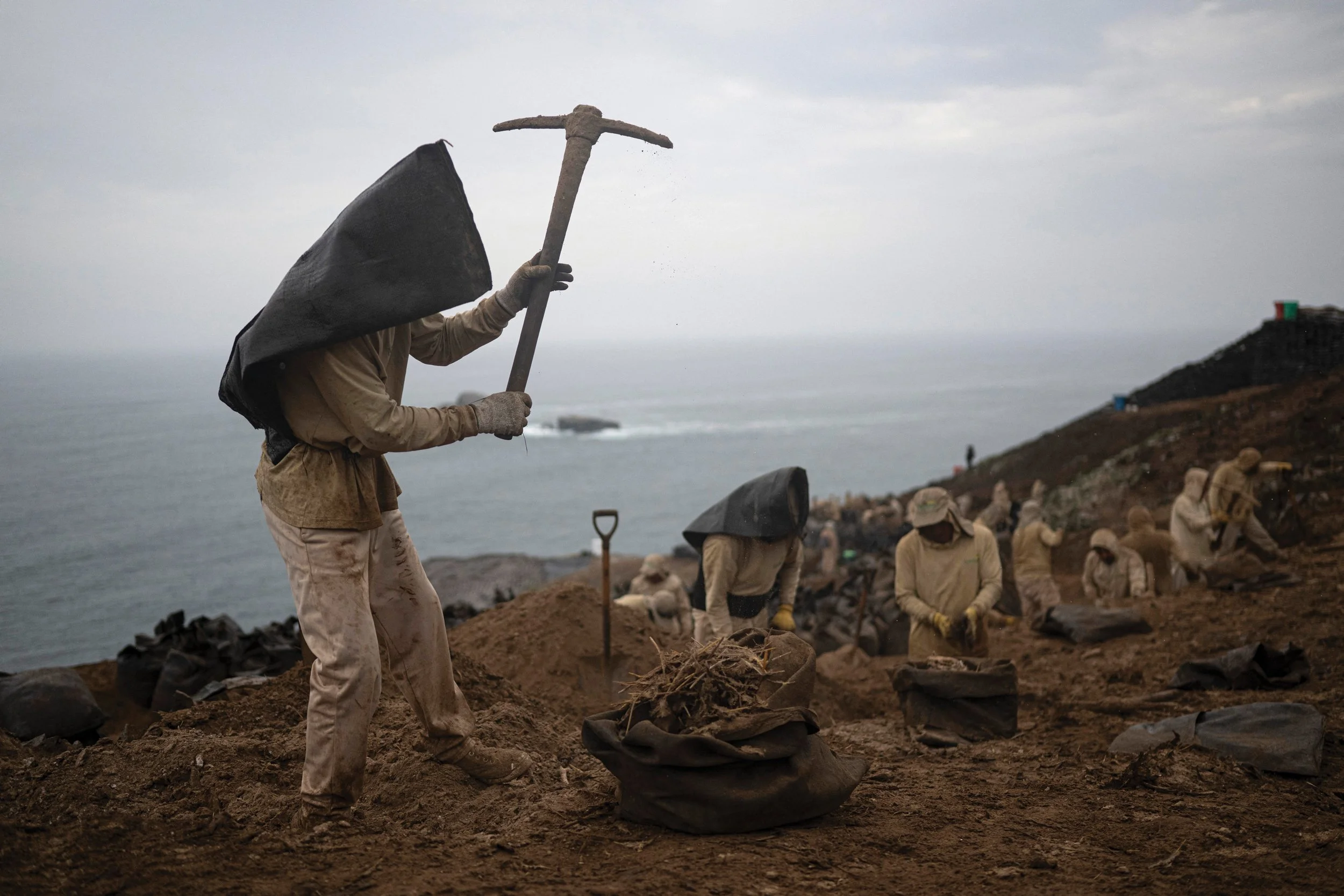
Workers extract seabird guano on Santa Island, located in Chimbote, in the Ancash department in northern Peru. Derived from seabird excrement, guano enriched Peru in the 19th century.
A hundred workers between the ages of 20 and 60 extract guano that has accumulated over decades. Photo by Ernesto Benavides/AFP via Getty Images.
However important slaves were to the American capitalists who harvested the nitrates they found in the South Pacific, the new global industry of nitrate production found different ways of adapting to life without the peculiar institution. When Peru achieved independence in 1826 and Great Britain abolished slavery (1833), British capitalists pivoted and perfected the infamous “coolie” system of labor by importing hundreds of thousands of bonded Chinese workers into Peru and Chile. These people labored under some of the most extreme conditions imaginable. One English eyewitness described that these workers:
[...] Besides being worked almost to death, [...] have neither sufficient food nor passably wholesome water. Their rations consist of two pounds of rice and about half a pound of meat. This is generally served out to them between ten and eleven in the morning, by which time they have got through six hours’ work. Each man is compelled to clear from four to five tons of guano a day. During the last quarter of 1875, it is reported that there were 355 Chinamen employed at Pabellon de Pica alone, of whom no less than 98 were in the hospital. The general sickness is swelled legs, caused, it is supposed, by drinking condensed water not sufficiently cooled, and by a lack of vegetable diet. The features of this disease are not unlike those of scurvy or purpura. A few years later, the U.S. consul to Peru noted in a letter that the suicide rate of the Chinese workers who dug guano was so high that the British had to put armed guards “around the shores of the Guano Islands, where they are employed, to prevent them from committing suicide by drowning, to which end the Coolie rushes in his moments of despair.” Guano workers in the 20th century reported that they still found bones and the tattered garments of Chinese workers scattered around the islands.
Initial returns from the experiments with guano in America were good, really good. On both sides of the Atlantic, large landowners touted stupendous crop yields in journals and newspapers addressed to the gentleman farmer. Increasing yields freed up more cropland for raising cattle and swine. By the 1840s, slaves and sharecroppers in the South were pooling resources to purchase Peruvian guano and applying it in their gardens and on their land. Following the Guano Act, enterprising businessmen began building processing facilities up and down the coastline of the U.S. South. The largest of them, the Navassa Guano Company, was located a few miles outside of Wilmington, North Carolina. The company shipped Black North Carolinians to a tiny island called Navassa, a two-square-mile limestone outcrop between Haiti and Jamaica, where they labored in shifts every winter. Eventually, a small, predominantly African-American community sprouted on the outskirts of the plant. (The town of Navassa, North Carolina, is still on the map.) When guano on Navassa ran out, the company began mining the island’s phosphate and harvesting minhaden, another oily, unpalatable fish, from North Carolina’s coasts and estuaries. Both were processed into fertilizer. After Reconstruction, the company became of one of the largest employers in the South.
Perhaps the greatest irony of the age of shit is that Peruvian guano ended up ruining many of the soils that it was intended to improve. It also decimated whole nations: DNA sequencing suggests that the Peruvian guano trade may have been responsible for the arrival of the P. infestans strain that partially caused the Great Famine in Ireland. (The principal cause was the disastrous government of Great Britain.) Over time, farmers found that guano tended to cause soil productivity to decline. This is because plants aren’t able to absorb nitrates unless there is a minimum of other necessary chemicals available to them in the soil. (Scientists have recently shown that excess nitrogen inhibits the bloom of biological life in the soil.)
The so-called “law of the minimum,” first articulated by the German chemist Justus von Liebig [1803-1873], brought the guano craze to a sudden halt. In Letters on Modern Agriculture, von Liebig spared no British or American farmer. While the Americans were guilty of the worst land abuse — an “open system of [soil] robbery,” he called it — the British practiced a “more refined system of spoliation”: “Good fortune kindly sent guano to rescue them in their utmost need … but in their fatal hands, this blessing actually turned into an instrument for impoverishing the land in the course of time more completely.” Others soon joined Liebig’s complaint. But none of the polemic did anything to curtail agriculture’s addiction to off-farm inputs.

The anchoveta industry accounts for a much larger portion of the Peruvian economy than guano does. Guano is still harvested, but the industry is highly regulated. Conservationists crisscross the Chinchas every year, ensuring that the harvest of manure doesn’t disturb sea bird populations. Since the collapse of the guano industry, global agriculture has pivoted. Nowadays, the majority of fertilizers used in conventional agriculture are produced by artificial means. A byproduct of the munitions industry in World War I, nitrogen fertilizer is made by subjecting atmospheric nitrogen and hydrogen from natural gas to extremely high temperatures and pressures. Rock phosphate is mined below the surface of the earth and then mixed with sulfuric acid to make phosphate fertilizer. One of the largest phosphate mines — in fact, the largest integrated mine and chemical plant in the world, the Aurora Phosphate Mine — lies a hundred miles east of my farm in Aurora, North Carolina. Nutrien, a Canadian agrochemical corporation worth over $35 billion, owns and operates the mine. The mine itself is located on top of an ancient sea bed that houses the remains of millions of prehistoric sea creatures. The phosphorus is in those remains.
Accounting for these changes, it’s still worth asking whether the age of shit has really ended. We’re no longer scanning the globe for large caches of animal manure, but our dependence on the intensive extraction and global distribution of very specific substances from biologically or geologically rich places is every bit as acute as it was during the guano age. If extraction and distribution are what the guano age was all about, then it is hard to believe that we’ve changed our ways. Also, it’s worth bearing in mind that one of the most popular (and controversial) crop fertilizers in the U.S. is “wastewater biosolids,” a euphemism for human shit. Research suggests that much of the land where biosolids have been applied suffers from PFAS contamination.
The Humboldt Current is hardly an outlier in the history of capitalist extraction. To take a few of the most salient contemporary examples: the small mountain town of Spruce Pine, North Carolina, is one of the few places in the world where the pure quartz necessary for computer chips and solar panels is found. In the cobalt mines of the Democratic Republic of Congo, tens of thousands of modern-day slaves scrape the ground for chunks of the blue mineral that goes into electric car batteries and rechargeable household devices. Where I live and farm, the soils have been strip mined for so long that the ground is prized for what can go on top of it: data centers, solar panels, natural gas storage, conurbation.
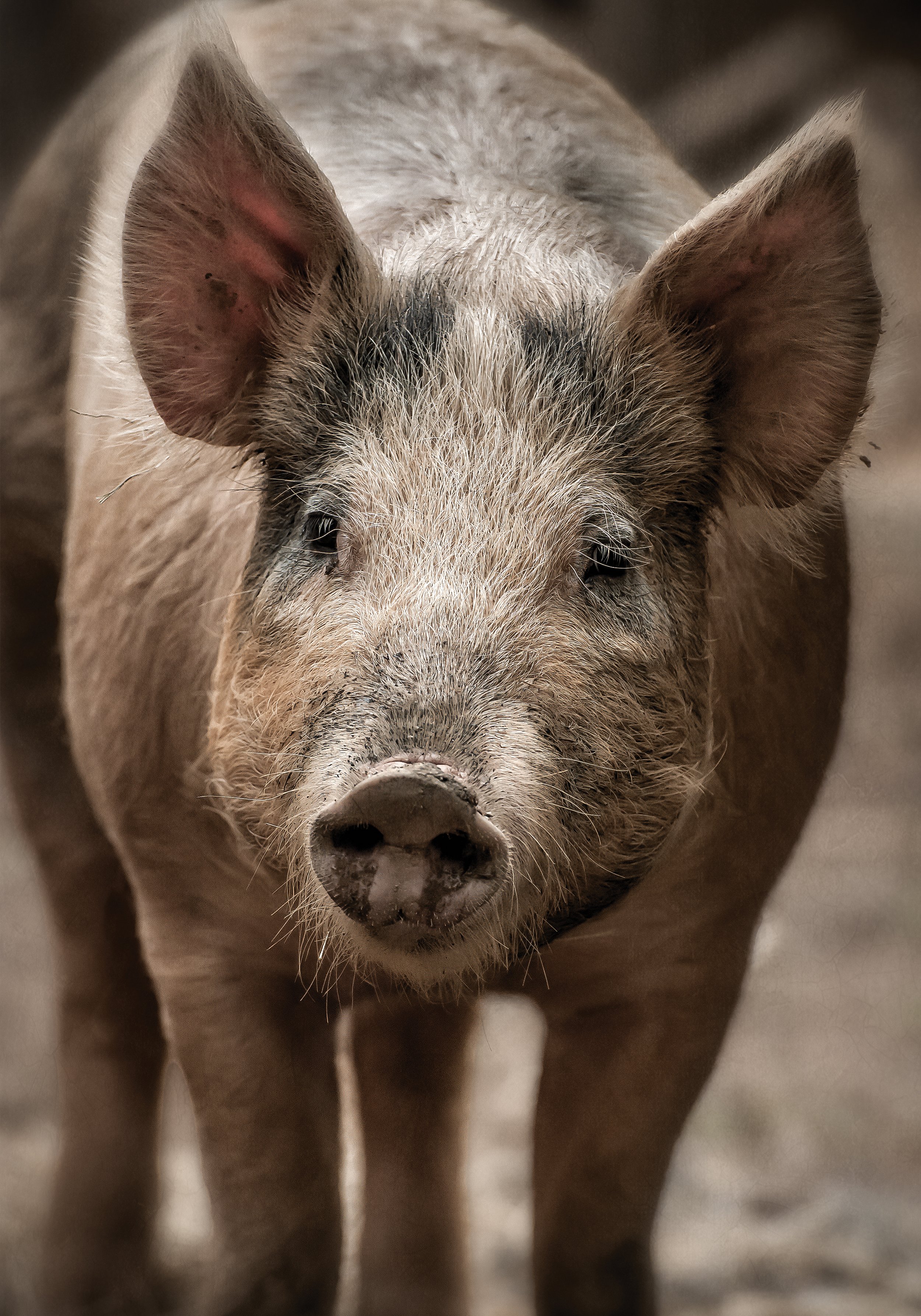
Photo by Dan Routh
Meanwhile, global agriculture is more reliant on off-farm inputs than ever. Here is an absurd fact: studies suggest that crops absorb only 50 per cent of the nitrogen and phosphate fertilizers applied to them. A little of the leftover residue leaches into groundwater. The rest finds its way into the ocean, where it creates vast dead zones for marine life, which are growing in number and size. A dead zone in the Gulf of Oman is the size of Florida. Closer to home, the Gulf of Mexico contains a dead zone with an average size of 4,755 square miles, two times larger than the 2035 reduction target set by the EPA.
What will it take to leave behind the age of shit? Small farms are certainly part of the answer. Diversified production allows the farmer to cycle nutrients efficiently across multiple systems of growing food. Market garden waste can become compost or fodder for animals. On a 1,000-acre corn farm, this is impractical. Also, small farms use smaller machines and require less fossil fuel. Their supply chains are more compact. When run well, these operations outperform large farms in productivity and profit per acre.
However, scaled-down, diversified production is only part of the answer. If there is a future for agriculture in the South, it will depend on identifying the industrial supply chains that dominate everyday life and finding ways to replace them, when possible, with local, just, and sustainable alternatives. This work requires collective action at every level, not only state and federal policy, but also county and city government. There is so much good, creative, communal work left to do. Community-supported agriculture, farmers markets, food hubs, ag and food policy councils, agricultural and grocery co-ops — these don’t have to be empty institutional gestures but, with community buy-in, show us what a just, equitable, and truly sustainable food system might look like. ◊
Jack Bell is a writer and a farmer based in rural North Carolina. He has taught literature at Duke and Wake Forest Universities.
Dan Routh is a commercial photographer living on his family’s 100 acre beef cattle farm in Grays Chapel, North Carolina.
Ernesto Benavides is a Peruvian documentary photographer working primarily within South America. He has been teaching photography at the University of Lima since 2010.
Featured in Issue No. 14