
Photos by Matt Ramey & Forest Woodward
November 17, 2026
—
Originally published in Issue No. 15 of The Bitter Southerner Magazine
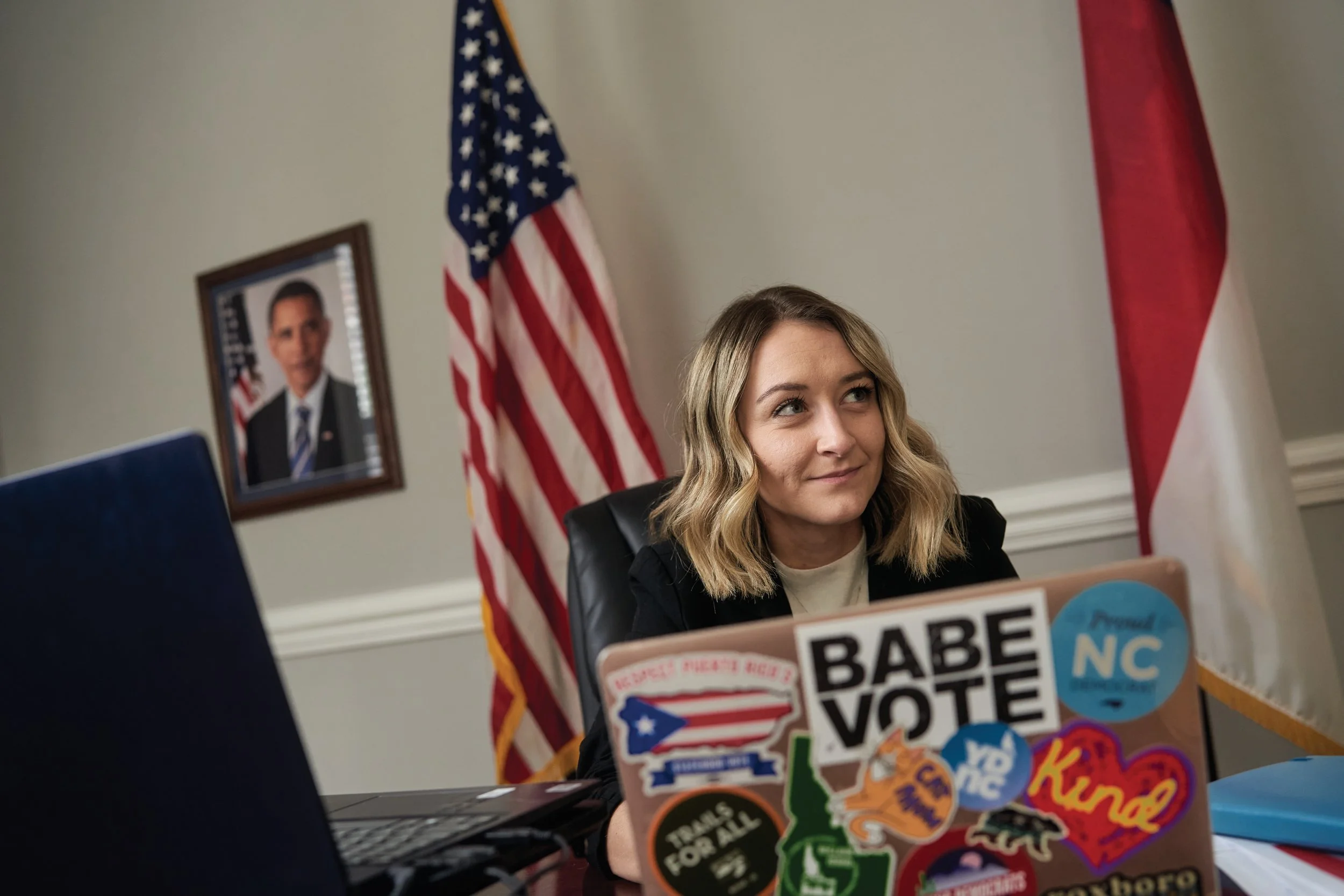
While many of her peers eschewed partisan politics — and even elections altogether — Anderson Clayton took her own frustration with the system and used it to fuel a headlong sprint into the belly of the beast. In 2023, at 25 years old, she was elected the youngest state party chair in the country, heading the North Carolina Democrats.
Anderson’s age in her position is unusual. But what really distinguishes her from most party leaders is her approach. She is very vocal about the Democratic Party’s mistakes, especially their failed calculus which lead to abandoning organizing in rural America. Anderson showed up in every corner of her state while campaigning to become chair. At every stop, she emphasized the urgency of reformulating a strategy that included year-round organizing and rural communities.
She hasn’t slowed down one bit since taking the reins of the party. She has simultaneously elevated North Carolina on the national map for federal races and dialed in the focus on state and local races — refusing to let uncontested rural state legislative seats continue to go unchallenged.
Anderson and I were both small-town 90s kids growing up eager to get out of rural North Carolina. We were both pulled back home by work we couldn’t ignore, in service of the people and places we love. Anderson maintains her role as party chair and I co-founded Dirtroad Organizing, a nonpartisan national training ground for progressive rural leaders. She and I got to sit down for a conversation exploring this work and our paths into it. We cover a good bit of ground, from staving off pessimism through action, to reflections on movement mentors and, ever importantly, leaving the door open for those following.
Let us follow Anderson’s lead and cultivate hope by charging headlong toward the problems and finding our own levers for action in community with others.
— Canyon Woodward
September 14, 2026
Franklin, North Carolina
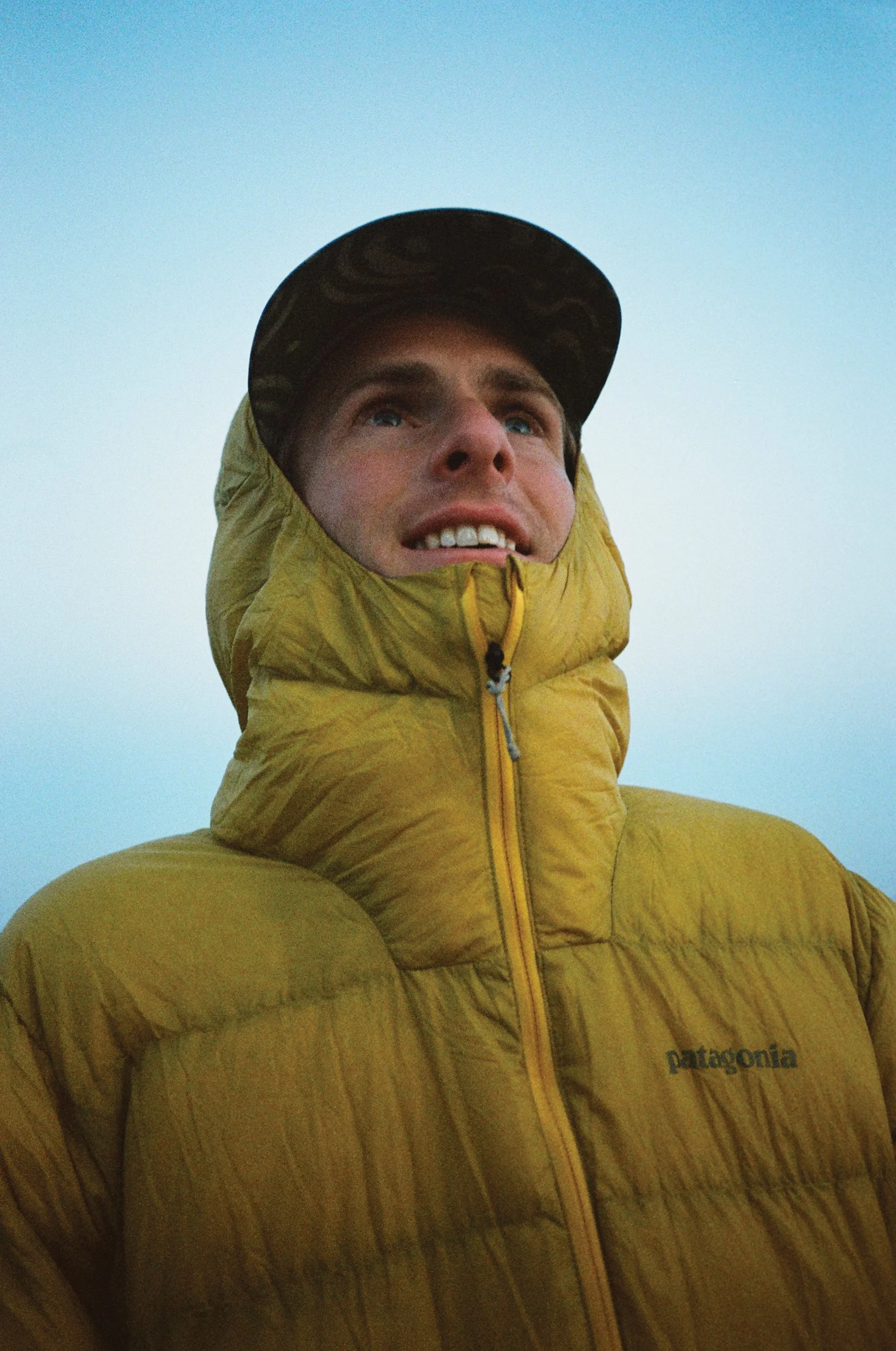
Canyon Woodward. Photo by Forest Woodward
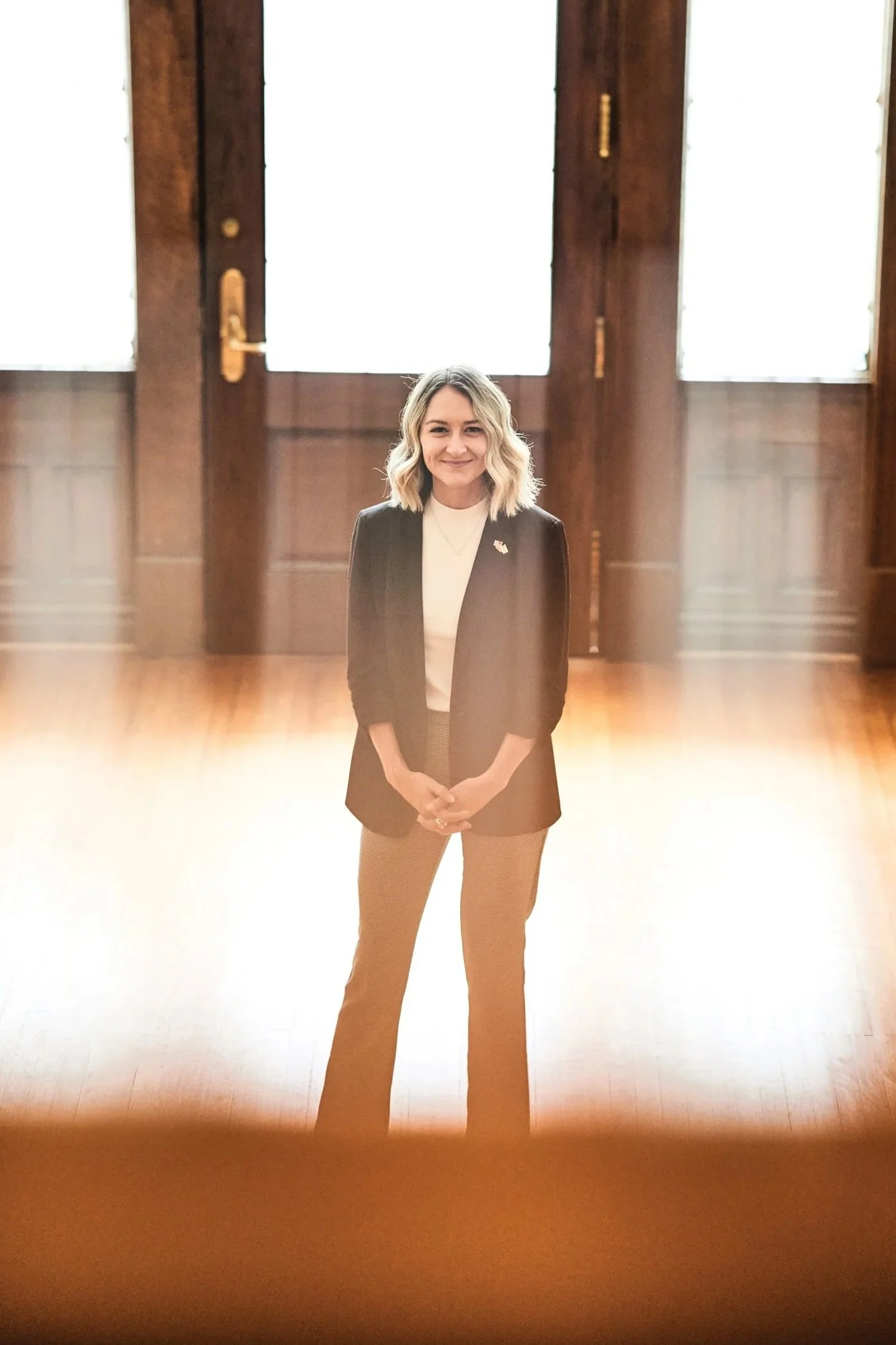
Anderson Clayton. Photo by Matt Ramey
CANYON WOODWARD
Yo, what’s up?
ANDERSON CLAYTON
Hey, how you doing, Canyon? Been a minute.
CANYON
I’m good. Awesome. I thought maybe a good place to start would just be a little bit of your background. Where did you grow up and how did you come into this work?
ANDERSON
I grew up in Roxboro, North Carolina, and I spent a lot of time with people who grew up with me saying, “You know, you’ve got to figure out a way to get out of Roxboro, North Carolina.”
I always had the impression that I was going to leave at some point. Appalachian State was where I got my start in political organizing. The two things they tell you not to talk about at the dinner table are always religion and politics. But, the two things that I was always talking a lot about at the dinner table were religion and politics. [Laughs.] And so I got my start in school where that was acceptable. There’s a trope, you know, by Republicans, where they say that college makes people liberal. Yeah, well, this was true for me and it was meeting Republicans in college that made me liberal. It was the first time that I had seen a political party trying to strip away a college campus voting site. Started organizing from there pretty organically on that campus in a tiny rural county in the mountains of Appalachia. We had to be scrappy as hell. We had to think about winning electoral politics by utilizing and teaching and educating young people about what it means to look outside the university lines at the community that you exist in as a whole. That’s how I think I approach organizing, too. A group of small people that come together — from 17 to 70 years old — can make a difference.
CANYON
Hell, yeah. I also grew up in a small town in North Carolina and it never even crossed my mind that moving back here or ending up back here post-college would be anywhere on my life map. That was just, for whatever reason, an implicit assumption.
ANDERSON
But organizing led you back?
CANYON
Exactly. I also got into it in college. For the most part, I grew up not wanting to touch politics with a 10-foot stick, you know? I grew up in a district that has sent some of our worst to Congress and I just grew up with so much, so much distrust of electoral politics. It wasn’t until getting into climate organizing in college, meeting Chloe [Maxmin] and organizing around the fossil fuel divestment campaign there that I started to connect the dots. That led me to jump on Bernie’s campaign, and eventually, move back down south to the Carolinas right after college. I know we had similar journeys post-college too. What did you get into post-college?
ANDERSON
Well, like yourself, I went from being in college to a few big campaigns. I think that a lot of us who grew up in certain places were taught that you had to take every opportunity that was ever presented to you. You had to chase the opportunities because it was a way for you to make your way out. I hate to frame it like that, but I genuinely think that’s how my parents looked at me when I grew up in Roxboro. They wanted to give me opportunities because they didn’t have them. People that come from these places always end up having to fight for any little thing. I was really lucky because I had so many incredible people before me who put their foot in the door. When they got an opportunity, they held the door open enough for me to get there as well. There are so many folks that helped the pipeline stay open for somebody else who was not from a traditional background to get into politics.
Eventually, I went to work on a presidential campaign for Kamala Harris in Iowa. I went to work for Amy McGrath in Kentucky in 2019 when she was going to be running against Mitch McConnell. We need people that are from rural communities on campaigns. It was a rarity for someone from rural North Carolina, or from rural anywhere, to go and exist and be in Iowa on a presidential campaign. The people that I was around on that campaign, by and large, had political families, and they had been on campaigns before, and they had access to that world. It was so different for me. I think part of that access pipeline is still the problem that we face. So many people in rural places do not know that jobs in politics are available, and that we really need their voices right now, because they’re the folks that understand these communities. It wasn’t until 2020 that I was sort of making my way up from being a field organizer to a regional organizing director. And in 2020, I got put in the heart of Appalachia in Kentucky in the middle of Covid. All of a sudden, campaigns had to go completely virtual. And, man, if you didn’t have the internet, it sucked. You weren’t going to be reached by campaigns anymore. The infrastructure was not fit or designed to reach everybody everywhere.
Nationally, the party was basically of the mindset that if you live in a rural part of this country, they didn’t care enough about you to try to figure out a way to reach you in some way. And, after that 2020 election cycle, I felt like I couldn’t organize anymore. I just can’t be trying to climb up the ladder in politics anymore. I have to go home, and I’ve got to figure out a way to do this in my own backyard in a way that feels different, that feels authentic to the people that we’re actually trying to help at the end of the day.
CANYON
I really love what you said about people holding the door open for us and that being so key. I see that as one of the huge challenges in this work. Especially as it relates to burnout. I think back to my first campaign experience. I’m working crazy hours, you know, seven days a week. I remember sleeping in Walmart parking lots in my ’98 Civic on the Bernie campaign, and, you know, the number of miles you put on your car across the state is just insane.
One thing that I’ve reflected on throughout this is just the need to keep young people in this work for the long haul. One of our huge gaps and challenges is that people like us come in because we care so damn much about the work, about where we’re from, about the people. But, we burn really bright, and sometimes we don’t have the mentorship or the support to make it sustainable. And then: Poof! A couple of election cycles and we’re gone to other things because we just burn out. And then we’re left with a gap where there’s not that experience and institutional knowledge being passed down and there’s not the experienced mentors for the next generation coming in. The main thrust behind Dirtroad Organizing is to work with rural candidates and rural organizers and give them a sense of community and folks to commiserate with, because it can be so isolating campaigning in rural places. One of the most important things in this is viewing this as the long-term work that it is, and not getting caught up in the boom and bust of single election cycles.
ANDERSON
Well, we got a lot of work left to do on that, though, to be honest. When I quit McGrath’s campaign in 2020, I came home feeling so depressed after seeing a national apparatus with $96 million not invested in on-the-ground organizing, or really in people at all. That is where our party needs to do a better job, and where candidates need to do a better job, is just investing in our people.
When I got back to North Carolina, I quit national campaigns. I was jobless. I was living back with my parents. I was feeling so down in the dumps about what was going on and then I found your book [Dirt Road Revival: How to Rebuild Rural Politics and Why Our Future Depends On It], Canyon. You and Chloe had flipped the state legislative seat in Maine and powered through the same feeling of how this shit is so hard. Rural organizing is so hard because you are often fighting a fight you know you’re gonna lose. Sometimes you just need to know that you’re in community with people doing it together.
CANYON
For me, a broader theme in this work that I think we both really feel is this increasingly digital age where everyone’s constantly on their phones, on their screens and their algorithms and more and more just existing in this digital space, and how powerful it is — now more than ever — to invest in organizing in real life, doing the real work of bringing people together face-to-face in their communities and fostering the spaces where folks have a place to go to find a political home.
I remember growing up and feeling like I had to whisper while talking about Obama in ’08, because it felt like me and a couple of my friends were the only liberal folks in the whole town, which of course was not true by any measure. But that’s a real feeling in these small towns. So, investing in organizing infrastructure, giving folks a place to go to organize, to learn those skills, to find other people to build power with, and then to go out door to door and just have authentic conversations with people in their communities feels like the real power and potential of this work to me.
ANDERSON
It’s true. I have talked with so many people that say they could not vote for a Democrat regardless of policy, even policy that was vital to our community, simply because the candidate was a Democrat. I realized very quickly that our party seriously needed to address our brand problem. Republicans spent 40 years defining Democrats before Democrats actually started trying to define themselves. We used to be the party of working-class people, and we got away from that — largely by this kind of branding and messaging and misinformation.
We stopped having good communicators and people in communities that were representing our party and values. It is something that we need to acknowledge and to own. We are behind when it comes to the media ecosystems. Rural North Carolina radio is still a very popular way for people to get their information, and so many people across this country do not believe it. I’m like: That’s because you don’t live there. And you ain’t been back here in a minute, either, otherwise, you might know.
CANYON
Yep. Local newspapers do as well, where they still exist.

ANDERSON
Genuinely they do. People still read them. The circulation is not as big as it used to be, but people still read a local newspaper. They still feel proud to know their local editor. They go to the softball games and the baseball games. They cover their kids’ games. To these communities, that paper is putting out things that matter. You’ve still got the John Locke Foundation in North Carolina ripping them every single Sunday, trying to make sure that people understand that, hey, the alt-right Christian movement is out here trying to make sure that they are pushing their propaganda in your backyard every step of the way. And that, to me, is what Republicans have done extremely well. They have created propaganda machines in communities and it works.
We have got to have the ground game behind us right now. We have to have somebody going to people’s doors telling them, Hi, I’m the person that’s going to represent you on the ballot as a Democrat right now. If they don’t have that, the only thing that they’re likely going to believe is what they’re hearing on Fox News or coming in through their radio every day. There’s a difference between talking to Democrats and talking to rural Democrats — and a party chair has got to be able to do that. I think that a lot of times people in politics fear the unknown, and I was an unknown entity. I was a rural county party chair who nobody knew. They knew me as someone who cared about rural organizing, who wanted to fill every seat on the ballot. The number-one critique we got was that a young person couldn’t raise money. And that a young person just could not do the job in general. I think that over the last three years what we’ve managed to prove is that young people, when given the right tools and the institutional knowledge, can do a lot of good things.
CANYON
That really strikes me as the key work of the whole country. In my view, another huge part of that is inertia amongst leadership within the establishment. Folks get into positions of power and then get really comfy and just stay and run the same playbook over and over again, even when it’s clearly not yielding the results that we need. That’s a huge challenge that we face. In my view, a big reason for the gap that’s opened up in rural America was this failed political calculus to only focus on cities and suburbs, with the refrain “demographics are destiny.” And not just in states like North Carolina, but other states as well.
ANDERSON
We used to lose rural North Carolina on 60-40 margins. Now we’re losing them on 80-20 margins. And that’s because people stopped showing up to vote. They got gerrymandered out of their representation. And, they don’t have Democrats that have cared about them, that answer their phone calls anymore. Constituency services went down because of that, right? And, when you don’t feel you’ve got a connective tissue to who represents you, that’s intentional, right? Republicans re-gerrymandered North Carolina so much that the result was to make people, especially in rural North Carolina, feel disenfranchised and to perpetuate the entirety of what the Republican media apparatus has been putting out for 40 years.
CANYON
Preach.
ANDERSON
It is the cycle that we exist in right now, in every way. Our biggest challenge is figuring out how to have grassroots organizing that can fill those gaps right now, while we’re also going through so much of a transition in how people get their information, and what third places look like in communities right now. There is a lot of isolationism that we’re going through as a country, you know? And I think that is a big part of why people in rural places are getting more and more left behind.
CANYON
We have to be in every corner of every state. I remember so distinctly when we were in the height of Chloe’s first campaign, going door to door for hours every day. The chair of the DNC at the time said, “You can’t door knock in rural America.” It was the direct quote and that was just so mind-bending and frustrating. Chuck Schumer famously said, “You know, for every vote that we lose in rural Pennsylvania, we’ll pick up two in the suburbs.” Those little insights into the thinking of the top leadership is so key to where we’ve ended up, in my opinion, where top-of-the-ticket races have called the shots in every state, whether that’s presidential or U.S. Senate or governor’s race. It’s been a really deliberate strategy of disinvestment in rural places and in down-ballot races where we haven’t put the effort into recruiting candidates, supporting candidates, supporting the infrastructure, and instead just focused on this idea of turnout in these big cities which, like you said, of course, we need that, too. But it’s been a huge, huge strategic blunder to go all in on that strategy.
ANDERSON
Well, I say that, too, because the numbers are there for us. Fifty-two percent of North Carolina still lives in a rural or exurban area. We’ve got the second highest rural population of any other state in the country other than Texas and that’s because of our economic history in both agribusiness and manufacturing. When a lot of people look at the South and they look at North Carolina, they don’t understand that agribusiness is still the number one economic driver in the state. It ain’t AI.
For so many people in rural places, they don’t see a party that talks about their future.
CANYON
I’m curious in your bird’s-eye view across the state, to what extent data centers are becoming a fertile ground to organize across partisan and ideological boundaries?
ANDERSON
The thing that I think Republicans have done in North Carolina especially well is they’ve taken partisanship and injected it into local elections. I think that Republicans have really done a disservice to local communities by being able to actually figure out what they need to move forward by any means necessary. But I agree with you, and I think that bipartisanship comes from issues like Flock cameras, AI data centers. Microsoft came into my backyard this year in Person County, and I mean it, it tore people all to pieces from both sides of an aisle. The same thing can be said for Duke Energy Corporation right now, who are raising energy rates in North Carolina. And healthcare that is far too expensive. Water contamination, PFAS chemicals that are going into our water. Agriculture is such a major issue. We rival Iowa for hog production in the entire country. We got more hogs than people. We have got to be talking to people in these communities about these issues, because at the end of the day, that is what’s going to move these folks. That’s what brings people together.
A lot of people still feel very scared right now to be Democrats in rural communities. I went up there and just spoke during one of their local school board meetings at Catawba County, for example. Their school board was trying to ban about 30 different books from their school system. I just stood up with the local Democratic County party group that was out there doing it to show them, look, if you’re gonna put yourselves on the line, I’m gonna put mine on the line with you, too. You’re not gonna be the only one out here making yourselves uncomfortable in the community that you’ve gotta go live in.
CANYON
So many folks of all ages want to find a way to have an impact, want to find a way to get involved, and just are at a loss of how to do that. It is scary to step up. Obviously, turning out to vote is the most basic first step. But for folks of all ages who are struggling to kind of find that lever for themselves, what’s something manageable that you tell people they can do to make an impact and engage productively. What advice do you have?
ANDERSON
I always tell folks, become the voting friend in your network.
Make sure that you are educated about how you help register somebody else to vote, not just making sure that you yourself are capable. It’s about taking the next step to care about the other people in your life and in your community. The number-one place where people get their information right now is not from TikTok. It is not from a television screen. It is from the people in their everyday community and in their orbit, and it’s the most trusted source of information right now, too.
The saying that I have carried with me throughout the time that I’ve been organizing is that you cannot organize those that you do not love. We have got to make sure that we love people a lot harder this year and every year afterwards, too.
CANYON
One thing that was really surprising for me when I got started was how easy it is to get involved and to take on leadership at the really local level. It is really easy to sit back and complain and feel hopeless. Pessimism can creep in so easily and pervasively. But I think that pessimism is really fucking lazy.
ANDERSON
Yep.
CANYON
If you’re dissatisfied with the way that things are going, you can show up, and I guarantee you, if you’re motivated and you organize, you know, you can take some form of leadership. By and large, the folks in these counties who have been carrying democracy on their backs for decades are overwhelmingly, in most places, retired folks who have more time. They are desperate for young people, but really anyone, to come in and give themselves and their energy to this work.
Looking at young people across the country, the majority are unaffiliated, choosing not to identify with any political party — I think it’s 54 to 56 percent nationally amongst Millennials and Gen Z. There’s just really broad frustration amongst young people with both parties. As so many of your peers have leaned away from partisan politics, it really strikes me that you chose a freaking all-out sprint in the opposite direction when it would have been potentially really easy to go the other way. What went into that active and intentional decision?
ANDERSON
I tell people this all the time. An organization is only as good as the people that make it up. I think that goes for political parties. It goes for issue organizations. It goes for the United States Federal Government.
For me, that’s what I hope young people hear from this, that actually, if you belong to a political party, you can infiltrate it, take it over and reshape it. That is why we call it organizing.
I want more people to be organizing a political party that they want to be a part of versus saying, “Well, actually, we’re just not going to be involved in politics at all.” Because somebody else is then going to choose how you live your life in this country. I would much rather say I’m going to do something about it than I’m going to doomscroll about it, because I just cannot be somebody who sits complacently by and lets things happen.
I think right now, young people have been told they can’t do anything about it, and that’s why they’re doomscrolling. They’re in this mindset that they have no power. Maybe we can’t change the world right now, no. But, if you changed your backyard, we sure would be on our way to it. I need young people and people who are new to politics to stop looking up and look down. Look at where you can get involved in front of you, in your backyard. Own something that nobody else can do but you — and make that your goal.
CANYON
There’s a really deliberate effort to make people feel powerless. The billionaire class wants you to feel like your vote doesn’t matter, like your actions don’t matter. We do still live in a democracy, though, where people have power. Finding the actions to push back against those deliberate endeavors to make us feel like we don’t hold the power is so key.
Wendell Berry just passed away and I came across his poem “The Real Work.” It reads:
It may be that when we no longer know what to do
we have come to our real work,
and that when we no longer know which way to go
we have come to our real journey.
The mind that is not baffled is not employed.
The impeded stream is the one that sings.
Let your mind be baffled, you know? Find that real work of taking action in your community and in ways that take some thought and take some sitting with. Venture out and find your purpose along the way.
ANDERSON
Thank you, Canyon, for that and, genuinely, for all that you have done. It’s funny that you were the one to interview me in this sense, because I remember being so demoralized and you are one who helped me to do the work and continue. I started off as a county party chair, and now I am a state party chair and the work that I get to keep doing is because you and Chloe had done it, too. The connective tissue of that is very special. Rural organizers all across the country really have built each other up and I just want to thank you for that.
CANYON
Thanks. Yeah, big, big love. That brought one more image into my head, which was during the days of the divestment campaign in college, I remember our first sit-in in front of the president’s office. We were having a candlelight vigil, but it was crappy weather, and windy, and the candles kept getting snuffed out as we were trying to light them, but, you know, a friend next to you would lean over and relight your candle with theirs and that moment has always stuck with me.
It’s amazing to hear that we were a little bit of candlelight when things were tough finding your way post-campaign. You’ve been very much the same for me, and just seeing you absolutely go for it in North Carolina and the number of candles that you’ve lit all across the state. Don’t underestimate your ripple effects across the country. It’s incredible. ◊
Anderson Clayton serves as the chair of the North Carolina Democratic Party. Elected at 25 years old, she was the youngest chair of a state Democratic party. Clayton grew up in Roxboro, North Carolina, and graduated from Appalachian State University. She worked on Kathy Manning’s congressional campaign, in Iowa as a field organizer for the presidential campaigns of Kamala Harris and Elizabeth Warren, and then for the senate campaign of Amy McGrath. Prior to her election as chair of North Carolina Democratic Party, Clayton served as a chair of the Person County Democratic Party, her hometown county.
Born and raised in the mountains of western North Carolina, Canyon Woodward is a professional trail runner, a co-founder of Dirtroad Organizing, and co-author, with Chloe Maxmin, of Dirt Road Revival: How to Rebuild Rural Politics and Why Our Future Depends On It. Through Dirtroad Organizing, he works to empower the next generation of progressive rural leaders. Woodward earned an honors degree in social studies from Harvard College, and says his real education was organizing a multiyear campaign to pressure Harvard to divest from fossil fuels. His writing has appeared in The Nation, Outside Run, National Geographic Adventure, and The New York Times.