
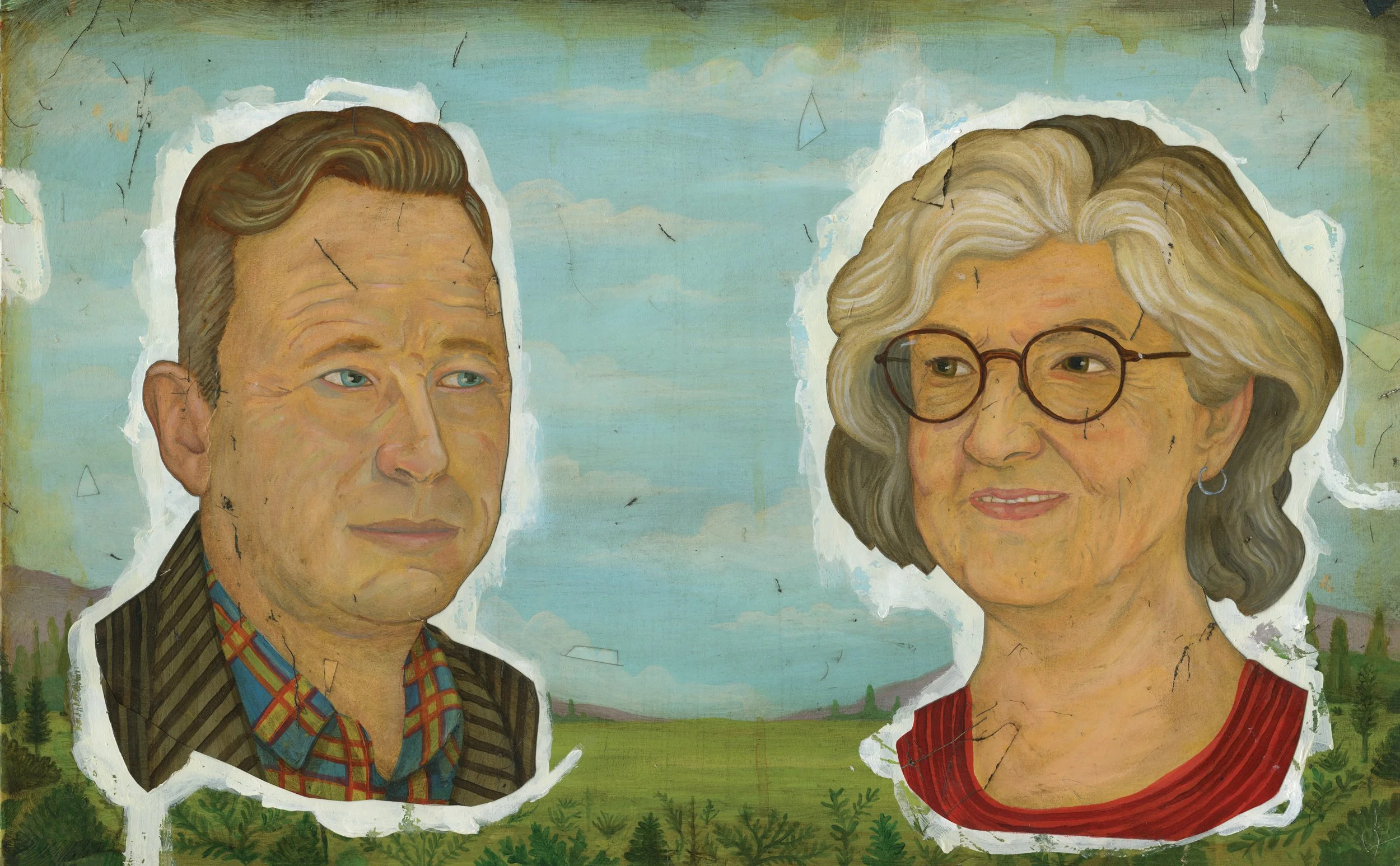
Painting by Jason Holley
November 10, 2026
—
Originally published in Issue No. 15 of The Bitter Southerner Magazine
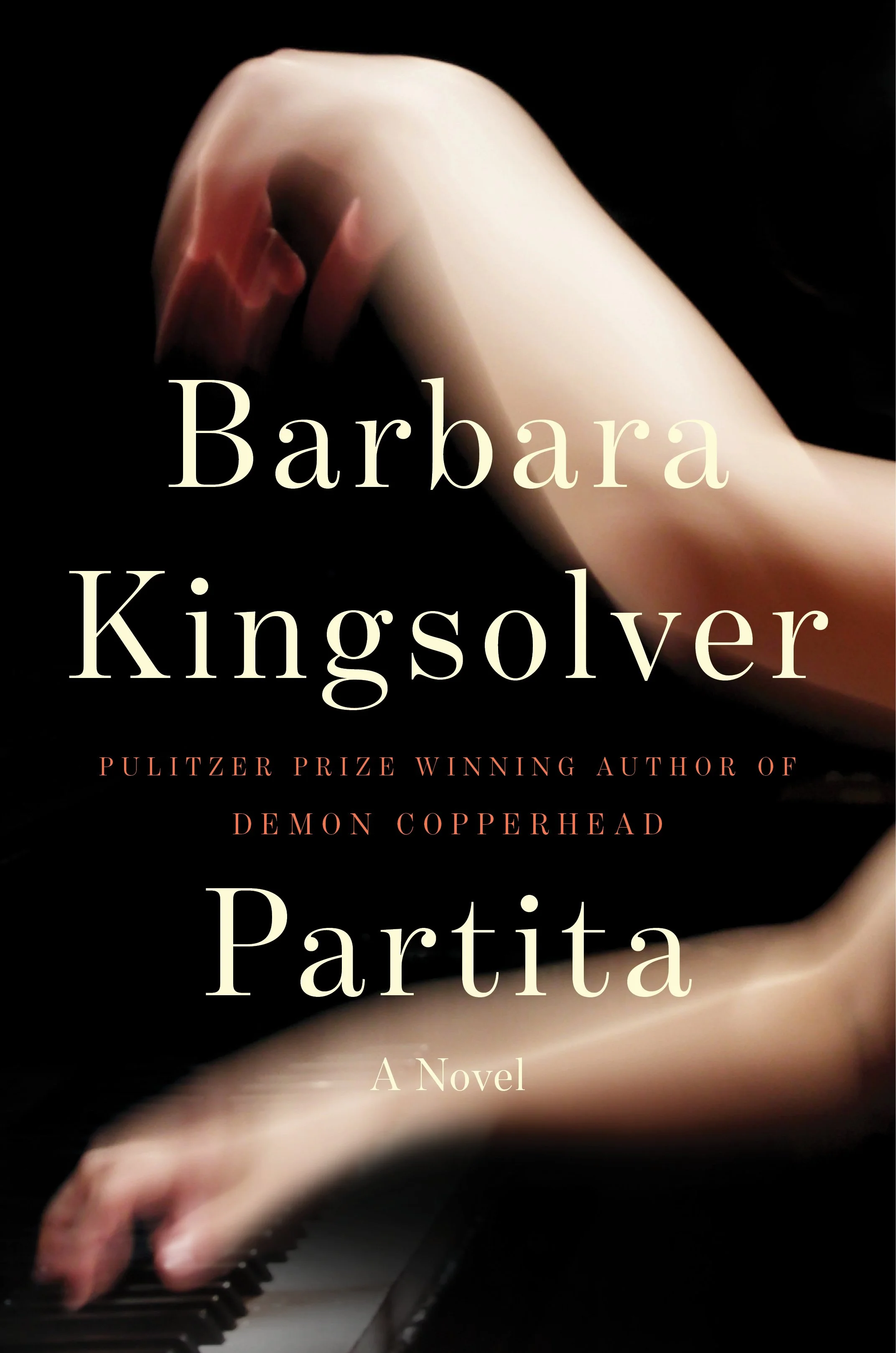
Barbara Kingsolver was already one of the most successful writers of our time when she took me under her wing — even though I was a new writer, struggling with imposter syndrome and trying to find my fullest voice. Over the years, she has taught me so much. I have witnessed her not only talking the talk, but also walking the walk. She has been an inspiration to me as an artist and for her work in social justice. We’ve climbed the mountains of Appalachia together and sung with abandon on their rocky summits. We’ve sheared sheep, worked on presidential campaigns, cooked, and broken bread together many times. But my favorite times with Barbara have always been on porches, usually mine or hers. Sometimes we also find ourselves on distant porches, as we did when we were teaching together this past summer on the tiny island of Patmos, Greece, overlooking the Adriatic Sea along with poets Ada Limón and Safiya Sinclair.
For this conversation we settled for a couple hours on the porch of her house in the mountains of southwest Virginia, not far from where her Pulitzer Prize-winning phenomenon, Demon Copperhead, is set. Her good dog dozed at our feet and a gang of guineafowl hens often broke out in riotous chatter all the while. Like most Appalachian people, we are good at jawing.
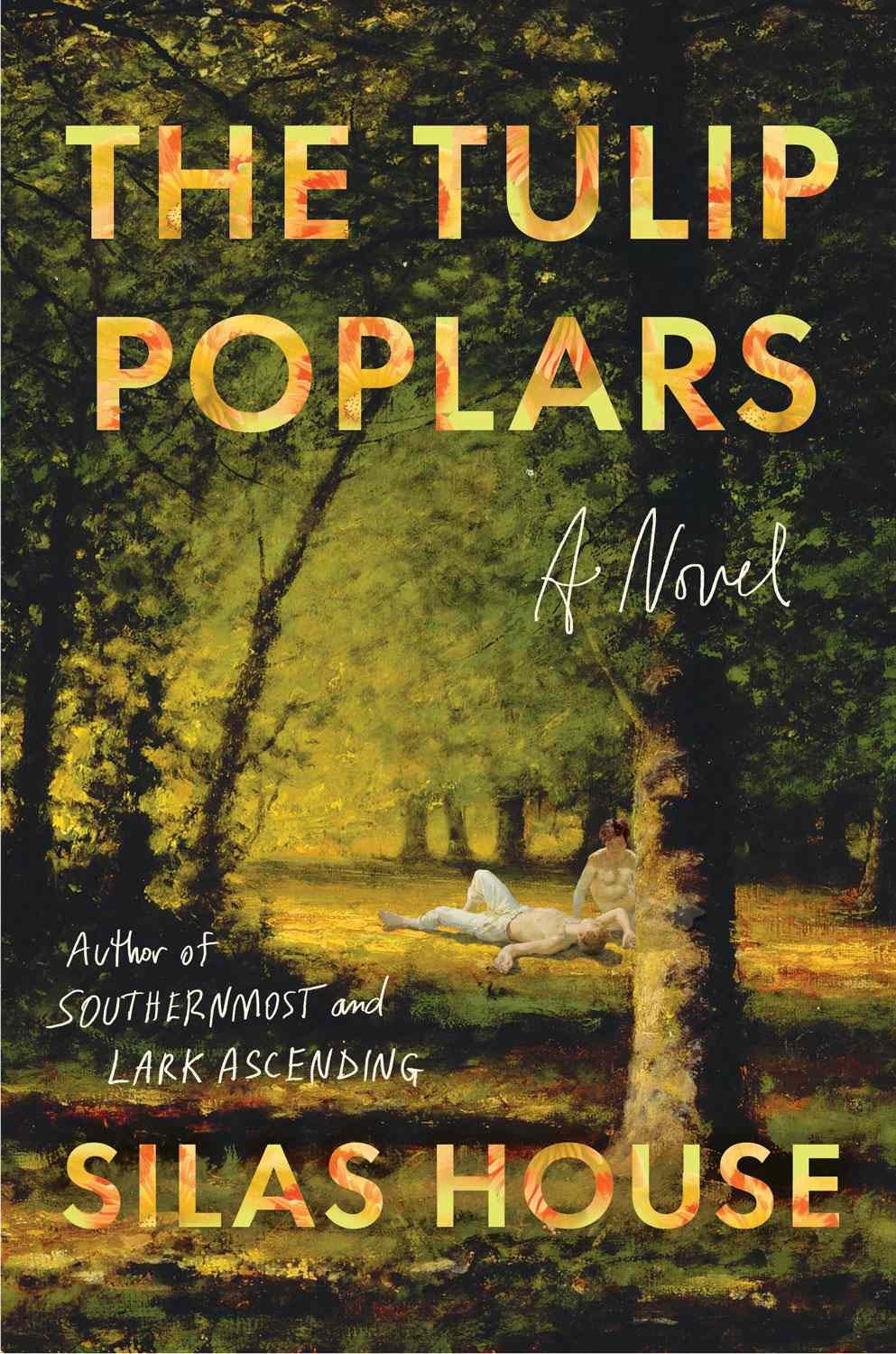
During this visit we discussed our new novels, Partita (hers) and The Tulip Poplars (mine), the creative process, our friendship, and some of our most tender vulnerabilities, which Barbara calls “grievous wounds.”
— Silas House
September 10, 2026
Lexington, Kentucky
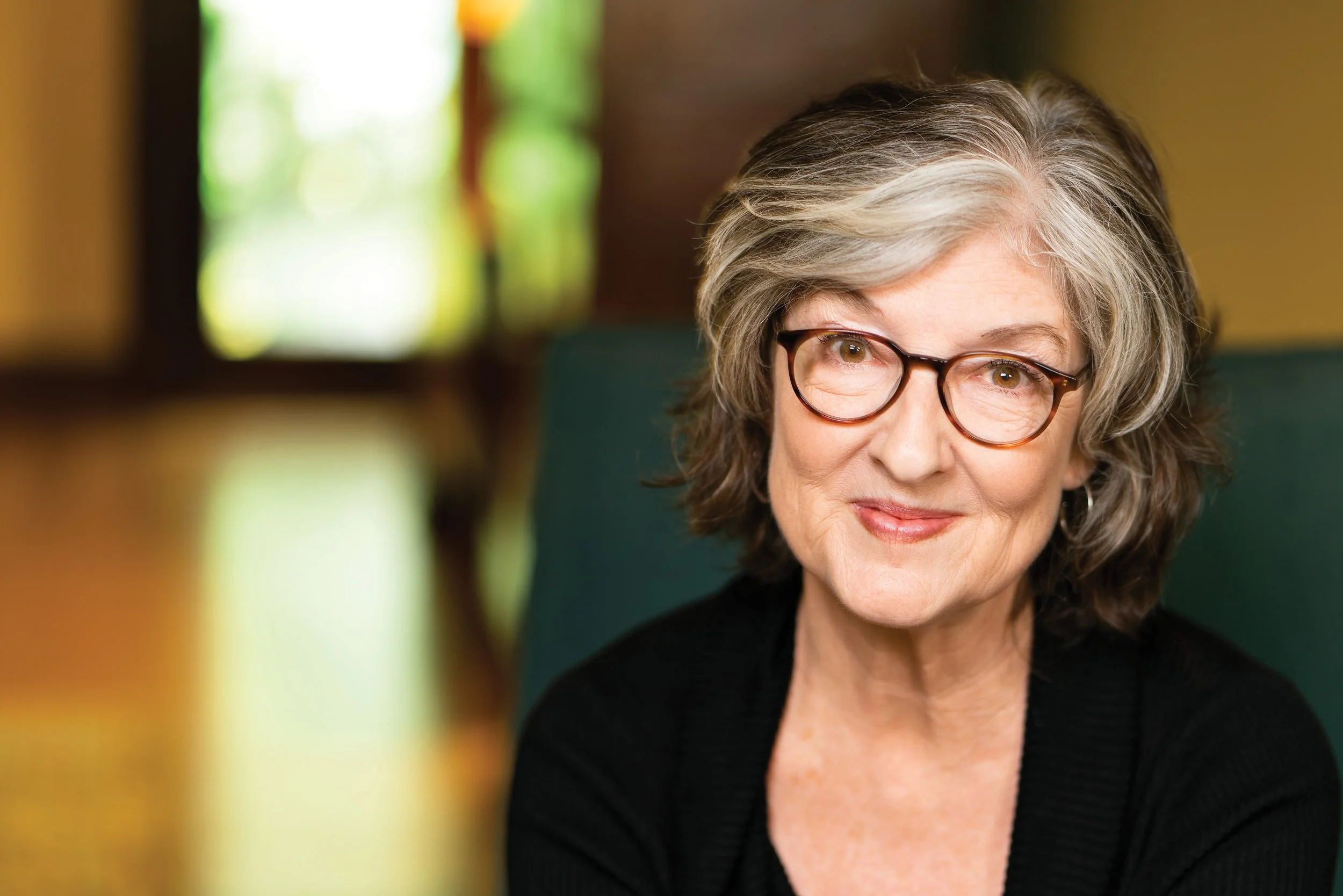
Barbara Kingsolver. Photo by Evan Kafka
SILAS HOUSE
When we were in Greece, I was listening to you talk, and I was really moved to think about you as a little girl, dreaming of what you wanted to do and how you wanted to expand your world and make it bigger. I love how you have been able to hang on to that little girl. I feel like you’re still seeing the world from that point of view to some degree. I think that’s one of your strengths as a writer.
BARBARA KINGSOLVER
There were parts of my childhood that were terrible, and parts that were wonderful. And the wonderful part was the wonder. I spent so much time outdoors, unsupervised. There was nothing really that I could do most days but go out and play in the woods or read underneath the willow tree. I had freedom to make my own life out of the ingredients of nature. I credit my dad with really reinforcing and rewarding my curiosity. If we were curious about the names of plants or trees or creatures, he would give us a book. He encouraged us to learn the names of things. It was kind of a perfect life in some ways and it was also very limited in others. The school experience was terrible and there were a lot of things that were very hard about it. But, that wonder — that was my favorite part of life, quietly playing in the woods and reading books. Those gave me so much joy and so much escape in childhood that I have never had cause to leave them behind. And I mean, here I am — look — playing in the woods and reading books! And I guess it’s easy to hold on to the things that have sustained you, made you glad to be alive.
SILAS
One thing that often makes me feel unified with other rural people is how, despite lots of obstacles, we found the literature and we found the music. It often surprises people that I listened to classical music growing up. People just assume I only heard banjos on a porch. Now, with that said, probably most of my classmates did not listen to classical music. But I did, and I’m an Appalachian. I’m a rural person.
BARBARA
Same. Yes. It was there. We could find it. We had to seek it out. And we did that because something about it struck a chord in us, there was something in it that made us say, oh, I want more of that. And whether it was a school music teacher that played John Philip Sousa or the “Firebird Suite” or something, there were always those occasionally eccentric educators who would bring something into the classroom and 28 of the kids would roll their eyes and two of them would lean forward and gasp.
SILAS
As a teacher, I’m always teaching to those two.
BARBARA
Yep, yep, yep. And it’s interesting that you bring that up because did I tell you the story of how I found the engine for Partita?
SILAS
No, I don’t believe so.
BARBARA
Well, it took quite a while for me to get this novel going. I started out thinking, “Well, I’m going to write a little love story.” Just something real small, contained. I wanted to make it so different from Demon Copperhead that it wouldn’t be compared. Something small. Not epic, just little. So I started out with a love story. Then I thought, well, how interesting would it be to kind of layer this in time, sort of make it a midlife retrospective on love and passion and ambition, all those things that we feel so intensely when we’re young that we often have to reorganize or reorder. At some point in our lives when we realize we’re not going to set the world on fire and we have to figure out, Is this enough, what I’ve got here, what I’ve got going? Have I failed or succeeded in some other way? And so I was kind of plotting it out and I liked the idea of this protagonist being a musician, being this girl who played the piano, and the piano was her ticket. But I kept saying to [her husband] Steven, nobody really needs to read this book. I guess I didn’t believe in it. It didn’t feel important to me. I’m not saying anything here that hasn’t been said before. And then I was kind of in the doldrums. But somehow, across my feed came a title of a Substack called something like, “Why Barbara Kingsolver is a Fraud.”
SILAS
Oh, wow. Lord.
BARBARA
And I clicked. I mean, normally I don’t read stuff about me, interviews or reviews or any of that. It’s just too disorienting. But I had to click. Why am I a fraud? Am I? I needed to know. Well, this woman, her position was that I purported to speak for Appalachian people and rural people and people from small towns and working class people, but I am not one of them. And she had a list of reasons that she’d gotten off Wikipedia. Most of them were just plain inaccurate but one of them that was accurate is that I went to college on a music scholarship playing classical piano. Now how it happened was kind of a stroke of good fortune but still I did, so how could anyone from this background actually love and be good at classical music?
SILAS
So she’s an anti-ruralist.
BARBARA
[Nodding.] There’s my novel. The woman has an issue with rural people. It’s bigotry. And I mean, it just made me so mad that I just, I said, that’s the engine. Because sure, lots of people think that about us, lots of people think that there is no high culture in “low” places. But it’s also true that plenty of people who live in places like this don’t feel welcomed into that world. Don’t feel like they would be allowed in a concert hall or a museum, a fine art museum. And there’s even a little bit of sour grapes there. Like, “that stuff isn’t for us, high-minded stuff is not for us.” And I just thought that is really rich material. It’s a class migration story. There just aren’t enough of those and the ones that are are like “I got out of there and I made good and I never went back and I became vice president and never looked back.” But there’s so much more to class, to the life of a class migrant, including how much you want to go back and how much you need to go back and how much of your home you want to keep. Like any migrants, you miss your home. But it also brought up this question of, well, what good is art? What is art? What does art do for us? Why should it be accessible to all kinds of people? So that’s when I knew I had a story to tell that mattered.
SILAS
Well, as you know, after I read Partita I was so moved by it that I wanted to put in writing how I felt, so I wrote you a letter, and I told you then that I think it’s a really revolutionary novel. In the way that it looks at rural life, and the way that it challenges those notions and assumptions. To me, it is so complex and authentic. But I wonder how people who don’t have a deep understanding of rural life are going to accept the novel. It’s so unexpected.
BARBARA
I tried really hard to just get Demon out of my office and not have him looking over my shoulder and not think about this as a follow-up but I feel very good about this as a follow-up because a lot of people who are from here saw themselves [in Demon Copperhead]. They saw their own sons, nephews, fathers, neighbor kids, themselves. Not just in poor Demon’s life — but in all the characters and the culture — and felt seen by it. But for people not from here it was eye-opening. People were shocked to find out oh there’s plenty of kids who get to be 12 or 13 years old and haven’t been to a doctor or haven’t been to a dentist. And I guess my point was, Yeah, it is this bad for some people, and we didn’t ask for it, and this is the history that got us here. But Appalachia is so many different things, and this [Partita] is another way of being Appalachian: a farm family, a dairy family, a family that’s really doing okay.
SILAS
In Partita, I know we’re in East Tennessee, even if I’m not sure exactly where, but I thought, Demon just lives an hour up the road.
BARBARA
Precisely, yeah.
SILAS
And these people can coexist. They’re all of the same world.
BARBARA
I just kind of arbitrarily made up an East Tennessee county. It could be directly adjacent to Lee County [where Demon Copperhead is set]. I thought about that.
SILAS
Livia and Demon could very well know each other.
BARBARA
Exactly. Yeah, it’s the same place. They could have people in common.
SILAS
I love that about it because on the surface, it does seem so different. And it does seem like such different worlds and different experiences. But it’s the same place, the same culture. I think that will be surprising to a lot of people. Just based on the way some folks talk to me about Appalachia, it’s things like “How can you be a writer and be from Kentucky, where everybody’s illiterate?” It’s exhausting. And then they learn we have readings and open mic poetry. All the time! There's a lot of culture here. And not just banjos on the porch which is culture, too, of course.
BARBARA
I thought it was important to write about farming communities and the economic strain they’re under and how people are moving away. Plenty of little houses [here] you can buy for a song because people have to move away. But it’s also important for me to talk about how when she went to college she went to this place where everybody looked at her like she was from Mars and she felt like she was from Mars. And she has this boyfriend who’s from a different class and culture, from a professional family and so forth. And when they argue, he says, “We’re not rich. We’re just like everybody we know.” And she says, “Well, we’re not poor. We’re like everybody we know.” I mean, just to talk about class and normalization of these differences in opportunity; we don’t drag around saying, “Oh, poor us.” Most people around here are just getting through their lives. But they also have a sense of getting a bad deal from the economy or the agricultural industry or whatever but also blaming themselves. [There’s this] notion of universal opportunity that simply is not true.
SILAS
You are our contemporary Dickens.
BARBARA
Thank you. I’m nicer.
SILAS
[Laughter.] Yes, let’s clarify. In a particular way you are our Dickens in that you’ve always been able to explore social issues without writing polemics. You make the human story take precedence over the social issue. You strike that balance — your books are about issues, but they’re still human stories that people can relate to and don’t feel beaten over the head with the issue.
BARBARA
While I was writing Partita, I was thinking so much about being a class migrant. I mean, we both are in some ways. And we are class migrants who stayed home or came home and embraced our place while having and keeping and giving our families more opportunity. But it’s funny that I didn’t really understand class until I went to college and felt so daunted by what I didn’t know of the world and what people thought of me and the judgments that they made. And so that’s just indelible. I mean, that’s just engraved on me that this is a country with very strong class barriers. This is a country of mythologies that we’re just supposed to believe in; that’s just supposed to be kind of imprinted on our DNA, that everybody can be rich if you work hard enough and if you’re smart. Everybody can be president. All these things that just aren’t true and that bite back hard when you don't succeed and you feel like you have only yourself to blame. And also sexism. I grew up with a very powerful sense of the limitations on women’s opportunities because of all the women I saw that just had no choices. So all those things are just baked into me. When I finally figured out that I could write stories that other people would read, they’re coming from the only place I know. They’re coming from a place of awareness of broken promises, power imbalances, and myths that hurt people. I don’t know any other world to write about. I just write about people dealing with the stuff that I know about. And I try to make good stories.
SILAS
Reproductive rights become a part of Partita, and it’s just a natural part of the story. It’s just what happens to young women, it’s not you shoe-horning in an issue.
BARBARA
Yes, she runs into a barrier. This is in 1990 so it’s well after Roe v. Wade. And it’s funny, I was talking with a British journalist, and she was surprised; she thought reproductive choices were a yes or a no kind of thing, and that now that we’ve had this backsliding and these losses of rights in some states, she had this idea that it’s kind of like everything’s fine in some places and everything’s not fine in other places. This is coupled with a lack of understanding that even when things are legal, because of misogyny and because our country is ruled by men who have no comprehension or understanding of women’s reproductive health and issues, it is always really hard to get good health care for some women, especially young women without resources. So it’s just life. I didn’t sit down and say, Well, my character is going to run into this barrier and that barrier and let me think of 12 things that are going to be hard for her to do and then make a story about them. I wrote a story about a young woman falling in love, hitting hard times, running into the various disasters that you just run into in life, especially as a woman with no money, far from home. I mean, for the most part, if we don’t have money, we have family. And because of her bad luck and family history, she has neither. Her story is different from Demon’s because Demon had community, no matter what. She came from a very damaged family and she went far from home and it was her isolation from her own people that caused the worst of her problems.
SILAS
I think the thing that moved me the most about Partita was the way Livia’s mother hurt her. The reader is so endeared to her because of that. And I cared for her. The reader wants to mother her. I love that aspect of it.
BARBARA
It’s a journey of — if not forgiveness — at least resolution.
SILAS
I feel like you talk more about the difficulties of your childhood now than you used to.
BARBARA
There’s a very good reason for that: both my parents have passed. I had a very difficult relationship with my mother and I understand now that she had severe postpartum depression after I was born and never properly bonded with me. And then I was given some letters that really made me so sad. She was not able to care for me and that was a revelation. It explained so much of her coldness to me. It was different from my siblings. I’m a mother myself and because you’re a parent, I think you’d probably agree, there is nothing more precious or wonderful than that feeling of being bonded to your child. And for me to realize that she didn’t have that, that that was taken from her because of very poor mental health and the understanding of mental health in those days and the expectations that, no matter what, you just suck it up and you’re okay.
That was a grievous wound, not just to me, but to her. It goes a long way to helping you forgive. In some ways, I did write about that in this book even though I made the circumstances very different and invented plot lines and characters. The misogyny of those days was a cultural injury. My mother got married in 1950, right at the time when the men were coming home from the war, and the women had been running everything in the factories, and the entire culture turned on those women and said, “You’re going to stay home. You’re going to have children. You’re going to love vacuuming.” And she was miserable. She should have had a job. She should have been an architect. She had so many talents. She was a good writer. She was so damaged by the cage that was put around her, as so many women were. It’s only natural that some women who were confined in that way would take it out on their daughters, would resent their daughters’ opportunities and their daughters’ success.
SILAS
For the record, I just want to reiterate that Livia [the main character in Partita] is not you. But also, reading the novel and having that prior knowledge as your friend, knowing some of that, knowing that you were drawing on that, even if it’s not your life story, you’re still drawing on that experience, it just killed me to read this novel. Because I love you, and it just made me hurt for you as a child and as an adult child. I think that makes it even more powerful to know that, for readers to know that it's fiction, but it’s informed fiction.
BARBARA
Yes, we still draw on the stuff we know and experience. You mine your experience for the emotional truths that you have known. And just like in The Tulip Poplars, you have felt all those many feelings in different ways, even though none of those characters is you. We’re so lucky to live in the times we do. However, we might want to lament the things that aren’t great about our times. People don’t go to prison for holding hands with a person of a different race now. But we can imagine it because we have experienced some aspect of it. I’ve never let myself write about the grievous wound of having a damaged attachment to your mother. On the contrary, I’ve written about so many great mother-daughter relationships. I think over the years I’ve invented the good or the trying-hard mothers…
SILAS
… to live vicariously.
BARBARA
And also, I had to start from scratch being a mother myself. I had to figure that out.
SILAS
Don’t you think that a lot of writing fiction is about balancing imagination and experience?
BARBARA
Even when we’re imagining something, we still are drawing on our own experiences to some degree. I do get a little impatient with this relentless search that the public carries on for the autobiography in your fiction, which is so funny because when you write nonfiction, everybody questions your facts. But when you write fiction, people want to make all of it true. I think you almost have to be another writer to understand how pure invention of a character is possible. You can create a character that’s based on nobody you’ve ever known, nobody in your family, and yet there’s like 75 elements of that person, just like a gesture or a bandana that they wear or a habit of speech or a profession like all of these different things have come from things you’ve known because that’s all we have is what is the life we live But it doesn't mean we’re writing about ourselves.
SILAS
Yes, right.
BARBARA
There’s also a way in which we take our characters through these emotional journeys. But it’s not therapy. We’re not doing it to make ourselves feel better. A therapy journal is a whole other thing, and it’s very boring to read if it’s not your own. Probably even your therapist would find it boring to read sometimes. But it’s all in service of story. I do think that I did make up my mind a long time ago when I understood that I could do this for a living, that I could be a novelist, I just thought, I have to experience everything I can. Not because I will specifically write about going to Greece or doing this or that, but because it enriches that body of experience that we have to draw from meeting other kinds of people and experiencing other flavors of life, other ways of interacting with different cultures.
SILAS
You mentioned the grievous wound. I love that phrase. I mean, it’s pretty emphatic.
BARBARA
Well, what wound could be more grievous than being unloved by your mother? I had to look that in the eye when I was writing this and own it. Forgiveness and acceptance is still, as Livia’s friend tells her, a moving target.
SILAS
The heart of the grievous wound for me is that I had a really wonderful mother, but there was always that fear that if she knew who I really was, that I was gay, she might take that love away from me. Fortunately mine didn’t, but for a lot of people, that’s not the case. That’s at the heart of The Tulip Poplars. What good is love when there’s the threat of it being taken away? Is it really love …
IN UNION
… if it's conditional?
BARBARA
And how can you know until you’ve tested it?
SILAS
Exactly. One of the things we truck in as novelists is trouble.
BARBARA
You gotta have it!
SILAS
So of course we have to explore those sorts of things. But would you say Partita is your most personal novel?
BARBARA
[Takes a thoughtful moment.] I don’t know. I think that I’ll have to get some time away from it. Do you think The Tulip Poplars is your most personal novel?
SILAS
Yeah, I think I put every solid thing that I had in it, every bit of knowledge. But I guess we do that with every novel.
BARBARA
I was going to say, haven’t you always felt that way?
SILAS
Yeah, with every novel. But I feel like I was revealing more of myself in this book. I mean, one reason I’m a fiction writer is because I want to hide behind the fiction.
BARBARA
Sure. [Reconsiders.] Well, it’s not even just hiding. It’s to be private. It’s like my personal life is not the world’s business.
SILAS
Right. And I sort of want to create characters so I don’t have to talk about myself.
BARBARA
Yeah, yeah. And here we are talking about ourselves.
[Laughter]
But also it’s the freedom to invent because I also think if I just wrote about myself it would be so limiting. I would so much rather be able to create scenarios where there are these truths you want to tell, but you can tell them much more vividly and more effectively and efficiently if you, let’s say, invent these four characters who love each other — I’m talking about The Tulip Poplars — these four characters who love each other and can’t be lovers [in the time and place]. Like I told you when I read it, it is the great Abide No Hatred novel because it touches all the ways that hatred is posterous and wrong when it comes to choosing who you get to love. And you did that so effectively by making up those four characters. And they’re invented, right?
SILAS
Yes, that’s right.
BARBARA
It’s not like you looked around and said, “Oh, well, these four people, they’ll work.” No, you had to make them up and you had to put them in a place and a time and give them certain backgrounds that would constrain them and that would also bring them together and then take them to other places where they would encounter other kinds of bigotry.
SILAS
I think one of the great pleasures and responsibilities of being a novelist is that we have to think about these big abstractions. It’s our job to think about and articulate abstractions like love and hate and bigotry.
BARBARA
And the future in a certain way, like predicting where this is going to take us. Where is this headed? What's wrong with this picture? A lot of people can only look as far as next Friday when they get their next paycheck. Our job is to look years into the future and years into the past and show these patterns of repetition and how we can break out of them, to look at the bigger picture all the time.
SILAS
The reason I asked if Partita is your most personal novel is because as somebody who knows you and thinks of you as my friend and chosen family even, it's the book of yours where I felt the most like I was with you …
BARBARA
Oh, interesting.
SILAS
… and that I was hearing you, even though it’s not you. It's not in any way autobiographical. Still, to me, it’s like so much of the essence of who you are is captured in this book. The way you think about art and parenthood and the natural world and music. I just felt like I was with you and I love that. I mean, I do with every book you write, but this one just felt deeply personal to me in that way. And I mean, part of it is because it is an intimate novel.
BARBARA
Well, thank you. Yes, it’s intimate. That's what I wanted to do, is tell a love story.
SILAS
When you say that, which one? Because the love story for me is the unexpected one. We don’t want to give too much away, but … are you thinking that it’s two love stories or are you thinking more about only one?
BARBARA
I think that it’s three love stories. I started with the young love story, the passionate, out-of-your mind…that way that love takes you over, it’s a kind of insanity. First love can be …
SILAS
… a wonderful and dangerous insanity.
BARBARA
That was my starting point. The way that art takes us over, the way music takes us over, the way love takes us over, especially that kind of passionate young love, so that we lose ourselves. I thought, That’s something interesting to write about. And then... As I got into it, I thought it would be more interesting if this was a looking back. So, like a mature love versus young love, kind of like a reconciliation of all of these things, these passions that take us over and how life and time can help us hold the center while holding on to ourselves. It is about the endless human desire for art: what pulls us towards music, what pulls us toward beauty, of a painting or a poem. That’s another love story. So, it’s like it started as a little love story and then it got like a box around it and then a bigger box around it. That's kind of how it worked.
SILAS
Do you think that maybe you wanted to write love stories because we’re living in such hard times? We need love stories right now. That’s one reason I wanted to write The Tulip Poplars.
BARBARA
I was telling my editor that I was working on this little love story, but who needs to read a love story? And he said, “Barbara, everybody needs that.” And I took that to heart.
SILAS
I agree. It felt really good to me to be immersed in that love. In writing my novel and reading yours.
BARBARA
Same, reading The Tulip Poplars. The way it opened out into all kinds of love: chosen family, and the New York part, and how you find love, and how you find what isn’t love, and loyalty and what endures. I loved just being immersed in that, the epic scope of this story that was really all about love.
SILAS
On that note, I think love and hope are the same, they’re in the same sphere there.
BARBARA
Yes.
SILAS
You’re one of the most interesting people I know, and I think the most interesting thing about you, to me, is that you’re such a realist, yet you're never cynical. And sometimes I feel really hopeless, and you help me out of that.
BARBARA
Well, I’m glad.
SILAS
Throughout your career, you’ve always stated the facts about things. I have never heard you lose faith in the American people or a conservative county or whatever. So many people want to just write off Appalachia as Trump Country or put all the blames of everything on the South. And you just refuse to do that.
BARBARA
The people who live here, we know our neighbors. I mean, my down-the-road neighbors had Trump signs in their yard, but they also would come over here and bring me a casserole if we had a tragedy. We know the granular truth of our place. I’m never willing to just write people off. I feel that being a novelist — I wonder if you feel this way too — it forces me continually to exercise my muscles of seeing every side of the story. Because we have to represent every side of the argument. The characters that are bad in our stories, they still have to be real. So we have to get in there and figure out, oh, well, he’s doing this thing because he’s scared. He’s doing this thing because he has a good job and he might lose it. And, we get it.
SILAS
The vulnerability, the fear.
BARBARA
Yeah, yeah, yeah. It’s a part of the profession to really understand where everybody’s coming from. And I feel like I do that in my working life and then I bring it into the rest of my life. When people are trash-talking somebody, I’m the person who always says, “But look where he’s coming from, look at the trauma that he’s coming from.” So how does that translate into hope? I think that translates into this powerful sense that we have so much in common. We will get over ourselves in time. Another part of that is because of my background in science. I spent years and years studying evolution, learning to think not in years or decades or centuries, but millennia. And I also know, the dinosaurs, they had their big day. And then it ended. But something else came along. Flowering plants came along. And look at them, how great they are! I’d rather have those than a dinosaur, wouldn’t you? I mean, come on. I think my training as an evolutionary biologist gave me this profound faith that things come and go, but good is not necessarily holding on to this moment.
And what I see right now in American politics is these old guys holding on so hard to their notion of when America was great — which sure as hell was not great for people like you or me. Their imaginary notion of the wife at home cooking and the breadwinner and the two children — they’re hanging on to that, which they don’t even adhere to themselves. No, they don’t. Fear of change. And I don’t fear change. I welcome change. And I have this understanding that sometimes the house has to fall down before you can build a new one. And of course I feel sympathy for the human cost, the environmental cost. But the dinosaurs will go and the flowers will come.
SILAS
That’s perfect. I love that. This next thing is a little difficult to talk about, because I know how you feel about this.
BARBARA
Okay.
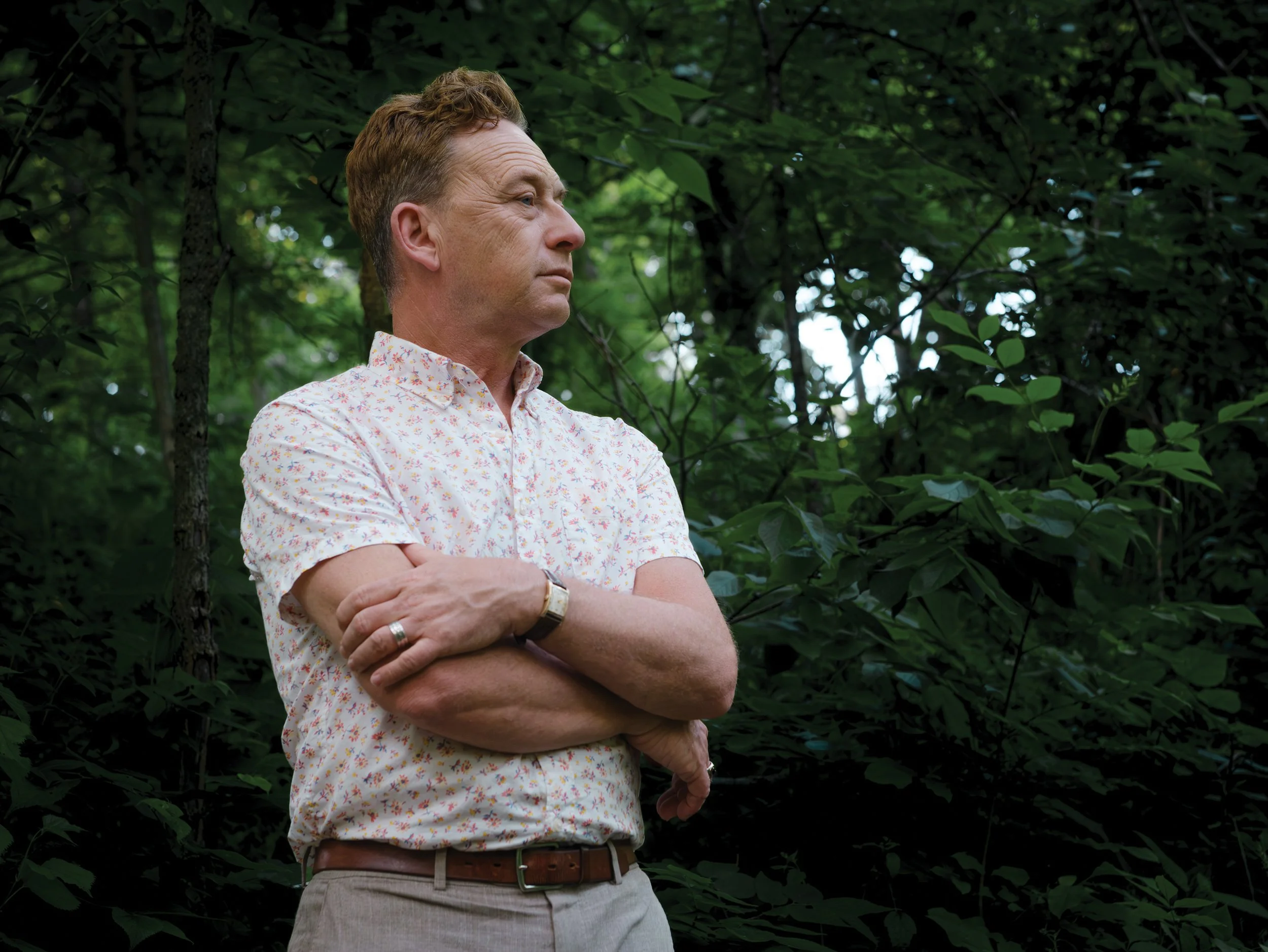
Silas hOuse. PHoto by Carey neal Gough.
SILAS
You’re one of the most successful novelists of our time.
BARBARA
That’s hard to talk about.
SILAS
I’ve known you for about 20 years. I have never seen you exhibit any kind of extravagance. I mean, you live in this holler in Southwest Virginia with a guineahen chittering in the background. I think that people have this idea of “a successful novelist” living in a high-rise overlooking Central Park or something.
BARBARA
Which would be Doom Castle for me.
SILAS
So why do you choose to live where you live and live the way you do?
BARBARA
Because I think this is the most beautiful place in the world. I tried living other places. Honestly, when I was growing up, I wanted to escape. I loved the woods and the fields where I played, but when I outgrew those particular woods and fields, I wanted to get out of there. I wasn’t happy in Carlisle, Kentucky. I didn’t find kindred spirits. I didn’t see a way of life that would make me happy. I wanted to kick the little town dust off my shoes and go to college. That was amazing, just to get to do that. That’s going to the moon. Then I went to Europe and backpacked around and took whatever job I could find. I lived in Paris, France, I lived in Athens, Greece. I didn’t have any money but I experienced all those places. None of them felt like home and this is home. But it’s not the town where I grew up. That’s important. I like to travel but I love to come home. I don’t want trappings.
SILAS
You want experiences.
BARBARA
I want experience. I give a lot of money away. And I’m very happy to be able to do that. I feel like if money comes to you, it should go to people who need it. But I also travel. I spend. I don’t go on yachts, I will never set foot on a private jet. I will not do that. But I love to go hiking in mountains that are different from these and see flowers that I’ve never seen. I love experience, but I don’t want things. This is hard to generalize about because you and I, we both grew up without much. And we know that one can live without much. Some people grow up without much, and they want everything. You know what I’m talking about, right?
SILAS
Yeah. My parents have a very different way of interpreting all of that than I do. They grew up very poor and they like a lot of stuff, whereas I prefer an experience. I don’t want material stuff. So it is interesting the way people react to that in different ways.
BARBARA
Yeah, some people feel deeply insecure and they just buy things and buy things and it’s like there’s a big hole and there’s never enough. I feel the opposite. I feel like when I was in school living on nothing, I could live on beans and rice all year and I know that I won’t die. To me, that’s a great safety, having lived on very little. And I also think, as an artist, that low overhead is the key to artistic success. When I hear young writers say, “I'm going to go to New York so I can be a writer,” I think that is not wise. I mean, I don’t give people advice unless they ask, but you’re moving to a city where $4,000 a month will buy you a room the size of a closet? Your every artistic choice will be dictated by money, and you’re going to end up writing ad copy. If you want to write a novel, move here. You can buy a small house and a farm for $50,000. This is the place to be an artist. I’ve always felt like safety, security to me is low overhead, knowing I can be safe, meet my needs, and then write whatever I want without worrying about marketability. The greatest gift of my career has been the freedom to write. I wanted to write without worrying about who wanted to read it or not. I never tried to be popular. There’s freedom in that. I don’t know how to be popular. I was never one of the cool kids growing up. So actually, that’s also liberating too, knowing how to not be one of the cool kids. But I also want to credit my dad because my dad came from truly nothing. His father, my papaw, was a really smart man, but I don’t think he finished the fifth grade. They had to start working and having babies, and they didn’t own anything. They were day laborers and stuff. And my dad came from that, and he had an extraordinary, unusual mind. He could memorize books. He decided when he was 5 that he wanted to be a doctor. And his parents, I’m sure, said, “How do you do that? Good luck!” He read books and he memorized the anatomy books. He got himself to college and then got himself through medical school. And then he said, “I’m going to go home and take care of the people that need me.” And he did. And they couldn’t pay anything. What I remember is people bringing really nice cakes to our house — and vegetables. And he didn’t worry about making money. I don’t think my mother was extremely happy about that, but that’s just how it was. And he was so happy. The value that he clearly passed down to all of us kids was that the way to be happy is to do work that makes the world better. And what you have is not what makes you an important person. What you do is what makes you an important person.
SILAS
Is some of that frugality or resourcefulness from having been a single parent?
BARBARA
Yeah, resourcefulness. I spent some really poor years when I was a single parent. I had to scrap and save. There was nothing to save, but I just really had to figure out how to get by on very little and make sure that my family was safe, but they also had to learn. We were just kind of all in it together.
SILAS
I’ve told you before that you were mentoring me before I ever knew you. Your first novel [The Bean Trees] was published when I was 18.
BARBARA
Did you read it then?
SILAS
Yeah, I read it immediately. It was one of the main books that gave me permission to be a writer because I knew you were from just a few counties away. I knew you had a similar experience.
BARBARA
That was for you what Shiloh and Other Stories [a short story collection by Bobbie Ann Mason] was for me. Wow. I guess I didn’t know that, and I’m so glad.
SILAS
And then, after I was published, you reached out to me. I was in southwest Virginia, doing a reading, and I had no idea, of course, that you even knew I existed. And you reached out and asked if I would like to meet.
BARBARA
I had given your books to all my relatives. I really wanted to meet you.
SILAS
It was just so validating. It made me feel seen as a writer, as an artist, to have an artist who had absolutely nothing to gain in meeting me …
BARBARA
Are you kidding? There was everything for me to gain! I mean, look at us. Friendship. Collegiality.
SILAS
But I could have been a total asshole. You didn’t know.
[Laughter.]
BARBARA
The thing is, I knew you weren’t. You read Lee Smith and you couldn’t have imagined that Lee Smith would be a total asshole, right? From people’s writings, you don’t know anything about them except the goodness of their hearts. That I think you can count on. They may have ugly secrets or what have you, but the goodness of their hearts. I’m so glad that we did meet. Very soon after Clay’s Quilt was published, I found it. I feel like all Appalachian writers really need to know each other, and we’re in the same boat.
SILAS
Well, that’s very generous of you to say, and not everybody’s as generous as you. I’ll just say that. There are a lot of people who are of your stature in international literature who are just not that generous.
BARBARA
Don’t you think that what you call generosity is just a cultural attachment to community? None of us is doing this by ourselves. And that’s the great part of being an Appalachian and I think it’s largely the great gift of being a rural person. We understand that we belong to each other. ◊
Barbara Kingsolver grew up in rural Kentucky, earned degrees in biology from DePauw University and the University of Arizona, and has worked as a writer and author since 1985, with her latest work being the novel Partita. Her 2022 novel Demon Copperhead won the Pulitzer Prize for fiction and was named the Best Book of the 21st Century by a New York Times readers’ poll. Her other books include The Bean Trees, Homeland, The Poisonwood Bible, and Flight Behavior. Since 2004, she and her husband have raised their family and farmed in southwestern Virginia, in the mountains she considers her home territory.
Silas House is the New York Times and USA Today bestselling author of seven novels. He currently serves as the poet laureate of Kentucky and as the National Endowment for the Humanities Chair at Berea College. In 2022 he was given the Duggins Prize, the largest award for an LGBTQ writer in the nation.
Jason Holley is a Texas born illustrator, educator, and exhibiting artist living in Los Angeles. His illustration career spans 25 years and his is widely recognized for his influence and contribution to the field. He has received awards from: SPD, AIGA, American Illustration, Society of Illustrators, BMG, D&AD, Communication Arts, and others. He served on the board of directors for Icon8 and Icon9. He has been a member of the faculty at Art Center Colege of Design since 1997 where he is an associate professor.