
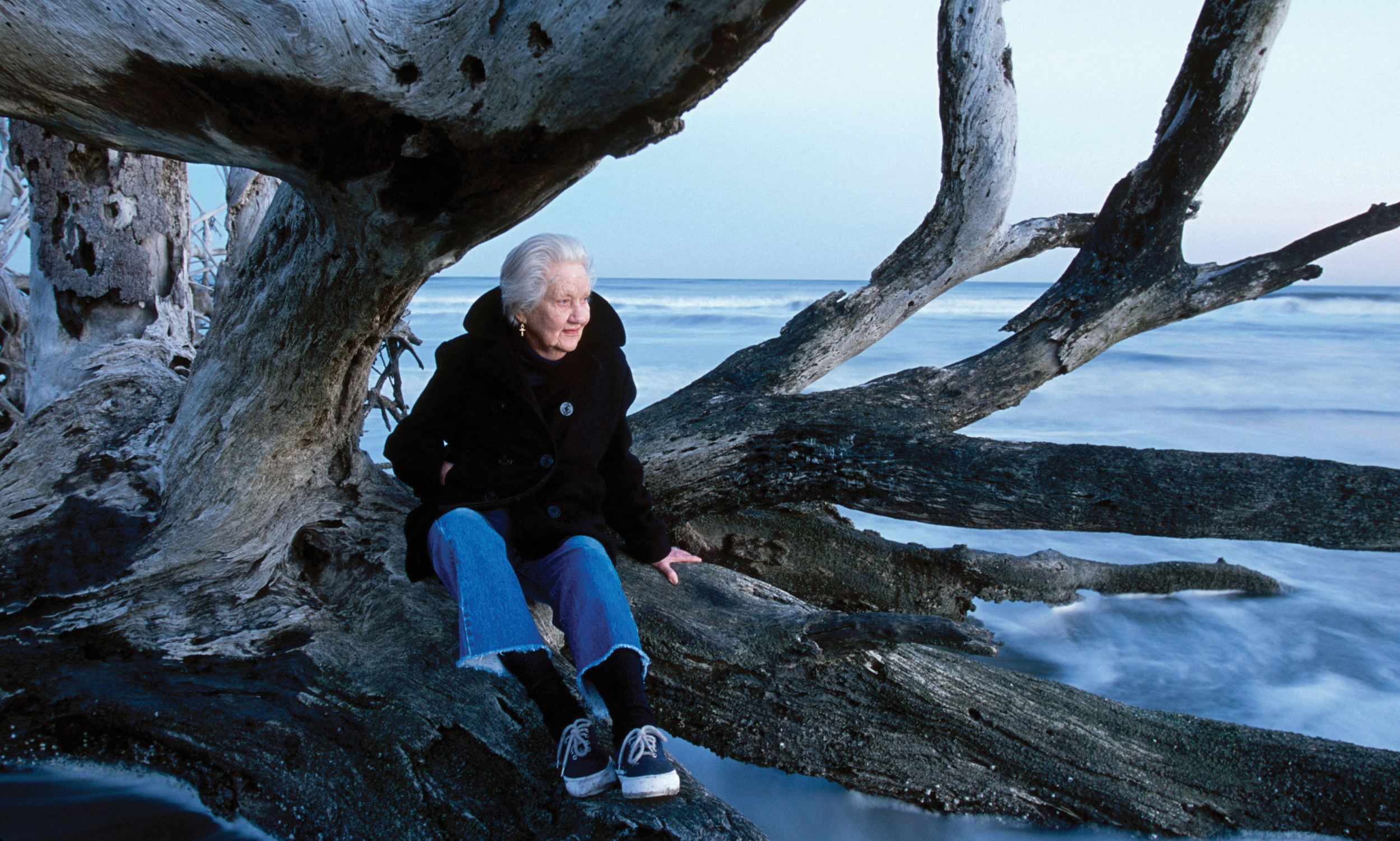

Beryl Gilothwest’s tribute to a pioneering conservationist ... his legendary grandmother. Sandy West believed that embracing what we cannot understand is the pathway to enlightenment, and that time on her beloved Ossabaw was the best way to learn that lesson.
Words by Beryl Gilothwest
September 21, 2026
—
Originally published in Issue No. 14 of The Bitter Southerner Magazine
On a clear spring day in 1977, Sandy West got into her beat-up pickup truck with Muldoon, her Red Tick Coonhound, and set off into the woods of Ossabaw Island. As she wove down the curving, live oak-lined dirt roads, rays of sunlight pierced the tree canopy like spotlights and bounced off her windshield. She stopped twice, first to allow a group of little black pigs to cross in front of her and again to drag a fallen branch to the side of the road. Sandy’s mind turned over and over as she made her way deeper into the island. She was wrestling with one of those pivotal moments in life when you’ve finally achieved something you worked hard for, but you’re suddenly questioning if it’s the right way forward after all.
After doggedly fighting for 10 years to find the perfect steward for Ossabaw — an undeveloped, 26,000-acre barrier island off the coast of Savannah, Georgia, that had been in her family for over 50 years — Sandy had finally found a partner who appreciated her vision for the place. She and her late brother’s four children were prepared to sell half of Ossabaw to the State of Georgia at its appraised value and donate the rest. Unfortunately, the plan had languished when the state couldn’t come up with enough money.
That week, when all hope had appeared lost, Robert Woodruff, the chairman of the Coca-Cola company, stepped in with a check. While this was the news Sandy had been waiting for, she now had to face the difficult reality of letting go. Ossabaw was the great love of her life, the place where she had grown up, raised her children, hosted the greatest thinkers of her time, and found her voice as an environmentalist. The island was in every fiber of her being, and relinquishing control felt impossible, no matter how carefully she had considered the decision.
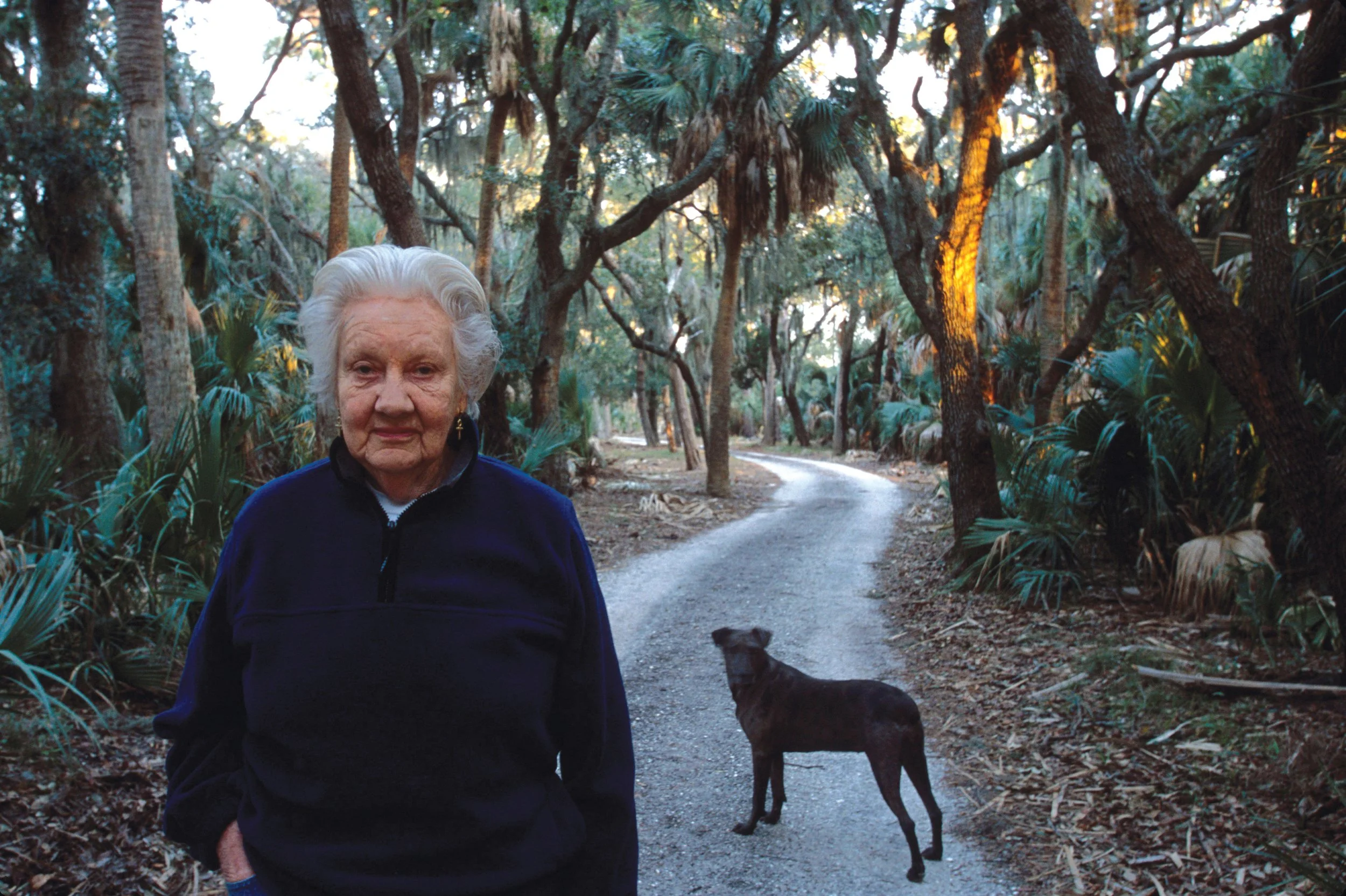
Eleanor “Sandy” Torrey West on Ossabaw Island.
After cresting a wooded dune and emerging into the sunlight, Sandy pulled her truck up to the edge of Bradley Beach, a section of Ossabaw’s 13 miles of pristine shoreline that is one of the world’s most important breeding grounds for sea turtles. The tide was low, and the expansive, hard, dark gray sand flats stretched out in front of her. Sandy took off her shoes, and she and Muldoon set off down the beach, walking close enough to the water so the receding tide could wash over her feet. After a while, a flash of red caught her eye. As she got closer, she realized that a vintage 2x2-foot rounded metal Coca-Cola sign had washed up onto the sand in front of her. She couldn’t believe what she was seeing, but she didn’t second-guess the omen. She had her answer at that moment, and she signed her name on the dotted line shortly thereafter.
Sandy brought the Coca-Cola sign home and hung it in her back hallway, not only to commemorate a key moment in Ossabaw’s history but also to represent her personal ethos. When she told this story, which she did often, she always added a postscript about a Coca-Cola bigwig who called her discovery into question, claiming that the sign was too old to be in such good condition and too heavy to float over to Ossabaw. “Why do people always have to take something extraordinary and make it ordinary?” she’d asked him. “Human thinking and planning … [don’t] have a very good track record, and human awareness is proven to be limited. Unknown things are hopeful — it’s the known that I dread.”
Sandy believed that embracing what we cannot understand is the pathway to enlightenment. In her mind, spending time in the uncharted wilds of Ossabaw is the best way to learn that lesson. Separated from the mainland by a 30-minute boat ride, the island is deeply remote. Cell service is scant, and there is no wi-fi. You have to fend for yourself out there in a way that is uncommon in contemporary culture, where we always seem to have an escape hatch. Sandy knew that welcoming people into that kind of environment, where they have to relinquish control to the island, would force them to reckon with the unknown.
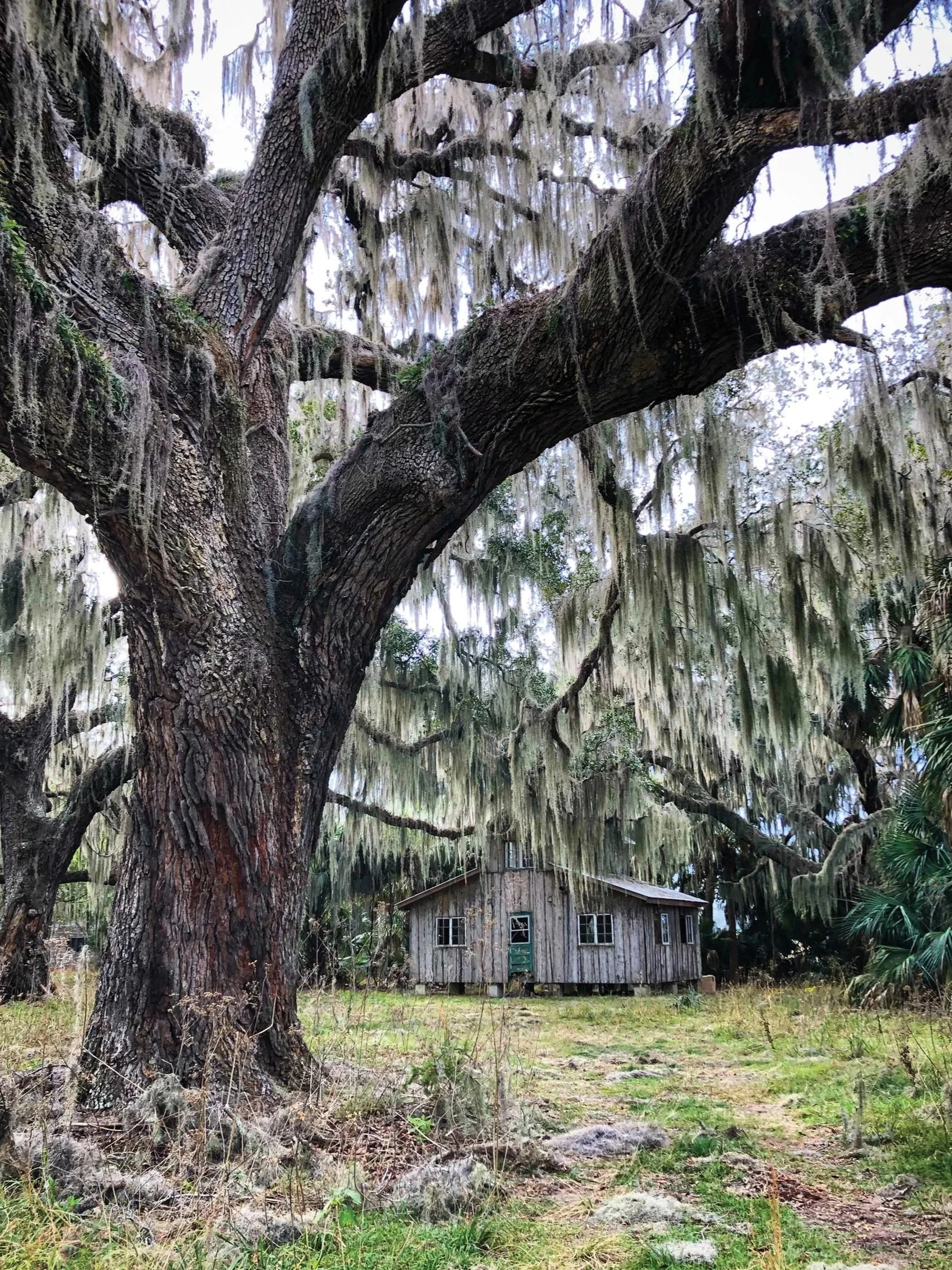
Tower House at Middle Place, a historic plantation on Ossabaw, which was built by students participating in the Genesis Project around 1980. Photo by Brian Foster. Courtesy of Georgia Conservancy.
As a little boy growing up in the 1990s, I always knew that my grandmother was larger than life. “Moose” — so-named by my father because her short, wavy hair looked like antlers — lived on the island alone, except for the two men, Roger Parker and Richard Boaen, who took turns driving a speedboat across the Ossabaw Sound to bring groceries and generally look after the 15-bedroom home her parents built there in the 1920s. My grandmother wasn’t tall, but she made an impression. Often clad in a black- and blue-checked L.L. Bean zip-up, a pair of denim jeans cut off just above the ankle, and statement socks, she filled every room she entered with her infectious laugh, insatiable curiosity, and biting humor. She had an effervescence that few people could resist.
When we visited her at the Main House, it was always filled with her admirers. They ranged from a Wellesley linguistics professor to a bestselling investigative journalist to a superior court judge, all of them decades younger than she was. But none of that distracted from our relationship. Moose was affectionate and loving, reading me stories each morning perched on the edge of my bed, pressing treasures into my hand that I would display on my bureau back home in Massachusetts, and showering me with hugs and kisses before my parents tucked me in at night. Every night at dinner, she asked about my day on Ossabaw, gasping in horror when I told her about the boat getting stuck on a sandbar and laughing uproariously when I described my father pulling me out of the pluff mud. When Moose fixed her gaze on me, her bright blue eyes sparking, it felt like we were the only two people on earth.
I took it for granted that such an unspoiled paradise was accessible to me, with its countless acres of maritime forest, even larger expanses of saltwater marsh, and miles of beach, all of it unpopulated. Danger was also everywhere on the island, from alligators who poked their eyes through the duckweed to rattlesnakes in the woods I heard but couldn’t see to sand gnats that bit me so ferociously that a doctor in Savannah once misdiagnosed me with chickenpox.
While Moose warned me about Ossabaw’s perils, she also urged me to embrace them as part of the island’s challenge.
One afternoon, I ran to her room at top speed after finding a massive snake coiled up next to one of the toilets in the Main House’s back hall. She didn’t bat an eyelash. “Can you imagine trying to do your business only to be disrupted by a snake looking up at you?” she asked me, her eyes shining. “I mean, things like that just don’t happen to people.” She led me back downstairs, we carefully scooped the snake into a barrel, and then we brought him out into the woods. She was brilliant at turning unsettling situations into exciting ones.
Moose also urged me to look beyond what I could see on Ossabaw, to use my imagination to understand the island on a deeper level. I still have a small, comb-bound book called The Story of Ossabaw she made for me as a Christmas present when I was six years old. Her story focuses on the island’s wide variety of tame and wild animals, but she sets the scene with Baba Yaga, a fearsome witch from Slavic folktales whose cabin ran around on chicken legs; my grandmother claimed that she used to live out on Ossabaw. Moose asked her artist friend, Craig Rubadoux, to bring this image to life for me, and she pasted his fantastical watercolor painting directly into the book. She then glued sassafras leaves from the island to the following pages to represent Baba Yaga’s footprints.
While Moose knew how to excite my imagination, she also challenged me to understand the same wisdom she bestowed on adults. In the book, she paired the outrageousness of Baba Yaga with a “gosper,” her word for wise advice to live by. “The story of Ossabaw is the story of animals because they love and understand it and know how to take care of it,” she wrote. After we read the book together under the Christmas tree, she asked me if I thought that statement was true. As a little kid, I wasn’t used to having that kind of agency. When I came to Ossabaw, she always made me feel like a participant rather than a visitor.
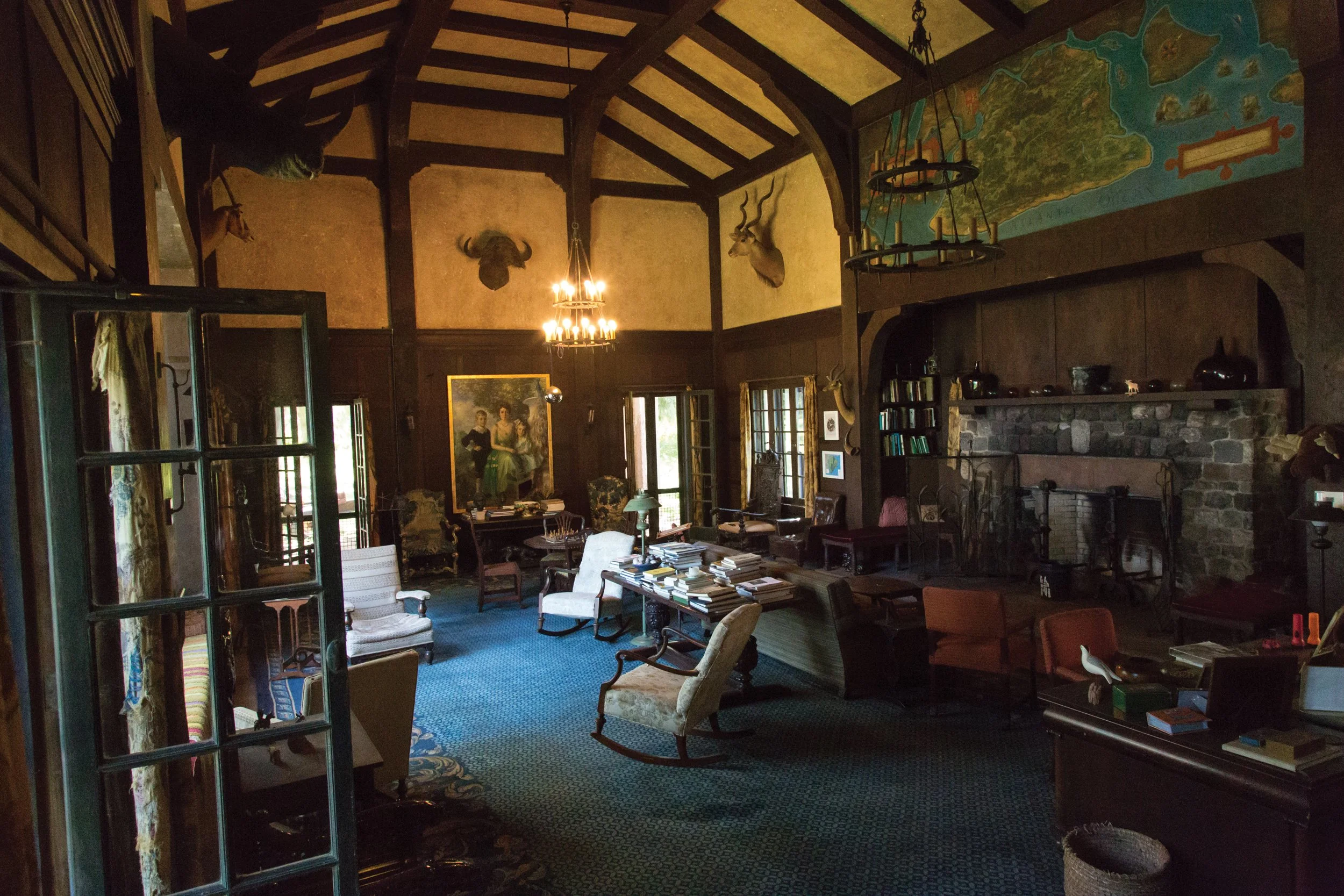
Torrey West Mansion. Photo by Julian Buckmaster. Courtesy of Georgia Conservancy.
My grandmother’s parents, Dr. Henry Norton Torrey and Nell Ford Torrey, purchased Ossabaw in 1924 as a winter retreat from their home outside Detroit. A third-generation heiress to the Pittsburgh Plate Glass and Wyandotte Chemical fortunes, Nell and her husband operated in the upper echelons of American society and were among the handful of Northern Industrialists who acquired Georgia’s mythical Sea Islands. My grandmother was 13 years old when the Main House was completed in 1926, and she was not enthusiastic about the wild, remote place that her parents had acquired. Her love for Ossabaw was a slow burn.
In 1958, Nell passed away and left Ossabaw to Sandy and her late brother’s four children. My grandmother had spent most of her young adulthood and early middle age away from Ossabaw. She attended finishing school in Dobbs Ferry, New York, married an eligible young man named John Shallcross in front of her parents’ glamorous mansion in Grosse Pointe Shores, and appeared often in the Detroit Free Press’s society pages. Now 45 years old and living in the wealthy suburb of Bloomfield Hills, Sandy was married to her second husband and raising her four children, the youngest of whom was just four years old. Suddenly, she was saddled with the burden of stewarding a place she had always considered to be an escape. Her immediate reaction wasn’t resentment or fear; it was guilt. Why should she be able to spend her days alone on this massive private island when others couldn’t? She felt the urge to throw open the doors to visitors so that they could share her experience of Ossabaw.
Sandy’s husband and my grandfather, Clifford West, was a painter and art teacher with close connections to the Cranbrook Academy of Art in Bloomfield Hills, a legendary experimental art school associated with Eliel and Eero Saarinen, Charles and Ray Eames, and Florence Knoll, among others. He cautioned her that allowing unlimited access to the island would destroy the very thing that made it priceless. Together, they brainstormed ways to share Ossabaw that could emulate the slow, open-ended, and secluded way they had forged connections with the island, eventually landing on the idea of a residency program. While they used Yaddo and MacDowell as inspiration, their concept diverged from those legendary artist colonies in two key ways. Here, painters, musicians, and writers would rub shoulders with scientists, businesspeople, and religious leaders. Nothing would be required of any of them during their time on the island, except to gather for dinner each evening. When Sandy asked Elizabeth Ames, Yaddo’s founding director, and others for their opinions, she was told her loose, wide-ranging approach would never work. The unstructured and interdisciplinary Ossabaw Island Project was unprecedented.
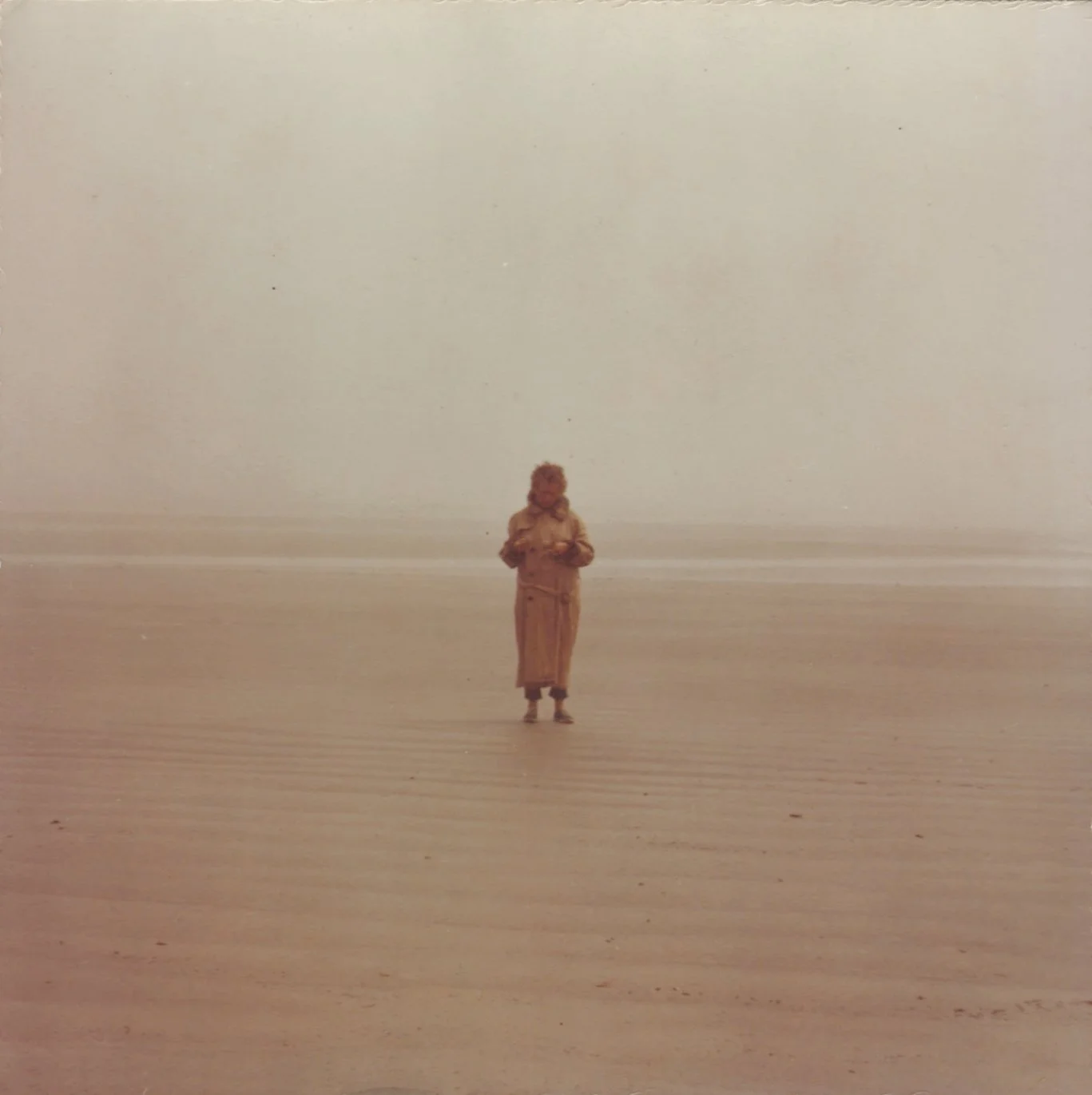
Sandy West often visited Ossabaw’s 13 miles of pristine shoreline, one of the world’s most important breeding grounds for sea turtles. Photo courtesy of Beryl Gilothwest.
In June 1961, Sandy and Clifford invited a group of luminaries in their extended network to spend a weekend on Ossabaw and weigh in on their idea. Included were sculptor Harry Bertoia, painter Arnold Blanch, novelist David Dodge, biologist Colin Pittendrigh, and composer Samuel Barber, among others. Bertoia had recently visited Washington, D.C., where he had received an important commission from Eero Saarinen to make a monumental artwork for the new Dulles International Airport. While on the island, Bertoia was struck by the dramatic way the tide eroded South End Beach, leaving a series of sculptural, dead trees poking through the sand like skeletons. He later explained, “I was deeply impressed by the constant battle of the elements, the sea was taking away part of the island, eroding these huge oaks, some of them were falling, being denuded, scrubbed clean … I became aware of forces continuing.”
When Dulles opened the following year, the airport featured a nine-panel sculpture by Bertoia made using a radical new form of bronze casting that he called “spill casting.” Partially inspired by his experience at South End Beach, this method involved pouring bronze into a pit in the ground — rather than a mold, which had been the process for thousands of years — and then manipulating it to create a rough, topographic effect. Not only did the technique beautifully complement Saarinen’s International Style architecture, but it also shifted the public’s perception of bronze sculpture.
While the island certainly provided the Ossabaw Island Project’s residents with a quiet refuge to work in, the genius loci of the place quickly proved to be the program’s most powerful asset. My grandmother liked to say that Ossabaw has the potential to be a “tremendous catalyst.” But why? In many ways, Ossabaw is just like the other Southeastern Sea Islands. They all have huge swaths of nourishing tidal marshes, rich Gullah Geechee cultural legacies, sun-dappled maritime forests, and terrible histories of slavery and displacement. People who know the islands well often say that Ossabaw’s density is what sets it apart. You don’t get very far when you venture into its forests, stymied by palmetto groves and fallen oaks. But Ossabaw’s individuality cannot be quantified. Many have tried and failed to explain what makes the island feel so immersive that the rest of the world fades away.
When I was little, I became fascinated by the dirt roads that snaked across the island, so different from the asphalt highways back home in Massachusetts. The ruts remained sandy, but the hump in between was often covered in grass and held together by bits of oyster shell. In the pre-Civil War era, enslaved workers used the many shell middens on the island — left behind by the Indigenous tribes who lived on Ossabaw for millennia — to help keep the roads sturdy during the rainy season. I would sometimes find bits of pottery or, if I were very lucky, an arrowhead tucked into the bed of the road. My grandmother carefully preserved everything in one of her closets, organized by the spots on the island where they were found. These treasures are now even better protected at the University of Georgia in Athens. My boyish interest in Ossabaw’s roads stoked my fascination with what the island held ecologically and historically, but also with what it could teach me. The island showed me how to use clues people left behind to better understand their histories, to perceive rather than to judge, and, most importantly, to follow my impulses and let my imagination run wild.
“I always thought it would be a great idea to have a great big trash can on the [mainland] dock labeled: EXPERTISE,” Sandy once said about the Ossabaw Island Project. “Why, if you were the proper kind of person, you could come here and seem to be doing nothing at all, but that’s when your imagination is really going into high gear.” The sculptor Anne Truitt discovered that her journal might constitute a manuscript while at the Project, leading to the publication of her legendary memoir, Daybook: The Journal of an Artist, a few years later. The renowned linguist Roman Jakobson credited Ossabaw with helping him find an unprecedented level of focus, writing that “even the peculiar ground and geographical contour of the island act as an inspiring background of our scientific theories and artistic imagination.” Truitt, Jakobson, and I are three of the many who have had such revelatory experiences on Ossabaw.
While Sandy herself was never an official member of the Ossabaw Island Project, the program catalyzed something in her, too. Starting in the mid-1960s, she was forced to reckon with two major roadblocks. The first was personal. Clifford had begun spending more and more time in Europe to work on a series of films about the Italian Renaissance and later the painter Edvard Munch. My grandfather’s absences, during which he began an extramarital affair, put an enormous strain on their marriage and left my grandmother largely alone to manage the programs on Ossabaw.
At the same time, her fears were growing for the safety of the Georgia Sea Islands, which had weighed on her mind ever since Charles Fraser’s successful development of Hilton Head Island in the mid-1950s. The breaking point came in 1966, when a subsidiary of the Kerr-McGee Corporation announced its intention to mine phosphates — used in insecticides, detergents, and other products at the time — off the coast of Wassaw Island, directly north of Ossabaw. This intervention into the landscape had the potential to irreparably damage the Lowcountry’s marshlands, which are the lifeblood of Georgia’s coastline. Local environmental activists rallied together, led by Robert Hanie of the Georgia Natural Areas Council and Eugene Odum, the “father of modern ecology” and a professor at the University of Georgia. After successfully shutting down the proposal, they worked with my grandparents and others to organize a conference on Sea Island to discuss the uncertain future of Georgia’s coast.
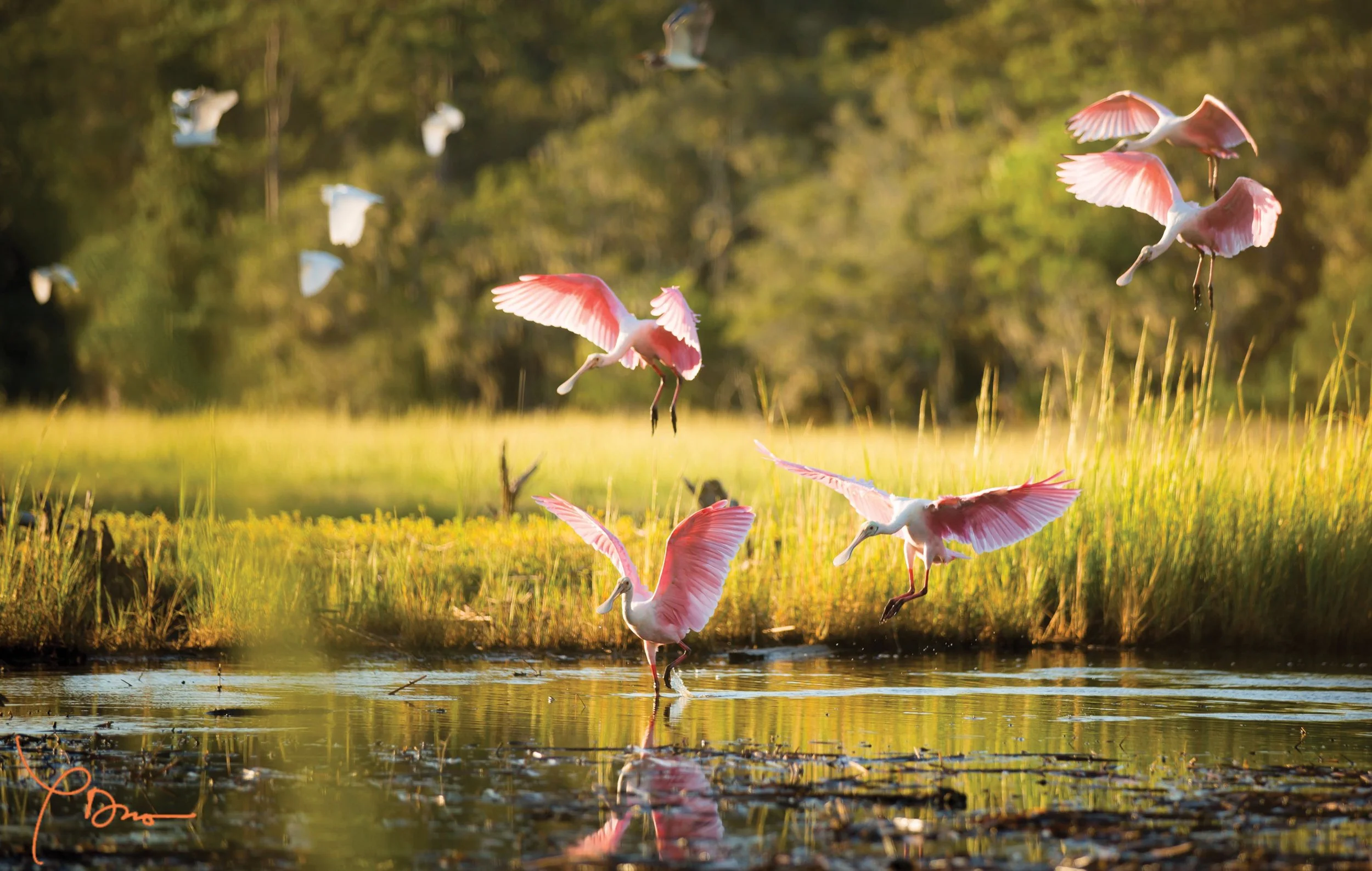
Roseate spoonbills frequent Ossabaw’s brackish ponds. Photo by Phuc Dao. Courtesy of Georgia Conservancy.
Up until this point, in October of 1968, Sandy had mostly deferred to the men in her life: her husbands, her advisors, the island’s caretakers. But this time, she used her own voice. While Sandy and Clifford both spoke at the conference, her speech was far more daring. She didn’t advocate for established methods of land preservation, nor did she claim to know the perfect solution. Rather, she spoke from her own experience, using the radical idea that led to the Ossabaw Island Project as an example of the kind of unconventional thinking that was necessary to protect the endangered coastline:
Why save the birds, the turtles, the fish, and the thinkers? How can anyone or anything keep its head above the mindless stream of pollution, misguided urban planning, and the gobbling up of natural resources and overpopulation? I don’t know the answer, but I do know that not one of these problems can be jammed into a Procrustean bed of antiquated solutions either. So, with the great number of top thinkers here and abroad who are already Ossabaw’s friends through the Ossabaw Island Project … could this part of the Southeast become a nucleus for planning on an even more vital scale?
When I first read this speech, I was struck by the clarity and forcefulness of my grandmother’s words, especially given her lack of experience as a leader and a public speaker at that time. While she used that platform to promote her programs on Ossabaw, she even more boldly seized the moment to advocate for new modalities of land conservation on a national and international scale. It marked the beginning of a new chapter of her life at 55 years old. She was evolving into an outspoken and uncompromising advocate for Ossabaw, the Sea Islands, and wilderness protection more broadly, a far cry from the accommodating society woman she was brought up to be.
My grandmother spent the next 10 years searching for the right steward to protect the island in perpetuity. A huge hike in property taxes, her dwindling bank account, and the knowledge that inheritance taxes would preclude her children from maintaining Ossabaw after her death were impossible to ignore. The process came with many false starts and major disappointments. She had conversations with the Audubon Society, the Nature Conservancy, and Friends of the Earth that ultimately went nowhere. They all wanted to fit Ossabaw into established modes of land preservation, and that wasn’t good enough for her.
During a conference in the early 1970s held at the Main House to discuss Ossabaw’s future, Sandy lost her patience with the lack of imagination and, more importantly, decisiveness that she perceived in the men assembled around her, and she issued a warning: “We’ve as a family felt the need [to preserve] this island, but … [when the money] runs out, and nobody else dies and leaves us [money, and] we have no more cattle to sell, we will have to sell this island to the highest bidder.” My grandmother wouldn’t have sold Ossabaw for development in a million years, but she wasn’t afraid to issue the reminder that she could.
Sandy wasn’t someone who studied the numbers. She was deeply curious, loved ideas, and read avidly, but she always relied on her intuition when making big life decisions. With the knowledge that private stewardship made her programs on Ossabaw possible, she was wary of state or federal acquisition. However, her opinion started to change after Georgia governor Jimmy Carter visited Ossabaw in December 1972. Instead of immediately laying out a plan, he sought to understand the island’s particular mystique. Sandy was delighted, and she took him to as many corners of the island as she could during his two-day visit. “As we walked the beautiful Ossabaw beaches, forests, and marshlands, I grew to appreciate Sandy’s deep spiritual connection to the island and all its living creatures, past, present, and future,” Carter later said. Most importantly for my grandmother, at the end of his visit, Carter didn’t claim to know what should happen to the island. Instead, she remembered him asking her, “What do you think Ossabaw should be?” While negotiations for the State of Georgia to acquire Ossabaw lasted another five years and were finalized under a different governor, Carter’s curiosity and lack of ego in that moment made a world of difference for Sandy. There is a reason she kept a framed portrait of the two of them in her back hallway.
In 1978, my grandmother and her brother’s four children sold half of Ossabaw to the State of Georgia and donated the rest to become the state’s first Heritage Preserve. Incredibly, she was able to negotiate terms that not only protected Ossabaw’s natural resources in perpetuity but also stipulated that the island “shall only be used for natural, scientific, and cultural study, research, and education, and environmentally sound preservation, conservation, and management of the Island’s ecosystem.” Against all odds, she convinced the State of Georgia that the unusual idea she had proposed on Sea Island ten years earlier was viable. It was a lightning rod moment in her life, the culmination of years of tireless work that had resulted in a miraculous outcome. However, the sale also represented a deeply painful separation. When our family signed Ossabaw over to the state at a bank in Savannah that spring, my grandmother threw her check on the floor in disgust. No matter how hard she had fought for this outcome, the loss was devastating.
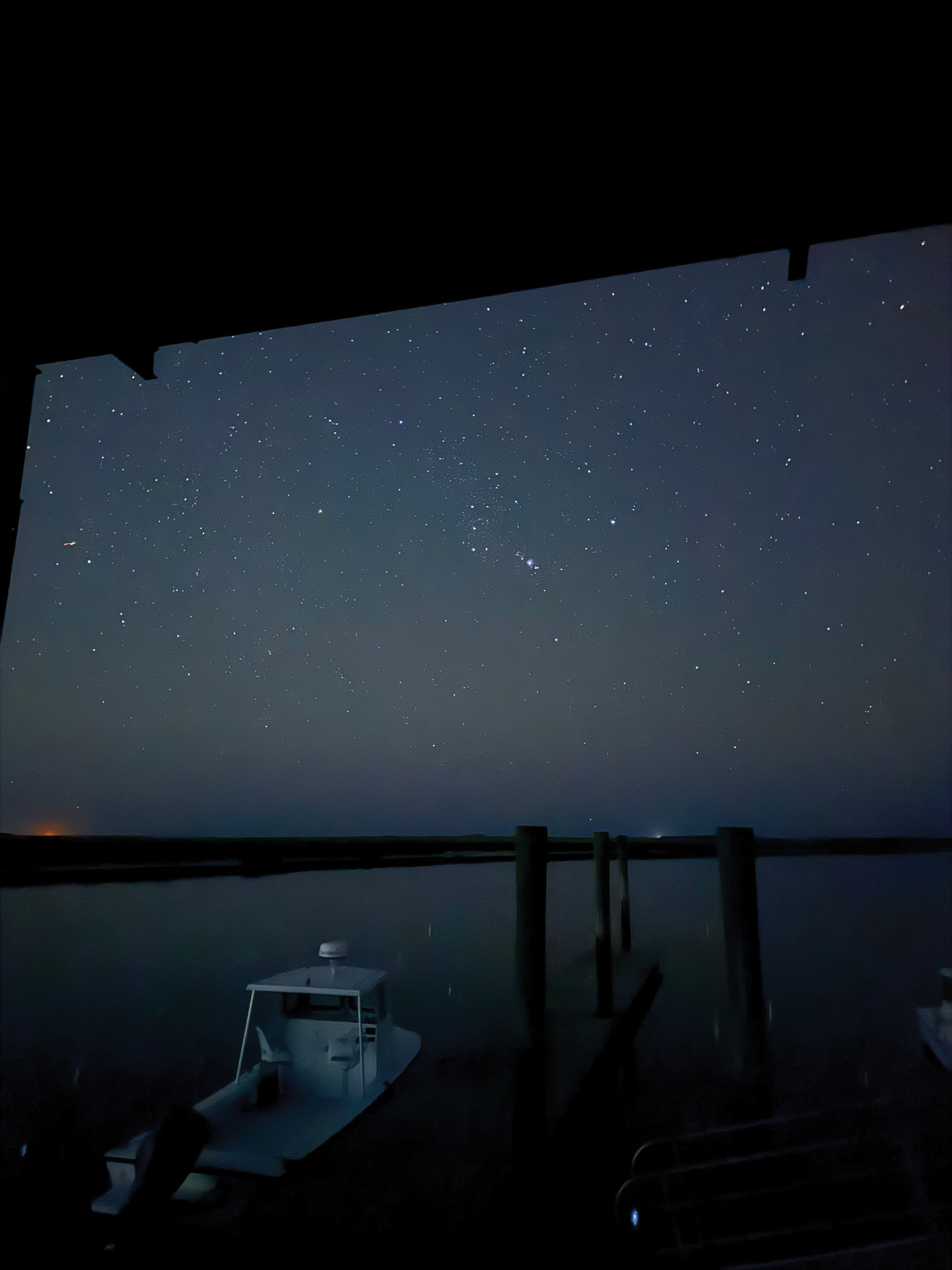
Ossabaw stars. Photo by Brian Foster. Courtesy of Georgia Conservancy.
I don’t think Georgia’s Department of Natural Resources realized in 1978 that they were not only acquiring Ossabaw, but also its most vocal champion. In the sale agreement, my grandmother secured a life estate that allowed her to live in the Main House until her death. She stayed on the island for another 38 years, keeping her eye on every little thing that happened there to make sure it fell in line with the terms she had so carefully negotiated. She passed away on her 108th birthday in 2021, and I am not the only one who thinks she lived as long as she did in order to watch over Ossabaw. She never stopped being its fiercest advocate.
The DNR started making changes as soon as they took over Ossabaw in 1978, or at least they tried to. When my father was a little boy, his parents had presented him with three Sicilian donkeys as a 10th birthday present. My grandmother discovered that the animals had lost their home in South Carolina, and she and my grandfather went to collect them in their Volkswagen Bus. My father was immediately delighted by the gift, appreciating the donkeys’ slow, contemplative nature and long, starchy ears. “[Ossabaw is] a bit of an Alice in Wonderland situation,” he explained later, “you don’t really question the fact there are hedgehogs playing croquet because everything else is so unusual.”
By the late 1970s, the number of donkeys had grown considerably. The DNR issued my grandmother an ultimatum: either castrate the males or remove all the donkeys to prevent overgrazing. Horrified by both options and unwilling to acquiesce, Sandy set to work finding a solution. Before long, she had formed a partnership with Penn State University. The veterinary department proposed to vasectomize the males, rather than castrate them, and then observe any resulting behaviors. Ossabaw’s unique population of feral donkeys made this research interesting and therefore possible. The veterinarians set up a makeshift field hospital on the island and got to work. Once again, my grandmother found a solution that not only preserved what she held dear but also had concrete benefits.
Sandy also fought to establish a unique public-private partnership to steward Ossabaw. In the first few years after the sale, she negotiated a use agreement with the State of Georgia to continue the Ossabaw Island Project and her other programs. This choice proved catastrophic for her finances, and they were forced to close almost entirely only four years later. However, starting in 1993, Sandy’s organization morphed into the independent nonprofit Ossabaw Island Foundation, which continues to manage limited access to the island today.
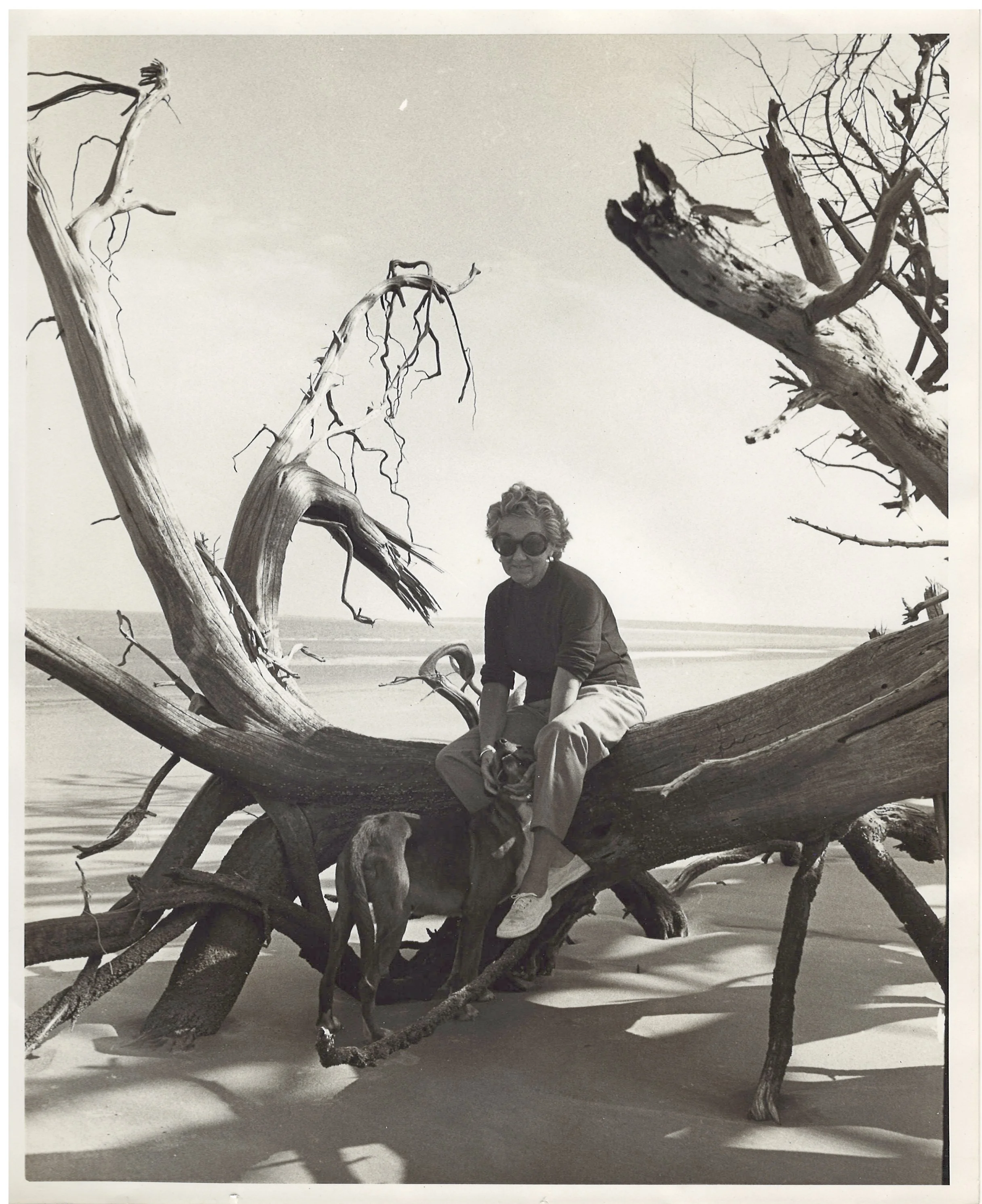
Photo courtesy of Beryl Gilothwest.
As I grew up and left home for college, my relationship with my grandmother matured. She recommended books (everything from Victorian novels to Jung’s memoirs) and listened as I shared the ups and downs of being on my own for the first time. She always urged me to get out of my comfort zone and not to shy away from the things that felt difficult in my life. In turn, she was open with me about the challenges of aging, her disgust with the trajectory of our country, and, of course, her fears for Ossabaw. She lamented the DNR’s management of the island’s feral pig population and decried their plan to bring high-speed internet over from the mainland: “Can you imagine?” I noticed that she was always solution-oriented when describing these situations, never allowing her worries to dampen her drive or defeat her spirit.
While my grandmother no longer had any official authority on Ossabaw, she remained effective at getting her point across. When the Garden Club of America gave her an award for outstanding achievement in environmental protection in 2003, she used her acceptance speech to emphasize the ongoing fight to protect Ossabaw. She wasn’t afraid to call up the Savannah Morning News or even National Geographic to hold the State of Georgia accountable, and she was rarely subtle about it. When a state-operated bulldozer cut a path through a historic Indigenous shell midden in 1996, Sandy was quoted in The Atlanta Journal as saying, “Everybody has always respected [Ossabaw] and loved it, and now they’re trying to destroy it.” While her inflammatory comment was definitely an exaggeration, it was impossible for the DNR to ignore.
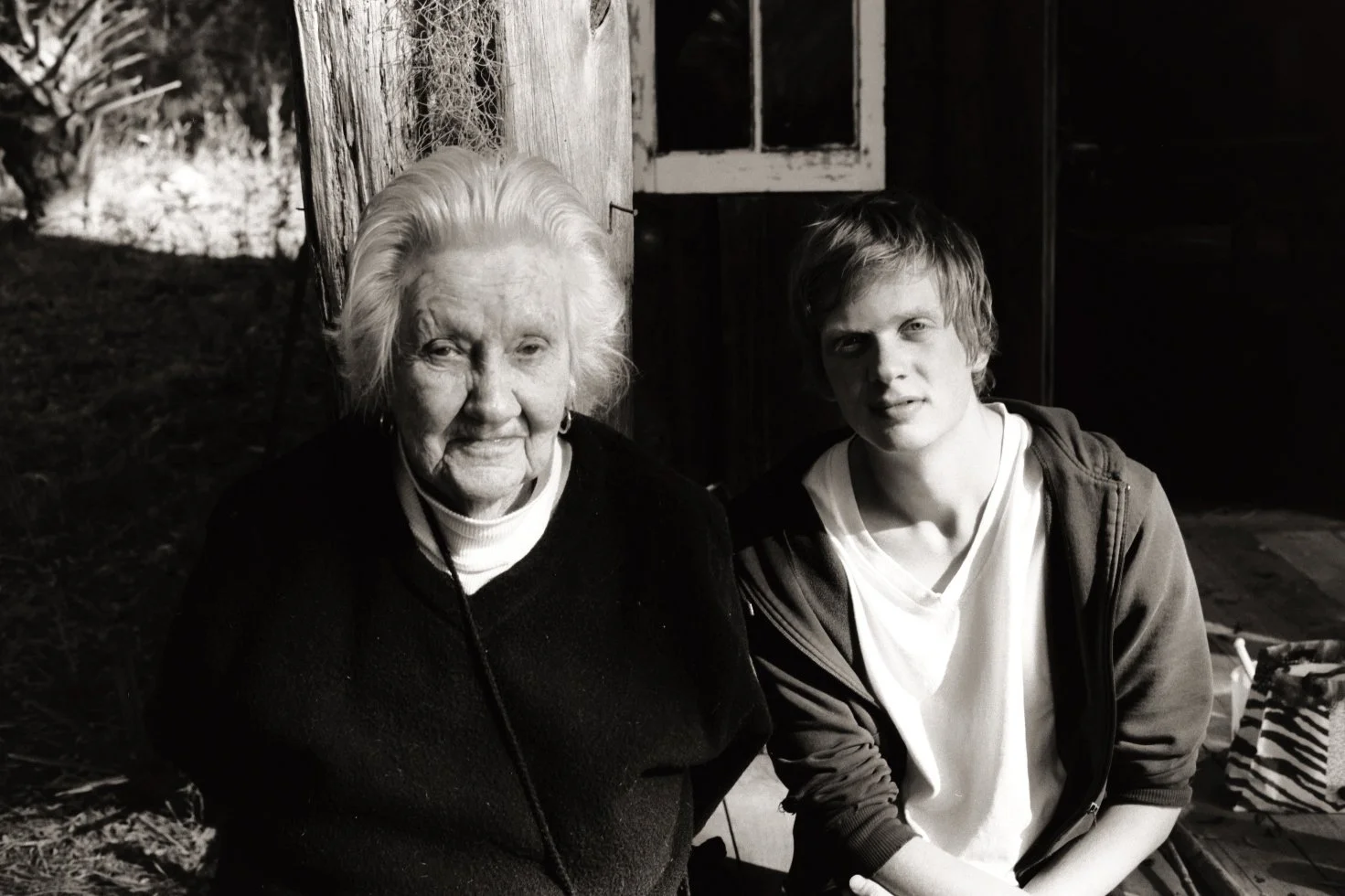
The author with his grandmother at Ossabaw in 2009. Photo by Justin P. West (Beryl’s father).
In 2016, my grandmother reached another crossroads in her life. She had just turned 103 and was living with a revolving series of nurses who would come over to Ossabaw to cook, clean, and care for her. While she was still in good physical health for her age, her memory had slipped considerably, and she needed assistance around the clock. The toughest challenge was her uncertain future on Ossabaw. Her declining health and precarious financial situation made it increasingly difficult for her to stay there.
At that time, my life was also at an inflection point. I was 26 years old and had recently returned home after a year of traveling, but I hadn’t landed on a plan for what I would do next. My father suggested that I go to Ossabaw to help take care of my grandmother. I said yes immediately, not fully considering the challenges of being a caregiver. Owing to her failing memory, communication could be difficult. While her personality remained intact, I often had to intuit what she might be feeling or needing at any given moment.
Our dynamic now was predicated more on warmth and affection than on intellectual connection. During the five months I stayed with her, I slowly acclimated to the methodical way that we moved through the house, the times when she would wake up in the middle of the night and think it was morning, and the intense feelings of joy or anger that she sometimes couldn’t explain. In those moments, I thought back on how she wanted people to approach Ossabaw, without urgency and on its own terms. As her best friend, Elizabeth Pool, once wrote, “Sandy … somehow turns jungles and swamps into a wonderland where those whose lives touch her are privileged to dwell.”
The decision to move my grandmother off the island was inevitable, a necessary but extremely difficult one for our family to make. She had always insisted that she would die there, that nothing could tear her away from Ossabaw. Her family, friends, and people who had never even met her pitched in to help make that possible, but the costs of her care and maintaining the house proved insurmountable. In the spring of 2016, we started making plans to move her to Savannah. As the details coalesced and the day that she would leave the island drew closer, I was filled with dread. The situation was stressful and overwhelming, but above all, it was deeply sad. I couldn’t imagine her without Ossabaw and Ossabaw without her. The process felt like ripping a turtle from its shell.
During her last weeks on the island, my grandmother oscillated between sleepy days and energetic ones, moments of fogginess and confusion, and sometimes, when I least expected it, slivers of disarming clarity. One beautiful morning, she woke up with the very specific intention of going to Bradley Beach. We packed up the car and set out on the hour-long drive. As we drove through the woods, she tilted her head back and let the cool spring air waft through her hair. As we crossed the causeways that span the island’s marshes, I pointed out a pair of alligators sunning themselves, and she gasped with delight. When we finally got to the beach, I helped her out of the car, and we walked towards the surf. Just before we reached the point where the receding waves had darkened the sand, she sat down on her walker, and I unfolded a beach chair. After several minutes of watching waves curl onto the sand, she put her hand on mine and said, “Oh, how lucky we are …” ◊
Beryl Gilothwest is a Brooklyn-based curator, art historian, and writer from Western Massachusetts. He is the co-editor of Off the Coast of Paradise: Artists and Ossabaw Island, 1961–Now, and is guest curator of an exhibit by the same name at Telfair Museums in Savannah, which runs through September 6. His writing has appeared in Apartamento, The Brooklyn Rail, Art in America, and other publications. He is deputy director of research and exhibitions at the Calder Foundation, and he sits on the steering committee for ARTS Southeast’s Ossabaw Island Residency program.
Featured in Issue No. 14