November 25, 2025
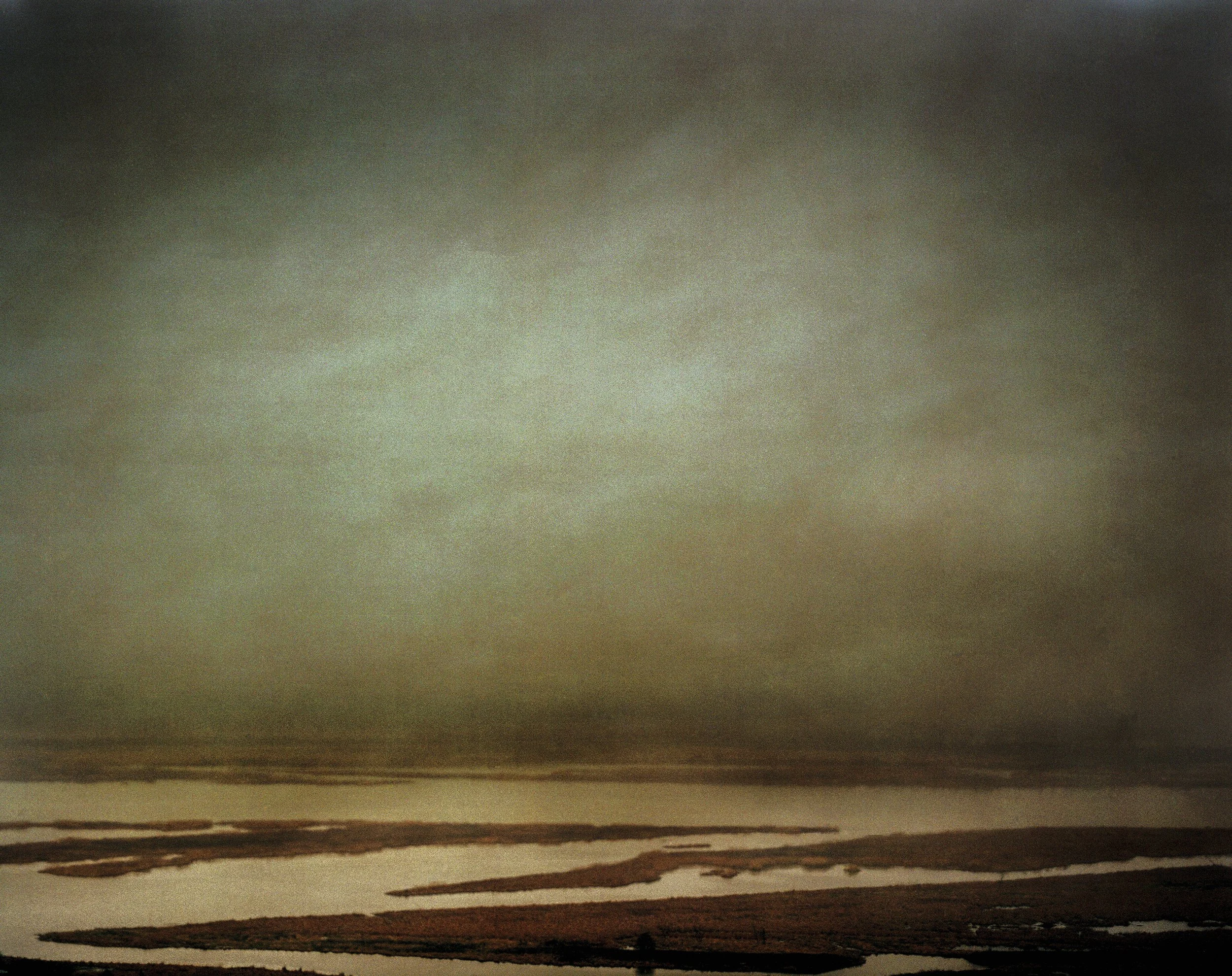
In the early spring of 2017, I traveled to Niobrara State Park to photograph the confluence of the Niobrara and Missouri Rivers, located on the remote border of Nebraska and South Dakota. My family and I arrived late in the evening after flying into Omaha and driving four hours through vast farmland. This storied watershed had been on our bucket list since we’d read the prairie tales of author Jim Harrison, who once described this remote marsh as “a place we like to think we used to be, and even of a place we’d all like to live in now.”
We rented a cabin overlooking the water and had the park to ourselves. This is a popular duck hunting destination, but we had arrived before the ducks. The weather was gray and misty, casting a dreamy, introspective light. The heavy atmosphere gave a depth to the landscape that I feel is lost in bright sunlight. Stories are better told in the fog, which proved serendipitous, because here I discovered a remarkable American tale.
The Niobrara River runs through the ancestral home of the Ponca Tribe. In a landmark case in 1879 (Standing Bear v. Crook), Ponca Nation Chief Standing Bear successfully argued that Native Americans are “persons within the meaning of the law” and have the right of habeas corpus — thus granting Native Americans civil rights under federal law.
The U.S. government had forcibly removed the Ponca from their homeland to Indian Territory in what is now Oklahoma, where nearly a third of the tribe died from starvation, disease, and other tragedies within just a few years. Chief Standing Bear’s eldest son, Bear Shield, died in exile, and the grieving father made him a monumental deathbed promise to bury his son in their homeland, at the mouth of the Niobrara River.
After making the arduous journey, Chief Standing Bear and his party were arrested and jailed for leaving their reservation. But the sight of these people who were starved, stripped of their rights, exiled from their land, and jailed for unjust reasons pulled on the heartstrings of a few locals. Omaha Daily Herald editor, Thomas Henry Tibbles, published their story across the city, state, and nation, which caught the attention of two attorneys who helped bring their case to trial.
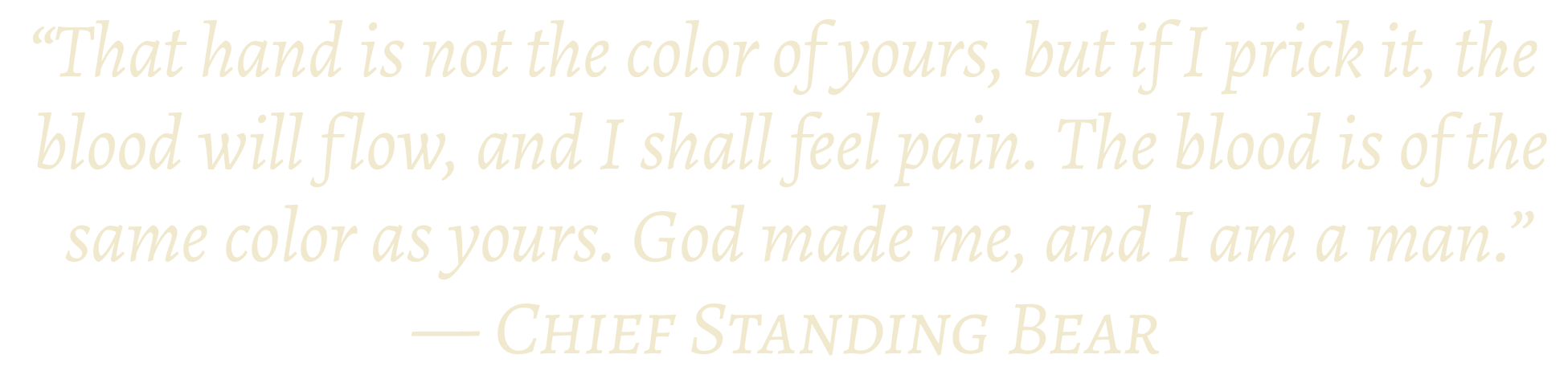
During Chief Standing Bear’s closing remarks, he raised his right hand and famously said: “That hand is not the color of yours, but if I prick it, the blood will flow, and I shall feel pain. The blood is of the same color as yours. God made me, and I am a man.”
I first learned of this dramatic story from a historical plaque while my family was hiking through the park. I read about this loving father while holding my own daughter’s hand. Here was a brave man who went up against the powerful U.S. government because he had heartbreakingly been denied the right to bury his son in their ancestral homeland. My own heart broke on the Niobrara River.
Today, I see grave injustices being carried out all around us by the same government that Chief Standing Bear so boldly stood up against. I have been reminded of the simple truth he spoke so clearly. People may have different skin tones, but our blood all runs red regardless of race, gender, or nationality.
I may not be the right person to tell this Ponca story, but I am a parent like Chief Standing Bear. I am humbled by the opportunity to salute his courage. I have been working on my watershed project for more than 10 years, carrying my heavy large format cameras across America. I have learned many things, but the most important is that a landscape never forgets tragedies that have transpired on its soil — even if humans cease telling the stories. The sentiments are forever felt in the fog, the rainstorms, the quiet forest, and the rolling rivers. The earth holds joys as well, but we must remember both.
The powerful tug of this Nebraska landscape inspired monumental change in our country. It preserved a family’s right to return home. We must never forget what our landscapes remember. ◊
Ansley West Rivers is an artist whose photographic practice focuses on the intersection of landscape and humanity. Her work is featured in many public and private collections. She received her BFA from the University of Georgia and MFA from the California College of the Arts. She currently lives with her husband and two children on their farm in Victor, Idaho.