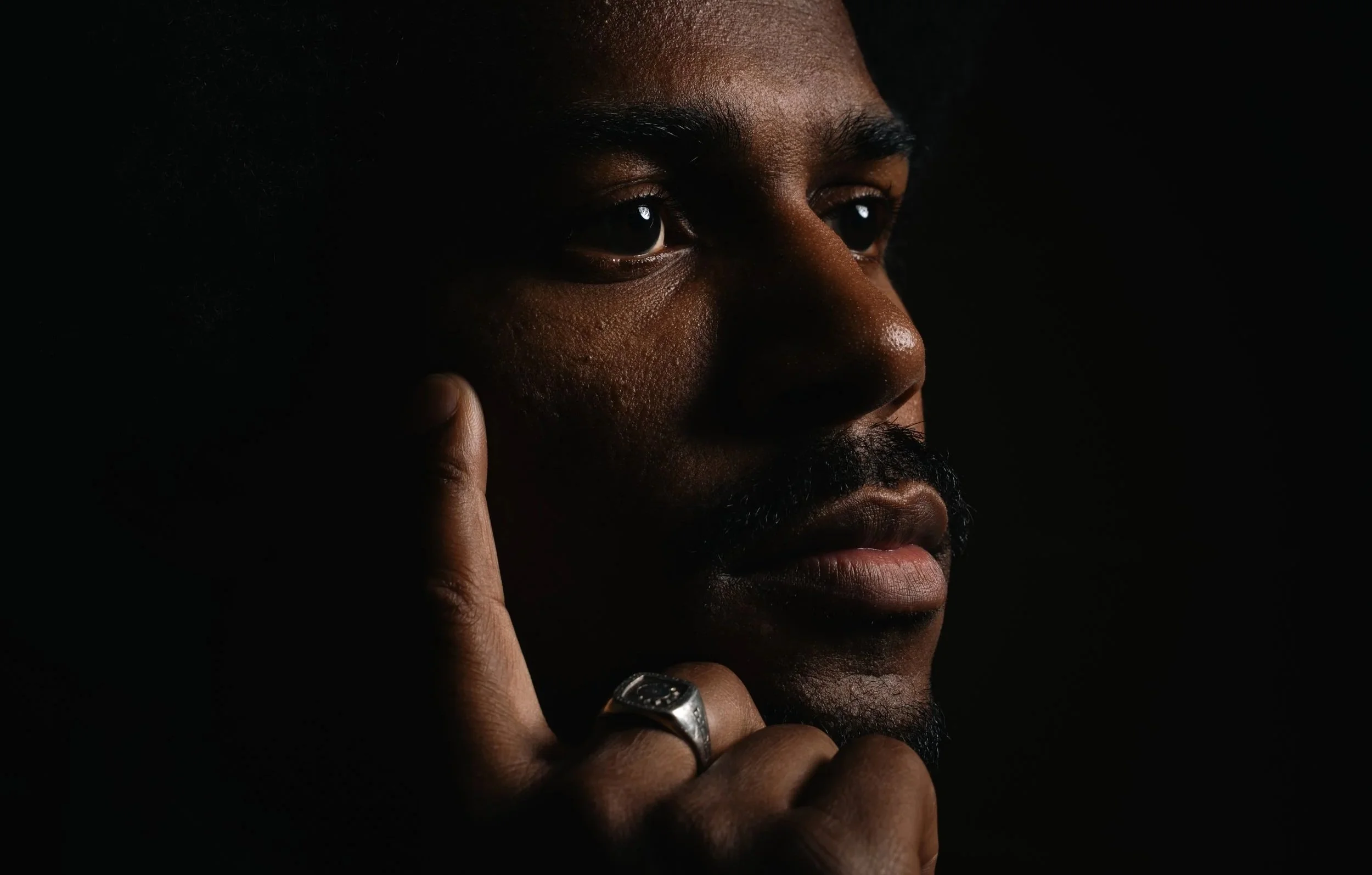

Words by Meredith McCarroll | Photos by Kevin Wurm
April 8, 2026
—
Originally published in Issue No. 13 of The Bitter Southerner Magazine
On March 30, 2023, just three days after the shooting at Nashville’s Covenant School — which left six dead, three of them nine-year-olds — hundreds of angry neighbors, grieving family members, and young students gathered outside the Tennessee State Capitol. They begged for someone to lift up their voices. To take their fear seriously. To stop this now ordinary and hardly remarkable event of children being gunned down in their classrooms.
Of the lawmakers inside, only Representatives Justin J. Pearson, Justin Jones, and Gloria Johnson — the Tennessee Three as they came to be known — listened and invited the protesters into the capitol to disrupt the business-as-usual session. Shouting through a bullhorn, leading chants, and refusing to yield the floor, these legislators did the job that they had been elected to do.
What followed was House Resolution 63, a “resolution to expel Justin J. Pearson from his seat as a member of the House of Representatives of the One Hundred Thirteenth General Assembly of the State of Tennessee elected by the Eighty-sixth Representative District.” Specifically, it alleged: “Representative Pearson and his colleagues shouted, pounded on the podium, led chants with citizens in the gallery, and generally engaged in disorderly and disruptive conduct, including refusing to leave the well, sitting on the podium, and utilizing a sign displaying a political message.”
Pearson and Jones, but not Johnson (the sole white member of the trio), were expelled. However, as you may recall, the men were quickly exonerated and reinstated. Both were later reelected. The same behavior that got them cast out — peacefully disrupting an assembly in reaction to the murder of children at school — thrust all three into the national spotlight. As Pearson said at the time, “You can’t expel a movement.”
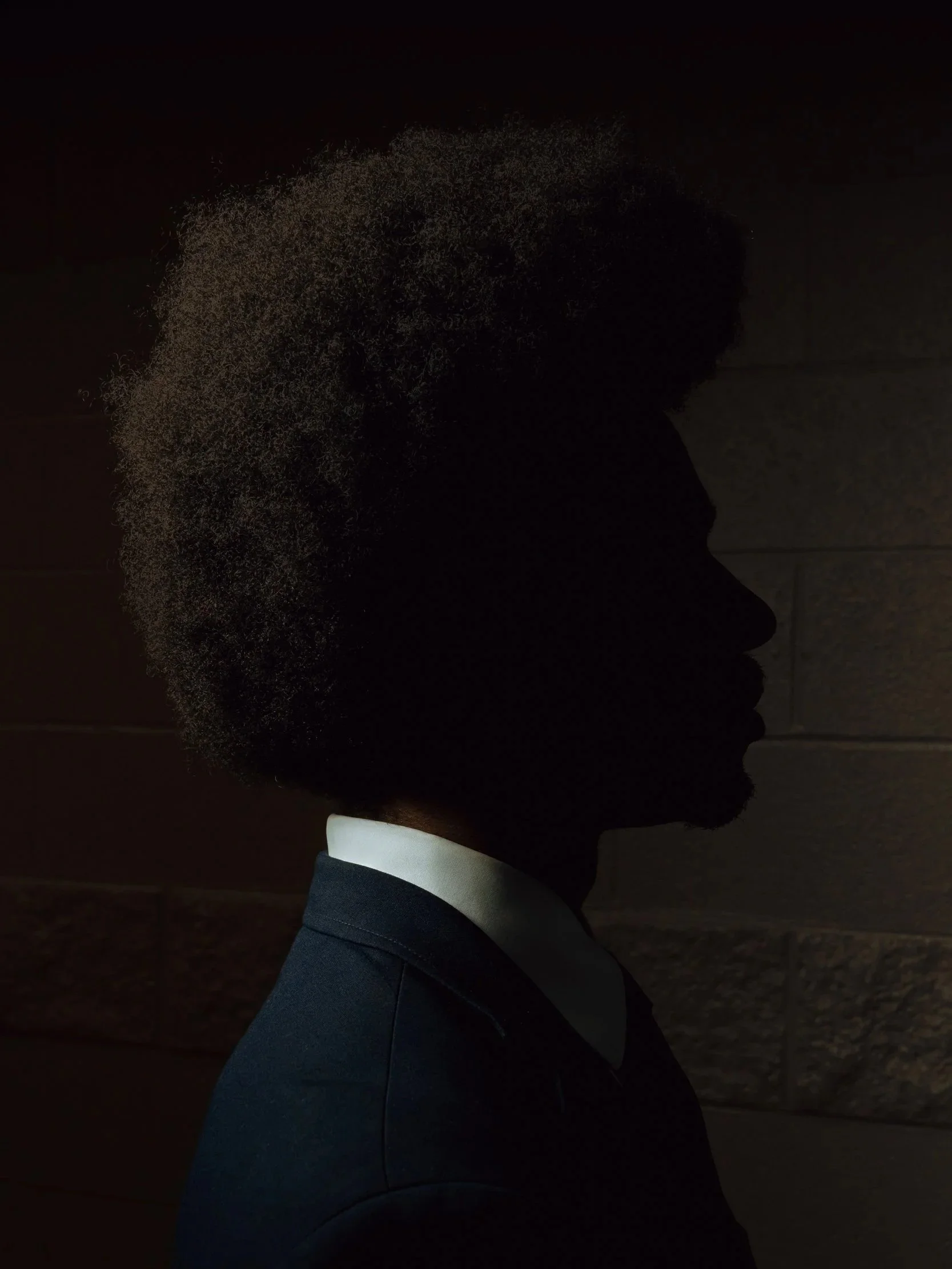
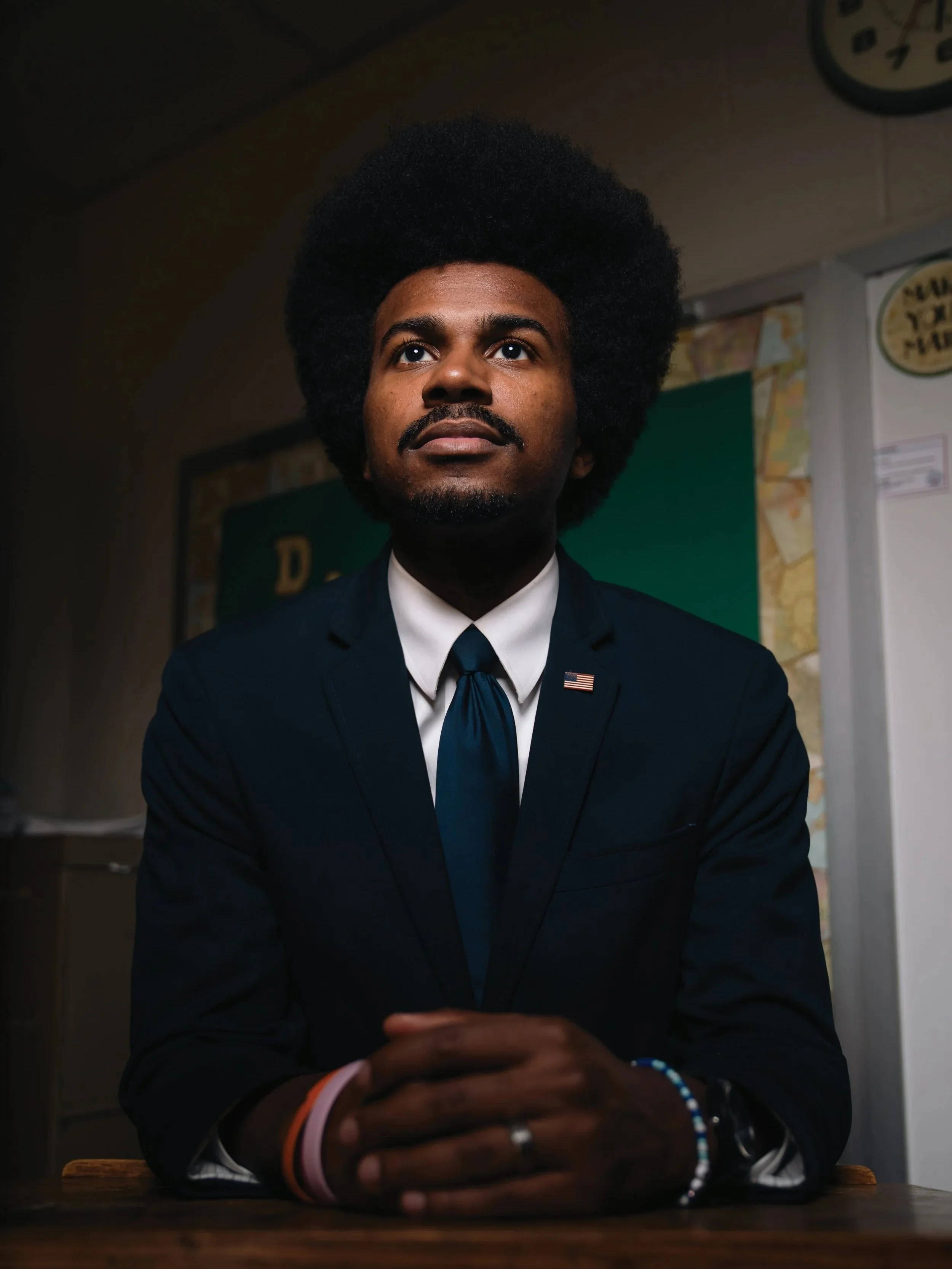
Just months into his first term, Pearson also was chastised for wearing his hair natural and long, and for dressing in a dashiki. He was breaking no rules. His peers — typically decades older than him — were trying to put the junior member in his place. But Justin J. Pearson is not one to fall in line for the sake of falling in line. Standing up for what is fair has shaped his identity since he ran for class president in elementary school. This is a kid who showed up to kindergarten with a briefcase.
Reading the headlines, I remembered the year Pearson and I had spent meeting in my office at Bowdoin College, where he was an undergrad and I taught writing and rhetoric. He had walked into my office hungry to become a better communicator. Each week, we discussed his writing — he kept a journal called “Pearson’s Pen” — and discussed current events, building his assurance that he had a right to his voice. He did not need much correction. He just needed permission.
There’s no stopping him now. Last fall Pearson announced his candidacy for Tennessee’s 9th district of the U.S. Congress. He is challenging Democrat Steve Cohen, who has held that position for 20 years and was first elected to the Tennessee General Assembly in 1982, 13 years before Pearson was born. Cohen is 76 and Pearson is 31. But the young challenger doesn’t object to Cohen’s age. He’s upset with what he sees as the incumbent’s lack of initiative and comfort with the status quo.
He also believes congressional leaders need to stay in touch with the citizens back home — through regular town hall meetings, over the phone, and one-on-one. As a state rep, Pearson has often been the first one to show up for a march or to visit a sick granny in the hospital. “[My constituents] call me at all times of the day because I’m proximate,” he says. “Proximity comes from love.”
“Justin’s name means to be just and fair. He embodies his entire name,” his mother Kimberly Owens-Pearson told me. Nothing that Pearson is doing now is a big surprise to his parents or his community in Memphis. “He just grew up,” she says, “And he has truly become who he has always been.”

To understand Justin J. Pearson, you must understand Memphis.
Pearson graduated from Mitchell High School in the historic Westwood neighborhood, where his great-great grandmother raised her family and where both of his grandmothers lived. It’s the same school that his grandfather’s family attended. Westwood and the adjacent Boxtown, which was founded by emancipated slaves and freedmen after the Civil War, are majority Black, working class communities of modest, single family homes. Pearson describes the area with warmth, noting that he cannot go anywhere “without someone knowing my mom, my dad, or my aunts and uncles.” Pearson’s immediate family lived in a series of apartments, so Westwood represented a special sort of stability.
Pearson and his wife, Oceana Gilliam, recently moved to the area, 5 minutes from where his mother was raised and now lives. The two met in college during a summer program at Princeton. Gilliam grew up in the Crenshaw neighborhood of Los Angeles and had planned to return to California. But during Pearson’s expulsion and its aftermath, she came to appreciate what the city means to her husband. She is currently in law school at the University of Memphis and is fast becoming connected to the place herself.
Pearson lights up talking about his hometown’s heroes, from Ida B. Wells-Barnett to Martin Luther King Jr. and Mary Church Terrell. “I do think there’s something about this place that is just so different. Being born here, living here, you are interwoven into this history just immediately,” he told me in January. “You know about the Civil Rights Movement and the sanitation workers [strike] just as much as you know the name of the football team or the basketball team in other cities.”
As he aspires to national office, Pearson insists his hometown is uniquely representative of the country at large. “We have the vestiges of America’s tribulations encoded into our DNA. Memphis has the fingerprints of America around it. And our story really tells a story of this country. About the struggle, the strife, the strive, the opportunity, the disinvestment, and then the hope.”
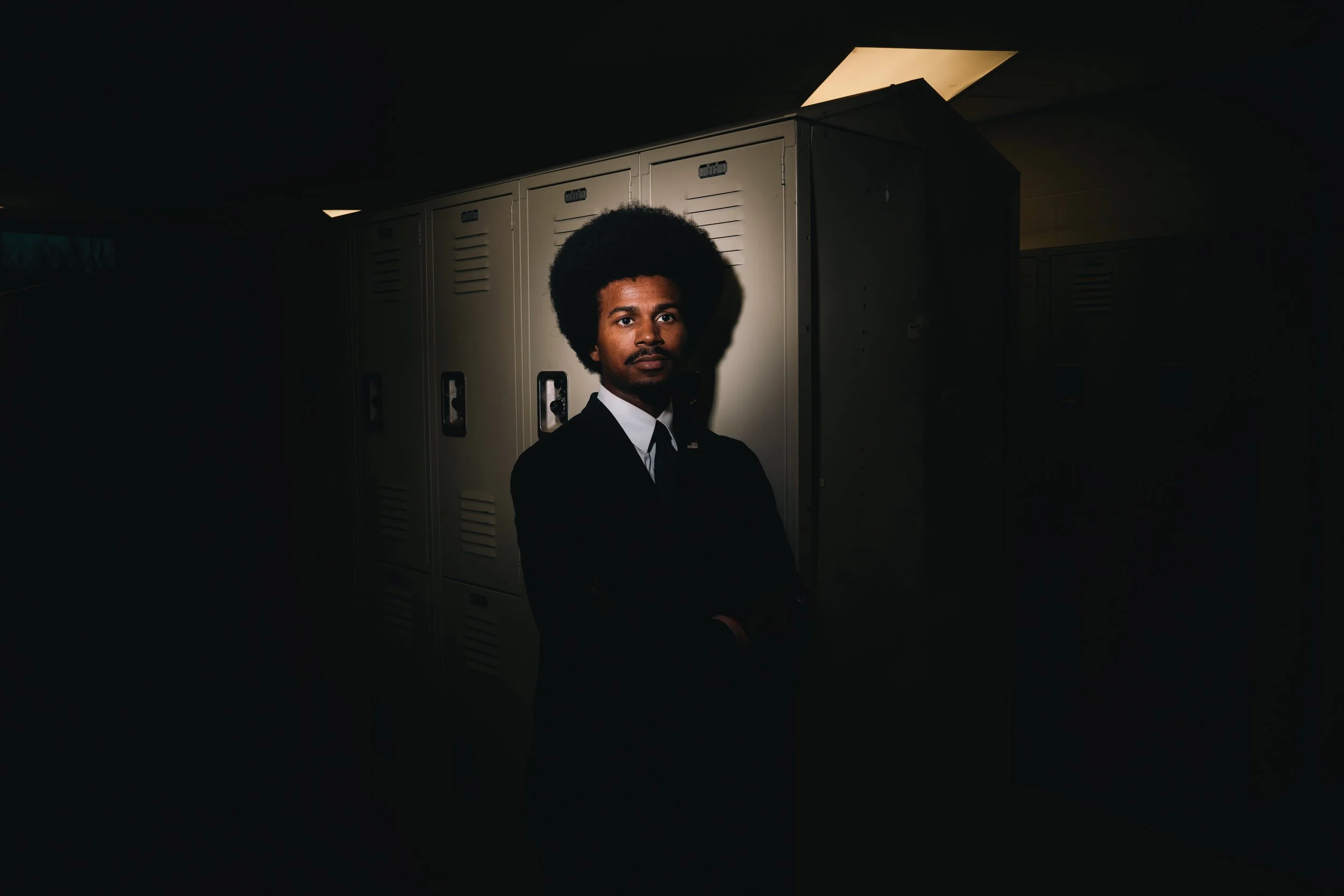

Pearson launched his first public battle against inequities as a 15-year-old sophomore at Mitchell High School. His family had recently moved back to Memphis after living for a few years near Washington, D.C., while his father studied at Howard University. When Pearson returned, he noticed the relative lack of resources. His mother remembers his outrage: “To go from a place where you have a set of books at school and a set of books at home to a school with no books, and classes not being offered. It was just a stark difference. And he was like: Why? How can you tell me to be successful when you’re not giving me the tools to be successful?”
Pearson says, “At the beginning of the year, I noticed that we did not have teachers in some classrooms. We had substitute teachers. I was handed only one book, in geometry class from Mrs. Parrot. I did not have textbooks in any of my other classes.”
After about nine weeks, Pearson told his parents that he wanted to take his case to the school board. During the next Monday meeting, he waited four hours until time for public comment. “I walked to the front of the room toward the podium and spoke. I held up the geometry book in one hand and my mother’s master’s degree in the other hand, explaining to them that there’s no way we will be able to get one of these without the other.” He received a standing ovation from everyone in the room, including the superintendent and commissioners. The story made the front page of the newspaper the next morning. And Pearson kept showing up, kept pointing out inequities, kept demanding resources. Eventually, his school got the books. They also got more AP classes, new teachers, even a new principal.
The high school sophomore already knew instinctively how to work a crowd. When his father, Jason, was installed as a minister at the Community of Faith Christian Church in Memphis, the entire family was introduced to the congregation. Justin waved and smiled at the members. Church member Justin Turner remembers, “I was like, OK. This kid is a little bit different here. He could integrate with you no matter what your age. He’s this teenager, and, normally, they don’t really interact with a lot of older people, but he would. And he would initiate. He’s coming up to people, shaking hands. He’s hugging, you know, just like he’d known you his whole life.”

To understand Justin J. Pearson, you must understand his family.
His parents, Jason and Kimberly Pearson, started their family as teenagers and had five sons over a span of 11 years (in order): KeShaun, Jason II, Timphrance, Justin, and Jaylen. Living in rental properties, the growing family sometimes faced substandard conditions. Pearson recalls, “I know what it’s like to struggle, to live in homes that are termite and roach infested, where the parents are doing the best they can to stretch a dollar so that their five kids can eat.” His parents were both making minimum wage, but they were resolute in their defense of the family. His mother left one fast food restaurant for a 25 cent raise at another across the street. She also successfully demanded that their landlord relocate the family to another townhouse when their previous building developed sewage problems.
The Pearsons believed that — with education and faith — they could build the life that they wanted for their children. They decided that first Kimberly would pursue her education, then Jason would follow.
“Although we were teen parents and we had statistics against us, we knew who we were,” Kimberly says. In the Pearson home, “TV was out Monday through Thursday.” Instead, they spent time together. Pearson remembers epic Monopoly games, where they had to set a timer to force the game to end. The family played backgammon and card games together. And, even as children, the siblings made and executed plans for their future. Pearson says his family was “financially poor but spiritually rich.” And he says it with the pride of someone who understands which matters most.
Kimberly completed college and began working as an educator while Jason worked as a truck driver. Then the Pearsons moved to Washington, D.C., so that Jason could earn his Master of Divinity degree. Just last year, Kimberly completed her doctorate in education. She says, “We were not going to just sit and wait for something to happen.”
Julius Turner, who volunteered with Pearson in the food kitchen of his family’s church, was often struck by the young man’s character. “He would actually make a sign, and then he walked himself to the corner, and he stood there pulling people into the food kitchen. And, you know, while the other kids are playing, this is what this kid was doing.” Pearson recalls that Turner often slipped him tens and twenties so that he could take the ACT (seven times!). He kept studying and kept taking the test, eventually becoming valedictorian getting accepted to Bowdoin College, a “Little Ivy” in Maine, as a Mellon Mays Fellow.
There, Pearson majored in government and legal studies with a minor in education. Not surprisingly, he was involved in student government all four years. More unpredictably, he found fellowship off campus in Brunswick. Government professor Andrew Rudalevige remembers Pearson’s regular attendance at First Parish Church, an “open and affirming” congregation of the United Church of Christ, located on the edge of campus: “Few Bowdoin students regularly attend church; even fewer wear suits; even fewer are Black. First Parish Church was a good introduction to a different brand of theology and perhaps a good test case in working a different room,” he says.
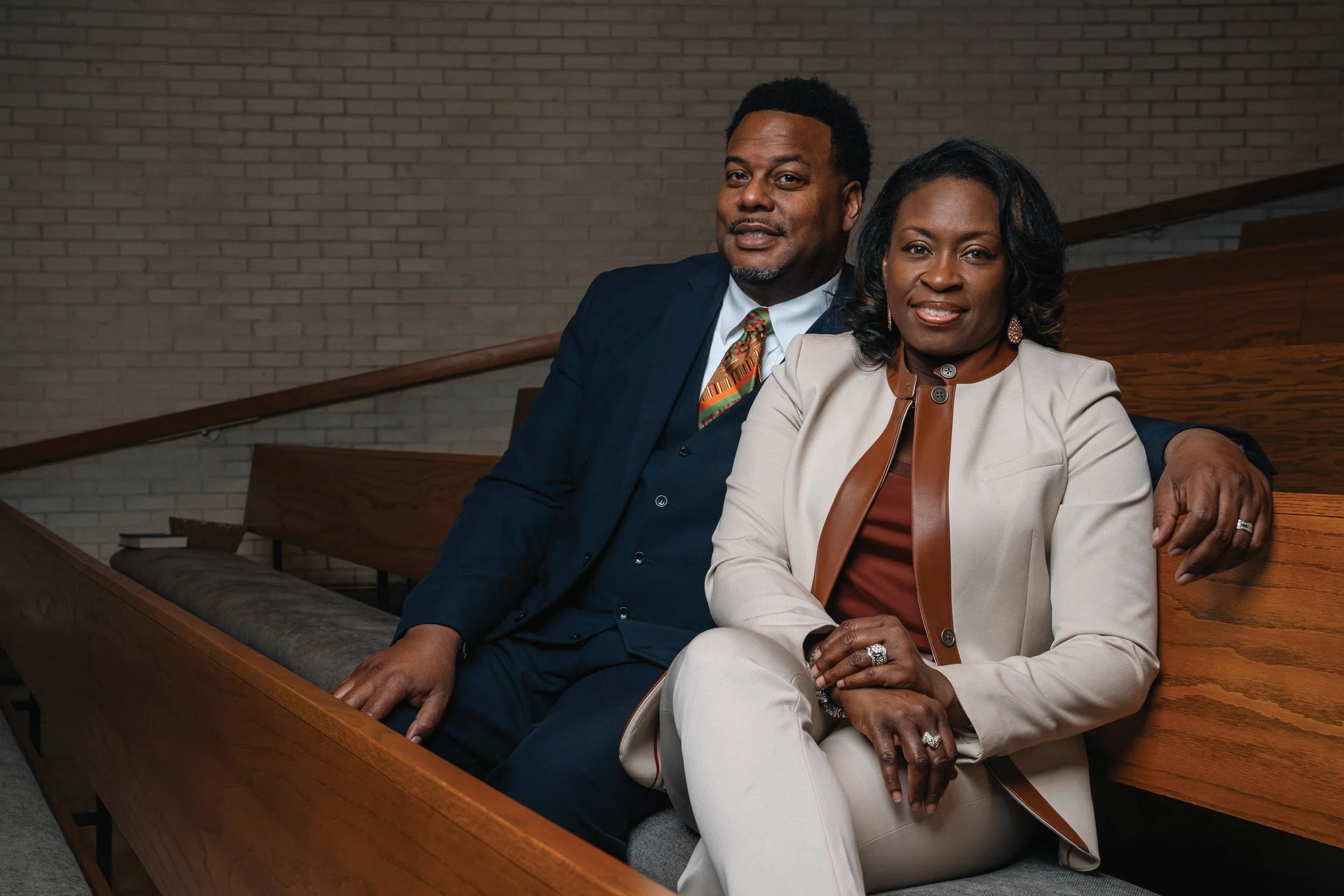
Pearson’s parents, Justin and Kimberly Pearson, started their family as teenagers and had five sons. Justin eventually earned his Master of Divinity from Howard University and became a pastor. Kimberly recently earned her doctorate in education.
Pearson is deeply thankful for his college experience. He says, “There aren’t that many statistics, if any, for children who are born to teenage parents, but then have those parents get master’s degrees and a doctor degree. And then send their kid to one of the top schools in the country.” Though they stayed closer to home, Pearson’s brothers have also been successful in sports and school.
Despite their determination and planning, the Pearson family could not avoid unexpected tragedy. In December 2024, they lost Tim to suicide. “I miss him every single day. I don’t know what happened and I don’t think I ever will,” says Pearson.
After taking time off to help his family cope, Pearson returned to the state legislature to weigh in on his proposal to revoke Tennessee’s permitless carry law. Promptly, Rep. Andrew Farmer (R-Sevierville) moved to shut down the debate, acknowledging Pearson had had “things going on,” but implying his unexcused absence disqualified him from the discussion.
In response to Farmer’s accusation, Pearson responded with raw honesty: “Let me explain to you what I have been doing, Representative, since you asked. My brother, Timphrance Darnell Pearson, one of the loves of my life, passed away from gun suicide on December 1st of 2024, and since that happened, it’s shattered my family like gun violence has shattered so many families.”

To understand Justin J. Pearson, you must understand his values.
Looking back, his time at Bowdoin College afforded Pearson incredible opportunities and gave him a new perspective on wealth. “I know people with four and five homes worth millions of dollars all across the world. And I know someone whose house is sinking into the ground as we speak. At the end of the day, that’s just not fair. It isn’t that I don’t want people to be appreciated and valued for their contributions and their hard work, but we have come to a point where we as a society have to say that more people deserve more than what they currently have. That no child should have to worry in the United States of America about whether or not they have glasses. Or food. Or health care. No parent should have to be worried about medical bills for a child who is sick or medical debt for a parent who’s aging. That’s not fair.”
Returning to Memphis after graduation, Pearson learned about the proposed Byhalia Pipeline, a 49-mile-long conduit that would run through poor Black neighborhoods and threaten the water supply. At an information session about the project, Pearson stepped up to the mic and connected the moment to the history of environmental racism: “We take our grandmothers to the grave at 60, see, because the air is poison. If somebody had been able or strong enough to fight some decades ago, maybe we wouldn’t be here. But we have to fight now.”
He and fellow high school alumni, including his brother KeShaun who now serves as executive director, founded Memphis Community Against the Pipeline (now Memphis Community Against Pollution) to protest the project. “Community was everything in fighting against the pipeline,” Pearson says. “We were organizing in the midst of a pandemic. And we needed each other because we were experiencing two things that we had never seen before. One was a pandemic that had taken the lives of millions of people across the world. People in our neighborhoods, in our communities; elders were dying. And, simultaneously, we were facing another existential threat. Two billion–dollar corporations wanted to steal hundreds of people’s land through the misuse of law and pollute the only drinking water source we’ve got.”
Eventually, the protesters halted the project. The victory energized Pearson, but he was also deeply impressed with the power of collective action. “We built the necessary momentum to change the course for that project. But it was our faith in each other. It was not our faith in government. I’m telling you that.”
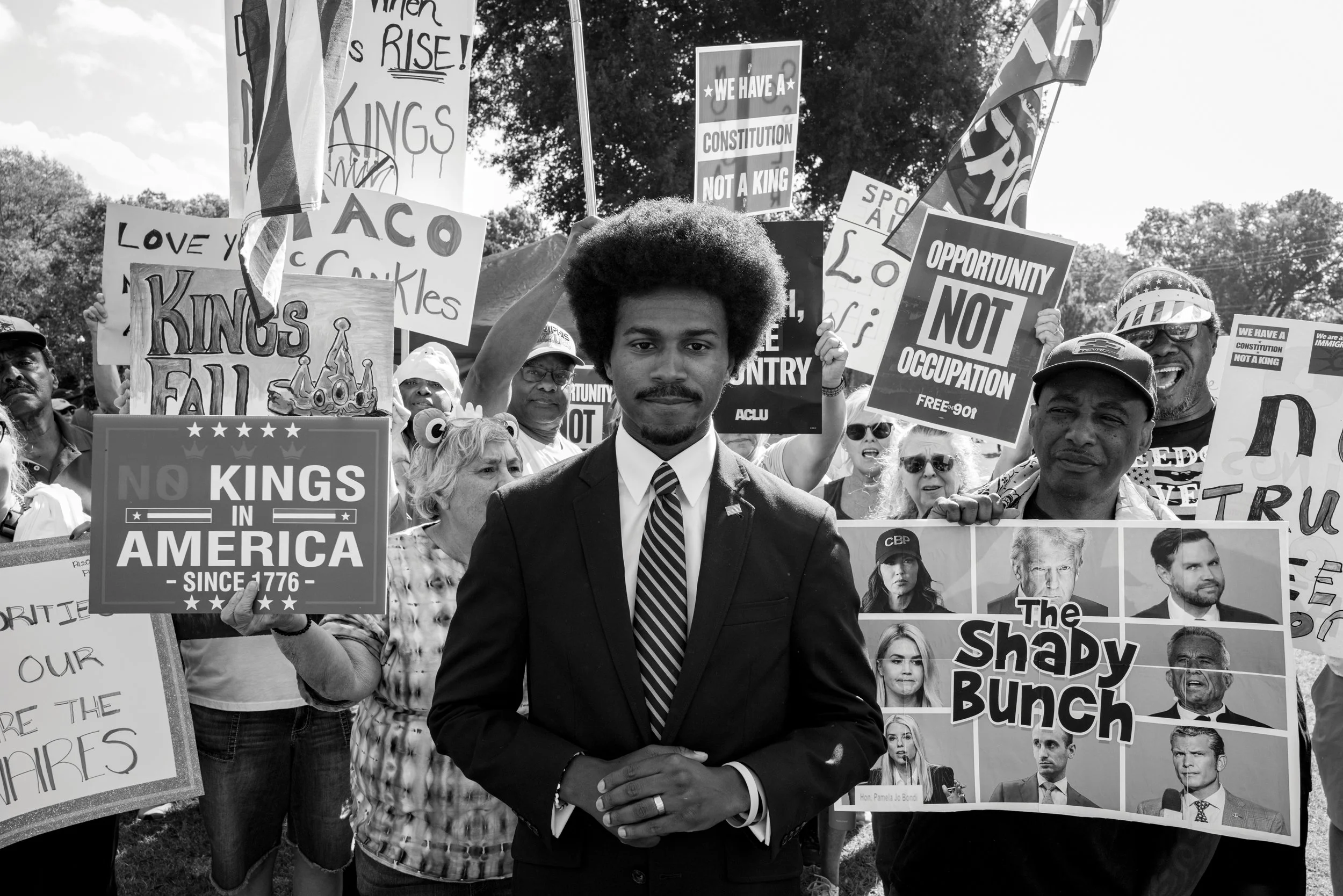
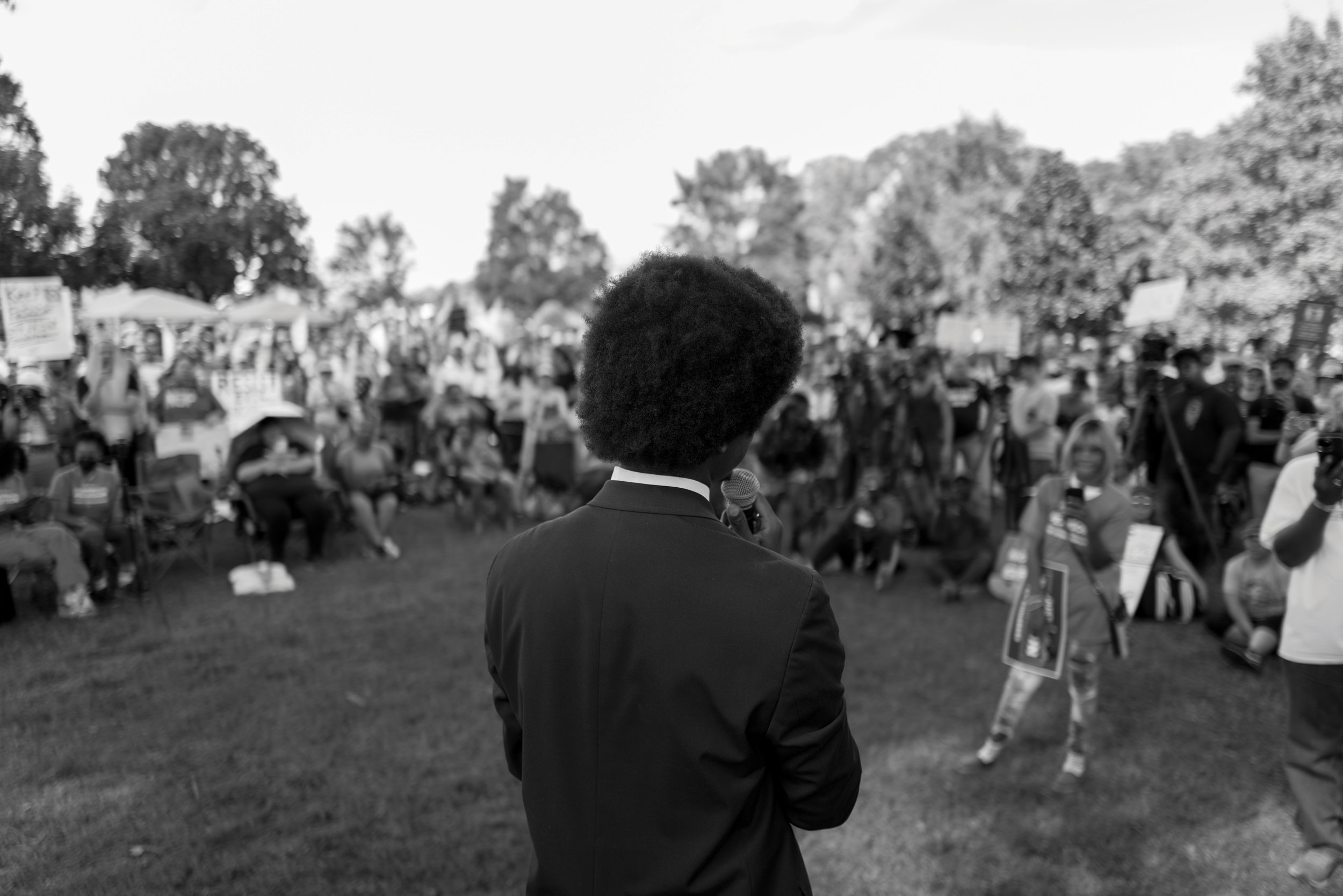
Pearson has won most of the battles he’s joined, from getting more school books his sophomore year in high school to stopping the Byhalia Pipeline. He’s confident that he can be elected to the U.S. House of Representatives this fall.
The only elected official who showed up in the fight against the pipeline was State Representative Barbara Cooper, whom Pearson describes as having “the heart of a public servant who wanted to use her position for progress for this community.” She modeled for him a way to be a leader who remains proximate to her constituents, leading with ferocity and with love. Dr. Cooper represented the 86th district from 1996 until her death, at age 93, in 2022. She was re-elected posthumously, and then a special election in January of 2023 led to Pearson’s election to the Tennessee House of Representatives. Finally, he was officially representing the district that had raised him.
“When I look at the way she led, and the strength with which she led for those many years, it’s something that I seek to emulate and bring to Congress. She never was out of touch with the people who she served. And she never thought herself better than the people in the community where she lived. And we’re living right now in a time where you’ve got Congress folk trading stocks, and they get millions of dollars for their own benefit. Staying in positions for their own benefit and forgetting about the people who they swore to represent in the first place.”
That early pipeline victory has emboldened Pearson to take on even bigger adversaries.
His latest battle is against one of Elon Musk’s xAI data centers, which opened without a permit near predominantly Black Memphis neighborhoods and is being contested by the Southern Environmental Law Center, the NAACP, and others.
To keep his priorities straight, Pearson does not accept donations from lobbyists. As of January, his campaign had raised $733,000. He says, “We take no corporate PAC money. I just refuse. Because I just don’t think you can have true independence when corporations are paying for your campaigns. One hundred percent of our money comes from individuals. And we’ve got more individual contributors to this campaign than my opponent has had his entire career in Congress.”
Lapsing into the rhetorical rhythms of his stump speech — or perhaps his father’s sermons — Pearson says: “The extraction of wealth and of time from the bodies of poor folk and working folk is one of the greatest travesties of our lifetime. If a parent is being forced to work two jobs because, in our city, where the minimum wage is $7.25, let’s say most people may be making $10 or $11 an hour. At one job that is roughly $20,000 a year, $22,000 a year. So you have to work at least two jobs to make ends meet, to get you to 80 hours of work. Just to make ends meet.That’s time that people are away from their kids. They’re away from their spouses. They’re away from those they love. They’re not able to participate in community, in church, in activities that everybody else who has the privilege of time is able to. It is abhorrent in our society to tell people if only they worked harder, if only they gave up hundreds of hours, then they would somehow receive success … [Meanwhile,] other people are able to have rockets that can go into outer space. We’ve been told to shame one and praise the other. We have a twisted paradigm in this country.”
Justin Pearson is aware that many voters feel hopeless. “I believe we are living in a very difficult and dark time in our country where everything around us is trying to convince us that we are not enough. Social media is trying to convince us that we are not enough if we do not have material things … I think that this hopelessness is toxic and is deeply impacting people, especially young people.” He understands their pain but refuses to surrender. “We’re gonna win,” he repeats like a mantra. “We’re gonna win.”


To understand Justin J. Pearson, you have to understand his faith.
Pearson has long made a habit of reading from the Bible, but since his expulsion from the Tennessee House, he has held onto a particular passage from Psalms 27: “When the wicked, even mine enemies and my foes, came upon me to eat up my flesh, they stumbled and fell. Though an army should encamp against me, my heart shall not fear; though war should rise against me, even in this will I be confident.” This is the same verse that Civil Rights Leader Fred Shuttlesworth turned to when his home was bombed in 1956. It is also the psalm that filmmaker and activist Bree Newsome recited as she climbed the flagpole at the South Carolina State House to remove the Confederate battle flag in 2015. It is a verse tied to action and resolution — a reclamation of what is right.
“The Church has always been the backbone of my understanding about the need for us to create transformational change in the world that we live in,” says Pearson. Most Sundays he attends services at two churches in Memphis (Community of Faith Christian Church, where his father is pastor, and Christ Missionary Baptist Church, led by Dr. Gina Stewart) as well as Union Combine Parish in Boston via Zoom. However, attendance alone is not the point for Pearson. “It is not enough to pray, to listen to sermons, and to hope. Our faith has to have work associated with it … My faith calls me to lead, to act in the ways that I do.”
“I hate for people who live in this nation that sent a man to the moon to tell me what’s impossible now. Like feeding hungry children, providing health care access to everybody, investing in our veterans. Like, why are those things impossible? In the same country, we get told you dream too big because you wanna increase the minimum wage. You’re being unrealistic because you want health care for all. And child care for all. How?”
As he speaks, I suddenly glimpse that 15-year-old holding up his geometry book. That childlike sense of fairness and justice that so many of us lose as we age has survived in Pearson. I ask him what he’d say to peers who have become disenchanted. His answer is quick and earnest: We need each other. “Community,” he says, “is the antipathy to apathy.” ◊
Meredith McCarroll: A writer and educator from Western North Carolina, Meredith McCarroll is the author of Unwhite: Appalachia, Race, and Film and co-editor of Appalachian Reckoning: A Region Responds to ‘Hillbilly Elegy,’ which won the American Book Award in 2019. Her essays and stories have appeared in the Guardian, CNN, Boston Globe, New Lines Magazine, Still, and elsewhere. She is a dancer, yoga teacher, and enthusiastic hiker.
Kevin Wurm: A portrait and documentary photographer based in Memphis, Tennessee, Kevin Wurm has produced work seen in Reuters, the New York Times, the Washington Post, the Wall Street Journal, the Guardian, NBC News, NPR, and more. He has been exhibited at the Griffin Museum of Science and Industry and the 2024 Visa pour l’Image Photo Festival. He is a 2025 CatchLight Local Fellow, RFA Corp Member, and staff photographer at MLK50. Wurm is also an Eddie Adams Workshop XXXV alumnus and Colton Family Award recipient.
Featured in Issue No. 13