

December 11, 2025
What a year. What a list.
Today, we share “The Very Best Stories of 2025” with the deepest gratitude for all of the writers, photographers, poets, and artists who traveled with us in 2025.
Every year (no matter what kind of year it’s been), this is the time when we reflect on the work, the stories, the magazines, the books, and most importantly, the exceptional contributors who created all of it.
And to all of you reading this: thank you for supporting The Bitter Southerner. Thank you, thank you.
Now... go find a comfy spot and enjoy some kick-ass holiday reading. We know you’re going to love these stories.

November 4, 2025
Words by Jennifer Justus
Photos by Houston Cofield
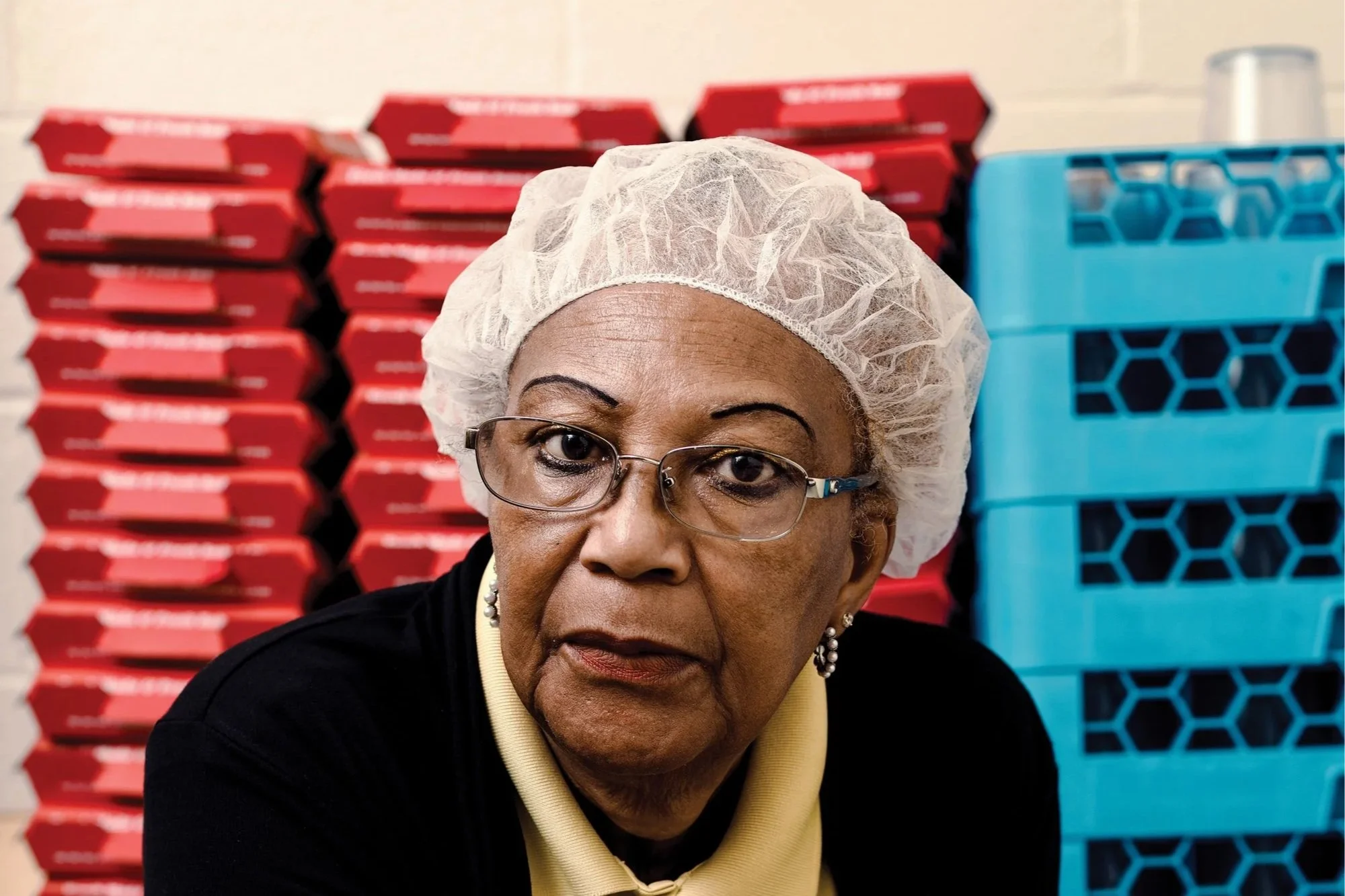
When food writer Jennifer Justus pitched this idea to us, warm memories of savory yeast rolls and melamine trays flooded our brains. Why, of course, it was the perfect time to celebrate the heroes who quietly feed our children day after day! She introduced us to veterans of school cafeterias across the South — Gigi Thomas, whose chocolate chip cookies are so delicious the seniors created a video tribute, and Lisa Seiber-Garland, who got her students hooked on fresh raspberries. But Justus’ reporting also revealed the constant challenges these workers face with tight budgets and ever-evolving government initiatives. Currently, they must cope with funding cuts to locally grown food grants and summer meal delivery programs — contradictory guidance under a MAHA regime which theoretically seemed promising. But perhaps what makes Justus’ story most irresistible is memories of her own grandmother, a veteran lunch lady in Blue Ridge, Georgia, who introduced the writer to the wonders of leftover processed government cheese.
—
“In those days at Granny’s, sitting with my cheese and the grown-ups in our rural mountain town, I might as well have been tasting Camembert on the banks of the Seine.”

October 28, 2025
Words by Nylah Iqbal Muhammad
Photos by Jaida Grey Eagle & Camille Farrah Lenain
Nylah Iqbal Muhammad’s essay about learning to hunt takes off like a movie thriller: “I allowed myself to accept that this world would end, but that I could adapt to it, and build a world where I could survive, where the generations after me could survive.” On the surface, this story is about Muhammad’s first hunts in Minnesota, Wyoming, and Georgia. But readers soon get past the visceral description of a woman butchering a deer to consider deeper observations about human survival. Through unexpected narrative twists, the author finds salvation in her ancestors’ symbiotic connection to the Earth and its creatures — severed by generations of Eurocentric attachment to concrete and asphalt, the relics of human dominance. Her discoveries may lead you to question your own priorities.
—
“Some things end and you cannot resurrect them, but you can give their ghosts some peace. I cannot wait to bleed out this old world, to groan as it slips away into nothing. I cannot wait to catch the new one in my hands, swaddle it, and give it to my future children to hold, as I too slip away into nothing.”

October 14, 2025
Words by Caroline Hatchett
Illustration by María Jesús Contreras
If food is your love language, sometimes a dish tells secrets you don’t expect. That’s what happened when James Beard Award-nominated Caroline Hatchett first read about arroz imperial, “Miami’s greatest contribution to the American casserole canon.” Despite her maternal family’s longstanding fondness for Cuban cuisine, she never encountered the iconic dish during the years she and her husband lived in South Florida. Nearly two decades later, her belated discovery led to revelations that were more than culinary — and a lesson to anyone overlooking treasures that hide in plain sight.
—
“At 24 I did not know how to be a wife, but I could cook. I thought that looked a lot like love.”


October 8, 2025
Words by Charles M. Blow
Illustrations by Mark Harris
When we decided the theme of Issue No. 12 had to be “The Way Forward,” we immediately thought of Charles Blow, a nationally acclaimed journalist and op-ed columnist for the New York Times, frequent commenter on CNN, and bestselling author. We were thrilled when he agreed to write the issue’s feature story about the horrifying parallels between today’s immigration raiders and yesterday’s slave catchers. Modern-day Alligator Alcatraz merch bears eerie similarities to 19th-century postcards making sport of lynchings. Blow exposes the underbelly of today’s resistance to multiculturalism but insists this hatred is neither inevitable nor invincible. We must keep the public from going numb by relentlessly humanizing the victims. As with Emmett Till, Rosa Parks, Harvey Milk, and George Floyd, we must say their names.
—
“The fundamental civic unit in this nation is ‘neighbor.’ And, that is the people who live in your community. Are you prepared to see them treated this way?”

September 19, 2025
Words by Mario Guevara
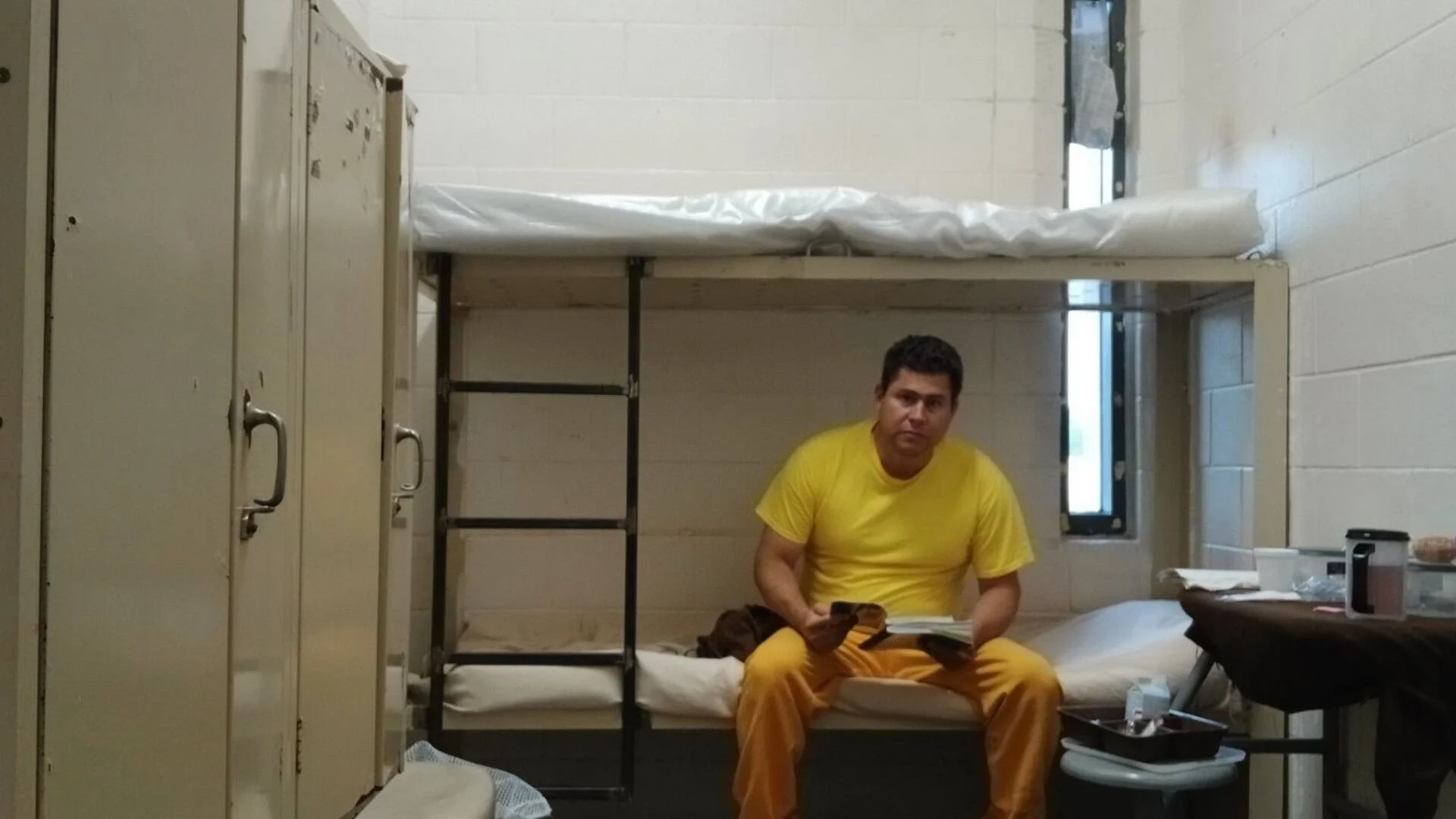
Mario Guevara is an Emmy-winning Spanish-language journalist who had lived in and around Atlanta since he immigrated to the United States in 2004. He was arrested on June 15, 2025 while reporting on a protest, and remained in custody even though he had legal work authorization and all pending criminal charges had been dropped. During his incarceration, he spent 69 days in solitary confinement. In October, a federal court sent him back to his native El Salvador. But before his deportation, The Bitter Southerner worked with his family to publish Guevara’s own words and drawings recounting his harrowing experience.
—
“I have to remain strong and confident that the United States still has some caring and decency left and that in the end justice will prevail.”

August 19, 2025
Words by Elissa Altman
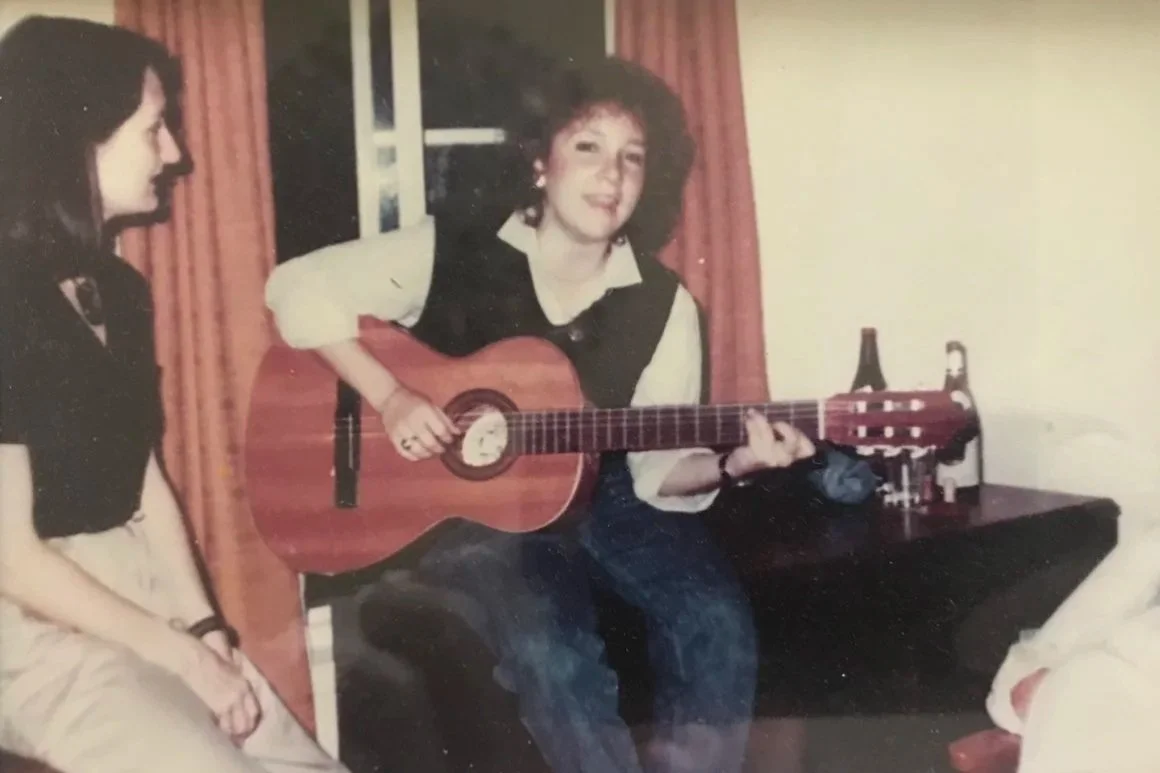
Author Elissa Altman’s paternal grandmother was a teenage piano prodigy. Her mother, who recently passed, was a singer branded “The Next Judy Garland” by her record company. Both women were divas who resented the familial constraints that hampered their careers, not to mention each other. Altman kept a low profile, channeling her own love of music into playing the guitar, a passion she shared with her devoted but impulsive father. In this essay, Altman traces her life by recounting her guitars, 24 in all — and her musical obsessions, ranging from Mother Maybelle Carter to R.E.M. The first guitar she picked out herself, a Spanish classical, melted when her mom put out too many cigarettes in their Chrysler Imperial’s ashtray, torching the car as they watched from the side of the highway. Despite the mishaps, Altman’s tale is a fun romp to a soundtrack you’ll recognize.
—
“‘You play in your sleep,’ my roommate told me one morning, after we began to share a bed. ‘Your fingers keep moving, even when your eyes are closed. You played Nanci Griffith last night, I could tell.’”


August 12, 2025
Story by Katherine Jentleson
Photos by Gregory K. Day
Art by Nellie Mae Rowe
Not all museum acquisitions begin in the rarefied atmosphere of an auction gallery. Here, High Museum curator Katherine Jentleson recalls a years-long journey that took her across the country to the doorstep of a stranger’s home, where she discovered priceless quilts and chewing gum sculptures by Vinings folk artist Nellie Mae Rowe (1900-1982). As a young man, photographer Gregory K. Day had met Rowe while working on a film for the South Carolina Arts Commission. He treasured her handiwork, as well as previously unpublished photos of her at home, for decades. Jentleson takes us behind the scenes, sharing the challenges, uncertainties, and thrills of discovery.
—
“The chocolate and auburn strips of teddy bear fabric are just so fuzzy: Reader, I had to rub them, ever so lightly, in a way that few will ever be able to do again, and that privilege was not lost on me, which is why I am sharing it here — so that you too can imagine their plush sweetness under your fingertip.”


August 6, 2025
Poems by Coleman Barks
Photo by Benjamin Rouse
An American poet known for his interpretations of Rumi, Coleman Barks is from Chattanooga, but has lived in Athens, Georgia, for decades. He is a professor emeritus at the University of Georgia and, in 2009, was inducted into the Georgia Writers’ Hall of Fame. Now in his late 80s, he’s hard to reach, downright reclusive. So we were especially honored to share six new poems written exclusively for The Bitter Southerner. Barks has intimated they may be his last.
—
One of these notebooks,
One of these pages,
Will be the last that gets written on/in, by me.
So my archive gets consolidated and put somewhere. Maybe to be looked at,
Ever again, maybe not …

July 29, 2025
Words by Jewly Hight
Photos by Kendrick Brinson
Styling by Courtney Mays
Jewly Hight writes, “Alabama Shakes — the most riveting band to emerge from the small-town American South in the 2010s — carved out a place in the rock firmament, then retreated before the end of the decade.” The band’s leader, Brittany Howard, spent the next 10 years experimenting with new genres from bluesy rock and folk to hardcore. After all, growing up with limited resources in rural Alabama — her first guitars had been borrowed — she never saw commercial success as her end game. Now, having pursued interests like Transcendental Meditation and medieval history, and after finding new love, Howard is again working on fresh material with Shakes partners Zak Cockrell and Heath Fogg. They’re back on the road, but don’t expect a nostalgia tour.
—
“I think being multifaceted and being authentic is the greatest form of resistance at the moment. I don’t think things should be black and white. I don’t think we should throw people away because we think they’re wrong either. I think that’s just another form of being black and white about it.”


July 8, 2025
Words by Silas House
Photos by Carey Neal Gough
Last spring, after a massive tornado tore through Laurel and Pulaski counties in Kentucky, rescue workers poured in to distribute supplies and aid the afflicted. Among them was Silas House, a bestselling novelist, playwright, Grammy finalist, and Kentucky Poet Laureate, who grew up near London, where the storm killed 18 people. In this letter, House writes movingly of the rescue efforts, but also poignantly about his ambivalence toward the people who loved and raised him — and who now reject his identity as a progressive, gay man. Still, it is here that he learned to accept others unconditionally, a belief that is vividly on display as neighbors rush to help neighbors recover from the devastation.
—
“When people have lost everything, when they are suffering, when they need you — none of us should care how any of them voted. I don’t. The culture of my homeplace taught me to love others without judgment, a tenet that many of the loudest voices in the public arena do not want us to practice because we are more easily controlled when we are divided. I will not let them take my love away any more than I will let them take my joy.”


May 7, 2025
Words by Tom Lee
Photos by Megan Ledbetter
This story began as an investigative piece about a 19th-century paupers’ graveyard that was intentionally forgotten by the city of Chattanooga until the Trust for Public Land nearly built a walking trail on top of it. Longtime TBS contributor Tom Lee waded through kudzu and plowed through reams of public records like the lawyer that he is to track descendants of those who were buried here, descendants who channeled the repercussions of past lynchings, rapes, and deprivations — even when they were unaware of the crimes. But as publication neared, and ICE started to close in, Lee also began to reflect about the people being thrown away today. Will the refugees of 2025 suffer the same fate as those of 1865?
—
“For sure, the Field is a looking glass through which we can come to understand old fears and prejudices. That’s how I entered this story, seeking to understand the past … But the Field is also a third eye, a line of sight to the future.”


April 23, 2025
Words by Michael Oates Palmer
Photos by Cedric Angeles
Los Angeles writer Michael Oates Palmer had been eating his way around New Orleans for years before he discovered Brigtsen’s. He knew the chef/owner, Frank Brigtsen, was a protégé of Paul Prudhomme, the OG celebrity chef, who introduced Louisiana cooking to the world. Still, Palmer feared the decades-old institution might be stuffy, and its location was inconvenient. Only as a self-described “completist” did he agree to accompany a friend who was a fan. The night turned magical, and Palmer became an avid devotee. His paean to Brigtsen, as the chef nears the end of his cooking career, reads more like a love letter than a profile. Palmer recounts how the restaurant survived Hurricane Katrina, Deepwater Horizon, the aftermath of 9/11, and Covid. The night before he first visited Brigtsen’s home, a terrorist drove into a French Quarter crowd, killing 14. The tragedies taught the chef and his co-owner wife Marna an important lesson about their life’s work: Their job is to give people joy.
—
“There’s no Open Table or Resy account. When you make a reservation at Brigtsen’s, you call their number and talk to someone, who enters your name, in pencil, into the Book of Life.”


April 16, 2025
Words by Gray Chapman
Photos by Erin Brethauer & Tim Hussin
As a young mother herself, Gray Chapman often writes about maternal challenges in times of crisis. So when Tropical Storm Helene barreled through Western North Carolina, she began reporting on new and postpartum moms cut off from medical care and supplies as basic as baby formula. When some roads became passable, Chapman went in person to find how stranded young families were managing to survive. She heard tales of trees cascading like dominoes, houses slipping from their foundations, and women wading through chest-high water with babes in arms. But, in town after town, she also found families banding together to create co-ops, clear trees, and deliver supplies. As a mother in Burnsville said, “I finally found my village. I’ve missed it for way too long.”
—
“All I could (and can) think about are the mothers … The terror of fleeing. The terror of staying. The precarity of bedtime routines, the bone-deep exhaustion, the mundane and the ecstatic of motherhood’s daily practice, all darkened by the question: What kind of world have I brought my child into?”


April 9, 2025
Words by Imani Perry
Photos by Caroline Gutman
In Issue No. 10’s “Letter from Home,” National Book Award–winning author Imani Perry celebrates literal letters, particularly the daunting correspondence her grandmother would send with admonishments for her offspring. Perry herself is partial to cheap paper and a blue ball point pen. She also sends notes to loved ones who have “crossed over.” Admittedly, these sentiments are of a metaphysical sort. “They aren’t made of words. They’re a grief dirge, a moan. A love letter to home.”
—
“My grandmother’s letters were squareish. My mother, her daughter, has a flourish that is elegant if often illegible. Mine are self-consciously crafted: of determined loops. Inheritance is inexact.”


February 12, 2025
Words by Kristina Drye
One of Donald Trump’s first executive orders began dismantling the U.S. Agency for International Development. At the organization’s Washington, D.C., headquarters, email accounts were locked down, photos were removed from walls, and career public servants were escorted out of the building. Overseas, vaccination and AIDS treatment programs were shut down without warning. Emergency food aid, already paid for by U.S. taxpayers, rotted on ships. Rumors swirled, as if reality weren’t hard enough to comprehend. Just over three weeks later, Kristina Drye, who had been fired from her USAID communications job, shared her firsthand account with us, describing the nightmare and explaining why this action would not only lead to starvation and death abroad, but would create serious national security risks at home. This essay was one of our most widely read stories of the year and, tragically, proved to be just a bellwether of the destruction to come.
—
“What does the closure of USAID say about us, about our country, and our values? What does it mean when the government Agency representing the best of us — generosity, kindness, and a respect for human dignity — is shuttered completely, in a move to turn inward and hoard our resources and talents?”